

Pork, rice, and vegetables excluding carrots, broccoli, and dark-green leafy; soy-based sauce
Common food
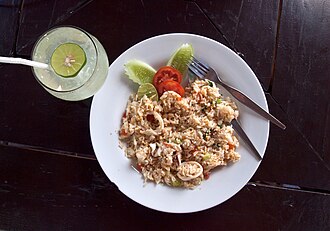
Photo: Wikipedia
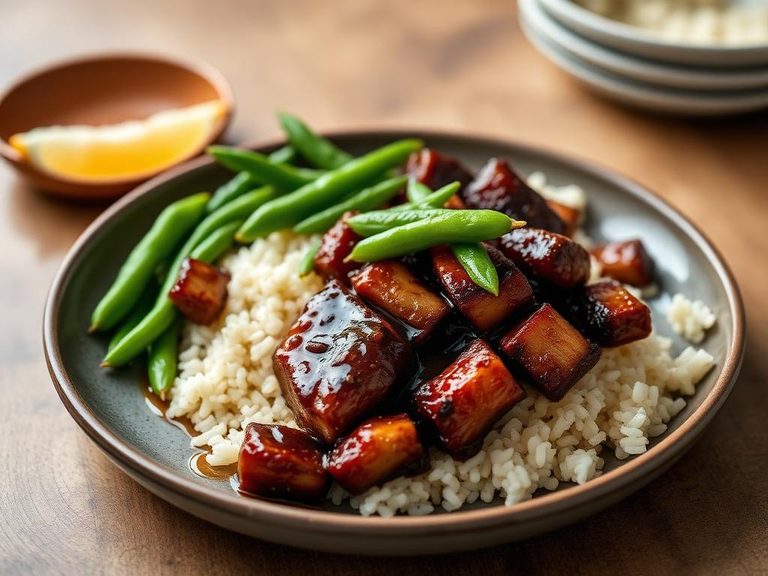
A savory, umami-rich stir-fry combining tender pork, fluffy rice, and crisp vegetables, all glazed in a salty, slightly sweet soy-based sauce. The texture is a satisfying mix of soft grains, chewy meat, and crunchy veggies, with a glossy, aromatic finish. Nutritionally, it's a balanced, protein-rich meal with moderate fat and carbs, making it a hearty yet portion-conscious option.
Calorie split: 28% protein · 21% carbs · 50% fat
↓ Full nutrition💚 Why it's loved
People love it for its comforting, savory flavor profile and the satisfying contrast of textures—soft rice, tender pork, and crisp veggies. It's a beloved staple in many cultures for its versatility, quick preparation, and ability to be customized with different vegetables and sauces.
⚠️ Watch-outs & how to enjoy it better
The soy-based sauce can be high in sodium, which may concern those watching salt intake. To counteract, use low-sodium soy sauce or dilute with water, and pair with potassium-rich foods like bananas or sweet potatoes. Also, be mindful of portion sizes to avoid blood-sugar spikes from the rice, and consider adding extra fiber-rich vegetables to slow digestion.
Key benefits
- High-quality protein from pork supports muscle maintenance.
- Balanced macros (protein, carbs, fat) for sustained energy.
- Contains fiber and micronutrients from mixed vegetables.
- Soy sauce adds umami and trace minerals like manganese.
- Versatile base for adding extra veggies or lean proteins.
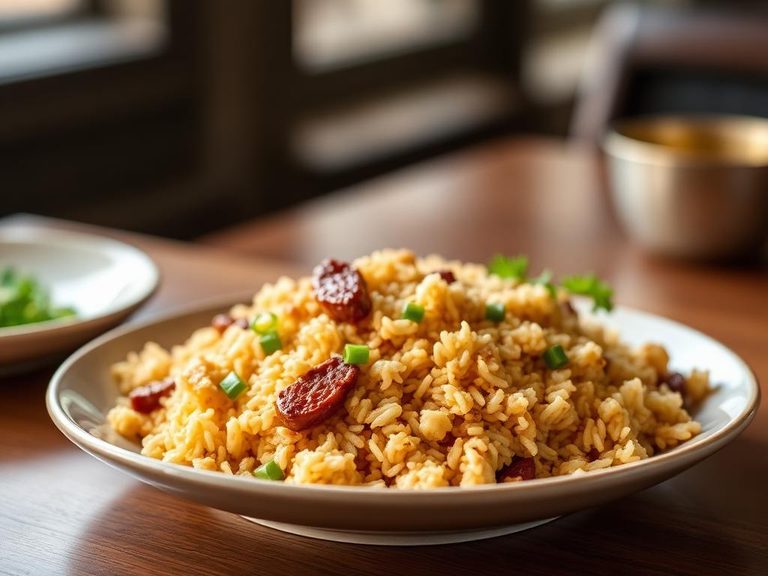
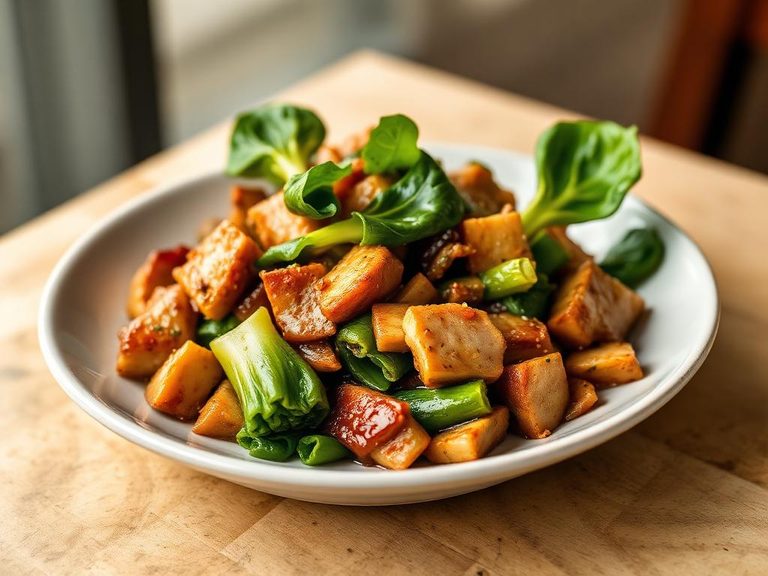
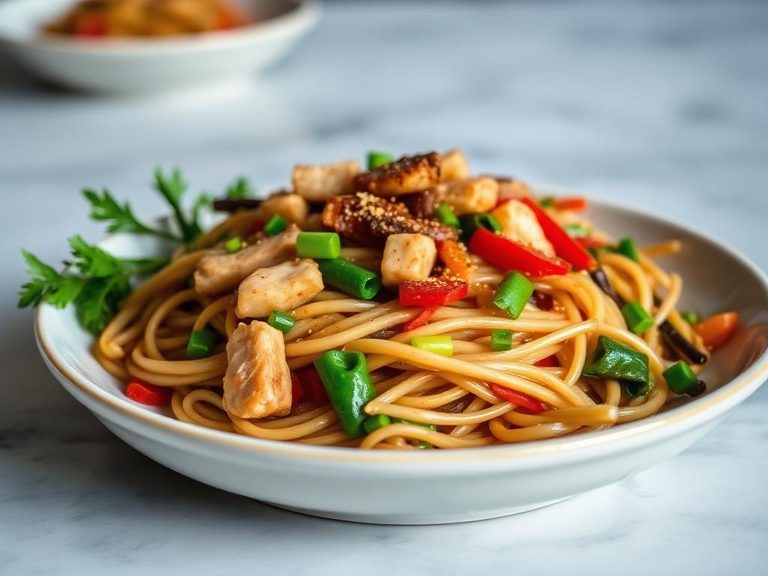
🍽️ Popular dishes
🌍 Where it's eaten
💡 Did you know?
Soy sauce, a key component, was originally a Chinese invention dating back over 2,000 years, and it was once used as a currency in parts of East Asia due to its high value and long shelf life.
Full nutrition (USDA data · scales with serving)
| Water | 72.8 g |
| Energy | 147 kcal |
| Protein | 10.3 g |
| Total lipid (fat) | 8.2 g |
| Carbohydrate, by difference | 7.8 g |
| Fiber, total dietary | 0.90 g |
| Total Sugars | 1.4 g |
| Calcium, Ca | 21.0 mg |
| Iron, Fe | 0.81 mg |
| Magnesium, Mg | 19.0 mg |
| Phosphorus, P | 107 mg |
| Potassium, K | 256 mg |
| Sodium, Na | 217 mg |
| Zinc, Zn | 1.0 mg |
| Copper, Cu | 0.08 mg |
| Selenium, Se | 13.3 ug |
| Vitamin C, total ascorbic acid | 11.6 mg |
| Thiamin | 0.36 mg |
| Riboflavin | 0.15 mg |
| Niacin | 2.5 mg |
| Vitamin B-6 | 0.27 mg |
| Folate, total | 19.0 ug |
| Folic acid | 8.0 ug |
| Folate, food | 11.0 ug |
| Folate, DFE | 25.0 ug |
| Choline, total | 35.8 mg |
| Vitamin B-12 | 0.23 ug |
| Vitamin B-12, added | 0.00 ug |
| Vitamin A, RAE | 8.0 ug |
| Retinol | 1.0 ug |
| Carotene, beta | 84.0 ug |
| Carotene, alpha | 8.0 ug |
| Cryptoxanthin, beta | 1.0 ug |
| Lycopene | 0.00 ug |
| Lutein + zeaxanthin | 145 ug |
| Vitamin E (alpha-tocopherol) | 1.1 mg |
| Vitamin E, added | 0.00 mg |
| Vitamin D (D2 + D3) | 0.20 ug |
| Vitamin K (phylloquinone) | 18.7 ug |
| Alcohol, ethyl | 0.00 g |
| Caffeine | 0.00 mg |
| Theobromine | 0.00 mg |
Fat & fatty acid profile (per 100g)
| Fatty acids, total saturated | 1.8 g |
| SFA 4:0 | 0.00 g |
| SFA 6:0 | 0.00 g |
| SFA 8:0 | 0.00 g |
| SFA 10:0 | 0.00 g |
| SFA 12:0 | 0.00 g |
| SFA 14:0 | 0.04 g |
| SFA 16:0 | 1.2 g |
| SFA 18:0 | 0.50 g |
| Fatty acids, total monounsaturated | 3.5 g |
| MUFA 16:1 | 0.11 g |
| MUFA 18:1 | 3.3 g |
| MUFA 20:1 | 0.06 g |
| MUFA 22:1 | 0.00 g |
| Fatty acids, total polyunsaturated | 2.2 g |
| PUFA 18:2 | 2.0 g |
| PUFA 18:3 | 0.24 g |
| PUFA 18:4 | 0.00 g |
| PUFA 20:4 | 0.01 g |
| PUFA 20:5 n-3 (EPA) | 0.00 g |
| PUFA 22:5 n-3 (DPA) | 0.00 g |
| PUFA 22:6 n-3 (DHA) | 0.00 g |
| Cholesterol | 25.0 mg |
Amino acid profile (per 100g)
Estimated from Pork, cured, salt pork, raw — USDA does not publish this profile for Pork.
| Tryptophan | 0.02 g |
| Threonine | 0.17 g |
| Isoleucine | 0.13 g |
| Leucine | 0.35 g |
| Lysine | 0.42 g |
| Methionine | 0.07 g |
| Cystine | 0.04 g |
| Phenylalanine | 0.19 g |
| Tyrosine | 0.08 g |
| Valine | 0.24 g |
| Arginine | 0.52 g |
| Histidine | 0.06 g |
| Alanine | 0.28 g |
| Aspartic acid | 0.42 g |
| Glutamic acid | 0.69 g |
| Glycine | 0.36 g |
| Proline | 0.27 g |
| Serine | 0.19 g |
FAQ
Is this dish suitable for a low-carb diet?
It can be adapted by reducing the rice portion and increasing the vegetable content, but the standard version is moderate in carbs. Consider using cauliflower rice as a substitute.
How can I reduce the sodium in this dish?
Use low-sodium soy sauce, limit added salt, and balance with potassium-rich foods like bananas or sweet potatoes. Also, rinse canned vegetables if used.
What are good vegetable substitutes for this dish?
You can use snap peas, bell peppers, mushrooms, or zucchini instead of carrots, broccoli, or dark-green leafy vegetables. These add variety and nutrients without altering the flavor profile significantly.
Nutrient density (calculated · NRF9.3)
Nutrient Rich Foods index: beneficial nutrients (protein, fiber, vitamins, minerals) minus saturated fat, added sugar & sodium, per 100 kcal.
NRF9.3 index — Fulgoni, Keast & Drewnowski, 2009. Computed from USDA nutrients.
Weight-loss friendliness (composite index)
Energy density 1.47 kcal/g · 28% calories from protein · 0.9 g fiber · 1.4 g sugar per 100 g.
Composite of energy density (Rolls et al., 1999), protein & fiber satiety, minus sugar. A calculated heuristic — ranks satiety-per-calorie, not a clinical measure.
Dietary load (calculated from USDA values)
Potential renal acid load. Positive = acid-forming, negative = alkaline-forming.
Sodium-to-potassium ratio: 0.85 (lower is better — aim for ≤ 1)
Sodium:potassium per WHO potassium guidance. Computed from USDA nutrients.