

Plantain, cooked with oil
Common food
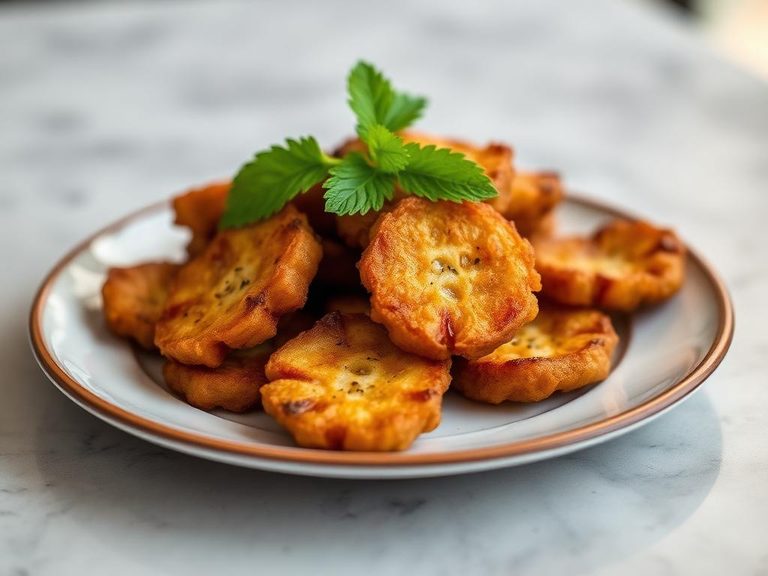
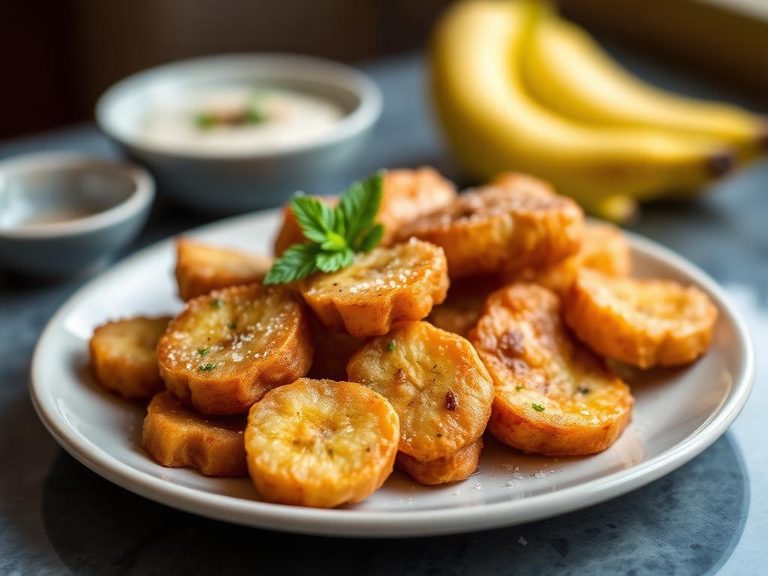
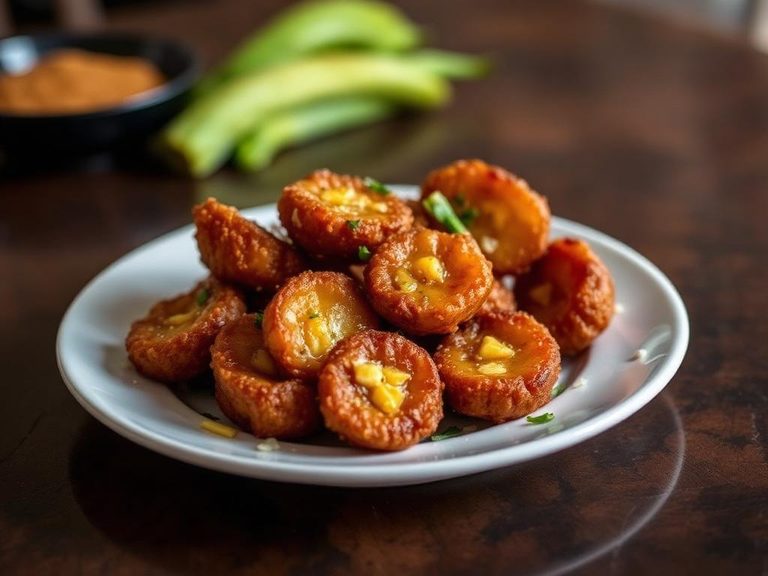
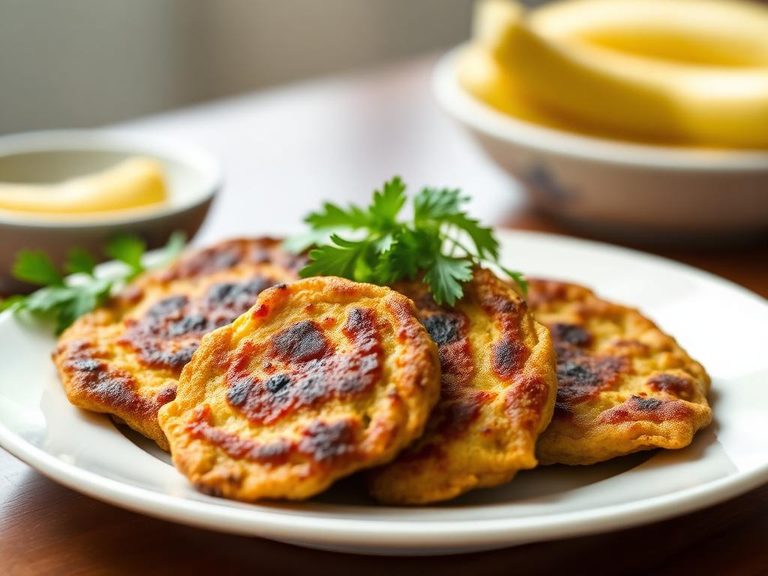
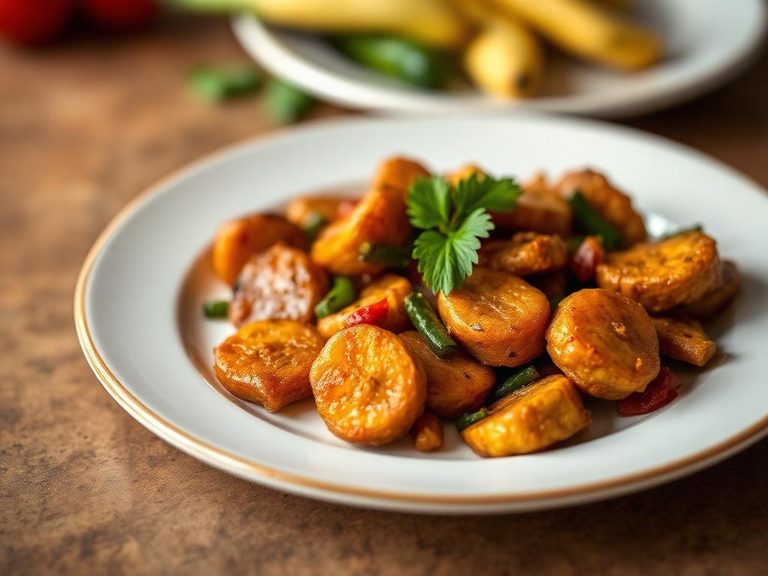
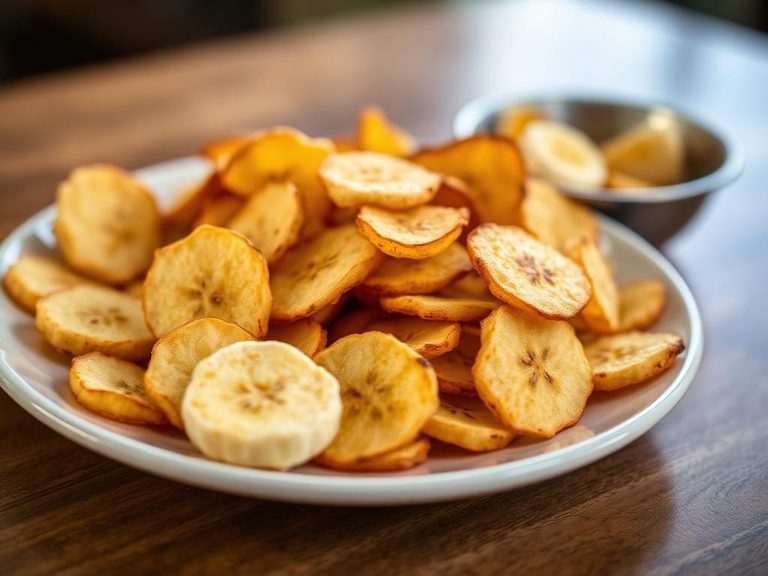
Fried plantain, often called 'dodo' in West Africa or 'tostones' in the Caribbean, transforms the starchy green fruit into a golden, crispy delight. The exterior develops a satisfying crunch while the interior becomes tender and sweet, creating a perfect contrast in every bite. With nearly 31g of carbohydrates per 100g, it's a potent energy source that fuels both body and soul.
Calorie split: 3% protein · 78% carbs · 18% fat
↓ Full nutrition💚 Why it's loved
People adore fried plantains for their magical transformation from firm, starchy slices to caramelized, sweet, and savory bites. They serve as the perfect crispy side dish or snack that bridges cultures from Africa to the Americas, carrying deep culinary traditions.
⚠️ Watch-outs & how to enjoy it better
The high carbohydrate content can cause rapid blood sugar spikes, especially when ripe and fried. To counteract this, pair with protein-rich foods like black beans or eggs, use smaller portions, or opt for air-frying to reduce oil absorption. Those watching caloric intake should be mindful, as frying significantly increases the calorie density.
Key benefits
- Excellent source of quick energy from complex carbs
- Provides potassium for heart and muscle function
- Contains resistant starch that may support gut health
- Offers vitamin B6 for brain development and function
- Naturally gluten-free and versatile in sweet or savory dishes
🍽️ Popular dishes
🌍 Where it's eaten
💡 Did you know?
Plantains are not botanically bananas—they're a separate fruit that must be cooked to be palatable, as raw plantains are unpleasantly starchy and astringent.
Full nutrition (USDA data · scales with serving)
| Water | 63.1 g |
| Energy | 144 kcal |
| Protein | 1.3 g |
| Total lipid (fat) | 3.2 g |
| Carbohydrate, by difference | 30.9 g |
| Fiber, total dietary | 1.6 g |
| Total Sugars | 16.9 g |
| Calcium, Ca | 3.0 mg |
| Iron, Fe | 0.54 mg |
| Magnesium, Mg | 35.0 mg |
| Phosphorus, P | 31.0 mg |
| Potassium, K | 471 mg |
| Sodium, Na | 116 mg |
| Zinc, Zn | 0.18 mg |
| Copper, Cu | 0.07 mg |
| Selenium, Se | 1.5 ug |
| Vitamin C, total ascorbic acid | 15.1 mg |
| Thiamin | 0.05 mg |
| Riboflavin | 0.07 mg |
| Niacin | 0.62 mg |
| Vitamin B-6 | 0.21 mg |
| Folate, total | 18.0 ug |
| Folic acid | 0.00 ug |
| Folate, food | 18.0 ug |
| Folate, DFE | 18.0 ug |
| Choline, total | 13.1 mg |
| Vitamin B-12 | 0.00 ug |
| Vitamin B-12, added | 0.00 ug |
| Vitamin A, RAE | 52.0 ug |
| Retinol | 0.00 ug |
| Carotene, beta | 420 ug |
| Carotene, alpha | 403 ug |
| Cryptoxanthin, beta | 0.00 ug |
| Lycopene | 0.00 ug |
| Lutein + zeaxanthin | 28.0 ug |
| Vitamin E (alpha-tocopherol) | 0.55 mg |
| Vitamin E, added | 0.00 mg |
| Vitamin D (D2 + D3) | 0.00 ug |
| Vitamin K (phylloquinone) | 30.8 ug |
| Alcohol, ethyl | 0.00 g |
| Caffeine | 0.00 mg |
| Theobromine | 0.00 mg |
Fat & fatty acid profile (per 100g)
| Fatty acids, total saturated | 0.39 g |
| SFA 4:0 | 0.00 g |
| SFA 6:0 | 0.00 g |
| SFA 8:0 | 0.00 g |
| SFA 10:0 | 0.00 g |
| SFA 12:0 | 0.00 g |
| SFA 14:0 | 0.00 g |
| SFA 16:0 | 0.28 g |
| SFA 18:0 | 0.08 g |
| Fatty acids, total monounsaturated | 1.2 g |
| MUFA 16:1 | 0.01 g |
| MUFA 18:1 | 1.2 g |
| MUFA 20:1 | 0.02 g |
| MUFA 22:1 | 0.00 g |
| Fatty acids, total polyunsaturated | 1.1 g |
| PUFA 18:2 | 0.99 g |
| PUFA 18:3 | 0.13 g |
| PUFA 18:4 | 0.00 g |
| PUFA 20:4 | 0.00 g |
| PUFA 20:5 n-3 (EPA) | 0.00 g |
| PUFA 22:5 n-3 (DPA) | 0.00 g |
| PUFA 22:6 n-3 (DHA) | 0.00 g |
| Cholesterol | 0.00 mg |
Amino acid profile (per 100g)
Estimated from Plantains, green, boiled — USDA does not publish this profile for Plantain.
| Tryptophan | 0.01 g |
| Threonine | 0.02 g |
| Isoleucine | 0.02 g |
| Leucine | 0.04 g |
| Lysine | 0.05 g |
| Methionine | 0.01 g |
| Cystine | 0.02 g |
| Phenylalanine | 0.03 g |
| Tyrosine | 0.02 g |
| Valine | 0.02 g |
| Arginine | 0.06 g |
| Histidine | 0.06 g |
| Alanine | 0.03 g |
| Aspartic acid | 0.09 g |
| Glutamic acid | 0.08 g |
| Glycine | 0.03 g |
| Proline | 0.03 g |
| Serine | 0.03 g |
| Hydroxyproline | 0.00 g |
FAQ
What's the difference between green and yellow fried plantains?
Green (unripe) plantains are starchy and savory, often fried twice for tostones. Yellow (ripe) plantains are sweeter and caramelize beautifully, becoming plátanos maduros.
Are fried plantains healthy?
They provide energy, potassium, and vitamins, but frying adds fat and calories. For a healthier version, try air-frying or baking with minimal oil.
Can I reheat fried plantains?
Yes, but they lose crispness. Reheat in a dry skillet over medium heat or in a 350°F oven for 5-10 minutes to restore some texture.
Nutrient density (calculated · NRF9.3)
Nutrient Rich Foods index: beneficial nutrients (protein, fiber, vitamins, minerals) minus saturated fat, added sugar & sodium, per 100 kcal.
NRF9.3 index — Fulgoni, Keast & Drewnowski, 2009. Computed from USDA nutrients.
Weight-loss friendliness (composite index)
Energy density 1.44 kcal/g · 4% calories from protein · 1.6 g fiber · 16.9 g sugar per 100 g.
Composite of energy density (Rolls et al., 1999), protein & fiber satiety, minus sugar. A calculated heuristic — ranks satiety-per-calorie, not a clinical measure.
Dietary load (calculated from USDA values)
Potential renal acid load. Positive = acid-forming, negative = alkaline-forming.
Sodium-to-potassium ratio: 0.25 (lower is better — aim for ≤ 1)
Sodium:potassium per WHO potassium guidance. Computed from USDA nutrients.