

Peas and carrots, cooked, NS as to form
Common food
A classic, comforting duo of sweet carrots and earthy green peas, typically boiled or steamed until tender. This simple side dish offers a satisfying mix of textures and a naturally sweet, savory flavor profile. It's a low-calorie, fiber-rich food that provides a good source of plant-based protein and essential vitamins.
Calorie split: 14% protein · 55% carbs · 30% fat
↓ Full nutrition💚 Why it's loved
People love this pairing for its nostalgic, home-cooked appeal and the way the sweetness of the carrots perfectly balances the fresh, green taste of the peas. Its versatility makes it a reliable side for everything from roast dinners to quick weeknight meals.
⚠️ Watch-outs & how to enjoy it better
Some may find the texture of overcooked peas mushy or the flavor bland. For those monitoring blood sugar, the combined carbohydrate content (12.47g per 100g) can cause a moderate spike. To mitigate, pair a portion with a source of protein (like chicken or beans) and healthy fat (like a drizzle of olive oil) to slow digestion.
Key benefits
- Excellent source of dietary fiber for digestive health.
- Provides plant-based protein and complex carbohydrates for sustained energy.
- Rich in beta-carotene (vitamin A) from carrots and antioxidants from peas.
- Low in calories and naturally fat-free when cooked without added fats.
- Contains essential vitamins like vitamin K and folate.
🍽️ Popular dishes
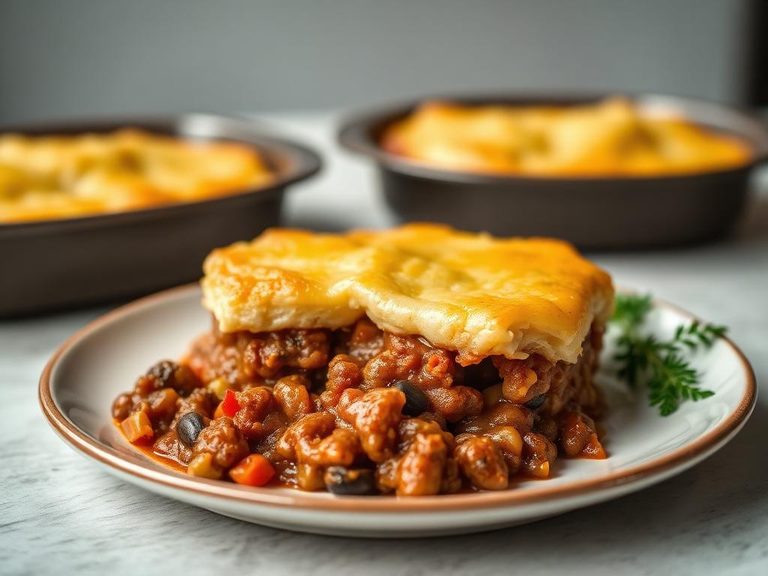

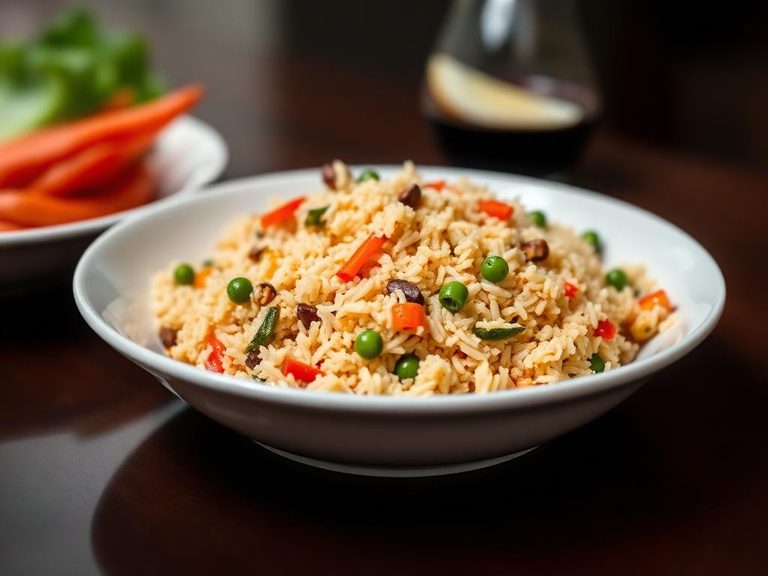
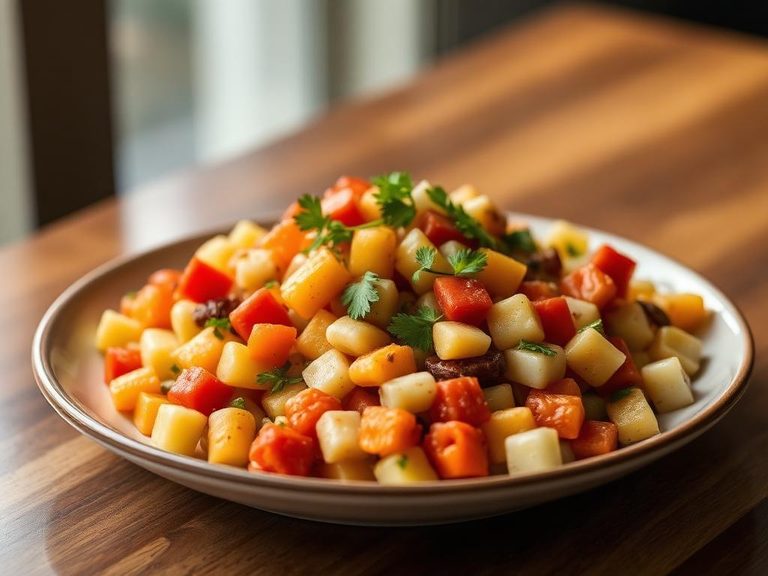
🌍 Where it's eaten
💡 Did you know?
The classic frozen mix of peas and carrots was popularized in the 1940s and 50s as a convenient, pre-cut 'mixed vegetable' staple for home cooks.
Full nutrition (USDA data · scales with serving)
| Water | 80.2 g |
| Energy | 89.0 kcal |
| Protein | 3.2 g |
| Total lipid (fat) | 3.0 g |
| Carbohydrate, by difference | 12.5 g |
| Fiber, total dietary | 4.4 g |
| Total Sugars | 5.3 g |
| Calcium, Ca | 28.0 mg |
| Iron, Fe | 0.82 mg |
| Magnesium, Mg | 23.0 mg |
| Phosphorus, P | 75.0 mg |
| Potassium, K | 265 mg |
| Sodium, Na | 172 mg |
| Zinc, Zn | 0.75 mg |
| Copper, Cu | 0.12 mg |
| Selenium, Se | 0.90 ug |
| Vitamin C, total ascorbic acid | 19.7 mg |
| Thiamin | 0.15 mg |
| Riboflavin | 0.11 mg |
| Niacin | 1.7 mg |
| Vitamin B-6 | 0.16 mg |
| Folate, total | 44.0 ug |
| Folic acid | 0.00 ug |
| Folate, food | 44.0 ug |
| Folate, DFE | 44.0 ug |
| Choline, total | 19.0 mg |
| Vitamin B-12 | 0.00 ug |
| Vitamin B-12, added | 0.00 ug |
| Vitamin A, RAE | 430 ug |
| Retinol | 11.0 ug |
| Carotene, beta | 4189 ug |
| Carotene, alpha | 1676 ug |
| Cryptoxanthin, beta | 0.00 ug |
| Lycopene | 0.00 ug |
| Lutein + zeaxanthin | 1309 ug |
| Vitamin E (alpha-tocopherol) | 0.80 mg |
| Vitamin E, added | 0.00 mg |
| Vitamin D (D2 + D3) | 0.00 ug |
| Vitamin K (phylloquinone) | 21.3 ug |
| Alcohol, ethyl | 0.00 g |
| Caffeine | 0.00 mg |
| Theobromine | 0.00 mg |
Fat & fatty acid profile (per 100g)
| Fatty acids, total saturated | 0.75 g |
| SFA 4:0 | 0.02 g |
| SFA 6:0 | 0.01 g |
| SFA 8:0 | 0.01 g |
| SFA 10:0 | 0.02 g |
| SFA 12:0 | 0.02 g |
| SFA 14:0 | 0.07 g |
| SFA 16:0 | 0.43 g |
| SFA 18:0 | 0.15 g |
| Fatty acids, total monounsaturated | 0.96 g |
| MUFA 16:1 | 0.02 g |
| MUFA 18:1 | 0.93 g |
| MUFA 20:1 | 0.01 g |
| MUFA 22:1 | 0.00 g |
| Fatty acids, total polyunsaturated | 0.91 g |
| PUFA 18:2 | 0.80 g |
| PUFA 18:3 | 0.10 g |
| PUFA 18:4 | 0.00 g |
| PUFA 20:4 | 0.00 g |
| PUFA 20:5 n-3 (EPA) | 0.00 g |
| PUFA 22:5 n-3 (DPA) | 0.00 g |
| PUFA 22:6 n-3 (DHA) | 0.00 g |
| Cholesterol | 2.0 mg |
Amino acid profile (per 100g)
Estimated from Peas and carrots, frozen, cooked, boiled, drained, without salt — USDA does not publish this profile for Peas and carrots.
| Tryptophan | 0.02 g |
| Threonine | 0.16 g |
| Isoleucine | 0.12 g |
| Leucine | 0.18 g |
| Lysine | 0.18 g |
| Methionine | 0.04 g |
| Cystine | 0.04 g |
| Phenylalanine | 0.11 g |
| Tyrosine | 0.07 g |
| Valine | 0.13 g |
| Arginine | 0.23 g |
| Histidine | 0.06 g |
| Alanine | 0.15 g |
| Aspartic acid | 0.29 g |
| Glutamic acid | 0.47 g |
| Glycine | 0.10 g |
| Proline | 0.10 g |
| Serine | 0.10 g |
FAQ
Are canned peas and carrots as nutritious as fresh or frozen?
Canned versions are cooked and preserved in liquid, which can lead to some loss of water-soluble vitamins (like vitamin C and B vitamins). They may also have added sodium. Rinsing them can reduce sodium content. Frozen vegetables are typically flash-frozen at peak ripeness and can retain more nutrients than canned.
How can I enhance the flavor without adding lots of calories?
Sauté them briefly in a little olive oil or butter with minced garlic and fresh herbs like thyme or parsley. A squeeze of lemon juice or a pinch of black pepper can also brighten the flavor significantly.
Is this a good food for weight loss?
Yes, it can be. At 89 kcal per 100g with 4.4g of fiber, it's a low-energy-dense food that can help you feel full on fewer calories. The key is to be mindful of preparation—avoid drowning it in butter, cream, or sugary glazes.
Nutrient density (calculated · NRF9.3)
Nutrient Rich Foods index: beneficial nutrients (protein, fiber, vitamins, minerals) minus saturated fat, added sugar & sodium, per 100 kcal.
NRF9.3 index — Fulgoni, Keast & Drewnowski, 2009. Computed from USDA nutrients.
Weight-loss friendliness (composite index)
Energy density 0.89 kcal/g · 14% calories from protein · 4.4 g fiber · 5.3 g sugar per 100 g.
Composite of energy density (Rolls et al., 1999), protein & fiber satiety, minus sugar. A calculated heuristic — ranks satiety-per-calorie, not a clinical measure.
Dietary load (calculated from USDA values)
Potential renal acid load. Positive = acid-forming, negative = alkaline-forming.
Sodium-to-potassium ratio: 0.65 (lower is better — aim for ≤ 1)
Sodium:potassium per WHO potassium guidance. Computed from USDA nutrients.