

Peanuts, unroasted
Common food

Photo: Wikipedia
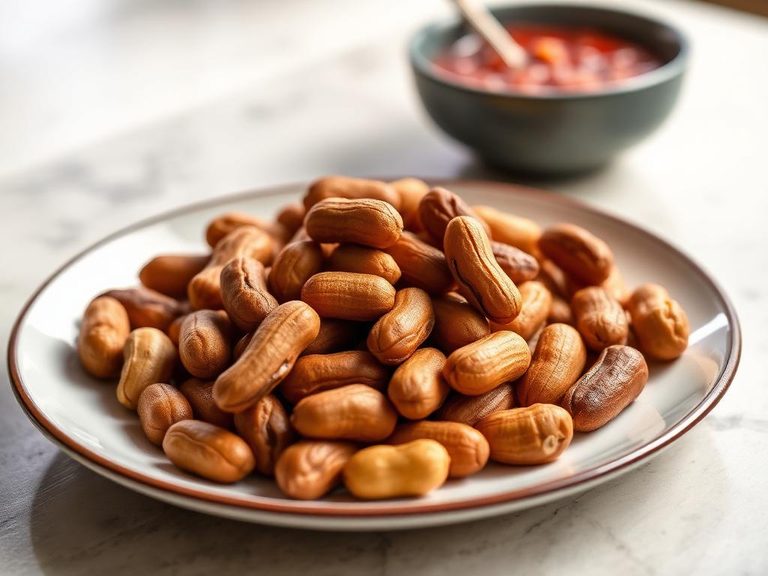
Raw, unroasted peanuts are the edible seeds of the Arachis hypogaea plant, harvested before any heat treatment. They possess a firm, starchy texture and a mild, beany flavor that is far less nutty and aromatic than their roasted counterparts. Nutritionally, they are a powerhouse of plant-based protein and heart-healthy monounsaturated fats.
Calorie split: 17% protein · 11% carbs · 73% fat
↓ Full nutrition💚 Why it's loved
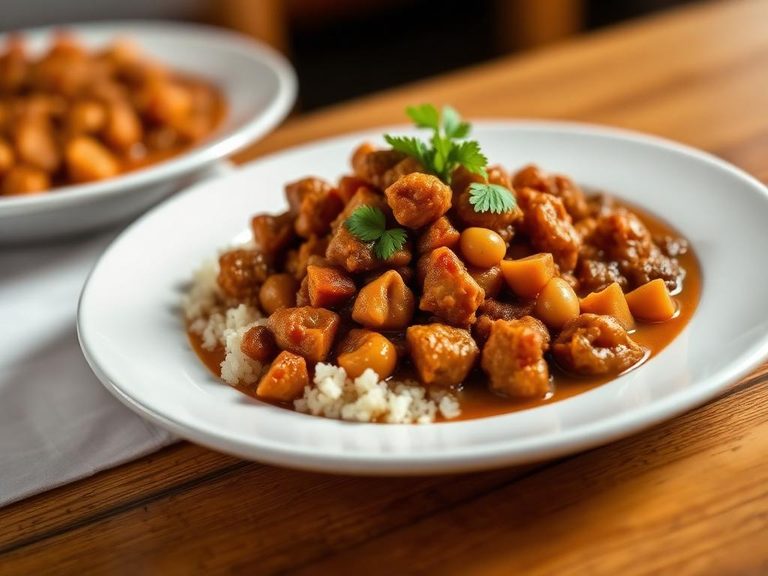
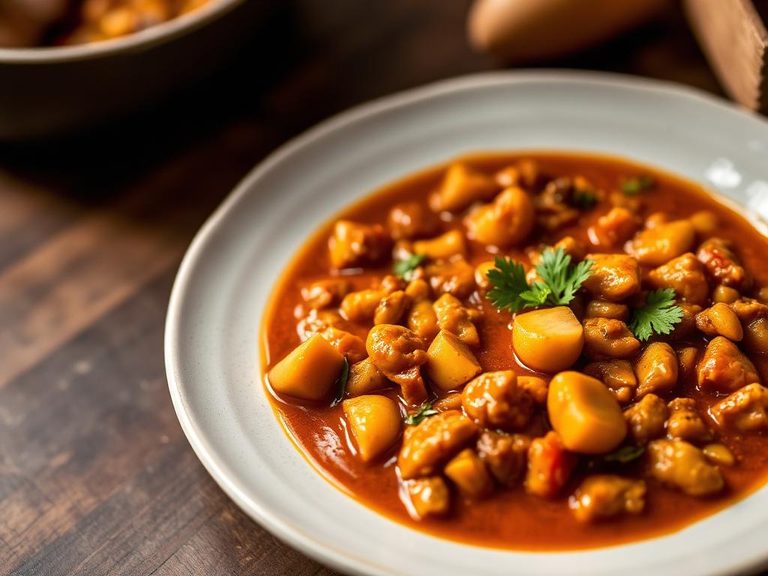
People love raw peanuts for their mild, versatile base flavor that readily absorbs seasonings, making them ideal for boiling, sprouting, or grinding into pastes. They are a beloved, affordable staple in many cultures, forming the foundation of iconic dishes from West African groundnut stews to Chinese cold-tossed salads.
⚠️ Watch-outs & how to enjoy it better
Raw peanuts contain trypsin inhibitors, which can interfere with protein digestion and cause digestive discomfort if consumed in large quantities. They are also a common and potent allergen. To counteract this, they should be cooked (boiled, roasted, or fried) to neutralize the inhibitors, and anyone with a known peanut allergy must strictly avoid them.
Key benefits
- Excellent source of plant-based protein for muscle maintenance.
- Rich in monounsaturated fats, linked to heart health.
- High in dietary fiber, promoting digestive health and satiety.
- Contains folate, an essential B-vitamin for cell function.
- Provides minerals like magnesium and phosphorus for bone health.
🍽️ Popular dishes
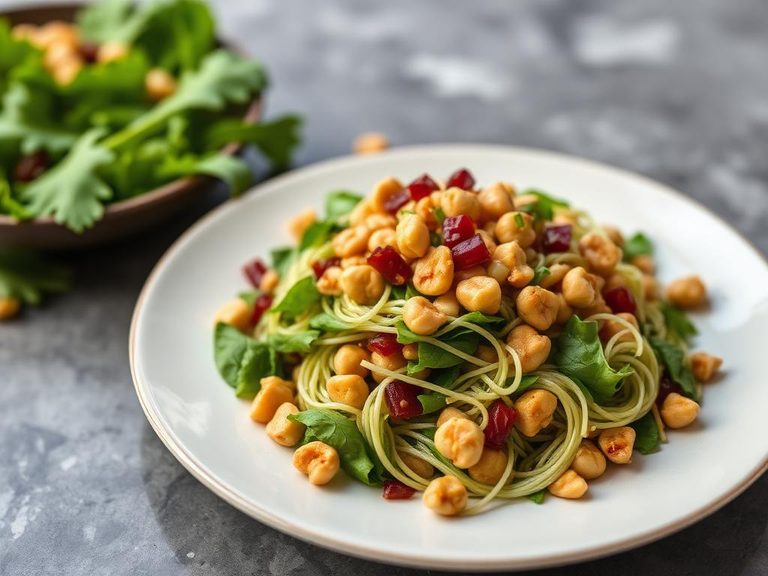
🌍 Where it's eaten
💡 Did you know?
Peanuts are not true nuts; they are legumes that develop underground, a unique growth habit called 'geocarpy' where the flower stalk buries the fruit into the soil to mature.
Full nutrition (USDA data · scales with serving)
| Water | 6.5 g |
| Energy | 567 kcal |
| Protein | 25.8 g |
| Total lipid (fat) | 49.2 g |
| Carbohydrate, by difference | 16.1 g |
| Fiber, total dietary | 8.5 g |
| Total Sugars | 4.7 g |
| Calcium, Ca | 92.0 mg |
| Iron, Fe | 4.6 mg |
| Magnesium, Mg | 168 mg |
| Phosphorus, P | 376 mg |
| Potassium, K | 705 mg |
| Sodium, Na | 18.0 mg |
| Zinc, Zn | 3.3 mg |
| Copper, Cu | 1.1 mg |
| Selenium, Se | 7.2 ug |
| Vitamin C, total ascorbic acid | 0.00 mg |
| Thiamin | 0.64 mg |
| Riboflavin | 0.14 mg |
| Niacin | 12.1 mg |
| Vitamin B-6 | 0.35 mg |
| Folate, total | 240 ug |
| Folic acid | 0.00 ug |
| Folate, food | 240 ug |
| Folate, DFE | 240 ug |
| Choline, total | 52.5 mg |
| Vitamin B-12 | 0.00 ug |
| Vitamin B-12, added | 0.00 ug |
| Vitamin A, RAE | 0.00 ug |
| Retinol | 0.00 ug |
| Carotene, beta | 0.00 ug |
| Carotene, alpha | 0.00 ug |
| Cryptoxanthin, beta | 0.00 ug |
| Lycopene | 0.00 ug |
| Lutein + zeaxanthin | 0.00 ug |
| Vitamin E (alpha-tocopherol) | 8.3 mg |
| Vitamin E, added | 0.00 mg |
| Vitamin D (D2 + D3) | 0.00 ug |
| Vitamin K (phylloquinone) | 0.00 ug |
| Alcohol, ethyl | 0.00 g |
| Caffeine | 0.00 mg |
| Theobromine | 0.00 mg |
Fat & fatty acid profile (per 100g)
| Fatty acids, total saturated | 6.3 g |
| SFA 4:0 | 0.00 g |
| SFA 6:0 | 0.00 g |
| SFA 8:0 | 0.00 g |
| SFA 10:0 | 0.00 g |
| SFA 12:0 | 0.00 g |
| SFA 14:0 | 0.03 g |
| SFA 16:0 | 5.2 g |
| SFA 18:0 | 1.1 g |
| Fatty acids, total monounsaturated | 24.4 g |
| MUFA 16:1 | 0.01 g |
| MUFA 18:1 | 23.8 g |
| MUFA 20:1 | 0.66 g |
| MUFA 22:1 | 0.00 g |
| Fatty acids, total polyunsaturated | 15.6 g |
| PUFA 18:2 | 15.6 g |
| PUFA 18:3 | 0.00 g |
| PUFA 18:4 | 0.00 g |
| PUFA 20:4 | 0.00 g |
| PUFA 20:5 n-3 (EPA) | 0.00 g |
| PUFA 22:5 n-3 (DPA) | 0.00 g |
| PUFA 22:6 n-3 (DHA) | 0.00 g |
| Cholesterol | 0.00 mg |
Amino acid profile (per 100g)
Estimated from Snacks, popcorn, caramel-coated, without peanuts — USDA does not publish this profile for Peanuts.
| Tryptophan | 0.04 g |
| Threonine | 0.15 g |
| Isoleucine | 0.16 g |
| Leucine | 0.28 g |
| Lysine | 0.28 g |
| Methionine | 0.07 g |
| Cystine | 0.04 g |
| Phenylalanine | 0.15 g |
| Tyrosine | 0.11 g |
| Valine | 0.18 g |
| Arginine | 0.23 g |
| Histidine | 0.11 g |
| Alanine | 0.21 g |
| Aspartic acid | 0.39 g |
| Glutamic acid | 0.66 g |
| Glycine | 0.22 g |
| Proline | 0.17 g |
| Serine | 0.16 g |
FAQ
Why are raw peanuts not recommended to eat straight from the bag?
Raw peanuts can harbor bacteria like Salmonella and contain natural compounds (trypsin inhibitors) that are reduced or eliminated by cooking. Roasting or boiling makes them safer and more digestible.
What's the difference in nutrition between raw and roasted peanuts?
The core macronutrient profile (protein, fat, carbs) is very similar. Roasting primarily affects flavor, texture, and may slightly reduce heat-sensitive vitamins, but it does not drastically alter the major nutritional benefits.
Can I use raw peanuts to make peanut butter?
Yes, but they must be roasted first. Roasting develops the characteristic deep, nutty flavor and reduces moisture, allowing the peanuts to blend into a smooth, oily paste. Using truly raw peanuts would result in a bland, pasty, and potentially unsafe product.
Nutrient density (calculated · NRF9.3)
Nutrient Rich Foods index: beneficial nutrients (protein, fiber, vitamins, minerals) minus saturated fat, added sugar & sodium, per 100 kcal.
NRF9.3 index — Fulgoni, Keast & Drewnowski, 2009. Computed from USDA nutrients.
Weight-loss friendliness (composite index)
Energy density 5.67 kcal/g · 18% calories from protein · 8.5 g fiber · 4.7 g sugar per 100 g.
Composite of energy density (Rolls et al., 1999), protein & fiber satiety, minus sugar. A calculated heuristic — ranks satiety-per-calorie, not a clinical measure.
Dietary load (calculated from USDA values)
Potential renal acid load. Positive = acid-forming, negative = alkaline-forming.
Sodium-to-potassium ratio: 0.03 (lower is better — aim for ≤ 1)
Sodium:potassium per WHO potassium guidance. Computed from USDA nutrients.