

Seeds, sesame butter, tahini, from unroasted kernels (non-chemically removed seed coat)
Whole food · Nut and Seed Products

Photo: Wikipedia
This is a raw, unroasted tahini made from hulled sesame seeds, yielding a smooth, pourable paste with a mild, slightly grassy flavor and a creamy, non-gritty texture. Nutritionally, it's a powerhouse of healthy fats and plant-based protein, with a notable amount of fiber and virtually no sugar.
Calorie split: 11% protein · 11% carbs · 78% fat
↓ Full nutrition💚 Why it's loved
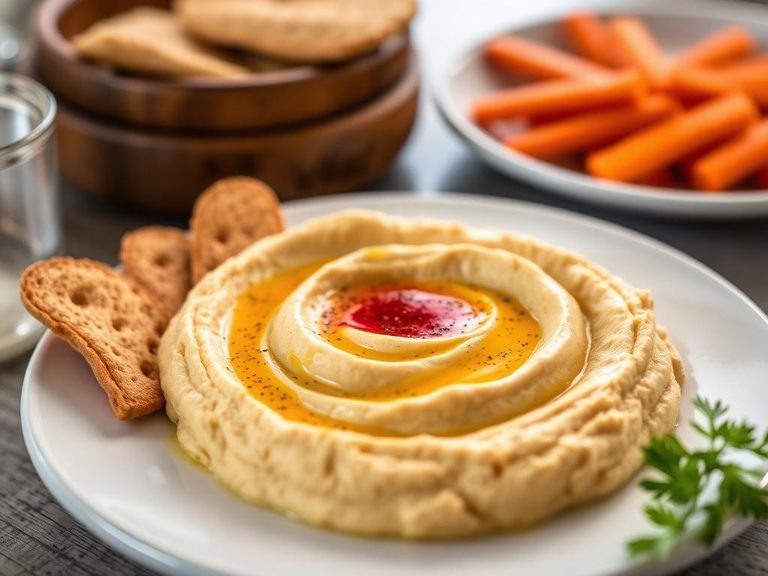
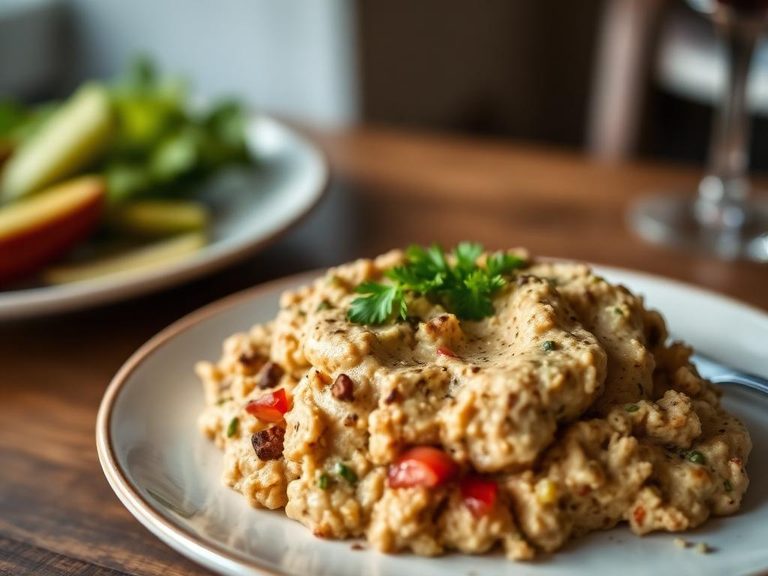
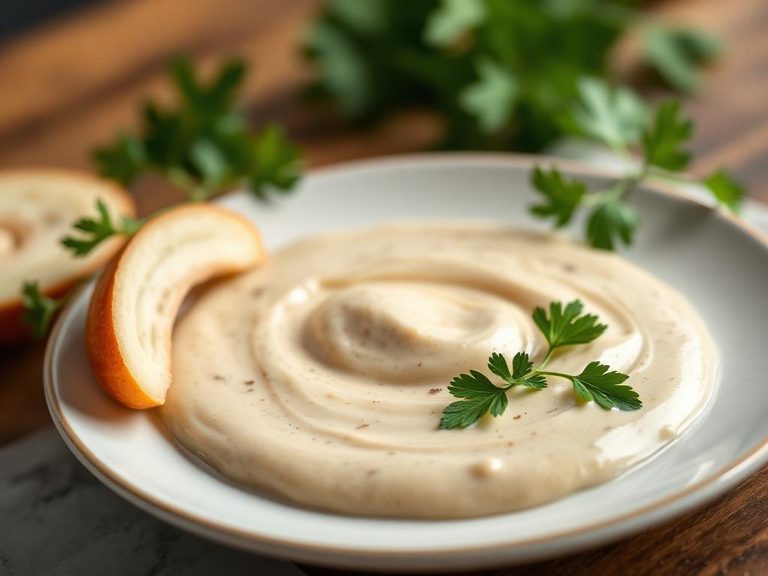
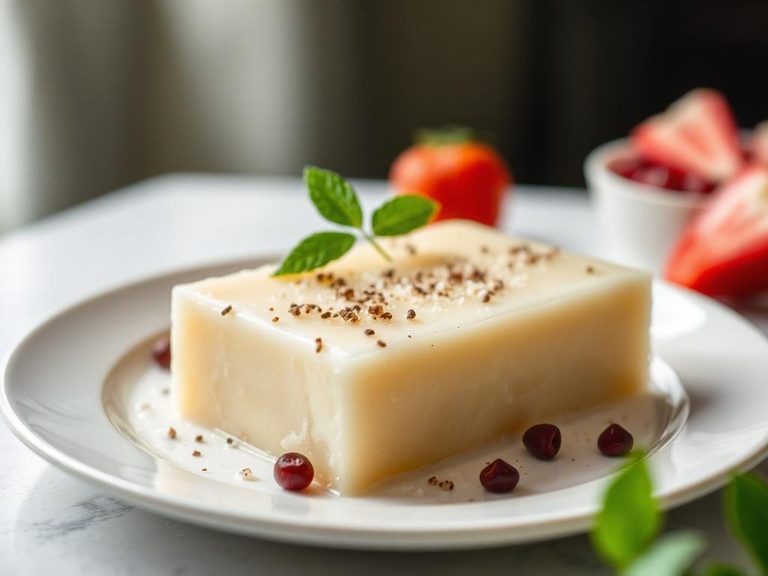
People love it for its rich, nutty, and versatile flavor that serves as a foundational ingredient in countless cuisines, from Middle Eastern hummus to Asian dressings. Its creamy texture and ability to bind ingredients or add luxurious depth to both sweet and savory dishes make it a kitchen staple.
⚠️ Watch-outs & how to enjoy it better
Its high calorie density (over 600 kcal per 100g) means portion control is key for those monitoring energy intake. As a common allergen, sesame is a top allergen in many countries, and individuals with a known allergy must strictly avoid it. For those sensitive to oxalates, which are present in sesame seeds, pairing with calcium-rich foods can help mitigate absorption.
Key benefits
- Excellent source of plant-based protein (18g per 100g).
- Rich in heart-healthy monounsaturated and polyunsaturated fats.
- High in dietary fiber (9.3g per 100g) for digestive health.
- Provides key minerals like copper, manganese, and calcium.
- Naturally sugar-free, making it a low-glycemic fat source.
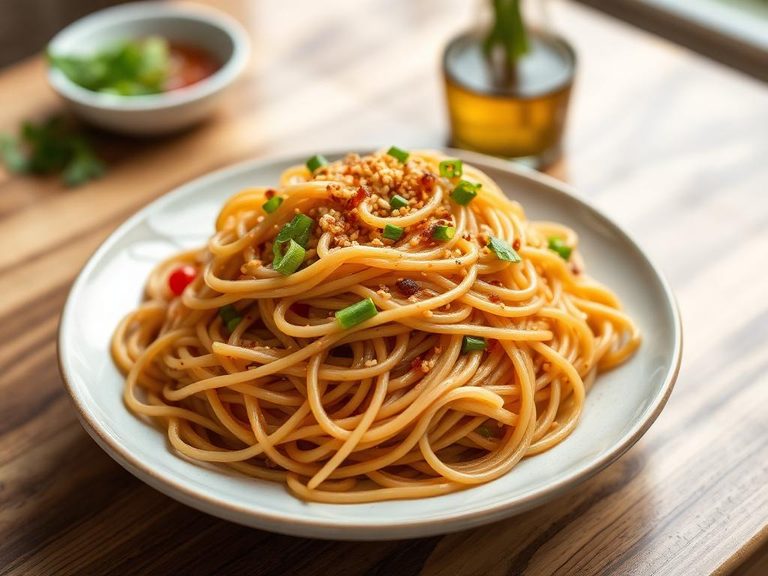
🍽️ Popular dishes
🌍 Where it's eaten
💡 Did you know?
The term 'tahini' comes from the Arabic word for 'to grind,' and this specific unroasted, hulled version is the traditional base for authentic hummus, prized for its lighter color and milder taste compared to roasted varieties.
Full nutrition (USDA data · scales with serving)
| Water | 3.0 g |
| Energy | 607 kcal |
| Energy | 2540 kj |
| Protein | 17.9 g |
| Total lipid (fat) | 56.4 g |
| Ash | 4.7 g |
| Carbohydrate, by difference | 17.9 g |
| Fiber, total dietary | 9.3 g |
| Calcium, Ca | 141 mg |
| Iron, Fe | 6.3 mg |
| Magnesium, Mg | 353 mg |
| Phosphorus, P | 790 mg |
| Potassium, K | 459 mg |
| Sodium, Na | 1.0 mg |
| Zinc, Zn | 10.4 mg |
| Copper, Cu | 1.5 mg |
| Manganese, Mn | 1.5 mg |
| Vitamin C, total ascorbic acid | 0.00 mg |
| Thiamin | 1.6 mg |
| Riboflavin | 0.12 mg |
| Niacin | 5.6 mg |
| Pantothenic acid | 0.69 mg |
| Vitamin B-6 | 0.15 mg |
| Folate, total | 98.0 ug |
| Folic acid | 0.00 ug |
| Folate, food | 98.0 ug |
| Folate, DFE | 98.0 ug |
| Vitamin B-12 | 0.00 ug |
| Vitamin A, RAE | 3.0 ug |
| Retinol | 0.00 ug |
| Vitamin A, IU | 67.0 iu |
| Vitamin D (D2 + D3), International Units | 0.00 iu |
| Vitamin D (D2 + D3) | 0.00 ug |
Fat & fatty acid profile (per 100g)
| Fatty acids, total saturated | 7.9 g |
| SFA 14:0 | 0.14 g |
| SFA 16:0 | 5.0 g |
| SFA 18:0 | 2.4 g |
| Fatty acids, total monounsaturated | 21.3 g |
| MUFA 16:1 | 0.17 g |
| MUFA 18:1 | 21.0 g |
| MUFA 20:1 | 0.08 g |
| Fatty acids, total polyunsaturated | 24.7 g |
| PUFA 18:2 | 24.3 g |
| PUFA 18:3 | 0.43 g |
| Cholesterol | 0.00 mg |
Amino acid profile (per 100g)
| Tryptophan | 0.39 g |
| Threonine | 0.74 g |
| Isoleucine | 0.77 g |
| Leucine | 1.4 g |
| Lysine | 0.58 g |
| Methionine | 0.59 g |
| Cystine | 0.36 g |
| Phenylalanine | 0.95 g |
| Tyrosine | 0.75 g |
| Valine | 1.0 g |
| Arginine | 2.7 g |
| Histidine | 0.53 g |
| Alanine | 0.94 g |
| Aspartic acid | 1.7 g |
| Glutamic acid | 4.0 g |
| Glycine | 1.2 g |
| Proline | 0.82 g |
| Serine | 0.98 g |
FAQ
What's the difference between this and regular tahini?
This version is made from *unroasted* kernels with a *non-chemically removed* (hulled) seed coat. Regular tahini is often made from roasted seeds, giving it a darker color, stronger nutty flavor, and slightly grittier texture. This raw, hulled variety is milder and smoother.
Why is it so high in calories?
It's composed of about 56% fat by weight, which is calorie-dense (9 kcal per gram). However, these are primarily healthy unsaturated fats. The calories come with significant nutritional benefits like protein, fiber, and minerals.
How should I store it?
Store it in a cool, dark pantry before opening. After opening, keep it in the refrigerator to prevent the natural oils from going rancid, which can happen within a few months at room temperature. Stir well before use as oil separation is natural.
Nutrient density (calculated · NRF9.3)
Nutrient Rich Foods index: beneficial nutrients (protein, fiber, vitamins, minerals) minus saturated fat, added sugar & sodium, per 100 kcal.
NRF9.3 index — Fulgoni, Keast & Drewnowski, 2009. Computed from USDA nutrients.
Weight-loss friendliness (composite index)
Energy density 6.07 kcal/g · 12% calories from protein · 9.3 g fiber · 0.0 g sugar per 100 g.
Composite of energy density (Rolls et al., 1999), protein & fiber satiety, minus sugar. A calculated heuristic — ranks satiety-per-calorie, not a clinical measure.
Dietary load (calculated from USDA values)
Potential renal acid load. Positive = acid-forming, negative = alkaline-forming.
Sodium-to-potassium ratio: 0.00 (lower is better — aim for ≤ 1)
Sodium:potassium per WHO potassium guidance. Computed from USDA nutrients.