

Pasta, whole grain, with tomato-based sauce and meat, home recipe
Common food

Photo: Wikipedia
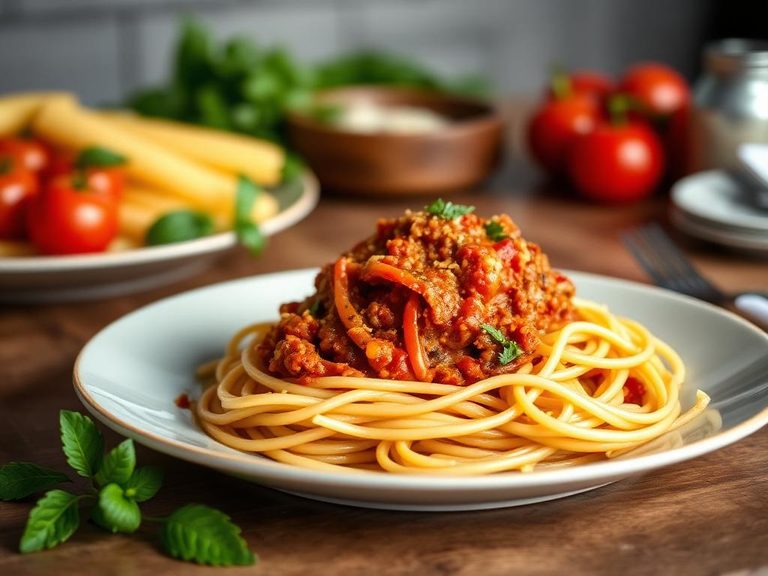
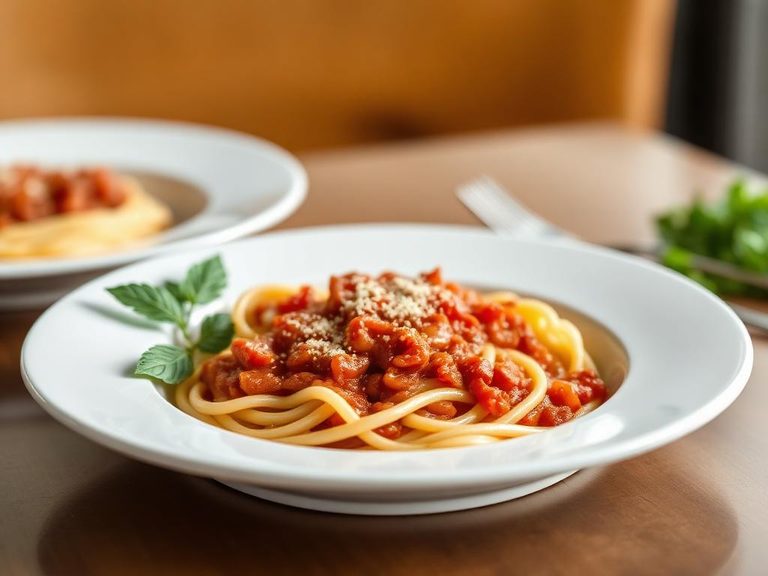
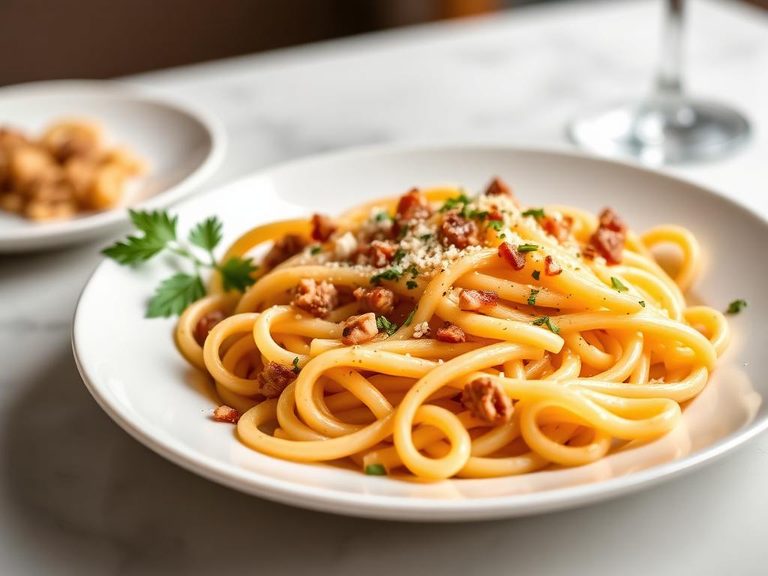
This is a hearty, home-cooked staple: whole-wheat pasta tubes coated in a robust, savory tomato sauce studded with tender morsels of ground meat. The whole grain lends a satisfying, slightly nutty chew and earthy depth, while the sauce provides a bright, tangy, and umami-rich counterpoint. Nutritionally, it's a balanced plate, offering a solid protein punch and significant fiber from the whole grain and tomato base.
Calorie split: 19% protein · 60% carbs · 21% fat
↓ Full nutrition💚 Why it's loved
People adore it for its comforting, familiar 'hug in a bowl' quality—the deep, savory flavor of the meat sauce melding perfectly with the hearty pasta. It's the ultimate versatile canvas, easily adapted with whatever herbs, veggies, or protein are on hand, making it a beloved weeknight hero across countless cultures.
⚠️ Watch-outs & how to enjoy it better
The combination of refined carbohydrates (if not using whole grain) and sugary tomato sauce can cause a rapid blood-sugar spike, and store-bought sauces are often high in sodium. Those with gluten intolerance or celiac disease must avoid traditional pasta. To counteract, opt for whole-grain pasta as specified, pair the dish with a large side salad with vinegar-based dressing to slow glucose absorption, and choose low-sodium sauce or make your own.
Key benefits
- Good source of plant-based and animal protein for muscle maintenance
- High in dietary fiber from whole grain pasta, supporting digestion
- Provides lycopene, an antioxidant from cooked tomatoes
- Contains B-vitamins and iron from the meat component
- A balanced meal with carbs, protein, and fat for sustained energy
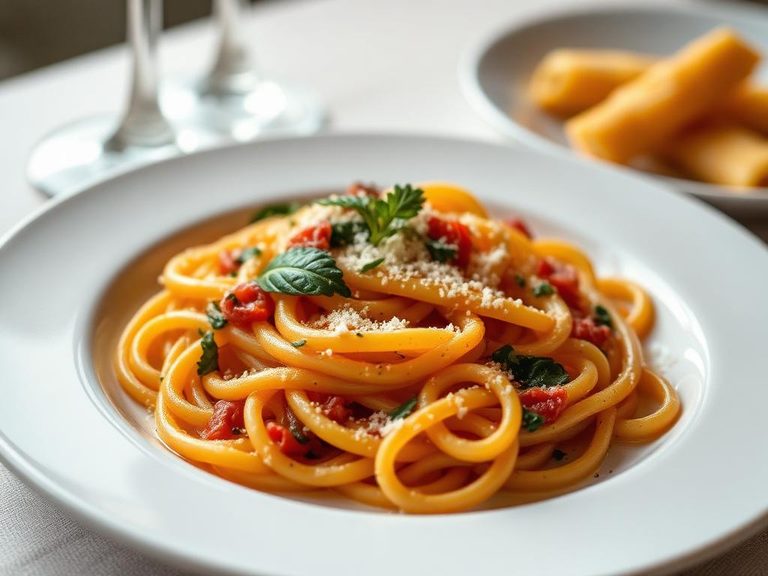
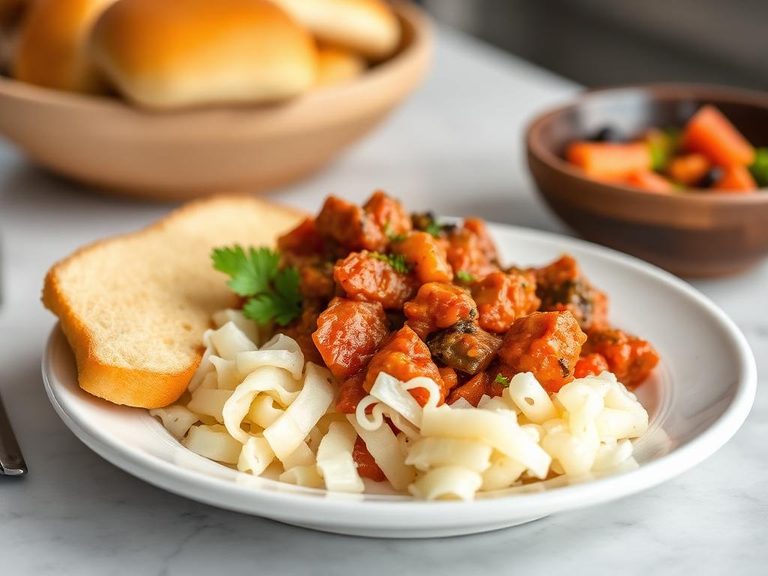
🍽️ Popular dishes

🌍 Where it's eaten
💡 Did you know?
The specific combination of pasta, tomato, and meat as we know it is largely an Italian-American invention; in Italy, pasta with meat sauce (ragù) is traditionally served with wider, flatter noodles like tagliatelle, not spaghetti, to better catch the chunky sauce.
Full nutrition (USDA data · scales with serving)
| Water | 71.3 g |
| Energy | 121 kcal |
| Protein | 6.0 g |
| Total lipid (fat) | 3.0 g |
| Carbohydrate, by difference | 18.7 g |
| Fiber, total dietary | 2.7 g |
| Total Sugars | 2.5 g |
| Calcium, Ca | 19.0 mg |
| Iron, Fe | 1.4 mg |
| Magnesium, Mg | 37.0 mg |
| Phosphorus, P | 97.0 mg |
| Potassium, K | 202 mg |
| Sodium, Na | 200 mg |
| Zinc, Zn | 1.3 mg |
| Copper, Cu | 0.16 mg |
| Selenium, Se | 21.3 ug |
| Vitamin C, total ascorbic acid | 0.80 mg |
| Thiamin | 0.09 mg |
| Riboflavin | 0.09 mg |
| Niacin | 3.6 mg |
| Vitamin B-6 | 0.15 mg |
| Folate, total | 17.0 ug |
| Folic acid | 0.00 ug |
| Folate, food | 17.0 ug |
| Folate, DFE | 17.0 ug |
| Choline, total | 16.0 mg |
| Vitamin B-12 | 0.24 ug |
| Vitamin B-12, added | 0.00 ug |
| Vitamin A, RAE | 13.0 ug |
| Retinol | 0.00 ug |
| Carotene, beta | 154 ug |
| Carotene, alpha | 0.00 ug |
| Cryptoxanthin, beta | 0.00 ug |
| Lycopene | 4968 ug |
| Lutein + zeaxanthin | 123 ug |
| Vitamin E (alpha-tocopherol) | 1.1 mg |
| Vitamin E, added | 0.00 mg |
| Vitamin D (D2 + D3) | 0.00 ug |
| Vitamin K (phylloquinone) | 5.9 ug |
| Alcohol, ethyl | 0.00 g |
| Caffeine | 0.00 mg |
| Theobromine | 0.00 mg |
Fat & fatty acid profile (per 100g)
| Fatty acids, total saturated | 0.78 g |
| SFA 4:0 | 0.00 g |
| SFA 6:0 | 0.00 g |
| SFA 8:0 | 0.00 g |
| SFA 10:0 | 0.00 g |
| SFA 12:0 | 0.00 g |
| SFA 14:0 | 0.05 g |
| SFA 16:0 | 0.47 g |
| SFA 18:0 | 0.21 g |
| Fatty acids, total monounsaturated | 0.92 g |
| MUFA 16:1 | 0.06 g |
| MUFA 18:1 | 0.81 g |
| MUFA 20:1 | 0.01 g |
| MUFA 22:1 | 0.00 g |
| Fatty acids, total polyunsaturated | 0.54 g |
| PUFA 18:2 | 0.48 g |
| PUFA 18:3 | 0.06 g |
| PUFA 18:4 | 0.00 g |
| PUFA 20:4 | 0.00 g |
| PUFA 20:5 n-3 (EPA) | 0.00 g |
| PUFA 22:5 n-3 (DPA) | 0.00 g |
| PUFA 22:6 n-3 (DHA) | 0.00 g |
| Cholesterol | 9.0 mg |
Amino acid profile (per 100g)
Estimated from Restaurant, Italian, chicken parmesan without pasta — USDA does not publish this profile for Pasta.
| Tryptophan | 0.20 g |
| Threonine | 0.66 g |
| Isoleucine | 0.72 g |
| Leucine | 1.3 g |
| Lysine | 1.3 g |
| Methionine | 0.41 g |
| Cystine | 0.20 g |
| Phenylalanine | 1.1 g |
| Tyrosine | 0.53 g |
| Valine | 0.81 g |
| Arginine | 0.93 g |
| Histidine | 0.50 g |
| Alanine | 0.79 g |
| Aspartic acid | 1.4 g |
| Glutamic acid | 2.8 g |
| Glycine | 0.61 g |
| Proline | 1.3 g |
| Serine | 0.70 g |
| Hydroxyproline | 0.04 g |
FAQ
Is this a healthy meal?
Yes, when made with whole-grain pasta and a homemade sauce, it's a nutritionally balanced meal providing fiber, protein, and key nutrients like lycopene. Its healthiness depends heavily on the sauce's sugar/sodium content and the portion size of the pasta.
Can I make it vegetarian?
Absolutely. Simply omit the meat and increase the umami with ingredients like finely chopped mushrooms, lentils, or a plant-based ground meat substitute. The tomato sauce base remains delicious.
Why is my sauce watery or not sticking to the pasta?
Always finish cooking the pasta in the sauce for the last minute of boiling. Reserve a cup of starchy pasta water to add to the sauce; this starchy liquid helps emulsify and bind the sauce to the pasta, creating a cohesive dish.
Nutrient density (calculated · NRF9.3)
Nutrient Rich Foods index: beneficial nutrients (protein, fiber, vitamins, minerals) minus saturated fat, added sugar & sodium, per 100 kcal.
NRF9.3 index — Fulgoni, Keast & Drewnowski, 2009. Computed from USDA nutrients.
Weight-loss friendliness (composite index)
Energy density 1.21 kcal/g · 20% calories from protein · 2.7 g fiber · 2.5 g sugar per 100 g.
Composite of energy density (Rolls et al., 1999), protein & fiber satiety, minus sugar. A calculated heuristic — ranks satiety-per-calorie, not a clinical measure.
Dietary load (calculated from USDA values)
Potential renal acid load. Positive = acid-forming, negative = alkaline-forming.
Sodium-to-potassium ratio: 0.99 (lower is better — aim for ≤ 1)
Sodium:potassium per WHO potassium guidance. Computed from USDA nutrients.