

Pasta, whole grain, with tomato-based sauce, home recipe
Common food

Photo: Wikipedia
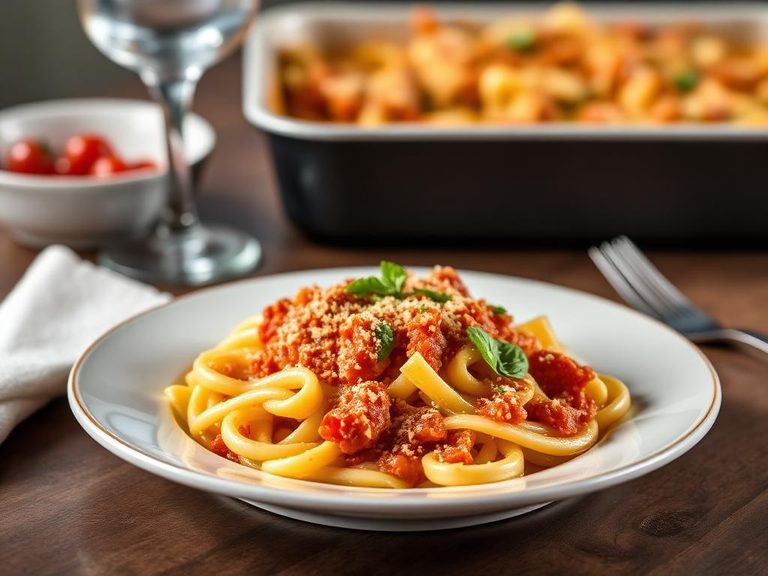
A hearty, wholesome plate of whole grain pasta tossed in a vibrant, savory tomato-based sauce. The nutty, chewy texture of the pasta pairs perfectly with the bright, acidic tang of the sauce, creating a deeply satisfying and comforting meal. Nutritionally, it stands out for its high fiber content and impressive protein-to-calorie ratio, making it a smart choice for sustained energy.
Calorie split: 14% protein · 73% carbs · 13% fat
↓ Full nutrition💚 Why it's loved
People love this dish for its comforting, familiar flavors and its incredible versatility, easily adapting to whatever vegetables or proteins are on hand. It's a staple of home cooking that evokes a sense of warmth and tradition, often tied to family meals and cultural heritage.
⚠️ Watch-outs & how to enjoy it better
The tomato sauce can be acidic, potentially triggering heartburn or digestive discomfort for some, and store-bought versions may be high in sodium. To counteract this, pair the pasta with a source of healthy fat like olive oil or a side of lean protein to slow digestion and balance blood sugar, and opt for homemade sauce to control salt content.
Key benefits
- High in dietary fiber for digestive health and satiety
- Excellent source of plant-based protein
- Low in fat and calories per serving
- Provides complex carbohydrates for steady energy release
- Rich in antioxidants from the tomato-based sauce
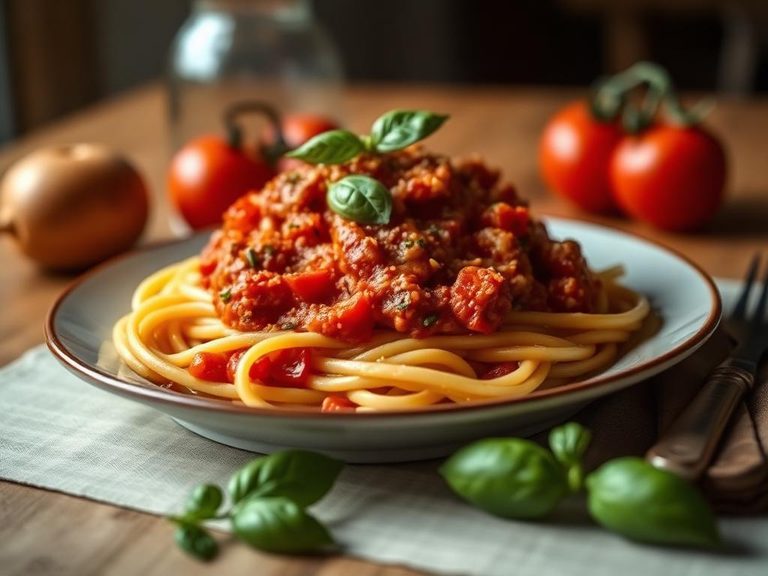
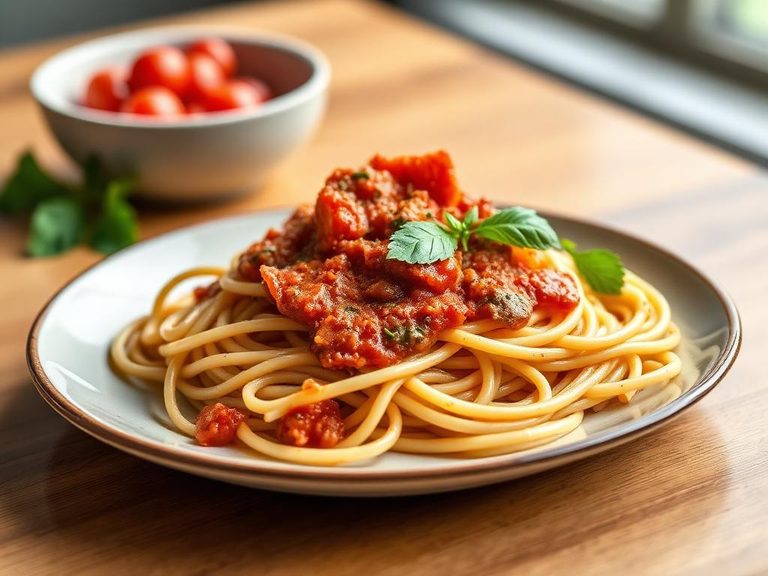
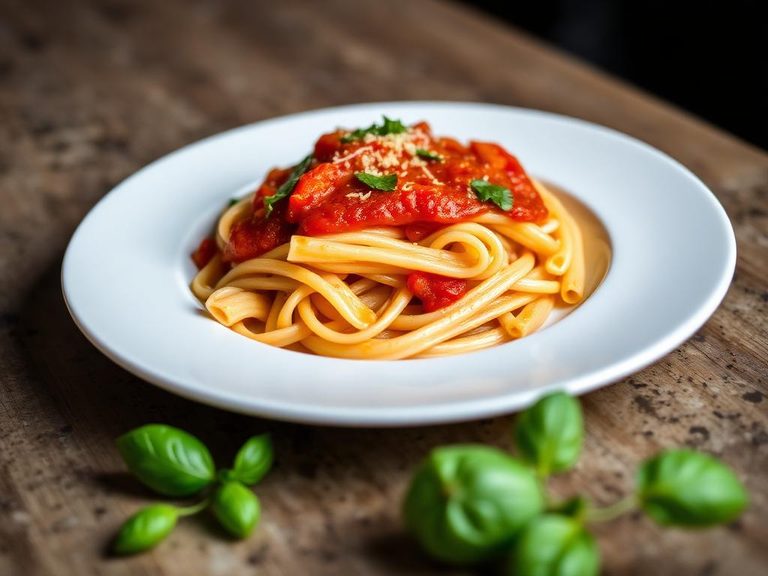
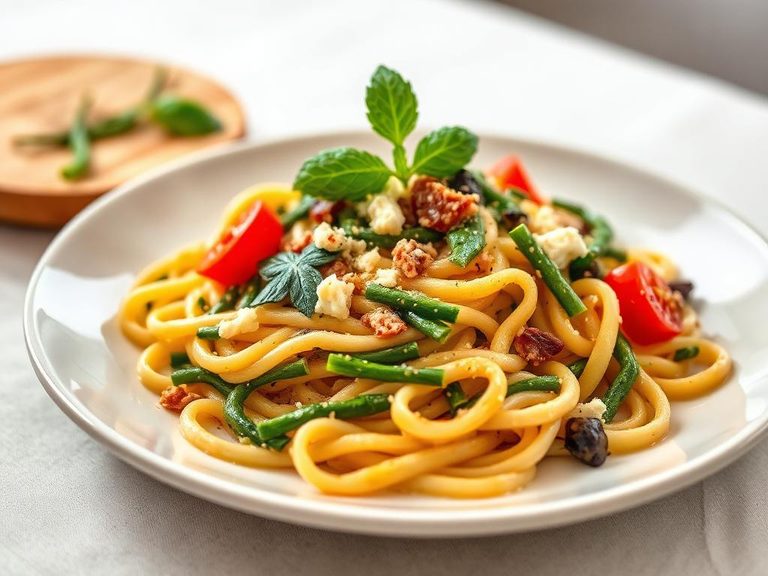
🍽️ Popular dishes
🌍 Where it's eaten
💡 Did you know?
The word 'pasta' comes from the Italian word for 'dough,' but the first known pasta-like food was actually a Chinese noodle made from millet, dating back over 4,000 years.
Full nutrition (USDA data · scales with serving)
| Water | 74.1 g |
| Energy | 102 kcal |
| Protein | 3.8 g |
| Total lipid (fat) | 1.6 g |
| Carbohydrate, by difference | 19.5 g |
| Fiber, total dietary | 2.9 g |
| Total Sugars | 3.0 g |
| Calcium, Ca | 20.0 mg |
| Iron, Fe | 1.3 mg |
| Magnesium, Mg | 37.0 mg |
| Phosphorus, P | 82.0 mg |
| Potassium, K | 203 mg |
| Sodium, Na | 204 mg |
| Zinc, Zn | 0.79 mg |
| Copper, Cu | 0.16 mg |
| Selenium, Se | 19.5 ug |
| Vitamin C, total ascorbic acid | 1.0 mg |
| Thiamin | 0.09 mg |
| Riboflavin | 0.08 mg |
| Niacin | 3.5 mg |
| Vitamin B-6 | 0.13 mg |
| Folate, total | 17.0 ug |
| Folic acid | 0.00 ug |
| Folate, food | 17.0 ug |
| Folate, DFE | 17.0 ug |
| Choline, total | 10.0 mg |
| Vitamin B-12 | 0.00 ug |
| Vitamin B-12, added | 0.00 ug |
| Vitamin A, RAE | 15.0 ug |
| Retinol | 0.00 ug |
| Carotene, beta | 189 ug |
| Carotene, alpha | 0.00 ug |
| Cryptoxanthin, beta | 0.00 ug |
| Lycopene | 6115 ug |
| Lutein + zeaxanthin | 140 ug |
| Vitamin E (alpha-tocopherol) | 1.3 mg |
| Vitamin E, added | 0.00 mg |
| Vitamin D (D2 + D3) | 0.00 ug |
| Vitamin K (phylloquinone) | 7.0 ug |
| Alcohol, ethyl | 0.00 g |
| Caffeine | 0.00 mg |
| Theobromine | 0.00 mg |
Fat & fatty acid profile (per 100g)
| Fatty acids, total saturated | 0.21 g |
| SFA 4:0 | 0.00 g |
| SFA 6:0 | 0.00 g |
| SFA 8:0 | 0.00 g |
| SFA 10:0 | 0.00 g |
| SFA 12:0 | 0.00 g |
| SFA 14:0 | 0.00 g |
| SFA 16:0 | 0.16 g |
| SFA 18:0 | 0.03 g |
| Fatty acids, total monounsaturated | 0.27 g |
| MUFA 16:1 | 0.00 g |
| MUFA 18:1 | 0.26 g |
| MUFA 20:1 | 0.01 g |
| MUFA 22:1 | 0.00 g |
| Fatty acids, total polyunsaturated | 0.54 g |
| PUFA 18:2 | 0.49 g |
| PUFA 18:3 | 0.06 g |
| PUFA 18:4 | 0.00 g |
| PUFA 20:4 | 0.00 g |
| PUFA 20:5 n-3 (EPA) | 0.00 g |
| PUFA 22:5 n-3 (DPA) | 0.00 g |
| PUFA 22:6 n-3 (DHA) | 0.00 g |
| Cholesterol | 1.0 mg |
Amino acid profile (per 100g)
Estimated from Restaurant, Italian, chicken parmesan without pasta — USDA does not publish this profile for Pasta.
| Tryptophan | 0.20 g |
| Threonine | 0.66 g |
| Isoleucine | 0.72 g |
| Leucine | 1.3 g |
| Lysine | 1.3 g |
| Methionine | 0.41 g |
| Cystine | 0.20 g |
| Phenylalanine | 1.1 g |
| Tyrosine | 0.53 g |
| Valine | 0.81 g |
| Arginine | 0.93 g |
| Histidine | 0.50 g |
| Alanine | 0.79 g |
| Aspartic acid | 1.4 g |
| Glutamic acid | 2.8 g |
| Glycine | 0.61 g |
| Proline | 1.3 g |
| Serine | 0.70 g |
| Hydroxyproline | 0.04 g |
FAQ
Is whole grain pasta healthier than regular pasta?
Yes, whole grain pasta retains the bran and germ, providing more fiber, vitamins, and minerals than refined pasta, which can help with digestion and blood sugar control.
Can I make this dish gluten-free?
Absolutely. Use gluten-free pasta made from rice, corn, or legumes, and ensure the tomato sauce is free from gluten-containing additives.
How can I increase the protein content?
Add lean proteins like grilled chicken, turkey, or beans, or stir in a handful of nuts or seeds for an extra protein boost.
Nutrient density (calculated · NRF9.3)
Nutrient Rich Foods index: beneficial nutrients (protein, fiber, vitamins, minerals) minus saturated fat, added sugar & sodium, per 100 kcal.
NRF9.3 index — Fulgoni, Keast & Drewnowski, 2009. Computed from USDA nutrients.
Weight-loss friendliness (composite index)
Energy density 1.02 kcal/g · 15% calories from protein · 2.9 g fiber · 3.0 g sugar per 100 g.
Composite of energy density (Rolls et al., 1999), protein & fiber satiety, minus sugar. A calculated heuristic — ranks satiety-per-calorie, not a clinical measure.
Dietary load (calculated from USDA values)
Potential renal acid load. Positive = acid-forming, negative = alkaline-forming.
Sodium-to-potassium ratio: 1.00 (lower is better — aim for ≤ 1)
Sodium:potassium per WHO potassium guidance. Computed from USDA nutrients.