

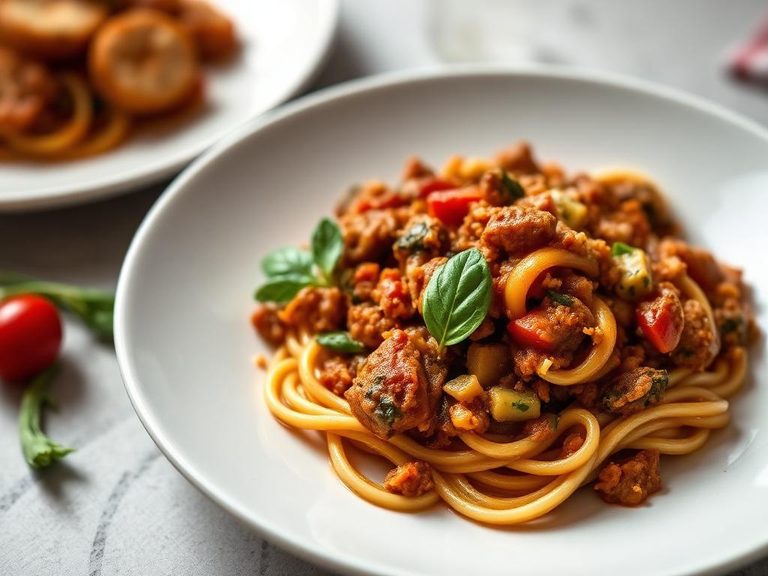
Pasta, whole grain, with tomato-based sauce and added vegetables, home recipe
Common food
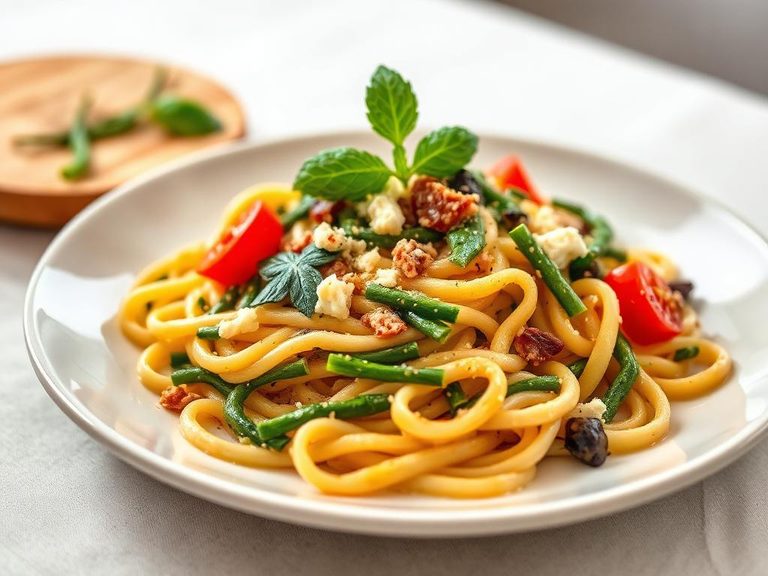
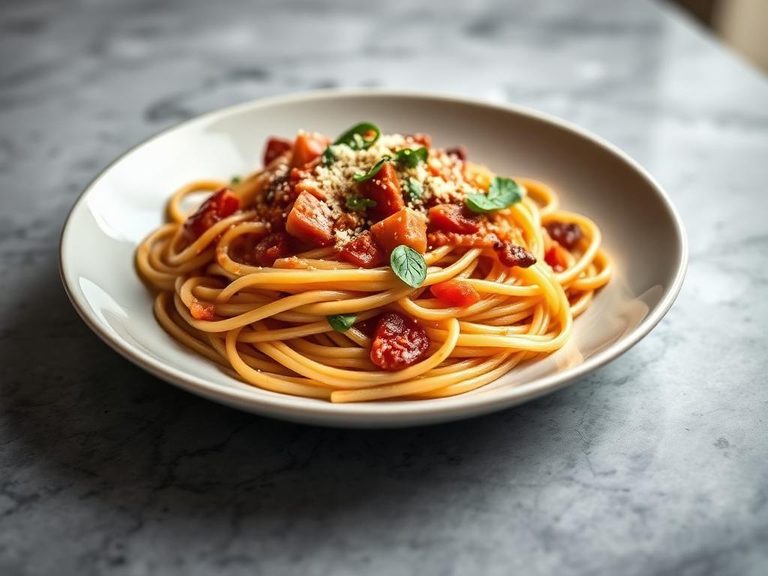
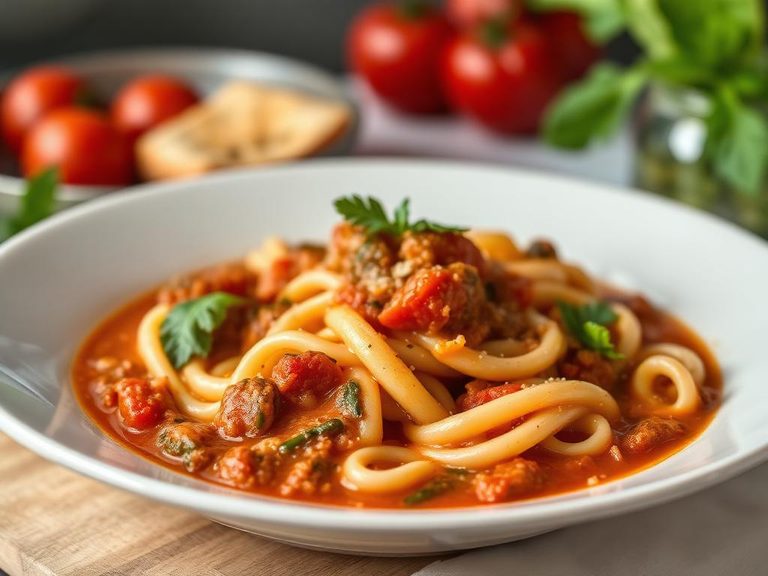
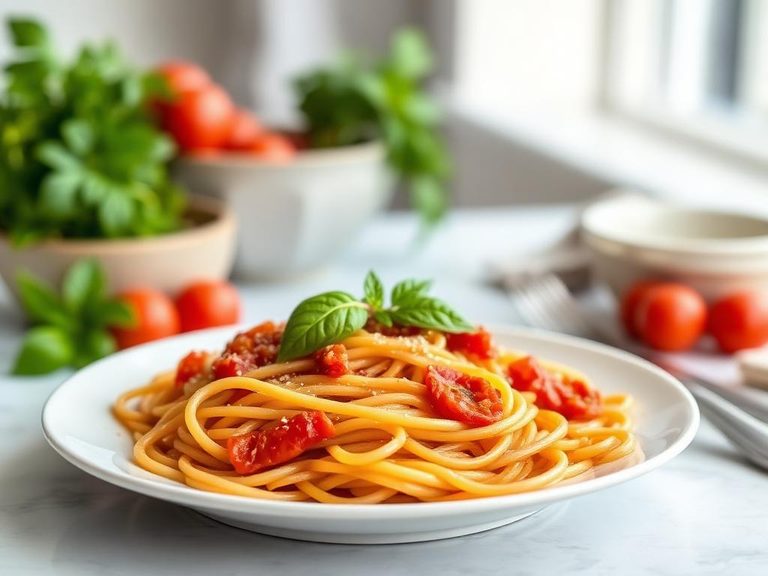
This is a comforting, home-cooked bowl of whole wheat pasta tossed in a vibrant, vegetable-packed tomato sauce. The whole grain pasta offers a satisfying, slightly chewy texture and nutty flavor, while the sauce provides a sweet and savory depth. It's a nutritionally balanced meal, delivering fiber and plant-based protein in a relatively low-calorie package.
Calorie split: 15% protein · 73% carbs · 13% fat
↓ Full nutrition💚 Why it's loved
People adore it for its comforting, familiar taste and incredible versatility—it's a perfect canvas for seasonal vegetables and herbs. It represents the heart of home cooking, offering a quick, satisfying, and nutritious meal that feels both wholesome and indulgent.
⚠️ Watch-outs & how to enjoy it better
The whole grain pasta can be dense for some palates, and the meal's carbohydrate content may cause blood sugar spikes if not balanced. To counteract this, pair it with a side of lean protein like chicken or beans, and ensure the sauce includes plenty of non-starchy vegetables to increase fiber and slow digestion.
Key benefits
- High in dietary fiber for digestive health and satiety
- Good source of plant-based protein from whole grains and vegetables
- Rich in complex carbohydrates for sustained energy release
- Contains vitamins and antioxidants from the tomato and vegetable sauce
🍽️ Popular dishes
🌍 Where it's eaten
💡 Did you know?
The whole grain pasta in this dish retains the bran and germ of the wheat kernel, which are removed in refined pasta, giving it up to three times more fiber.
Full nutrition (USDA data · scales with serving)
| Water | 74.6 g |
| Energy | 99.0 kcal |
| Protein | 3.8 g |
| Total lipid (fat) | 1.5 g |
| Carbohydrate, by difference | 19.2 g |
| Fiber, total dietary | 2.9 g |
| Total Sugars | 2.8 g |
| Calcium, Ca | 18.0 mg |
| Iron, Fe | 1.2 mg |
| Magnesium, Mg | 36.0 mg |
| Phosphorus, P | 85.0 mg |
| Potassium, K | 202 mg |
| Sodium, Na | 157 mg |
| Zinc, Zn | 0.81 mg |
| Copper, Cu | 0.17 mg |
| Selenium, Se | 20.2 ug |
| Vitamin C, total ascorbic acid | 5.8 mg |
| Thiamin | 0.10 mg |
| Riboflavin | 0.10 mg |
| Niacin | 3.3 mg |
| Vitamin B-6 | 0.13 mg |
| Folate, total | 19.0 ug |
| Folic acid | 0.00 ug |
| Folate, food | 19.0 ug |
| Folate, DFE | 19.0 ug |
| Choline, total | 9.8 mg |
| Vitamin B-12 | 0.00 ug |
| Vitamin B-12, added | 0.00 ug |
| Vitamin A, RAE | 16.0 ug |
| Retinol | 0.00 ug |
| Carotene, beta | 190 ug |
| Carotene, alpha | 1.0 ug |
| Cryptoxanthin, beta | 11.0 ug |
| Lycopene | 4676 ug |
| Lutein + zeaxanthin | 177 ug |
| Vitamin E (alpha-tocopherol) | 1.1 mg |
| Vitamin E, added | 0.00 mg |
| Vitamin D (D2 + D3) | 0.00 ug |
| Vitamin K (phylloquinone) | 5.9 ug |
| Alcohol, ethyl | 0.00 g |
| Caffeine | 0.00 mg |
| Theobromine | 0.00 mg |
Fat & fatty acid profile (per 100g)
| Fatty acids, total saturated | 0.20 g |
| SFA 4:0 | 0.00 g |
| SFA 6:0 | 0.00 g |
| SFA 8:0 | 0.00 g |
| SFA 10:0 | 0.00 g |
| SFA 12:0 | 0.00 g |
| SFA 14:0 | 0.00 g |
| SFA 16:0 | 0.15 g |
| SFA 18:0 | 0.03 g |
| Fatty acids, total monounsaturated | 0.23 g |
| MUFA 16:1 | 0.00 g |
| MUFA 18:1 | 0.22 g |
| MUFA 20:1 | 0.01 g |
| MUFA 22:1 | 0.00 g |
| Fatty acids, total polyunsaturated | 0.50 g |
| PUFA 18:2 | 0.45 g |
| PUFA 18:3 | 0.05 g |
| PUFA 18:4 | 0.00 g |
| PUFA 20:4 | 0.00 g |
| PUFA 20:5 n-3 (EPA) | 0.00 g |
| PUFA 22:5 n-3 (DPA) | 0.00 g |
| PUFA 22:6 n-3 (DHA) | 0.00 g |
| Cholesterol | 1.0 mg |
Amino acid profile (per 100g)
Estimated from Restaurant, Italian, chicken parmesan without pasta — USDA does not publish this profile for Pasta.
| Tryptophan | 0.20 g |
| Threonine | 0.66 g |
| Isoleucine | 0.72 g |
| Leucine | 1.3 g |
| Lysine | 1.3 g |
| Methionine | 0.41 g |
| Cystine | 0.20 g |
| Phenylalanine | 1.1 g |
| Tyrosine | 0.53 g |
| Valine | 0.81 g |
| Arginine | 0.93 g |
| Histidine | 0.50 g |
| Alanine | 0.79 g |
| Aspartic acid | 1.4 g |
| Glutamic acid | 2.8 g |
| Glycine | 0.61 g |
| Proline | 1.3 g |
| Serine | 0.70 g |
| Hydroxyproline | 0.04 g |
FAQ
Is this suitable for a vegan diet?
Yes, this home recipe is typically vegan, as it uses plant-based pasta and a tomato-vegetable sauce without animal products. Always check for any added cheese or broth in the specific recipe.
How can I increase the protein content?
You can boost protein by adding legumes like chickpeas or lentils to the sauce, topping with grilled chicken or tofu, or mixing in a scoop of nutritional yeast for a cheesy flavor.
Does the whole grain pasta taste very different from regular pasta?
Yes, it has a more pronounced nutty flavor and a denser, chewier texture. Some people prefer this heartier taste, especially when paired with a robust sauce.
Nutrient density (calculated · NRF9.3)
Nutrient Rich Foods index: beneficial nutrients (protein, fiber, vitamins, minerals) minus saturated fat, added sugar & sodium, per 100 kcal.
NRF9.3 index — Fulgoni, Keast & Drewnowski, 2009. Computed from USDA nutrients.
Weight-loss friendliness (composite index)
Energy density 0.99 kcal/g · 16% calories from protein · 2.9 g fiber · 2.8 g sugar per 100 g.
Composite of energy density (Rolls et al., 1999), protein & fiber satiety, minus sugar. A calculated heuristic — ranks satiety-per-calorie, not a clinical measure.
Dietary load (calculated from USDA values)
Potential renal acid load. Positive = acid-forming, negative = alkaline-forming.
Sodium-to-potassium ratio: 0.78 (lower is better — aim for ≤ 1)
Sodium:potassium per WHO potassium guidance. Computed from USDA nutrients.