

Pasta, whole grain, with tomato-based sauce, poultry, and added vegetables, home recipe
Common food

Photo: Wikipedia
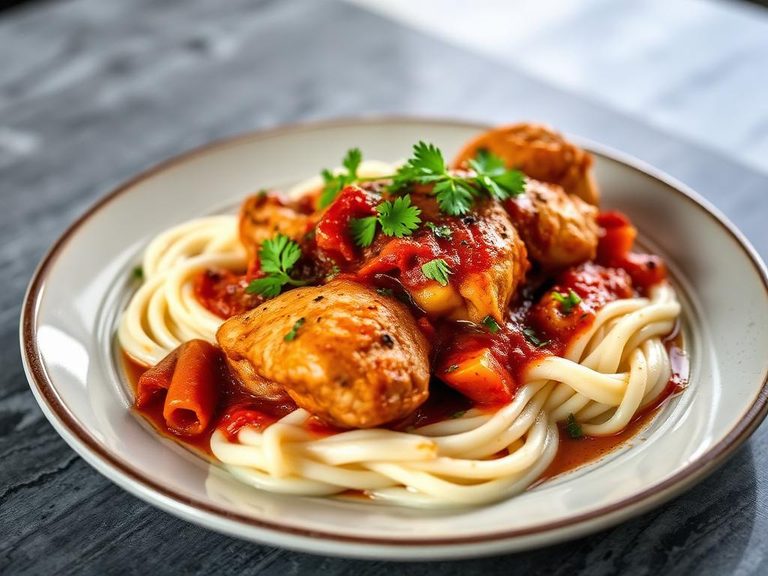
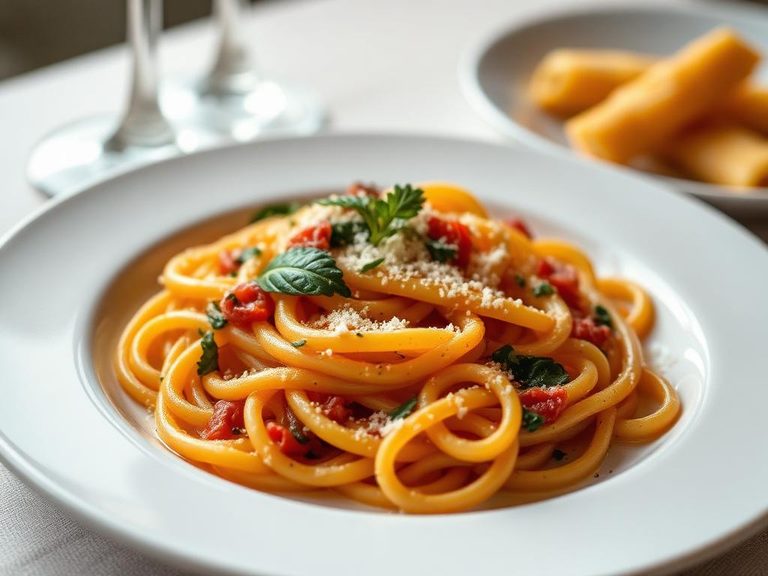
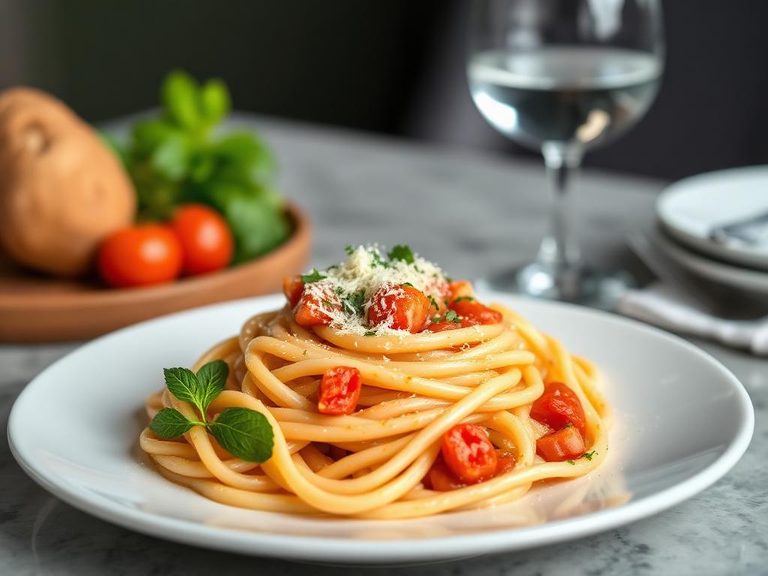
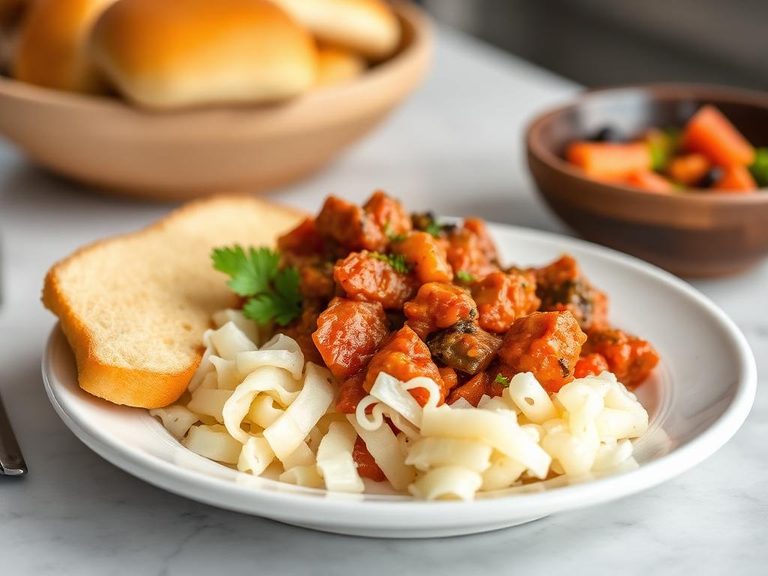
A hearty, home-cooked bowl of whole wheat pasta tossed in a vibrant tomato sauce, tender poultry, and a medley of vegetables. The whole grain pasta offers a satisfying, slightly nutty chew, while the sauce provides a savory, tangy base. It's a nutritionally balanced meal, delivering a solid protein punch and significant fiber in a relatively low-calorie package.
Calorie split: 21% protein · 63% carbs · 16% fat
↓ Full nutrition💚 Why it's loved
People adore this dish for its comforting, familiar flavors and incredible versatility—it's a perfect canvas for seasonal vegetables and favorite herbs. It embodies the Italian-American ideal of a wholesome, satisfying family meal that is both nourishing and delicious.
⚠️ Watch-outs & how to enjoy it better
The tomato sauce can be high in sodium, and the whole grain pasta, while healthy, may cause digestive discomfort for those unaccustomed to high fiber. To mitigate, choose low-sodium sauce or make your own, and increase fiber intake gradually while drinking plenty of water. The dish also contains gluten (from pasta) and may have common allergens depending on the specific recipe.
Key benefits
- High in satiating dietary fiber from whole grain pasta
- Good source of lean protein from poultry
- Rich in vitamins and antioxidants from tomato sauce and vegetables
- Provides complex carbohydrates for sustained energy
- Low in fat, making it a heart-healthy meal option
🍽️ Popular dishes
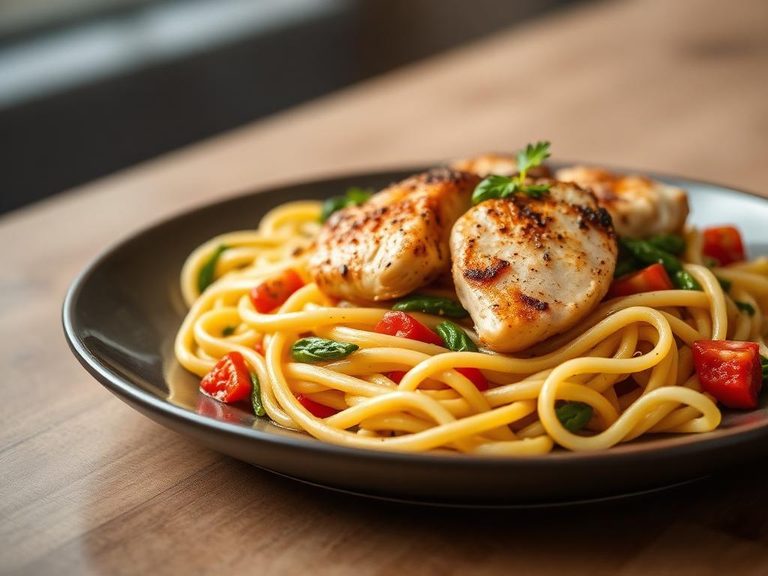
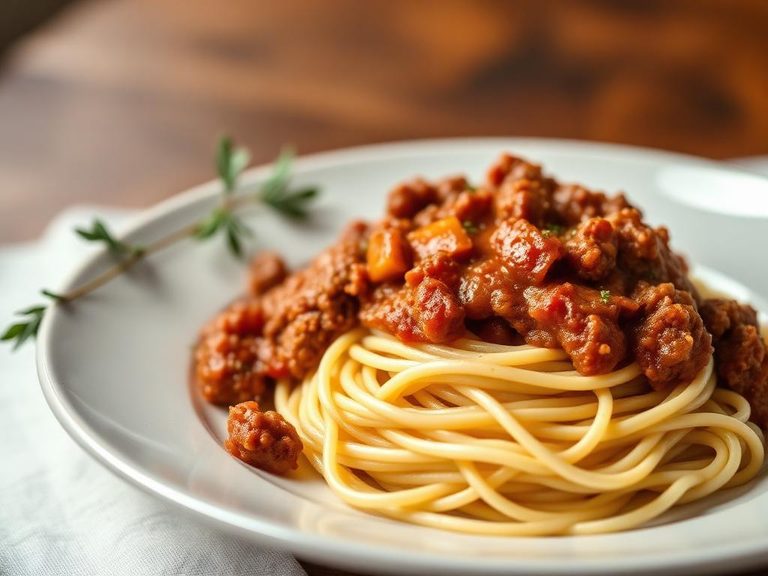
🌍 Where it's eaten
💡 Did you know?
The combination of tomatoes (a New World fruit) with pasta (an Italian staple) is a relatively modern marriage, only becoming widespread in Italy in the late 19th century after tomatoes were finally shed of their poisonous reputation.
Full nutrition (USDA data · scales with serving)
| Water | 72.4 g |
| Energy | 111 kcal |
| Protein | 6.2 g |
| Total lipid (fat) | 2.0 g |
| Carbohydrate, by difference | 18.5 g |
| Fiber, total dietary | 2.7 g |
| Total Sugars | 2.3 g |
| Calcium, Ca | 18.0 mg |
| Iron, Fe | 1.3 mg |
| Magnesium, Mg | 37.0 mg |
| Phosphorus, P | 104 mg |
| Potassium, K | 200 mg |
| Sodium, Na | 161 mg |
| Zinc, Zn | 1.0 mg |
| Copper, Cu | 0.17 mg |
| Selenium, Se | 22.2 ug |
| Vitamin C, total ascorbic acid | 4.7 mg |
| Thiamin | 0.10 mg |
| Riboflavin | 0.11 mg |
| Niacin | 3.8 mg |
| Vitamin B-6 | 0.15 mg |
| Folate, total | 18.0 ug |
| Folic acid | 0.00 ug |
| Folate, food | 18.0 ug |
| Folate, DFE | 18.0 ug |
| Choline, total | 14.8 mg |
| Vitamin B-12 | 0.10 ug |
| Vitamin B-12, added | 0.00 ug |
| Vitamin A, RAE | 15.0 ug |
| Retinol | 2.0 ug |
| Carotene, beta | 154 ug |
| Carotene, alpha | 1.0 ug |
| Cryptoxanthin, beta | 9.0 ug |
| Lycopene | 3799 ug |
| Lutein + zeaxanthin | 153 ug |
| Vitamin E (alpha-tocopherol) | 0.90 mg |
| Vitamin E, added | 0.00 mg |
| Vitamin D (D2 + D3) | 0.00 ug |
| Vitamin K (phylloquinone) | 4.9 ug |
| Alcohol, ethyl | 0.00 g |
| Caffeine | 0.00 mg |
| Theobromine | 0.00 mg |
Fat & fatty acid profile (per 100g)
| Fatty acids, total saturated | 0.35 g |
| SFA 4:0 | 0.00 g |
| SFA 6:0 | 0.00 g |
| SFA 8:0 | 0.00 g |
| SFA 10:0 | 0.00 g |
| SFA 12:0 | 0.00 g |
| SFA 14:0 | 0.01 g |
| SFA 16:0 | 0.27 g |
| SFA 18:0 | 0.07 g |
| Fatty acids, total monounsaturated | 0.44 g |
| MUFA 16:1 | 0.03 g |
| MUFA 18:1 | 0.40 g |
| MUFA 20:1 | 0.01 g |
| MUFA 22:1 | 0.00 g |
| Fatty acids, total polyunsaturated | 0.64 g |
| PUFA 18:2 | 0.58 g |
| PUFA 18:3 | 0.06 g |
| PUFA 18:4 | 0.00 g |
| PUFA 20:4 | 0.01 g |
| PUFA 20:5 n-3 (EPA) | 0.00 g |
| PUFA 22:5 n-3 (DPA) | 0.00 g |
| PUFA 22:6 n-3 (DHA) | 0.00 g |
| Cholesterol | 9.0 mg |
Amino acid profile (per 100g)
Estimated from Restaurant, Italian, chicken parmesan without pasta — USDA does not publish this profile for Pasta.
| Tryptophan | 0.20 g |
| Threonine | 0.66 g |
| Isoleucine | 0.72 g |
| Leucine | 1.3 g |
| Lysine | 1.3 g |
| Methionine | 0.41 g |
| Cystine | 0.20 g |
| Phenylalanine | 1.1 g |
| Tyrosine | 0.53 g |
| Valine | 0.81 g |
| Arginine | 0.93 g |
| Histidine | 0.50 g |
| Alanine | 0.79 g |
| Aspartic acid | 1.4 g |
| Glutamic acid | 2.8 g |
| Glycine | 0.61 g |
| Proline | 1.3 g |
| Serine | 0.70 g |
| Hydroxyproline | 0.04 g |
FAQ
Is this a good meal for weight management?
Yes, it can be. The high fiber and protein content help promote fullness, and at 111 kcal per 100g, a standard 300g serving is around 333 calories, which is moderate for a main meal. Portion control and the ratio of pasta to vegetables are key.
Can I make this ahead of time?
Absolutely. It stores well in the refrigerator for 3-4 days. The flavors often meld and improve overnight. Reheat gently with a splash of water or broth to loosen the sauce.
What's the best way to boost the nutrition further?
Double the volume of vegetables (like spinach, zucchini, or bell peppers) and use lean poultry like chicken breast or turkey. You can also stir in a handful of legumes like white beans for extra fiber and plant protein.
Nutrient density (calculated · NRF9.3)
Nutrient Rich Foods index: beneficial nutrients (protein, fiber, vitamins, minerals) minus saturated fat, added sugar & sodium, per 100 kcal.
NRF9.3 index — Fulgoni, Keast & Drewnowski, 2009. Computed from USDA nutrients.
Weight-loss friendliness (composite index)
Energy density 1.11 kcal/g · 22% calories from protein · 2.7 g fiber · 2.3 g sugar per 100 g.
Composite of energy density (Rolls et al., 1999), protein & fiber satiety, minus sugar. A calculated heuristic — ranks satiety-per-calorie, not a clinical measure.
Dietary load (calculated from USDA values)
Potential renal acid load. Positive = acid-forming, negative = alkaline-forming.
Sodium-to-potassium ratio: 0.81 (lower is better — aim for ≤ 1)
Sodium:potassium per WHO potassium guidance. Computed from USDA nutrients.