

Pasta with tomato-based sauce, poultry, and added vegetables, home recipe
Common food

Photo: Wikipedia
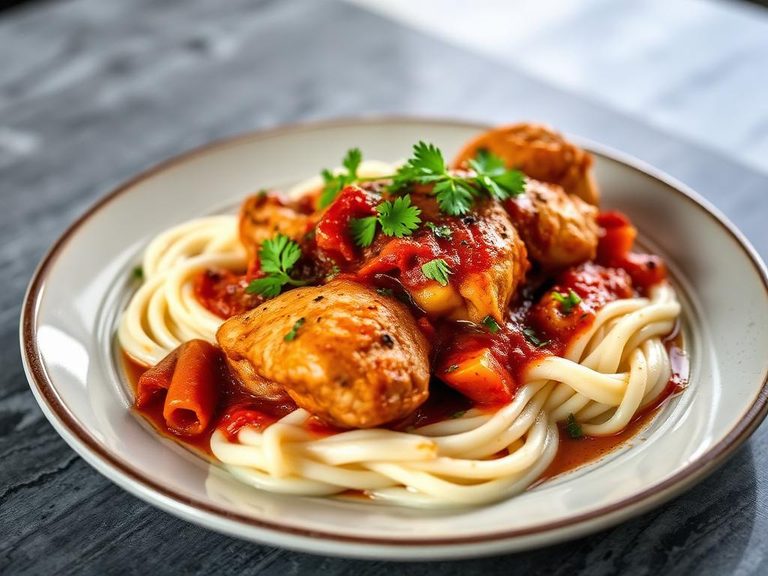
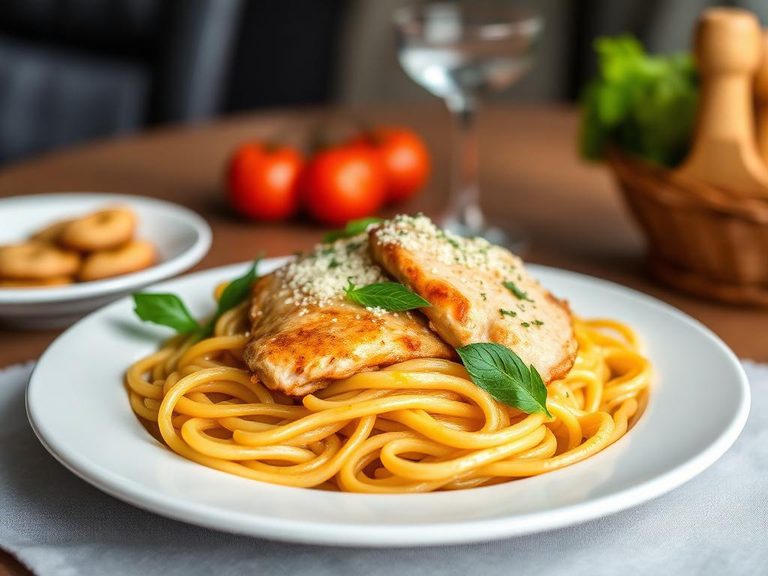
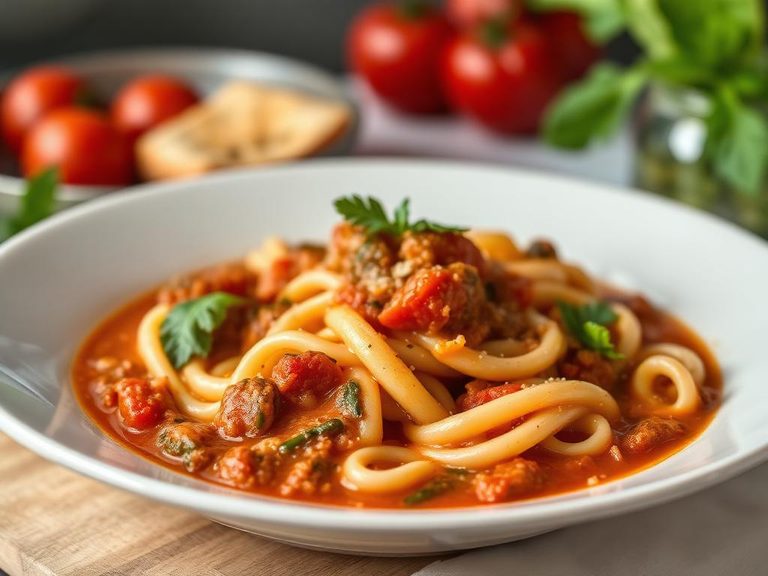
This is a classic home-cooked pasta dish where tender chicken or turkey is simmered in a rich, savory tomato sauce with a medley of vegetables like onions, carrots, and bell peppers. The texture is a comforting mix of al dente pasta, juicy poultry, and a sauce that coats every bite, offering a balance of tangy, sweet, and umami flavors. Nutritionally, it's a lean, high-protein meal with a good dose of fiber from the vegetables, making it a satisfying and balanced plate.
Calorie split: 21% protein · 66% carbs · 13% fat
↓ Full nutrition💚 Why it's loved
People adore this dish for its deep, comforting flavors and incredible versatility—it's a beloved canvas for personal touches, from adding extra garlic to a sprinkle of Parmesan. It's a staple of home cooking across many cultures, evoking feelings of warmth and family meals.
⚠️ Watch-outs & how to enjoy it better
The tomato sauce can be acidic, potentially aggravating heartburn or GERD in some individuals. Pasta is a high-glycemic carbohydrate, which may cause blood-sugar spikes if not balanced properly. Tip: Pair the dish with a side salad and a drizzle of olive oil to add fat and fiber, slowing digestion. Use whole-wheat pasta for a lower-glycemic option.
Key benefits
- High in lean protein from poultry for muscle maintenance.
- Rich in fiber from vegetables and pasta for digestive health.
- Contains lycopene from cooked tomatoes, an antioxidant.
- Low in fat, especially saturated fat.
- Provides complex carbohydrates for sustained energy.
🍽️ Popular dishes
🌍 Where it's eaten
💡 Did you know?
The combination of tomatoes and pasta is a relatively modern invention; tomatoes were brought to Italy from the Americas in the 16th century but were initially grown as ornamental plants before being embraced in the kitchen.
Full nutrition (USDA data · scales with serving)
| Water | 72.6 g |
| Energy | 116 kcal |
| Protein | 6.1 g |
| Total lipid (fat) | 1.6 g |
| Carbohydrate, by difference | 18.9 g |
| Fiber, total dietary | 1.6 g |
| Total Sugars | 2.2 g |
| Calcium, Ca | 15.0 mg |
| Iron, Fe | 1.0 mg |
| Magnesium, Mg | 19.0 mg |
| Phosphorus, P | 68.0 mg |
| Potassium, K | 173 mg |
| Sodium, Na | 160 mg |
| Zinc, Zn | 0.57 mg |
| Copper, Cu | 0.10 mg |
| Selenium, Se | 17.1 ug |
| Vitamin C, total ascorbic acid | 4.7 mg |
| Thiamin | 0.16 mg |
| Riboflavin | 0.13 mg |
| Niacin | 3.0 mg |
| Vitamin B-6 | 0.13 mg |
| Folate, total | 45.0 ug |
| Folic acid | 34.0 ug |
| Folate, food | 11.0 ug |
| Folate, DFE | 69.0 ug |
| Choline, total | 14.8 mg |
| Vitamin B-12 | 0.10 ug |
| Vitamin B-12, added | 0.00 ug |
| Vitamin A, RAE | 15.0 ug |
| Retinol | 2.0 ug |
| Carotene, beta | 153 ug |
| Carotene, alpha | 1.0 ug |
| Cryptoxanthin, beta | 9.0 ug |
| Lycopene | 3799 ug |
| Lutein + zeaxanthin | 108 ug |
| Vitamin E (alpha-tocopherol) | 0.81 mg |
| Vitamin E, added | 0.00 mg |
| Vitamin D (D2 + D3) | 0.00 ug |
| Vitamin K (phylloquinone) | 4.5 ug |
| Alcohol, ethyl | 0.00 g |
| Caffeine | 0.00 mg |
| Theobromine | 0.00 mg |
Fat & fatty acid profile (per 100g)
| Fatty acids, total saturated | 0.32 g |
| SFA 4:0 | 0.00 g |
| SFA 6:0 | 0.00 g |
| SFA 8:0 | 0.00 g |
| SFA 10:0 | 0.00 g |
| SFA 12:0 | 0.00 g |
| SFA 14:0 | 0.01 g |
| SFA 16:0 | 0.24 g |
| SFA 18:0 | 0.06 g |
| Fatty acids, total monounsaturated | 0.42 g |
| MUFA 16:1 | 0.03 g |
| MUFA 18:1 | 0.39 g |
| MUFA 20:1 | 0.01 g |
| MUFA 22:1 | 0.00 g |
| Fatty acids, total polyunsaturated | 0.51 g |
| PUFA 18:2 | 0.45 g |
| PUFA 18:3 | 0.05 g |
| PUFA 18:4 | 0.00 g |
| PUFA 20:4 | 0.01 g |
| PUFA 20:5 n-3 (EPA) | 0.00 g |
| PUFA 22:5 n-3 (DPA) | 0.00 g |
| PUFA 22:6 n-3 (DHA) | 0.00 g |
| Cholesterol | 9.0 mg |
FAQ
Can I make this dish ahead of time?
Yes, the sauce often tastes even better the next day as the flavors meld. Store it in an airtight container in the refrigerator for up to 3 days. Cook the pasta fresh when serving to maintain its texture.
What's the best way to keep the pasta from getting mushy in leftovers?
Store the cooked pasta and the sauce separately. When reheating, warm the sauce and toss it with the pasta just before serving. A splash of pasta water can help re-coat the noodles.
How can I boost the vegetable content without changing the flavor too much?
Finely grate carrots, zucchini, or mushrooms into the sauce while it simmers—they'll melt in, adding nutrients and sweetness without a noticeable change in texture. You can also stir in fresh spinach at the very end.
Nutrient density (calculated · NRF9.3)
Nutrient Rich Foods index: beneficial nutrients (protein, fiber, vitamins, minerals) minus saturated fat, added sugar & sodium, per 100 kcal.
NRF9.3 index — Fulgoni, Keast & Drewnowski, 2009. Computed from USDA nutrients.
Weight-loss friendliness (composite index)
Energy density 1.16 kcal/g · 21% calories from protein · 1.6 g fiber · 2.2 g sugar per 100 g.
Composite of energy density (Rolls et al., 1999), protein & fiber satiety, minus sugar. A calculated heuristic — ranks satiety-per-calorie, not a clinical measure.
Dietary load (calculated from USDA values)
Potential renal acid load. Positive = acid-forming, negative = alkaline-forming.
Sodium-to-potassium ratio: 0.92 (lower is better — aim for ≤ 1)
Sodium:potassium per WHO potassium guidance. Computed from USDA nutrients.