

Bolognese
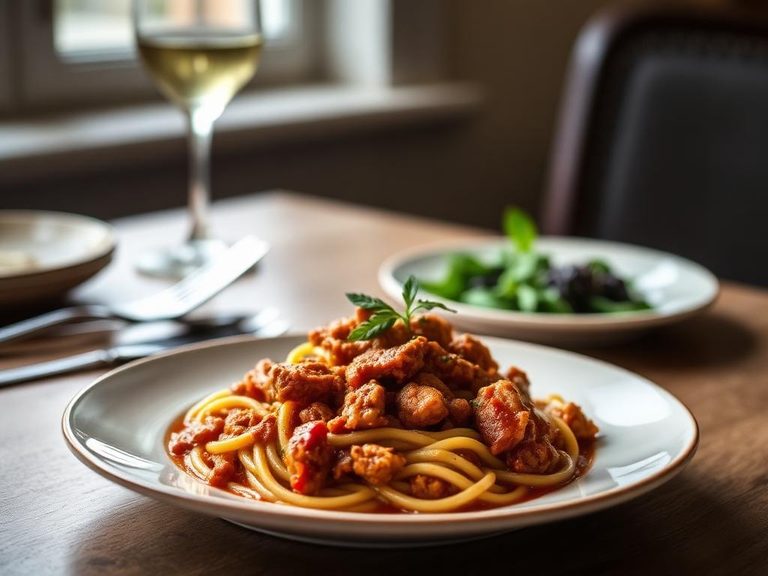
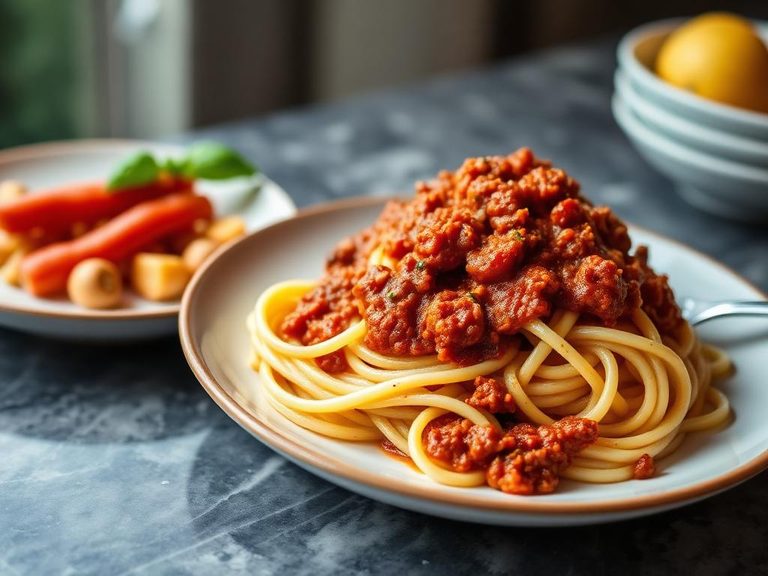
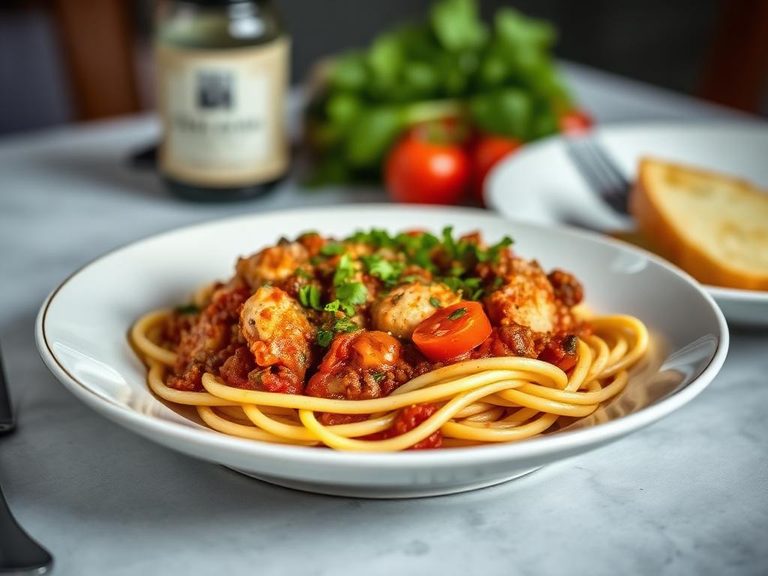
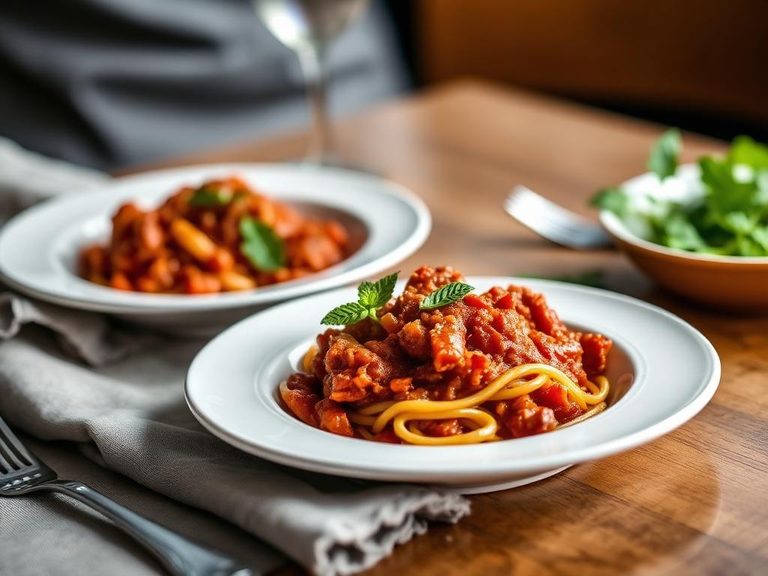
Bolognese is a rich, slow-cooked Italian meat sauce originating from Bologna, traditionally made with ground beef and pork, soffritto (onion, carrot, celery), tomatoes, wine, and milk or cream. The poultry variation substitutes chicken or turkey for the red meat, creating a lighter version that still maintains the sauce's signature depth and complexity. It's typically served with pasta, most famously tagliatelle or spaghetti.
🍽️ Nutrition at a glance
A standard serving (about 1 cup of sauce with pasta) is moderately high in protein from the meat, contains carbohydrates from the pasta and tomatoes, and has a moderate amount of fat depending on the cut of meat and added dairy. It provides a good source of iron, B vitamins, and lycopene from the tomatoes, with a rough calorie ballpark of 400-600 calories per serving.
Nutrition breakdown
| Calories | 250 kcal |
| Protein | 22 g |
| Carbs | 14 g |
| Fat | 12 g |
| Fiber | 3 g |
| Sugar | 6 g |
| Sodium | 650 mg |
| Iron | 3.5 mg |
| Potassium | 480 mg |
| Vitamin A | 120 mcg RAE |
| Vitamin C | 12 mg |
| Calcium | 60 mg |
| Phosphorus | 220 mg |
| Zinc | 3.0 mg |
| Vitamin B12 | 1.5 mcg |
Per 1 cup (240 g) · estimated, varies by recipe
💡 What's interesting
The traditional Bolognese recipe is protected by the Italian Academy of Cuisine and specifies exact ingredients and methods, while the poultry variation represents a modern, health-conscious adaptation that has become popular worldwide. Nutritionally, using poultry reduces saturated fat and cholesterol while maintaining high protein content, making it a heart-healthier twist on a classic comfort food.
🍽️ Related dishes


AI estimate may be inaccurate · Terms