

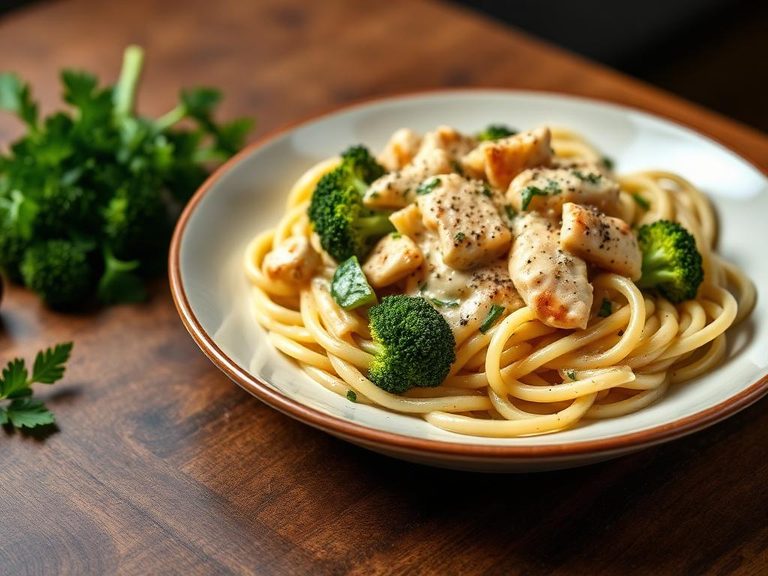
Pasta, whole grain, with cream sauce, poultry, and added vegetables, home recipe
Common food

Photo: Wikipedia
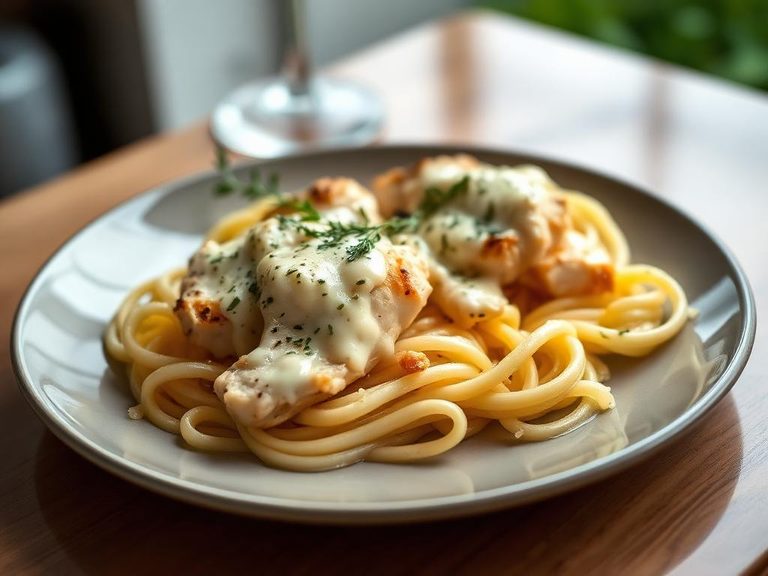
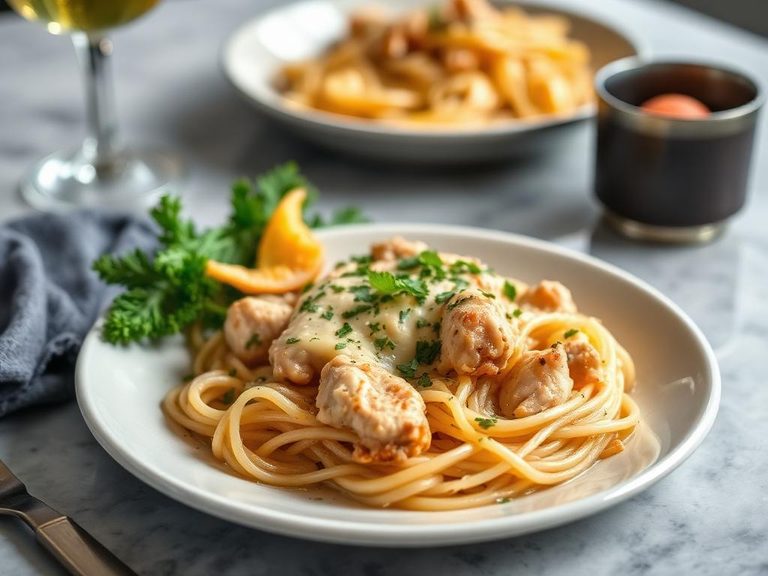
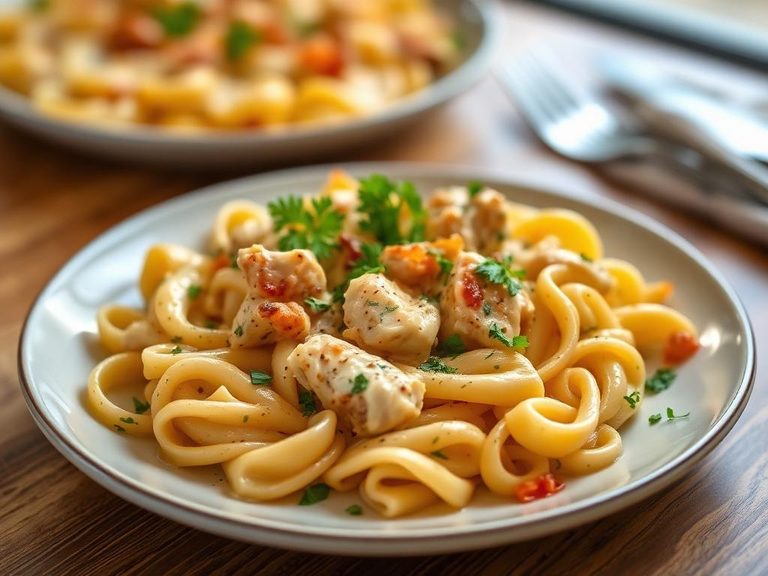
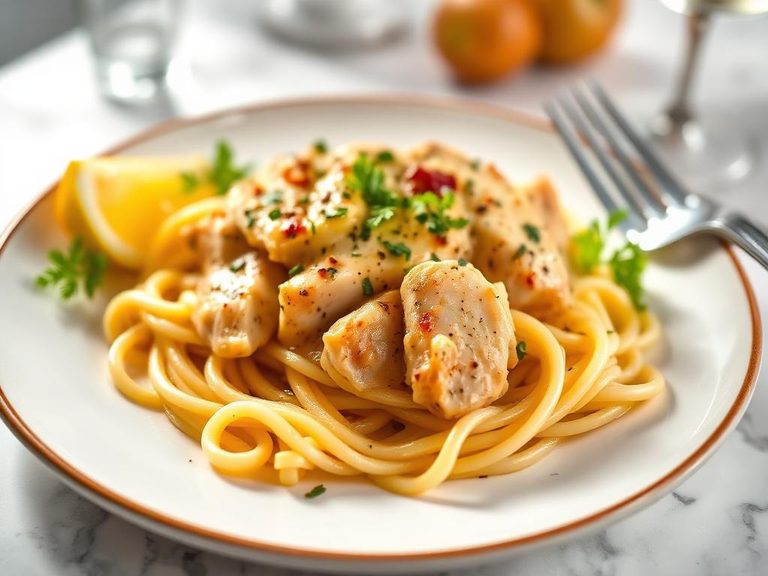
This is a comforting, home-style pasta dish featuring whole-grain noodles coated in a rich, velvety cream sauce, studded with tender poultry and vibrant vegetables. The whole-grain pasta provides a satisfying, slightly nutty chew, while the cream sauce adds a luxurious, savory richness. Nutritionally, it offers a balanced profile with a good protein content and moderate calories, making it a hearty yet mindful meal.
Calorie split: 17% protein · 45% carbs · 37% fat
↓ Full nutrition💚 Why it's loved
People love this dish for its comforting, familiar flavors and the satisfying combination of creamy sauce, tender chicken, and hearty pasta. It's incredibly versatile, allowing for endless variations with different vegetables and seasonings, making it a beloved staple in many home kitchens.
⚠️ Watch-outs & how to enjoy it better
The cream sauce can be high in saturated fat and sodium, which may be a concern for those watching their heart health or blood pressure. To counteract this, consider using a lighter cream (like half-and-half) or a Greek yogurt base, and be mindful of portion sizes. Also, if using store-bought sauce, check labels for added sugars and preservatives.
Key benefits
- Good source of protein from poultry.
- Provides dietary fiber from whole-grain pasta.
- Contains vitamins and minerals from added vegetables.
- Balanced macronutrients for sustained energy.
- Comforting and satisfying meal.
🍽️ Popular dishes
🌍 Where it's eaten
💡 Did you know?
The word 'pasta' comes from the Italian word for 'paste' or 'dough', and the first known pasta recipe was found in a 13th-century Italian cookbook, though pasta itself has been eaten for millennia in various forms.
Full nutrition (USDA data · scales with serving)
| Water | 70.0 g |
| Energy | 141 kcal |
| Protein | 6.4 g |
| Total lipid (fat) | 6.1 g |
| Carbohydrate, by difference | 16.6 g |
| Fiber, total dietary | 2.2 g |
| Total Sugars | 0.95 g |
| Calcium, Ca | 29.0 mg |
| Iron, Fe | 1.0 mg |
| Magnesium, Mg | 33.0 mg |
| Phosphorus, P | 109 mg |
| Potassium, K | 116 mg |
| Sodium, Na | 201 mg |
| Zinc, Zn | 1.0 mg |
| Copper, Cu | 0.15 mg |
| Selenium, Se | 22.6 ug |
| Vitamin C, total ascorbic acid | 4.2 mg |
| Thiamin | 0.10 mg |
| Riboflavin | 0.11 mg |
| Niacin | 2.6 mg |
| Vitamin B-6 | 0.10 mg |
| Folate, total | 15.0 ug |
| Folic acid | 0.00 ug |
| Folate, food | 15.0 ug |
| Folate, DFE | 15.0 ug |
| Choline, total | 12.6 mg |
| Vitamin B-12 | 0.12 ug |
| Vitamin B-12, added | 0.00 ug |
| Vitamin A, RAE | 46.0 ug |
| Retinol | 42.0 ug |
| Carotene, beta | 39.0 ug |
| Carotene, alpha | 1.0 ug |
| Cryptoxanthin, beta | 9.0 ug |
| Lycopene | 0.00 ug |
| Lutein + zeaxanthin | 96.0 ug |
| Vitamin E (alpha-tocopherol) | 0.28 mg |
| Vitamin E, added | 0.00 mg |
| Vitamin D (D2 + D3) | 0.20 ug |
| Vitamin K (phylloquinone) | 1.1 ug |
| Alcohol, ethyl | 0.00 g |
| Caffeine | 0.00 mg |
| Theobromine | 0.00 mg |
Fat & fatty acid profile (per 100g)
| Fatty acids, total saturated | 2.9 g |
| SFA 4:0 | 0.10 g |
| SFA 6:0 | 0.08 g |
| SFA 8:0 | 0.05 g |
| SFA 10:0 | 0.11 g |
| SFA 12:0 | 0.13 g |
| SFA 14:0 | 0.42 g |
| SFA 16:0 | 1.4 g |
| SFA 18:0 | 0.46 g |
| Fatty acids, total monounsaturated | 1.3 g |
| MUFA 16:1 | 0.10 g |
| MUFA 18:1 | 1.3 g |
| MUFA 20:1 | 0.01 g |
| MUFA 22:1 | 0.00 g |
| Fatty acids, total polyunsaturated | 0.68 g |
| PUFA 18:2 | 0.56 g |
| PUFA 18:3 | 0.05 g |
| PUFA 18:4 | 0.00 g |
| PUFA 20:4 | 0.01 g |
| PUFA 20:5 n-3 (EPA) | 0.00 g |
| PUFA 22:5 n-3 (DPA) | 0.00 g |
| PUFA 22:6 n-3 (DHA) | 0.00 g |
| Cholesterol | 22.0 mg |
Amino acid profile (per 100g)
Estimated from Restaurant, Italian, chicken parmesan without pasta — USDA does not publish this profile for Pasta.
| Tryptophan | 0.20 g |
| Threonine | 0.66 g |
| Isoleucine | 0.72 g |
| Leucine | 1.3 g |
| Lysine | 1.3 g |
| Methionine | 0.41 g |
| Cystine | 0.20 g |
| Phenylalanine | 1.1 g |
| Tyrosine | 0.53 g |
| Valine | 0.81 g |
| Arginine | 0.93 g |
| Histidine | 0.50 g |
| Alanine | 0.79 g |
| Aspartic acid | 1.4 g |
| Glutamic acid | 2.8 g |
| Glycine | 0.61 g |
| Proline | 1.3 g |
| Serine | 0.70 g |
| Hydroxyproline | 0.04 g |
FAQ
Is this dish suitable for a high-protein diet?
Yes, with 6.39g of protein per 100g, it provides a good amount of protein, especially when paired with poultry, making it a solid choice for a high-protein meal.
Can I make this dish gluten-free?
Absolutely, you can substitute the whole-grain pasta with gluten-free pasta made from rice, corn, or legumes, while keeping the rest of the recipe the same.
How can I reduce the fat content?
To lower the fat, use a lighter cream or milk-based sauce, reduce the amount of butter or oil, and add more vegetables to bulk up the dish without extra calories.
Nutrient density (calculated · NRF9.3)
Nutrient Rich Foods index: beneficial nutrients (protein, fiber, vitamins, minerals) minus saturated fat, added sugar & sodium, per 100 kcal.
NRF9.3 index — Fulgoni, Keast & Drewnowski, 2009. Computed from USDA nutrients.
Weight-loss friendliness (composite index)
Energy density 1.41 kcal/g · 18% calories from protein · 2.2 g fiber · 0.9 g sugar per 100 g.
Composite of energy density (Rolls et al., 1999), protein & fiber satiety, minus sugar. A calculated heuristic — ranks satiety-per-calorie, not a clinical measure.
Dietary load (calculated from USDA values)
Potential renal acid load. Positive = acid-forming, negative = alkaline-forming.
Sodium-to-potassium ratio: 1.73 (lower is better — aim for ≤ 1)
Sodium:potassium per WHO potassium guidance. Computed from USDA nutrients.