

Nuts, chestnuts, european, roasted
Whole food · Nut and Seed Products

Photo: Wikipedia
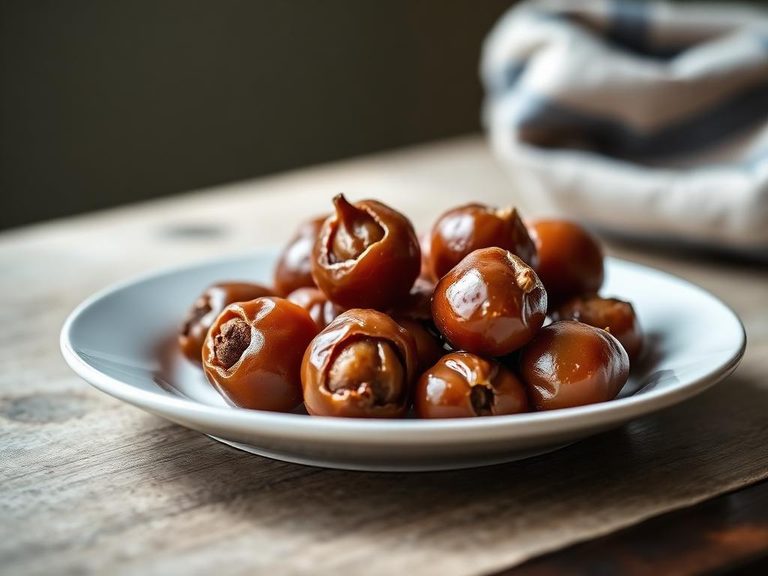
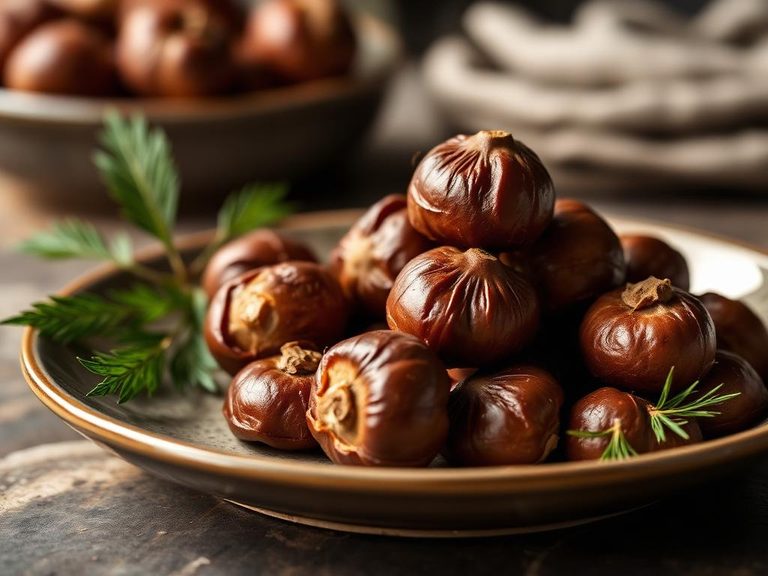
Roasted European chestnuts are the sweet, starchy gems of the nut world, offering a tender, almost creamy texture and a deep, nutty-sweet flavor distinct from all other nuts. Nutritionally, they are a standout for their high carbohydrate content and significant dietary fiber, providing a satisfying, energy-dense snack. Unlike most nuts, they are remarkably low in fat, making them a unique, plant-based source of complex carbs.
Calorie split: 5% protein · 87% carbs · 8% fat
↓ Full nutrition💚 Why it's loved
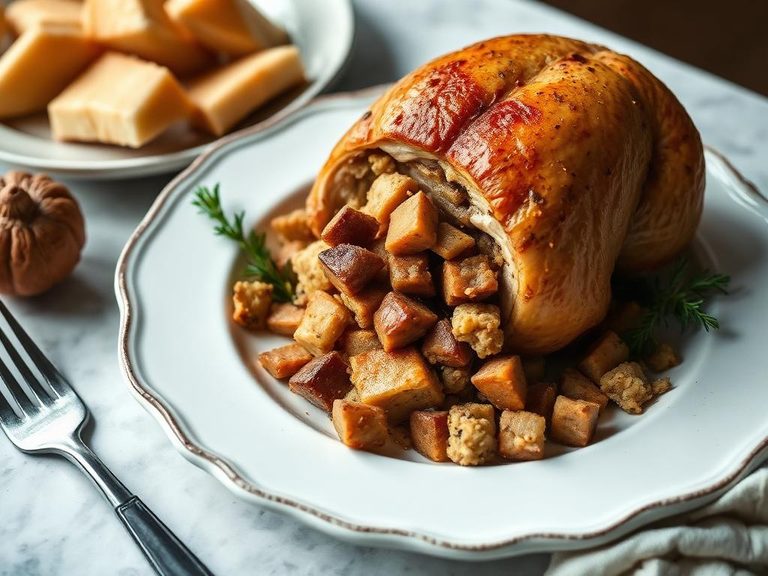
People love roasted chestnuts for their warm, comforting, and subtly sweet flavor that evokes autumn and winter traditions. Their soft, floury texture makes them a versatile ingredient in both savory and sweet dishes, from stuffings to desserts.
⚠️ Watch-outs & how to enjoy it better
Their high carbohydrate and sugar content can cause blood-sugar spikes, so portion control is key for those monitoring glucose levels. They also contain oxalates, which may be a concern for individuals prone to certain kidney stones. To counteract, pair with a source of protein or healthy fat (like a piece of cheese) to slow sugar absorption, and enjoy in moderation.
Key benefits
- Excellent source of dietary fiber for digestive health
- Naturally low in fat compared to other nuts
- Provides a good source of complex carbohydrates for sustained energy
- Contains vitamin C, unusual for a nut
- Rich in minerals like manganese and copper
🍽️ Popular dishes

🌍 Where it's eaten
💡 Did you know?
Unlike most nuts, chestnuts are primarily composed of starch, making them nutritionally closer to a grain or potato than a typical high-fat nut like an almond or walnut.
Full nutrition (USDA data · scales with serving)
| Water | 40.5 g |
| Energy | 245 kcal |
| Energy | 1025 kj |
| Protein | 3.2 g |
| Total lipid (fat) | 2.2 g |
| Ash | 1.2 g |
| Carbohydrate, by difference | 53.0 g |
| Fiber, total dietary | 5.1 g |
| Total Sugars | 10.6 g |
| Calcium, Ca | 29.0 mg |
| Iron, Fe | 0.91 mg |
| Magnesium, Mg | 33.0 mg |
| Phosphorus, P | 107 mg |
| Potassium, K | 592 mg |
| Sodium, Na | 2.0 mg |
| Zinc, Zn | 0.57 mg |
| Copper, Cu | 0.51 mg |
| Manganese, Mn | 1.2 mg |
| Selenium, Se | 1.2 ug |
| Vitamin C, total ascorbic acid | 26.0 mg |
| Thiamin | 0.24 mg |
| Riboflavin | 0.17 mg |
| Niacin | 1.3 mg |
| Pantothenic acid | 0.55 mg |
| Vitamin B-6 | 0.50 mg |
| Folate, total | 70.0 ug |
| Folic acid | 0.00 ug |
| Folate, food | 70.0 ug |
| Folate, DFE | 70.0 ug |
| Choline, total | 1.5 mg |
| Vitamin B-12 | 0.00 ug |
| Vitamin B-12, added | 0.00 ug |
| Vitamin A, RAE | 1.0 ug |
| Retinol | 0.00 ug |
| Carotene, beta | 14.0 ug |
| Carotene, alpha | 0.00 ug |
| Cryptoxanthin, beta | 0.00 ug |
| Vitamin A, IU | 24.0 iu |
| Lycopene | 0.00 ug |
| Lutein + zeaxanthin | 13.0 ug |
| Vitamin E (alpha-tocopherol) | 0.50 mg |
| Vitamin E, added | 0.00 mg |
| Vitamin D (D2 + D3), International Units | 0.00 iu |
| Vitamin D (D2 + D3) | 0.00 ug |
| Vitamin K (phylloquinone) | 7.8 ug |
| Alcohol, ethyl | 0.00 g |
| Caffeine | 0.00 mg |
| Theobromine | 0.00 mg |
Fat & fatty acid profile (per 100g)
| Fatty acids, total saturated | 0.41 g |
| SFA 4:0 | 0.00 g |
| SFA 6:0 | 0.00 g |
| SFA 8:0 | 0.00 g |
| SFA 10:0 | 0.00 g |
| SFA 12:0 | 0.00 g |
| SFA 14:0 | 0.01 g |
| SFA 16:0 | 0.37 g |
| SFA 18:0 | 0.02 g |
| Fatty acids, total monounsaturated | 0.76 g |
| MUFA 16:1 | 0.02 g |
| MUFA 18:1 | 0.73 g |
| MUFA 20:1 | 0.01 g |
| MUFA 22:1 | 0.00 g |
| Fatty acids, total polyunsaturated | 0.87 g |
| PUFA 18:2 | 0.78 g |
| PUFA 18:3 | 0.09 g |
| PUFA 18:4 | 0.00 g |
| PUFA 20:4 | 0.00 g |
| PUFA 20:5 n-3 (EPA) | 0.00 g |
| PUFA 22:5 n-3 (DPA) | 0.00 g |
| PUFA 22:6 n-3 (DHA) | 0.00 g |
| Cholesterol | 0.00 mg |
Amino acid profile (per 100g)
| Tryptophan | 0.04 g |
| Threonine | 0.11 g |
| Isoleucine | 0.13 g |
| Leucine | 0.19 g |
| Lysine | 0.19 g |
| Methionine | 0.07 g |
| Cystine | 0.10 g |
| Phenylalanine | 0.13 g |
| Tyrosine | 0.09 g |
| Valine | 0.18 g |
| Arginine | 0.23 g |
| Histidine | 0.09 g |
| Alanine | 0.21 g |
| Aspartic acid | 0.55 g |
| Glutamic acid | 0.41 g |
| Glycine | 0.16 g |
| Proline | 0.17 g |
| Serine | 0.16 g |
FAQ
How do I easily peel roasted chestnuts?
Score an 'X' on the flat side before roasting. The heat causes the shell to curl back at the cut, making them easier to peel while still warm. A kitchen towel can help grip the hot nuts.
Are roasted chestnuts a good snack for athletes?
Yes, their high carbohydrate content makes them an excellent source of quick and sustained energy, ideal for pre- or post-workout fueling, especially when paired with a protein source.
Can I use roasted chestnuts in savory dishes?
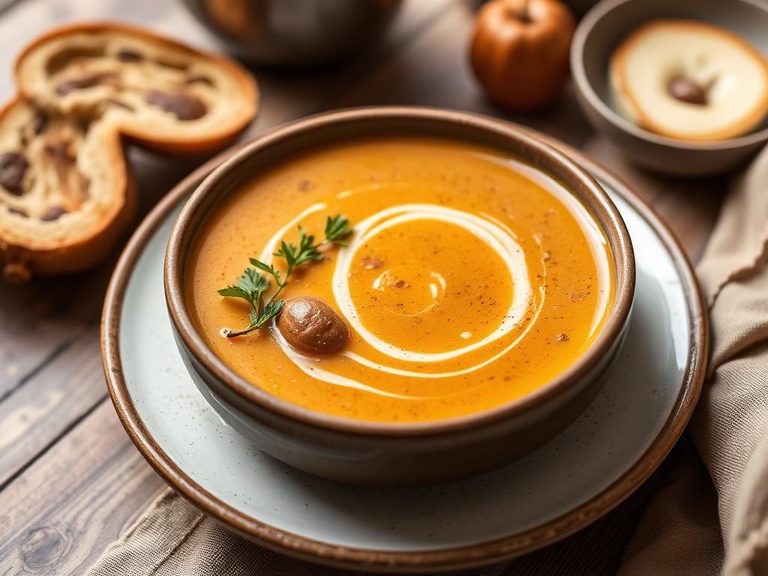
Absolutely. They are a classic ingredient in savory stuffings, risottos, pasta sauces, and soups, adding a rich, earthy sweetness and creamy texture.
Nutrient density (calculated · NRF9.3)
Nutrient Rich Foods index: beneficial nutrients (protein, fiber, vitamins, minerals) minus saturated fat, added sugar & sodium, per 100 kcal.
NRF9.3 index — Fulgoni, Keast & Drewnowski, 2009. Computed from USDA nutrients.
Weight-loss friendliness (composite index)
Energy density 2.45 kcal/g · 5% calories from protein · 5.1 g fiber · 10.6 g sugar per 100 g.
Composite of energy density (Rolls et al., 1999), protein & fiber satiety, minus sugar. A calculated heuristic — ranks satiety-per-calorie, not a clinical measure.
Dietary load (calculated from USDA values)
Potential renal acid load. Positive = acid-forming, negative = alkaline-forming.
Sodium-to-potassium ratio: 0.00 (lower is better — aim for ≤ 1)
Sodium:potassium per WHO potassium guidance. Computed from USDA nutrients.