

Milk, NFS
Common food
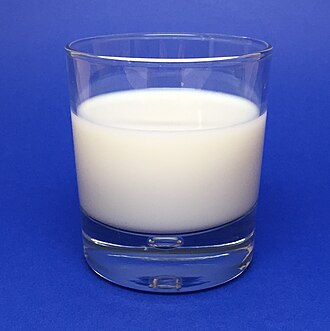
Photo: Wikipedia
Milk, NFS (Not Further Specified) is the fundamental, unadulterated dairy liquid, prized for its creamy, slightly sweet taste and smooth, pourable texture. It serves as a nutritional cornerstone, delivering high-quality protein and essential nutrients in a simple, digestible package. This baseline profile makes it a versatile ingredient and a standalone beverage of choice for millions.
Calorie split: 26% protein · 37% carbs · 37% fat
↓ Full nutrition💚 Why it's loved
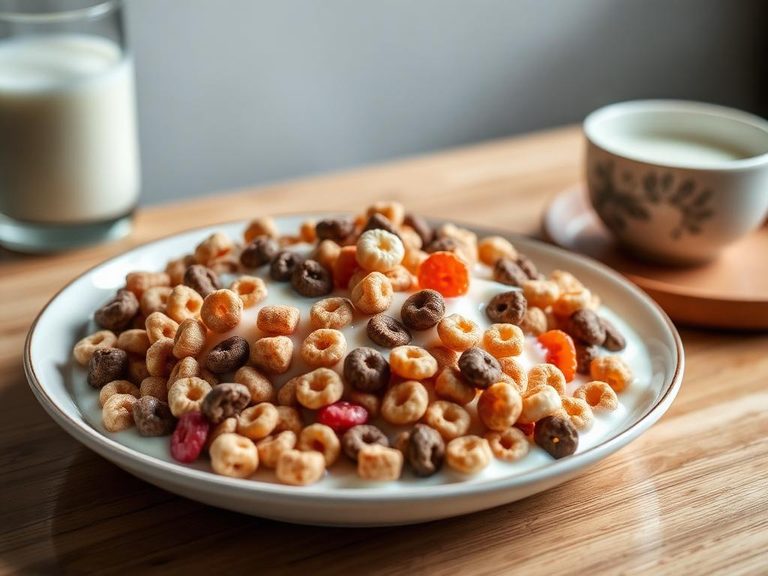
People love milk for its comforting, familiar flavor and unparalleled versatility, seamlessly transitioning from a morning cereal companion to a baking essential. Its cultural significance as a symbol of nourishment and purity is deeply embedded in many societies worldwide.
⚠️ Watch-outs & how to enjoy it better
A common downside is lactose intolerance, which can cause digestive discomfort; choosing lactose-free versions or consuming smaller portions can help. The natural sugars can cause blood sugar spikes in sensitive individuals, so pairing it with fiber-rich foods like oats is advisable. As a common allergen, those with a milk protein allergy must avoid it entirely.
Key benefits
- Excellent source of high-quality, complete protein for muscle maintenance.
- Naturally rich in calcium for bone and dental health.
- Provides essential vitamins like B12 and riboflavin.
- A hydrating beverage with a balanced mix of macros.
- Acts as a foundational ingredient in countless recipes.
🍽️ Popular dishes



🌍 Where it's eaten
💡 Did you know?
The phrase 'don't cry over spilled milk' has a historical counterpart: 'There's no use crying over spilt milk' first appeared in print in a 1659 proverb collection.
Full nutrition (USDA data · scales with serving)
| Water | 88.9 g |
| Energy | 52.0 kcal |
| Protein | 3.3 g |
| Total lipid (fat) | 2.1 g |
| Carbohydrate, by difference | 4.8 g |
| Fiber, total dietary | 0.00 g |
| Total Sugars | 4.9 g |
| Calcium, Ca | 125 mg |
| Iron, Fe | 0.00 mg |
| Magnesium, Mg | 12.0 mg |
| Phosphorus, P | 103 mg |
| Potassium, K | 156 mg |
| Sodium, Na | 39.0 mg |
| Zinc, Zn | 0.43 mg |
| Copper, Cu | 0.00 mg |
| Selenium, Se | 1.9 ug |
| Vitamin C, total ascorbic acid | 0.10 mg |
| Thiamin | 0.06 mg |
| Riboflavin | 0.14 mg |
| Niacin | 0.11 mg |
| Vitamin B-6 | 0.06 mg |
| Folate, total | 1.0 ug |
| Folic acid | 0.00 ug |
| Folate, food | 1.0 ug |
| Folate, DFE | 1.0 ug |
| Choline, total | 17.9 mg |
| Vitamin B-12 | 0.56 ug |
| Vitamin B-12, added | 0.00 ug |
| Vitamin A, RAE | 58.0 ug |
| Retinol | 57.0 ug |
| Carotene, beta | 4.0 ug |
| Carotene, alpha | 0.00 ug |
| Cryptoxanthin, beta | 0.00 ug |
| Lycopene | 0.00 ug |
| Lutein + zeaxanthin | 0.00 ug |
| Vitamin E (alpha-tocopherol) | 0.03 mg |
| Vitamin E, added | 0.00 mg |
| Vitamin D (D2 + D3) | 1.1 ug |
| Vitamin K (phylloquinone) | 0.20 ug |
| Alcohol, ethyl | 0.00 g |
| Caffeine | 0.00 mg |
| Theobromine | 0.00 mg |
Fat & fatty acid profile (per 100g)
| Fatty acids, total saturated | 1.2 g |
| SFA 4:0 | 0.05 g |
| SFA 6:0 | 0.04 g |
| SFA 8:0 | 0.02 g |
| SFA 10:0 | 0.06 g |
| SFA 12:0 | 0.07 g |
| SFA 14:0 | 0.20 g |
| SFA 16:0 | 0.58 g |
| SFA 18:0 | 0.21 g |
| Fatty acids, total monounsaturated | 0.46 g |
| MUFA 16:1 | 0.03 g |
| MUFA 18:1 | 0.47 g |
| MUFA 20:1 | 0.00 g |
| MUFA 22:1 | 0.00 g |
| Fatty acids, total polyunsaturated | 0.07 g |
| PUFA 18:2 | 0.07 g |
| PUFA 18:3 | 0.01 g |
| PUFA 18:4 | 0.00 g |
| PUFA 20:4 | 0.00 g |
| PUFA 20:5 n-3 (EPA) | 0.00 g |
| PUFA 22:5 n-3 (DPA) | 0.00 g |
| PUFA 22:6 n-3 (DHA) | 0.00 g |
| Cholesterol | 9.0 mg |
Amino acid profile (per 100g)
Estimated from Potatoes, mashed, prepared from granules, without milk, whole milk and margarine — USDA does not publish this profile for Milk.
| Tryptophan | 0.02 g |
| Threonine | 0.09 g |
| Isoleucine | 0.11 g |
| Leucine | 0.17 g |
| Lysine | 0.15 g |
| Methionine | 0.04 g |
| Cystine | 0.02 g |
| Phenylalanine | 0.10 g |
| Tyrosine | 0.09 g |
| Valine | 0.13 g |
| Arginine | 0.08 g |
| Histidine | 0.05 g |
| Alanine | 0.07 g |
| Aspartic acid | 0.25 g |
| Glutamic acid | 0.39 g |
| Glycine | 0.05 g |
| Proline | 0.15 g |
| Serine | 0.10 g |
FAQ
What does 'NFS' mean on a nutrition label?
NFS stands for 'Not Further Specified.' It indicates the data is for the generic, base food item without added ingredients or specific preparation details.
Is milk a complete protein?
Yes, cow's milk contains all nine essential amino acids required by the human body, making it a complete protein source.
How does the nutrition differ between whole and skim milk?
Skim milk has virtually no fat, resulting in fewer calories, while whole milk retains its natural fat, providing a creamier texture and fat-soluble vitamins.
Nutrient density (calculated · NRF9.3)
Nutrient Rich Foods index: beneficial nutrients (protein, fiber, vitamins, minerals) minus saturated fat, added sugar & sodium, per 100 kcal.
NRF9.3 index — Fulgoni, Keast & Drewnowski, 2009. Computed from USDA nutrients.
Weight-loss friendliness (composite index)
Energy density 0.52 kcal/g · 26% calories from protein · 0.0 g fiber · 4.9 g sugar per 100 g.
Composite of energy density (Rolls et al., 1999), protein & fiber satiety, minus sugar. A calculated heuristic — ranks satiety-per-calorie, not a clinical measure.
Dietary load (calculated from USDA values)
Potential renal acid load. Positive = acid-forming, negative = alkaline-forming.
Sodium-to-potassium ratio: 0.25 (lower is better — aim for ≤ 1)
Sodium:potassium per WHO potassium guidance. Computed from USDA nutrients.