

Non-dairy milk, NFS
Common food
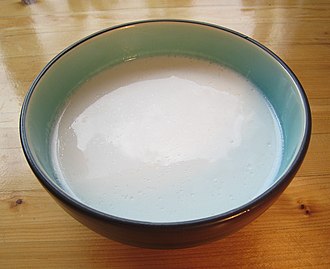
Photo: Wikipedia
Non-dairy milk, NFS (Not Further Specified) is a broad category of plant-based beverages made from sources like soy, almonds, oats, or rice. It typically has a mild, slightly sweet flavor and a smooth, creamy texture similar to dairy milk. Nutritionally, it's a low-calorie option, providing about 31 kcal per 100g, with a modest amount of protein and carbohydrates.
Calorie split: 15% protein · 39% carbs · 46% fat
↓ Full nutrition💚 Why it's loved
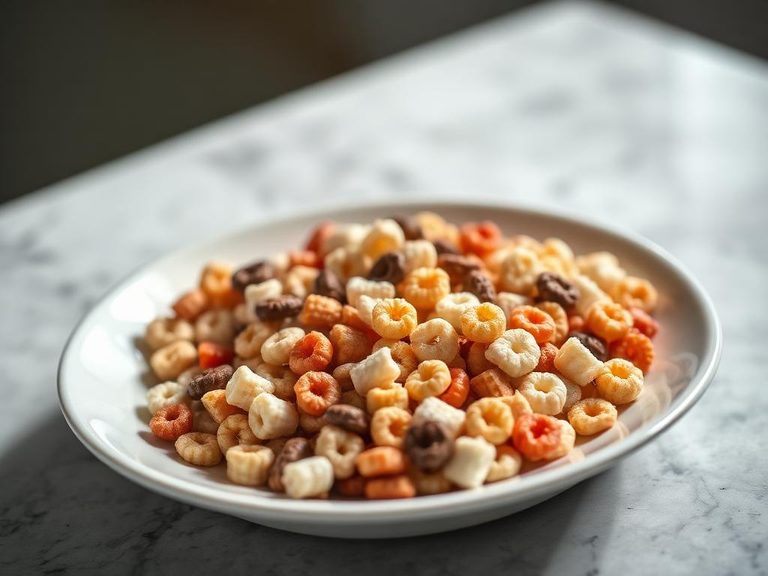
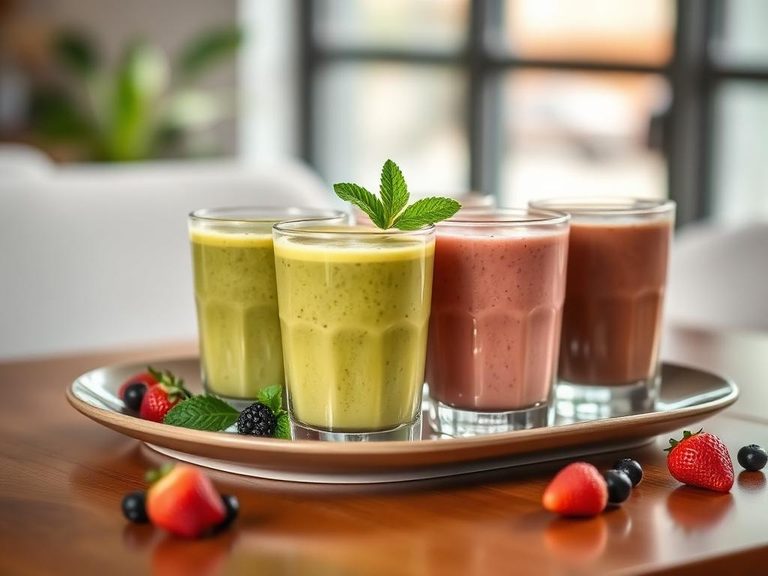
People love it for its versatility as a dairy substitute in coffee, cereal, smoothies, and baking, and for its ability to cater to dietary restrictions and preferences. It's embraced in many cultures as a modern, inclusive staple.
⚠️ Watch-outs & how to enjoy it better
Some varieties can be high in added sugars, which may contribute to blood-sugar spikes if consumed in large amounts. Those with nut allergies should be cautious with almond or cashew-based milks. To counteract sugar spikes, choose unsweetened versions and pair them with protein or healthy fats, like in a smoothie with nuts or seeds.
Key benefits
- Lactose-free and dairy-free alternative
- Often fortified with calcium and vitamin D
- Lower in saturated fat than whole dairy milk
- Suitable for vegan and plant-based diets
- Provides a source of hydration and nutrients
🍽️ Popular dishes


🌍 Where it's eaten
💡 Did you know?
The term 'NFS' (Not Further Specified) is a USDA database code, meaning this entry is a catch-all for any non-dairy milk not listed individually, making it a nutritional 'mystery blend' of the plant-milk world.
Full nutrition (USDA data · scales with serving)
| Water | 93.8 g |
| Energy | 31.0 kcal |
| Protein | 1.1 g |
| Total lipid (fat) | 1.6 g |
| Carbohydrate, by difference | 3.0 g |
| Fiber, total dietary | 0.10 g |
| Total Sugars | 2.0 g |
| Calcium, Ca | 153 mg |
| Iron, Fe | 0.32 mg |
| Magnesium, Mg | 10.0 mg |
| Phosphorus, P | 35.0 mg |
| Potassium, K | 52.0 mg |
| Sodium, Na | 51.0 mg |
| Zinc, Zn | 0.20 mg |
| Copper, Cu | 0.04 mg |
| Selenium, Se | 0.70 ug |
| Vitamin C, total ascorbic acid | 0.00 mg |
| Thiamin | 0.02 mg |
| Riboflavin | 0.04 mg |
| Niacin | 0.10 mg |
| Vitamin B-6 | 0.01 mg |
| Folate, total | 4.0 ug |
| Folic acid | 0.00 ug |
| Folate, food | 4.0 ug |
| Folate, DFE | 4.0 ug |
| Choline, total | 6.8 mg |
| Vitamin B-12 | 0.38 ug |
| Vitamin B-12, added | 0.38 ug |
| Vitamin A, RAE | 35.0 ug |
| Retinol | 35.0 ug |
| Carotene, beta | 0.00 ug |
| Carotene, alpha | 0.00 ug |
| Cryptoxanthin, beta | 0.00 ug |
| Lycopene | 0.00 ug |
| Lutein + zeaxanthin | 3.0 ug |
| Vitamin E (alpha-tocopherol) | 2.1 mg |
| Vitamin E, added | 2.0 mg |
| Vitamin D (D2 + D3) | 1.0 ug |
| Vitamin K (phylloquinone) | 0.90 ug |
| Alcohol, ethyl | 0.00 g |
| Caffeine | 0.00 mg |
| Theobromine | 0.00 mg |
Fat & fatty acid profile (per 100g)
| Fatty acids, total saturated | 0.16 g |
| SFA 4:0 | 0.00 g |
| SFA 6:0 | 0.00 g |
| SFA 8:0 | 0.00 g |
| SFA 10:0 | 0.00 g |
| SFA 12:0 | 0.00 g |
| SFA 14:0 | 0.00 g |
| SFA 16:0 | 0.11 g |
| SFA 18:0 | 0.03 g |
| Fatty acids, total monounsaturated | 0.78 g |
| MUFA 16:1 | 0.01 g |
| MUFA 18:1 | 0.77 g |
| MUFA 20:1 | 0.01 g |
| MUFA 22:1 | 0.00 g |
| Fatty acids, total polyunsaturated | 0.51 g |
| PUFA 18:2 | 0.45 g |
| PUFA 18:3 | 0.06 g |
| PUFA 18:4 | 0.00 g |
| PUFA 20:4 | 0.00 g |
| PUFA 20:5 n-3 (EPA) | 0.00 g |
| PUFA 22:5 n-3 (DPA) | 0.00 g |
| PUFA 22:6 n-3 (DHA) | 0.00 g |
| Cholesterol | 0.00 mg |
FAQ
Is non-dairy milk a good source of protein?
It varies widely by type. Soy milk is a complete protein source, while almond or rice milk are typically very low in protein. Always check the label for protein content.
Can I use it in cooking and baking like regular milk?
Yes, it's a versatile substitute in most recipes, but it may not thicken or brown the same way due to different fat and protein structures. It works best in equal ratios for liquids.
Why does it sometimes separate in hot drinks?
This can happen due to the different proteins and emulsifiers reacting to heat. Using barista-edition versions designed for steaming or shaking the carton well before use can help prevent separation.
Nutrient density (calculated · NRF9.3)
Nutrient Rich Foods index: beneficial nutrients (protein, fiber, vitamins, minerals) minus saturated fat, added sugar & sodium, per 100 kcal.
NRF9.3 index — Fulgoni, Keast & Drewnowski, 2009. Computed from USDA nutrients.
Weight-loss friendliness (composite index)
Energy density 0.31 kcal/g · 15% calories from protein · 0.1 g fiber · 2.0 g sugar per 100 g.
Composite of energy density (Rolls et al., 1999), protein & fiber satiety, minus sugar. A calculated heuristic — ranks satiety-per-calorie, not a clinical measure.
Dietary load (calculated from USDA values)
Potential renal acid load. Positive = acid-forming, negative = alkaline-forming.
Sodium-to-potassium ratio: 0.98 (lower is better — aim for ≤ 1)
Sodium:potassium per WHO potassium guidance. Computed from USDA nutrients.