

Chocolate milk, Nesquik, made with non-dairy milk
Common food

Photo: Wikipedia
A smooth, cocoa-flavored milk alternative that delivers the classic Nesquik chocolate taste without dairy. It's typically made from soy, almond, or oat milk, resulting in a slightly lighter body than traditional chocolate milk. Nutritionally, it's a low-calorie, low-fat beverage with a notable sugar content relative to its serving size.
Calorie split: 10% protein · 63% carbs · 27% fat
↓ Full nutrition💚 Why it's loved
It satisfies a sweet, nostalgic craving for chocolate milk while being suitable for vegans and those with lactose intolerance. The familiar, comforting flavor makes it a popular choice for both children and adults seeking a simple treat.
⚠️ Watch-outs & how to enjoy it better
The primary downside is the added sugar (nearly 7g per 100g), which can contribute to blood sugar spikes, especially if consumed alone. To counteract this, pair it with a source of protein or healthy fat (like a handful of nuts) to slow sugar absorption, or choose a smaller portion and enjoy it alongside a balanced meal.
Key benefits
- Dairy-free and lactose-free option
- Lower in calories than many chocolate milk alternatives
- Provides a quick source of carbohydrates for energy
- Fortified versions often contain calcium and vitamin D
- Convenient, ready-to-drink format
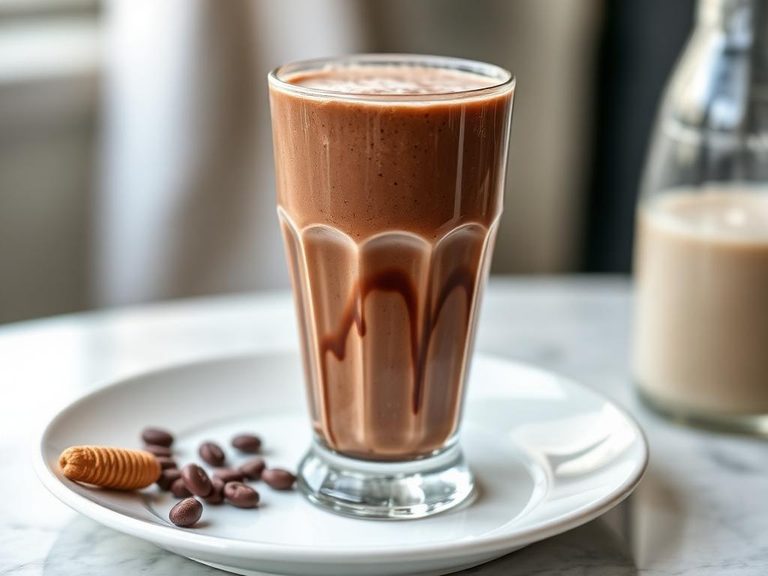
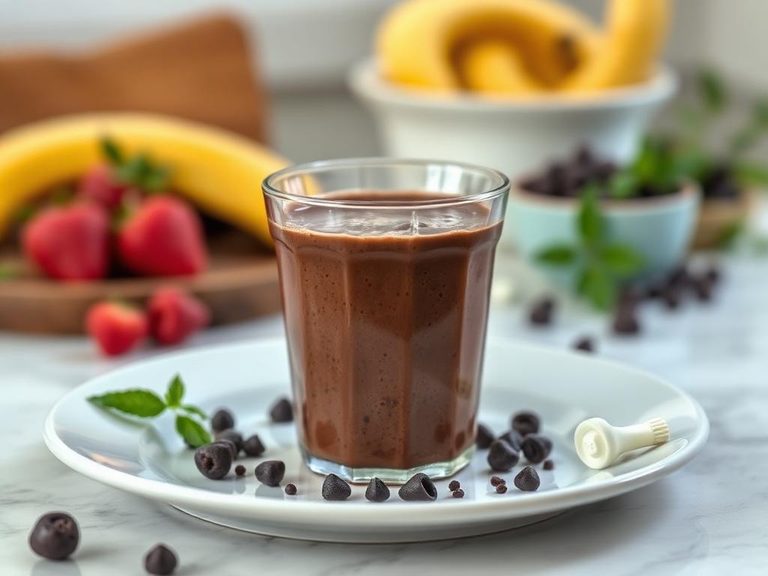
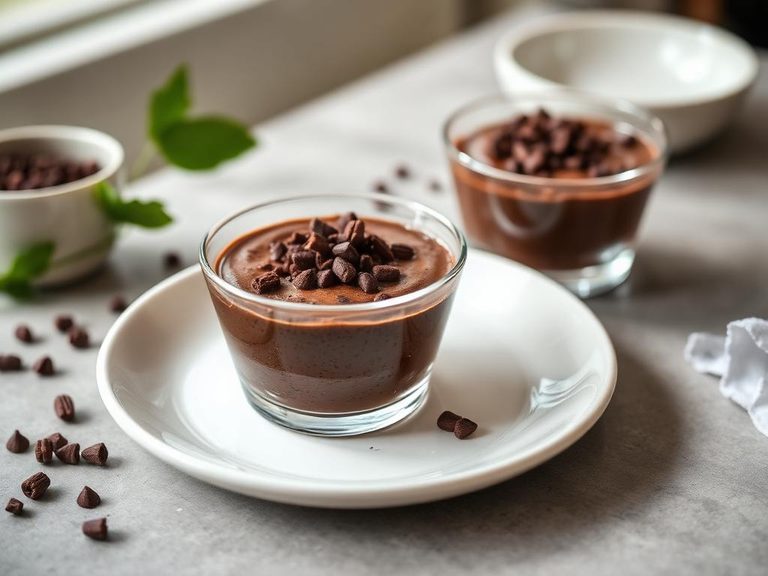
🍽️ Popular dishes


🌍 Where it's eaten
💡 Did you know?
Nesquik's iconic chocolate powder was originally developed in 1948 as 'Nestlé Quik' in the United States, and its non-dairy milk adaptations are part of a modern wave that began in earnest in the 2010s to meet plant-based demand.
Full nutrition (USDA data · scales with serving)
| Water | 88.0 g |
| Energy | 54.0 kcal |
| Protein | 1.4 g |
| Total lipid (fat) | 1.6 g |
| Carbohydrate, by difference | 8.4 g |
| Fiber, total dietary | 0.40 g |
| Total Sugars | 6.9 g |
| Calcium, Ca | 172 mg |
| Iron, Fe | 0.30 mg |
| Magnesium, Mg | 13.0 mg |
| Phosphorus, P | 38.0 mg |
| Potassium, K | 66.0 mg |
| Sodium, Na | 56.0 mg |
| Zinc, Zn | 0.61 mg |
| Copper, Cu | 0.09 mg |
| Selenium, Se | 0.70 ug |
| Vitamin C, total ascorbic acid | 1.7 mg |
| Thiamin | 0.02 mg |
| Riboflavin | 0.04 mg |
| Niacin | 0.11 mg |
| Vitamin B-6 | 0.07 mg |
| Folate, total | 4.0 ug |
| Folic acid | 0.00 ug |
| Folate, food | 4.0 ug |
| Folate, DFE | 4.0 ug |
| Choline, total | 6.6 mg |
| Vitamin B-12 | 0.35 ug |
| Vitamin B-12, added | 0.35 ug |
| Vitamin A, RAE | 33.0 ug |
| Retinol | 33.0 ug |
| Carotene, beta | 0.00 ug |
| Carotene, alpha | 0.00 ug |
| Cryptoxanthin, beta | 0.00 ug |
| Lycopene | 0.00 ug |
| Lutein + zeaxanthin | 3.0 ug |
| Vitamin E (alpha-tocopherol) | 1.9 mg |
| Vitamin E, added | 1.9 mg |
| Vitamin D (D2 + D3) | 0.90 ug |
| Vitamin K (phylloquinone) | 0.90 ug |
| Alcohol, ethyl | 0.00 g |
| Caffeine | 0.00 mg |
| Theobromine | 17.0 mg |
Fat & fatty acid profile (per 100g)
| Fatty acids, total saturated | 0.29 g |
| SFA 4:0 | 0.00 g |
| SFA 6:0 | 0.00 g |
| SFA 8:0 | 0.00 g |
| SFA 10:0 | 0.00 g |
| SFA 12:0 | 0.00 g |
| SFA 14:0 | 0.00 g |
| SFA 16:0 | 0.17 g |
| SFA 18:0 | 0.10 g |
| Fatty acids, total monounsaturated | 0.73 g |
| MUFA 16:1 | 0.01 g |
| MUFA 18:1 | 0.72 g |
| MUFA 20:1 | 0.01 g |
| MUFA 22:1 | 0.00 g |
| Fatty acids, total polyunsaturated | 0.48 g |
| PUFA 18:2 | 0.42 g |
| PUFA 18:3 | 0.06 g |
| PUFA 18:4 | 0.00 g |
| PUFA 20:4 | 0.00 g |
| PUFA 20:5 n-3 (EPA) | 0.00 g |
| PUFA 22:5 n-3 (DPA) | 0.00 g |
| PUFA 22:6 n-3 (DHA) | 0.00 g |
| Cholesterol | 0.00 mg |
Amino acid profile (per 100g)
Estimated from Snacks, granola bars, soft, coated, milk chocolate coating, chocolate chip — USDA does not publish this profile for Chocolate milk.
| Tryptophan | 0.07 g |
| Threonine | 0.23 g |
| Isoleucine | 0.27 g |
| Leucine | 0.47 g |
| Lysine | 0.29 g |
| Methionine | 0.11 g |
| Cystine | 0.06 g |
| Phenylalanine | 0.29 g |
| Tyrosine | 0.24 g |
| Valine | 0.34 g |
| Arginine | 0.24 g |
| Histidine | 0.10 g |
| Alanine | 0.22 g |
| Aspartic acid | 0.48 g |
| Glutamic acid | 1.1 g |
| Glycine | 0.18 g |
| Proline | 0.39 g |
| Serine | 0.25 g |
FAQ
Is chocolate Nesquik with non-dairy milk vegan?
It can be, but you must check the label. The non-dairy milk base (like soy or almond) is vegan, but the Nesquik powder itself may contain vitamin D3 derived from lanolin (sheep's wool), which is not vegan. Some brands use plant-based D3.
How does its nutrition compare to regular chocolate milk?
It is generally lower in calories, fat, and protein. A 100g serving has about 54 kcal and 1.35g protein, whereas regular chocolate milk has roughly 80-100 kcal and 3-4g protein. The sugar content can be similar, so it's more of a treat than a protein-rich recovery drink.
Can I use it in cooking or baking?
Absolutely. It works well as a 1:1 substitute for dairy milk in recipes like chocolate cakes, muffins, or smoothies, adding a subtle chocolate flavor. Be mindful that its lower protein content may affect the texture of some baked goods slightly.
Nutrient density (calculated · NRF9.3)
Nutrient Rich Foods index: beneficial nutrients (protein, fiber, vitamins, minerals) minus saturated fat, added sugar & sodium, per 100 kcal.
NRF9.3 index — Fulgoni, Keast & Drewnowski, 2009. Computed from USDA nutrients.
Weight-loss friendliness (composite index)
Energy density 0.54 kcal/g · 10% calories from protein · 0.4 g fiber · 6.9 g sugar per 100 g.
Composite of energy density (Rolls et al., 1999), protein & fiber satiety, minus sugar. A calculated heuristic — ranks satiety-per-calorie, not a clinical measure.
Dietary load (calculated from USDA values)
Potential renal acid load. Positive = acid-forming, negative = alkaline-forming.
Sodium-to-potassium ratio: 0.85 (lower is better — aim for ≤ 1)
Sodium:potassium per WHO potassium guidance. Computed from USDA nutrients.