

Hot chocolate / cocoa, made with non-dairy milk
Common food

Photo: Wikipedia
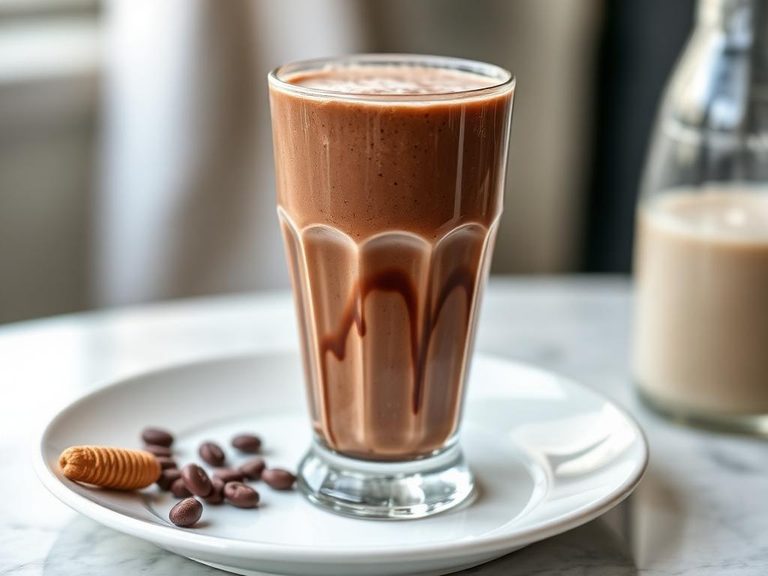
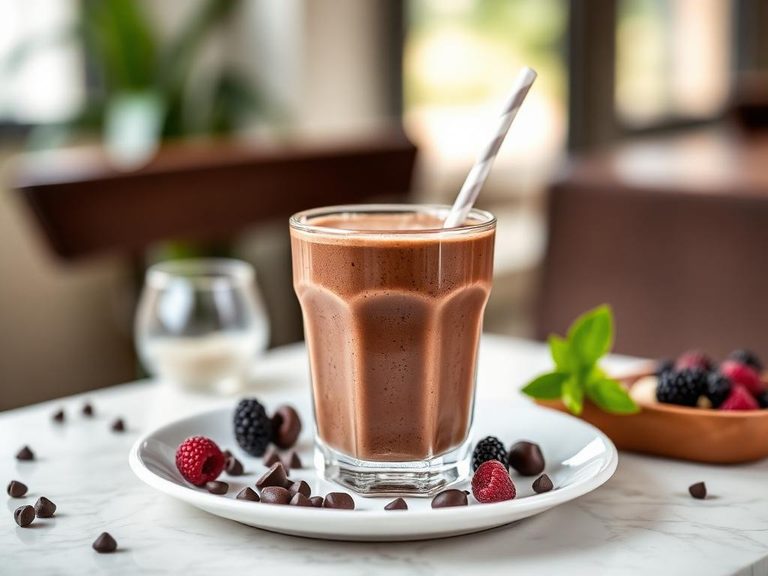
A warm, velvety beverage made by blending cocoa powder or melted chocolate with non-dairy milk like oat, almond, or soy. It offers a rich, comforting chocolate flavor with a smooth, creamy texture that's slightly lighter than its dairy-based counterpart. Nutritionally, it's a low-calorie treat primarily composed of carbohydrates from natural and added sugars.
Calorie split: 5% protein · 80% carbs · 15% fat
↓ Full nutrition💚 Why it's loved
People love it for its deep, comforting chocolate flavor and creamy mouthfeel, which provides a cozy ritual without dairy. It's incredibly versatile, easily customized with spices like cinnamon, a shot of espresso, or a dollop of whipped coconut cream.
⚠️ Watch-outs & how to enjoy it better
The high sugar content (12.85g per 100g) can lead to rapid blood-sugar spikes and energy crashes. To counteract this, pair it with a source of protein or healthy fat (like a handful of nuts or a sprinkle of chia seeds) to slow sugar absorption, and opt for unsweetened cocoa and a natural sweetener to control intake.
Key benefits
- Low in calories at 76 kcal per 100g.
- Contains antioxidants from cocoa flavanols.
- Provides a quick source of energy from carbohydrates.
- Dairy-free, suitable for lactose intolerant or vegan diets.
- Can be a source of minerals like magnesium and iron from cocoa.
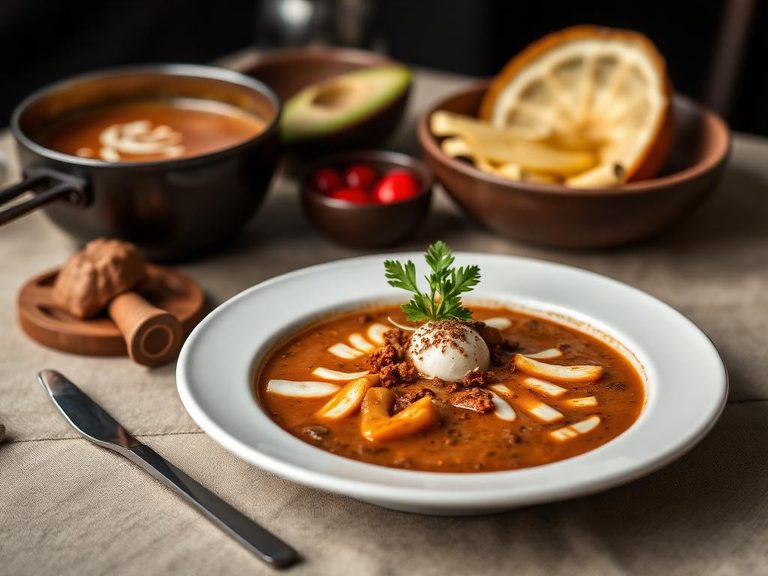
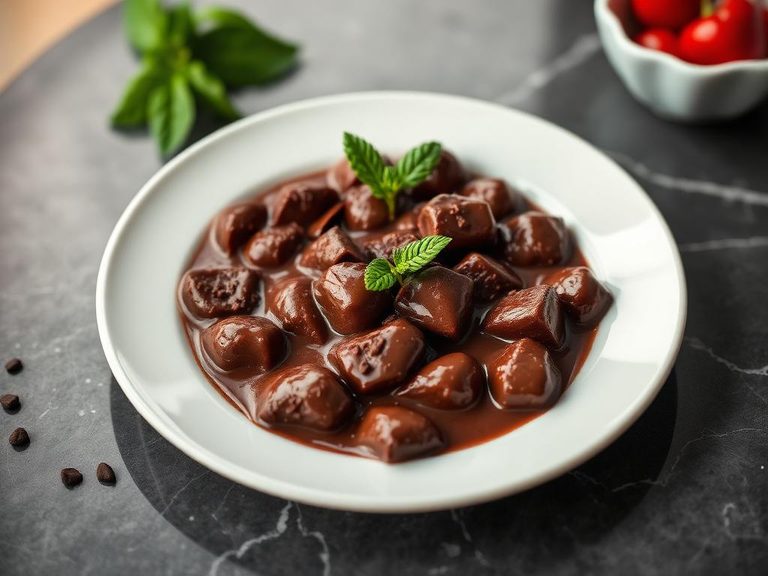
🍽️ Popular dishes


🌍 Where it's eaten
💡 Did you know?
The original Mesoamerican hot chocolate drinks, made by the Aztecs and Mayans, were often frothy, spicy, and bitter—sometimes seasoned with chili peppers, vanilla, or even cornmeal, and were considered a sacred, energizing elixir.
Full nutrition (USDA data · scales with serving)
| Water | 82.2 g |
| Energy | 76.0 kcal |
| Protein | 0.93 g |
| Total lipid (fat) | 1.3 g |
| Carbohydrate, by difference | 15.0 g |
| Fiber, total dietary | 0.10 g |
| Total Sugars | 12.8 g |
| Calcium, Ca | 124 mg |
| Iron, Fe | 0.26 mg |
| Magnesium, Mg | 16.0 mg |
| Phosphorus, P | 39.0 mg |
| Potassium, K | 65.0 mg |
| Sodium, Na | 69.0 mg |
| Zinc, Zn | 0.26 mg |
| Copper, Cu | 0.09 mg |
| Selenium, Se | 0.80 ug |
| Vitamin C, total ascorbic acid | 0.00 mg |
| Thiamin | 0.01 mg |
| Riboflavin | 0.04 mg |
| Niacin | 0.11 mg |
| Vitamin B-6 | 0.01 mg |
| Folate, total | 4.0 ug |
| Folic acid | 0.00 ug |
| Folate, food | 4.0 ug |
| Folate, DFE | 4.0 ug |
| Choline, total | 5.7 mg |
| Vitamin B-12 | 0.31 ug |
| Vitamin B-12, added | 0.31 ug |
| Vitamin A, RAE | 29.0 ug |
| Retinol | 29.0 ug |
| Carotene, beta | 0.00 ug |
| Carotene, alpha | 0.00 ug |
| Cryptoxanthin, beta | 0.00 ug |
| Lycopene | 0.00 ug |
| Lutein + zeaxanthin | 3.0 ug |
| Vitamin E (alpha-tocopherol) | 1.7 mg |
| Vitamin E, added | 1.6 mg |
| Vitamin D (D2 + D3) | 0.80 ug |
| Vitamin K (phylloquinone) | 0.80 ug |
| Alcohol, ethyl | 0.00 g |
| Caffeine | 3.0 mg |
| Theobromine | 30.0 mg |
Fat & fatty acid profile (per 100g)
| Fatty acids, total saturated | 0.13 g |
| SFA 4:0 | 0.00 g |
| SFA 6:0 | 0.00 g |
| SFA 8:0 | 0.00 g |
| SFA 10:0 | 0.00 g |
| SFA 12:0 | 0.00 g |
| SFA 14:0 | 0.00 g |
| SFA 16:0 | 0.09 g |
| SFA 18:0 | 0.03 g |
| Fatty acids, total monounsaturated | 0.64 g |
| MUFA 16:1 | 0.00 g |
| MUFA 18:1 | 0.62 g |
| MUFA 20:1 | 0.01 g |
| MUFA 22:1 | 0.00 g |
| Fatty acids, total polyunsaturated | 0.41 g |
| PUFA 18:2 | 0.36 g |
| PUFA 18:3 | 0.05 g |
| PUFA 18:4 | 0.00 g |
| PUFA 20:4 | 0.00 g |
| PUFA 20:5 n-3 (EPA) | 0.00 g |
| PUFA 22:5 n-3 (DPA) | 0.00 g |
| PUFA 22:6 n-3 (DHA) | 0.00 g |
| Cholesterol | 0.00 mg |
Amino acid profile (per 100g)
Estimated from Milk, chocolate beverage, hot cocoa, homemade — USDA does not publish this profile for Hot chocolate / cocoa.
| Tryptophan | 0.04 g |
| Threonine | 0.10 g |
| Isoleucine | 0.17 g |
| Leucine | 0.30 g |
| Lysine | 0.21 g |
| Methionine | 0.08 g |
| Cystine | 0.10 g |
| Phenylalanine | 0.15 g |
| Tyrosine | 0.14 g |
| Valine | 0.20 g |
| Arginine | 0.10 g |
| Histidine | 0.07 g |
| Alanine | 0.10 g |
| Aspartic acid | 0.28 g |
| Glutamic acid | 0.72 g |
| Glycine | 0.06 g |
| Proline | 0.34 g |
| Serine | 0.18 g |
FAQ
Is hot chocolate made with non-dairy milk less nutritious than with cow's milk?
It depends on the non-dairy milk. Soy milk often provides similar protein, while almond or oat milk may be lower in protein and calories. The cocoa itself adds antioxidants regardless of the milk base.
Can I make this without added sugar?
Absolutely. Use unsweetened cocoa powder and a non-dairy milk with no added sugar. Sweeten to taste with a small amount of maple syrup, a mashed banana, or a few dates blended in.
Why does my homemade version taste grainy?
Cocoa powder can clump. To avoid this, first mix the cocoa with a small amount of hot liquid to form a smooth paste before gradually adding the rest of the non-dairy milk while whisking constantly.
Nutrient density (calculated · NRF9.3)
Nutrient Rich Foods index: beneficial nutrients (protein, fiber, vitamins, minerals) minus saturated fat, added sugar & sodium, per 100 kcal.
NRF9.3 index — Fulgoni, Keast & Drewnowski, 2009. Computed from USDA nutrients.
Weight-loss friendliness (composite index)
Energy density 0.76 kcal/g · 5% calories from protein · 0.1 g fiber · 12.8 g sugar per 100 g.
Composite of energy density (Rolls et al., 1999), protein & fiber satiety, minus sugar. A calculated heuristic — ranks satiety-per-calorie, not a clinical measure.
Dietary load (calculated from USDA values)
Potential renal acid load. Positive = acid-forming, negative = alkaline-forming.
Sodium-to-potassium ratio: 1.06 (lower is better — aim for ≤ 1)
Sodium:potassium per WHO potassium guidance. Computed from USDA nutrients.