

Hot chocolate / cocoa, reduced sugar, made with non-dairy milk
Common food

Photo: Wikipedia
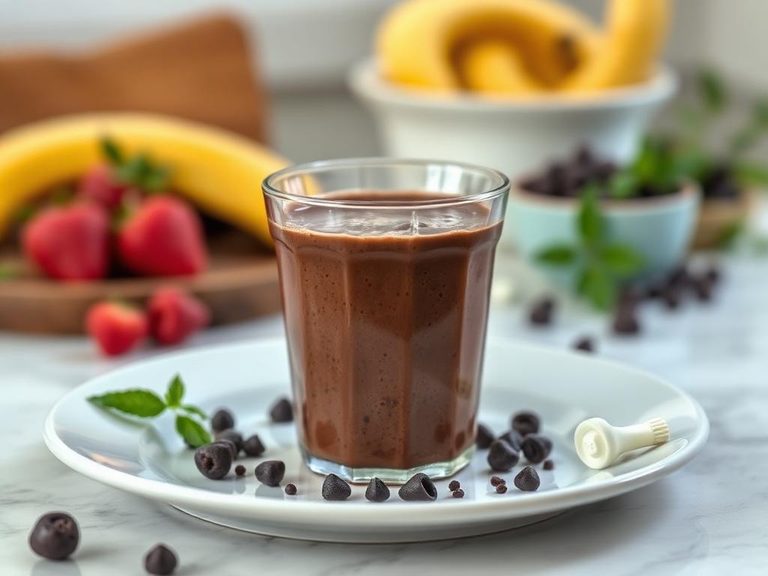
A velvety, reduced-sugar hot chocolate crafted with non-dairy milk, offering a deep cocoa flavor without excessive sweetness. Its smooth, comforting texture makes it a lighter yet satisfying alternative to traditional versions. With only 54 kcal per 100g, it provides a modest cocoa fix with significantly less sugar than standard mixes.
Calorie split: 9% protein · 66% carbs · 25% fat
↓ Full nutrition💚 Why it's loved
People love it for its rich, chocolatey comfort that fits into lower-sugar or dairy-free lifestyles. It's a versatile base that can be enjoyed plain or dressed up with flavors like cinnamon, vanilla, or a pinch of sea salt.
⚠️ Watch-outs & how to enjoy it better
The reduced sugar and non-dairy base may taste less sweet or creamy to some, and certain non-dairy milks can impart a distinct flavor. For those sensitive to caffeine or theobromine, a large serving could cause jitters. To counteract this, pair it with a source of protein or healthy fat (like a handful of nuts) to slow sugar absorption and enhance satiety, or opt for a smaller portion in the evening.
Key benefits
- Lower in calories and sugar than traditional hot chocolate
- Dairy-free, suitable for lactose intolerance or vegan diets
- Provides a modest source of plant-based protein
- Contains antioxidants from cocoa
- Can be easily customized with spices or natural sweeteners
🍽️ Popular dishes



🌍 Where it's eaten
💡 Did you know?
The word 'cocoa' is believed to be a misspelling of 'cacao' that stuck, originating from English traders in the 18th century.
Full nutrition (USDA data · scales with serving)
| Water | 87.8 g |
| Energy | 54.0 kcal |
| Protein | 1.2 g |
| Total lipid (fat) | 1.5 g |
| Carbohydrate, by difference | 8.9 g |
| Fiber, total dietary | 0.10 g |
| Total Sugars | 7.0 g |
| Calcium, Ca | 126 mg |
| Iron, Fe | 0.26 mg |
| Magnesium, Mg | 15.0 mg |
| Phosphorus, P | 39.0 mg |
| Potassium, K | 77.0 mg |
| Sodium, Na | 60.0 mg |
| Zinc, Zn | 0.25 mg |
| Copper, Cu | 0.08 mg |
| Selenium, Se | 0.80 ug |
| Vitamin C, total ascorbic acid | 0.00 mg |
| Thiamin | 0.01 mg |
| Riboflavin | 0.04 mg |
| Niacin | 0.12 mg |
| Vitamin B-6 | 0.01 mg |
| Folate, total | 4.0 ug |
| Folic acid | 0.00 ug |
| Folate, food | 4.0 ug |
| Folate, DFE | 4.0 ug |
| Choline, total | 5.7 mg |
| Vitamin B-12 | 0.31 ug |
| Vitamin B-12, added | 0.31 ug |
| Vitamin A, RAE | 29.0 ug |
| Retinol | 29.0 ug |
| Carotene, beta | 0.00 ug |
| Carotene, alpha | 0.00 ug |
| Cryptoxanthin, beta | 0.00 ug |
| Lycopene | 0.00 ug |
| Lutein + zeaxanthin | 3.0 ug |
| Vitamin E (alpha-tocopherol) | 1.7 mg |
| Vitamin E, added | 1.6 mg |
| Vitamin D (D2 + D3) | 0.80 ug |
| Vitamin K (phylloquinone) | 0.80 ug |
| Alcohol, ethyl | 0.00 g |
| Caffeine | 1.0 mg |
| Theobromine | 36.0 mg |
Fat & fatty acid profile (per 100g)
| Fatty acids, total saturated | 0.13 g |
| SFA 4:0 | 0.00 g |
| SFA 6:0 | 0.00 g |
| SFA 8:0 | 0.00 g |
| SFA 10:0 | 0.00 g |
| SFA 12:0 | 0.00 g |
| SFA 14:0 | 0.00 g |
| SFA 16:0 | 0.09 g |
| SFA 18:0 | 0.03 g |
| Fatty acids, total monounsaturated | 0.64 g |
| MUFA 16:1 | 0.00 g |
| MUFA 18:1 | 0.62 g |
| MUFA 20:1 | 0.01 g |
| MUFA 22:1 | 0.00 g |
| Fatty acids, total polyunsaturated | 0.41 g |
| PUFA 18:2 | 0.36 g |
| PUFA 18:3 | 0.05 g |
| PUFA 18:4 | 0.00 g |
| PUFA 20:4 | 0.00 g |
| PUFA 20:5 n-3 (EPA) | 0.00 g |
| PUFA 22:5 n-3 (DPA) | 0.00 g |
| PUFA 22:6 n-3 (DHA) | 0.00 g |
| Cholesterol | 0.00 mg |
Amino acid profile (per 100g)
Estimated from Milk, chocolate beverage, hot cocoa, homemade — USDA does not publish this profile for Hot chocolate / cocoa.
| Tryptophan | 0.04 g |
| Threonine | 0.10 g |
| Isoleucine | 0.17 g |
| Leucine | 0.30 g |
| Lysine | 0.21 g |
| Methionine | 0.08 g |
| Cystine | 0.10 g |
| Phenylalanine | 0.15 g |
| Tyrosine | 0.14 g |
| Valine | 0.20 g |
| Arginine | 0.10 g |
| Histidine | 0.07 g |
| Alanine | 0.10 g |
| Aspartic acid | 0.28 g |
| Glutamic acid | 0.72 g |
| Glycine | 0.06 g |
| Proline | 0.34 g |
| Serine | 0.18 g |
FAQ
How does the nutrition differ from regular hot chocolate?
This version is significantly lower in calories (54 vs. ~100-120 kcal per 100g) and sugar (6.99g vs. ~15-20g per 100g) than most standard mixes, while using non-dairy milk instead of cow's milk.
Can I make this with any non-dairy milk?
Yes, but the choice affects taste and nutrition. Oat milk adds creaminess and a touch of sweetness, almond milk is lighter, and soy milk boosts protein content. Ensure the milk is unsweetened to keep sugar low.
Is it suitable for people with diabetes?
While lower in sugar than traditional versions, it still contains carbohydrates and sugar. It should be consumed in moderation and ideally paired with protein or fat to help manage blood sugar response. Consulting a healthcare provider is always recommended.
Nutrient density (calculated · NRF9.3)
Nutrient Rich Foods index: beneficial nutrients (protein, fiber, vitamins, minerals) minus saturated fat, added sugar & sodium, per 100 kcal.
NRF9.3 index — Fulgoni, Keast & Drewnowski, 2009. Computed from USDA nutrients.
Weight-loss friendliness (composite index)
Energy density 0.54 kcal/g · 9% calories from protein · 0.1 g fiber · 7.0 g sugar per 100 g.
Composite of energy density (Rolls et al., 1999), protein & fiber satiety, minus sugar. A calculated heuristic — ranks satiety-per-calorie, not a clinical measure.
Dietary load (calculated from USDA values)
Potential renal acid load. Positive = acid-forming, negative = alkaline-forming.
Sodium-to-potassium ratio: 0.78 (lower is better — aim for ≤ 1)
Sodium:potassium per WHO potassium guidance. Computed from USDA nutrients.