

Milk, lactose free, reduced fat (2%)
Common food

Photo: Wikipedia
Lactose-free reduced-fat milk is a dairy product where the natural milk sugar, lactose, has been broken down into simpler sugars (glucose and galactose) by the enzyme lactase, making it digestible for those with lactose intolerance. It has a slightly sweeter taste than regular milk due to this pre-digestion, and a texture that is nearly identical to standard 2% milk, though some find it marginally thinner. Nutritionally, it provides a good source of protein and calcium while being lower in fat than whole milk, with a calorie count of 50 kcal per 100g.
Calorie split: 27% protein · 39% carbs · 34% fat
↓ Full nutrition💚 Why it's loved
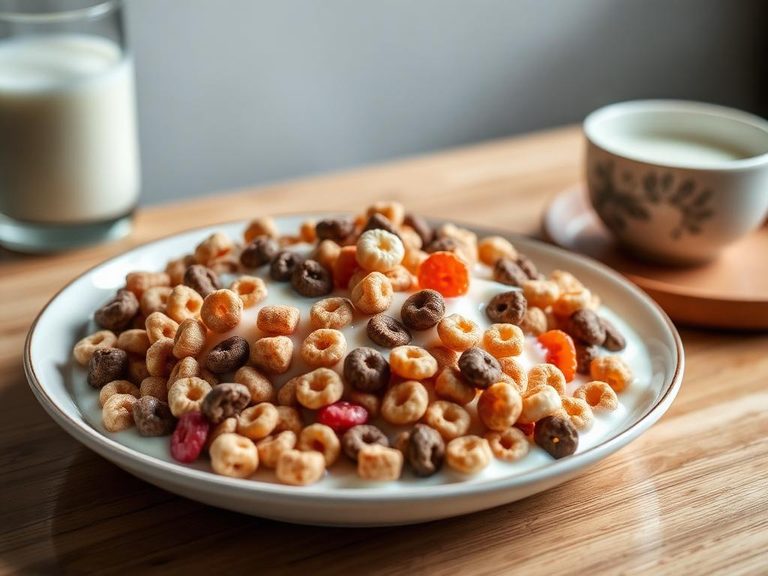
People love it for its familiar, comforting dairy flavor and creamy texture without the digestive distress of lactose. It's a versatile staple in breakfast cereals, coffee, and baking, seamlessly replacing regular milk in most recipes while being a cultural norm for many who grew up with dairy but developed intolerance later in life.
⚠️ Watch-outs & how to enjoy it better
The slightly sweeter taste can be off-putting to those accustomed to the mild flavor of regular milk, and it's still a common allergen (milk protein). For those watching blood sugar, the pre-digested sugars (glucose and galactose) can cause a faster blood sugar spike than regular milk. To counteract this, pair it with high-fiber foods like oatmeal or nuts, or choose a version with added fiber; for the allergen, consider plant-based alternatives if milk protein sensitivity exists.
Key benefits
- Digestible for lactose-intolerant individuals due to added lactase enzyme.
- Good source of high-quality protein (3.36g per 100g) for muscle maintenance.
- Lower in fat (1.9g per 100g) than whole milk, aiding in calorie control.
- Retains essential nutrients like calcium and vitamin D (fortified).
- Naturally sweeter taste without added sugars, appealing to some palates.
🍽️ Popular dishes


🌍 Where it's eaten
💡 Did you know?
The process of making lactose-free milk involves adding the enzyme lactase, which is the same enzyme naturally produced in the human small intestine but is deficient in lactose-intolerant individuals; this enzyme is often derived from fungi like Aspergillus oryzae.
Full nutrition (USDA data · scales with serving)
| Water | 89.1 g |
| Energy | 50.0 kcal |
| Protein | 3.4 g |
| Total lipid (fat) | 1.9 g |
| Carbohydrate, by difference | 4.9 g |
| Fiber, total dietary | 0.00 g |
| Total Sugars | 4.9 g |
| Calcium, Ca | 126 mg |
| Iron, Fe | 0.00 mg |
| Magnesium, Mg | 12.0 mg |
| Phosphorus, P | 103 mg |
| Potassium, K | 159 mg |
| Sodium, Na | 39.0 mg |
| Zinc, Zn | 0.43 mg |
| Copper, Cu | 0.00 mg |
| Selenium, Se | 1.8 ug |
| Vitamin C, total ascorbic acid | 0.20 mg |
| Thiamin | 0.06 mg |
| Riboflavin | 0.14 mg |
| Niacin | 0.11 mg |
| Vitamin B-6 | 0.06 mg |
| Folate, total | 2.0 ug |
| Folic acid | 0.00 ug |
| Folate, food | 2.0 ug |
| Folate, DFE | 2.0 ug |
| Choline, total | 18.2 mg |
| Vitamin B-12 | 0.55 ug |
| Vitamin B-12, added | 0.00 ug |
| Vitamin A, RAE | 83.0 ug |
| Retinol | 83.0 ug |
| Carotene, beta | 3.0 ug |
| Carotene, alpha | 0.00 ug |
| Cryptoxanthin, beta | 0.00 ug |
| Lycopene | 0.00 ug |
| Lutein + zeaxanthin | 0.00 ug |
| Vitamin E (alpha-tocopherol) | 0.03 mg |
| Vitamin E, added | 0.00 mg |
| Vitamin D (D2 + D3) | 1.1 ug |
| Vitamin K (phylloquinone) | 0.20 ug |
| Alcohol, ethyl | 0.00 g |
| Caffeine | 0.00 mg |
| Theobromine | 0.00 mg |
Fat & fatty acid profile (per 100g)
| Fatty acids, total saturated | 1.1 g |
| SFA 4:0 | 0.04 g |
| SFA 6:0 | 0.03 g |
| SFA 8:0 | 0.02 g |
| SFA 10:0 | 0.05 g |
| SFA 12:0 | 0.06 g |
| SFA 14:0 | 0.18 g |
| SFA 16:0 | 0.51 g |
| SFA 18:0 | 0.18 g |
| Fatty acids, total monounsaturated | 0.40 g |
| MUFA 16:1 | 0.03 g |
| MUFA 18:1 | 0.41 g |
| MUFA 20:1 | 0.00 g |
| MUFA 22:1 | 0.00 g |
| Fatty acids, total polyunsaturated | 0.06 g |
| PUFA 18:2 | 0.06 g |
| PUFA 18:3 | 0.01 g |
| PUFA 18:4 | 0.00 g |
| PUFA 20:4 | 0.00 g |
| PUFA 20:5 n-3 (EPA) | 0.00 g |
| PUFA 22:5 n-3 (DPA) | 0.00 g |
| PUFA 22:6 n-3 (DHA) | 0.00 g |
| Cholesterol | 8.0 mg |
Amino acid profile (per 100g)
Estimated from Potatoes, mashed, prepared from granules, without milk, whole milk and margarine — USDA does not publish this profile for Milk.
| Tryptophan | 0.02 g |
| Threonine | 0.09 g |
| Isoleucine | 0.11 g |
| Leucine | 0.17 g |
| Lysine | 0.15 g |
| Methionine | 0.04 g |
| Cystine | 0.02 g |
| Phenylalanine | 0.10 g |
| Tyrosine | 0.09 g |
| Valine | 0.13 g |
| Arginine | 0.08 g |
| Histidine | 0.05 g |
| Alanine | 0.07 g |
| Aspartic acid | 0.25 g |
| Glutamic acid | 0.39 g |
| Glycine | 0.05 g |
| Proline | 0.15 g |
| Serine | 0.10 g |
FAQ
Is lactose-free milk the same as dairy-free milk?
No, lactose-free milk is still dairy milk (from cows) with the lactose sugar broken down, while dairy-free milks are plant-based alternatives like almond, soy, or oat milk.
Does lactose-free milk have more sugar than regular milk?
It has the same total amount of sugar, but the lactose is pre-digested into glucose and galactose, which can make it taste sweeter and may cause a faster blood sugar response.
Can I use lactose-free milk in baking?
Yes, it can be used as a 1:1 substitute for regular milk in most baking recipes, though the slightly sweeter taste might subtly alter the flavor profile.
Nutrient density (calculated · NRF9.3)
Nutrient Rich Foods index: beneficial nutrients (protein, fiber, vitamins, minerals) minus saturated fat, added sugar & sodium, per 100 kcal.
NRF9.3 index — Fulgoni, Keast & Drewnowski, 2009. Computed from USDA nutrients.
Weight-loss friendliness (composite index)
Energy density 0.50 kcal/g · 27% calories from protein · 0.0 g fiber · 4.9 g sugar per 100 g.
Composite of energy density (Rolls et al., 1999), protein & fiber satiety, minus sugar. A calculated heuristic — ranks satiety-per-calorie, not a clinical measure.
Dietary load (calculated from USDA values)
Potential renal acid load. Positive = acid-forming, negative = alkaline-forming.
Sodium-to-potassium ratio: 0.25 (lower is better — aim for ≤ 1)
Sodium:potassium per WHO potassium guidance. Computed from USDA nutrients.