

Milk, lactose free, fat free (skim)
Common food

Photo: Wikipedia
This is milk with its natural lactose sugar broken down by enzymes, then skimmed to remove nearly all fat. It has a clean, slightly sweet taste and a thin, watery texture, offering a strong protein punch with minimal calories. It's a go-to for those seeking dairy nutrition without the lactose or fat.
Calorie split: 40% protein · 58% carbs · 2% fat
↓ Full nutrition💚 Why it's loved
People love it as a hassle-free, nutritious staple that fits seamlessly into smoothies, cereals, and coffee. It delivers the classic milky taste and protein benefits without the digestive issues of regular milk.
⚠️ Watch-outs & how to enjoy it better
The very low fat content can make it feel thin or watery, and it lacks the creamy richness of whole milk. For some, the rapid-absorbing carbs (sugar) could contribute to blood sugar spikes if consumed alone. Counteract this by pairing it with a source of fiber or protein, like whole-grain cereal or a handful of nuts.
Key benefits
- Naturally lactose-free for easy digestion
- Very low in fat and calories
- Excellent source of high-quality protein
- Rich in calcium and often fortified with vitamin D
- Provides quick-absorbing carbohydrates
🍽️ Popular dishes
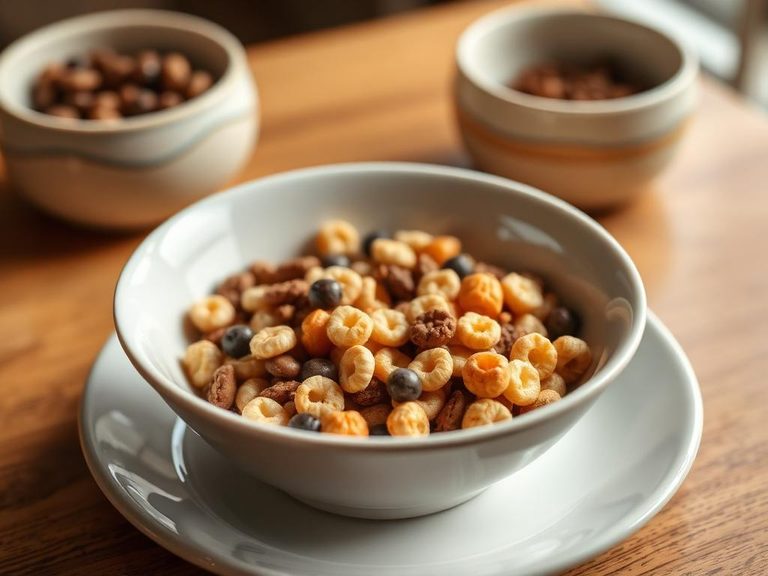
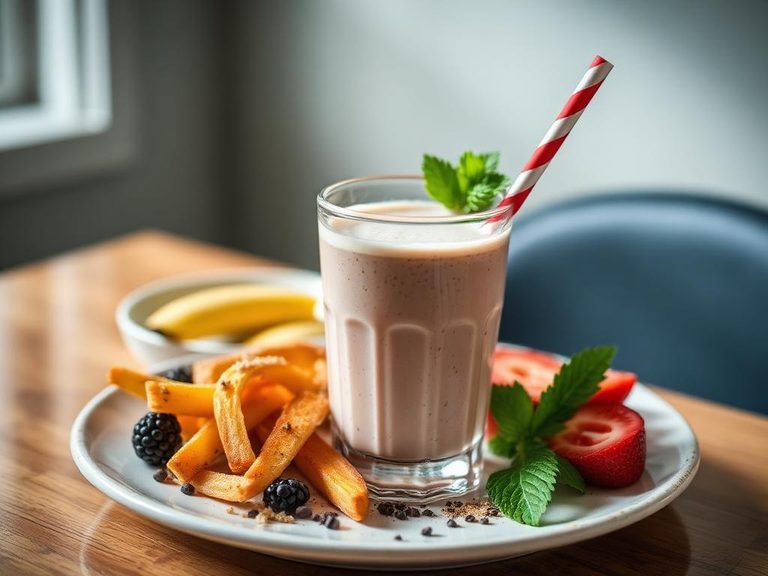
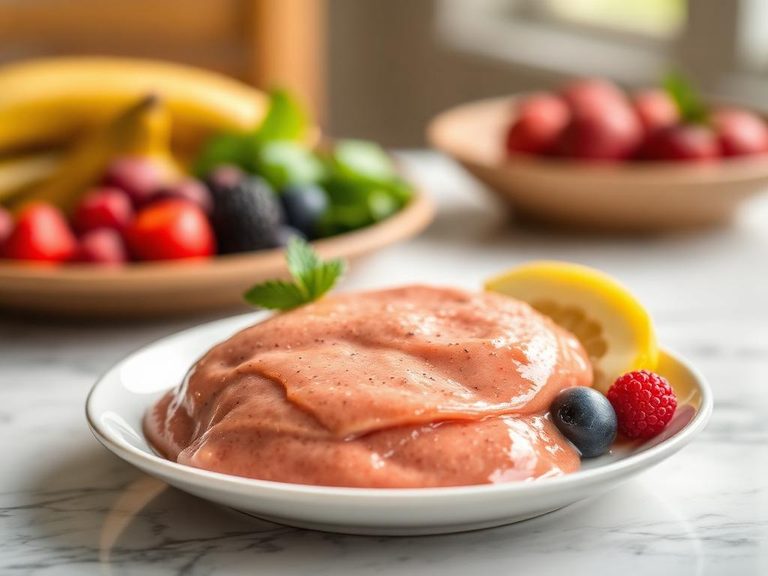
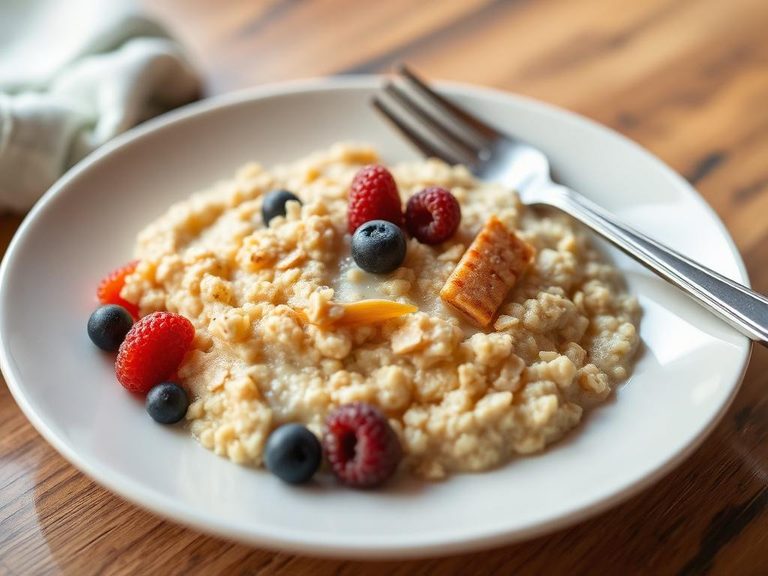
🌍 Where it's eaten
💡 Did you know?
The lactase enzyme used to make it lactose-free is often derived from fungi like Aspergillus oryzae.
Full nutrition (USDA data · scales with serving)
| Water | 90.8 g |
| Energy | 34.0 kcal |
| Protein | 3.4 g |
| Total lipid (fat) | 0.08 g |
| Carbohydrate, by difference | 4.9 g |
| Fiber, total dietary | 0.00 g |
| Total Sugars | 5.0 g |
| Calcium, Ca | 132 mg |
| Iron, Fe | 0.00 mg |
| Magnesium, Mg | 12.0 mg |
| Phosphorus, P | 107 mg |
| Potassium, K | 167 mg |
| Sodium, Na | 41.0 mg |
| Zinc, Zn | 0.45 mg |
| Copper, Cu | 0.00 mg |
| Selenium, Se | 2.0 ug |
| Vitamin C, total ascorbic acid | 0.00 mg |
| Thiamin | 0.06 mg |
| Riboflavin | 0.13 mg |
| Niacin | 0.12 mg |
| Vitamin B-6 | 0.06 mg |
| Folate, total | 2.0 ug |
| Folic acid | 0.00 ug |
| Folate, food | 2.0 ug |
| Folate, DFE | 2.0 ug |
| Choline, total | 18.2 mg |
| Vitamin B-12 | 0.58 ug |
| Vitamin B-12, added | 0.00 ug |
| Vitamin A, RAE | 64.0 ug |
| Retinol | 64.0 ug |
| Carotene, beta | 2.0 ug |
| Carotene, alpha | 0.00 ug |
| Cryptoxanthin, beta | 0.00 ug |
| Lycopene | 0.00 ug |
| Lutein + zeaxanthin | 0.00 ug |
| Vitamin E (alpha-tocopherol) | 0.00 mg |
| Vitamin E, added | 0.00 mg |
| Vitamin D (D2 + D3) | 1.1 ug |
| Vitamin K (phylloquinone) | 0.00 ug |
| Alcohol, ethyl | 0.00 g |
| Caffeine | 0.00 mg |
| Theobromine | 0.00 mg |
Fat & fatty acid profile (per 100g)
| Fatty acids, total saturated | 0.05 g |
| SFA 4:0 | 0.00 g |
| SFA 6:0 | 0.00 g |
| SFA 8:0 | 0.00 g |
| SFA 10:0 | 0.00 g |
| SFA 12:0 | 0.00 g |
| SFA 14:0 | 0.01 g |
| SFA 16:0 | 0.02 g |
| SFA 18:0 | 0.01 g |
| Fatty acids, total monounsaturated | 0.02 g |
| MUFA 16:1 | 0.00 g |
| MUFA 18:1 | 0.02 g |
| MUFA 20:1 | 0.00 g |
| MUFA 22:1 | 0.00 g |
| Fatty acids, total polyunsaturated | 0.01 g |
| PUFA 18:2 | 0.01 g |
| PUFA 18:3 | 0.00 g |
| PUFA 18:4 | 0.00 g |
| PUFA 20:4 | 0.00 g |
| PUFA 20:5 n-3 (EPA) | 0.00 g |
| PUFA 22:5 n-3 (DPA) | 0.00 g |
| PUFA 22:6 n-3 (DHA) | 0.00 g |
| Cholesterol | 3.0 mg |
Amino acid profile (per 100g)
Estimated from Potatoes, mashed, prepared from granules, without milk, whole milk and margarine — USDA does not publish this profile for Milk.
| Tryptophan | 0.02 g |
| Threonine | 0.09 g |
| Isoleucine | 0.11 g |
| Leucine | 0.17 g |
| Lysine | 0.15 g |
| Methionine | 0.04 g |
| Cystine | 0.02 g |
| Phenylalanine | 0.10 g |
| Tyrosine | 0.09 g |
| Valine | 0.13 g |
| Arginine | 0.08 g |
| Histidine | 0.05 g |
| Alanine | 0.07 g |
| Aspartic acid | 0.25 g |
| Glutamic acid | 0.39 g |
| Glycine | 0.05 g |
| Proline | 0.15 g |
| Serine | 0.10 g |
FAQ
Is it the same as regular skim milk?
No. Regular skim milk contains lactose, a natural milk sugar. This version has been treated with the lactase enzyme to break down lactose into simpler sugars (glucose and galactose), making it digestible for lactose-intolerant individuals.
Why does it taste sweeter than regular milk?
The lactase enzyme breaks lactose (a less sweet sugar) into glucose and galactose (sweeter sugars). Even though the total sugar content is the same, the taste perception is sweeter.
Can I use it for baking?
Yes, it's a 1:1 substitute for regular milk in most recipes. The slightly sweeter taste may be noticeable in delicate baked goods, but it works perfectly well.
Nutrient density (calculated · NRF9.3)
Nutrient Rich Foods index: beneficial nutrients (protein, fiber, vitamins, minerals) minus saturated fat, added sugar & sodium, per 100 kcal.
NRF9.3 index — Fulgoni, Keast & Drewnowski, 2009. Computed from USDA nutrients.
Weight-loss friendliness (composite index)
Energy density 0.34 kcal/g · 40% calories from protein · 0.0 g fiber · 5.0 g sugar per 100 g.
Composite of energy density (Rolls et al., 1999), protein & fiber satiety, minus sugar. A calculated heuristic — ranks satiety-per-calorie, not a clinical measure.
Dietary load (calculated from USDA values)
Potential renal acid load. Positive = acid-forming, negative = alkaline-forming.
Sodium-to-potassium ratio: 0.25 (lower is better — aim for ≤ 1)
Sodium:potassium per WHO potassium guidance. Computed from USDA nutrients.