

Milk and cereal bar
Whole food · Snacks
A milk and cereal bar is a dense, crunchy, and often sweet snack made from toasted grains bound together with milk, sugar, and fat. It typically offers a satisfying, crispy texture with a sweet, malty, or vanilla-like flavor profile. Nutritionally, it is a high-carbohydrate, energy-dense food with a significant sugar content per serving.
Calorie split: 6% protein · 70% carbs · 24% fat
↓ Full nutrition💚 Why it's loved
People love milk and cereal bars for their nostalgic, comforting flavor that evokes a bowl of cereal in milk, combined with the satisfying crunch. Their portability makes them a popular choice for a quick breakfast, snack, or dessert.
⚠️ Watch-outs & how to enjoy it better
The high sugar content (nearly 46g per 100g) can lead to rapid blood sugar spikes and subsequent crashes, making it a poor choice for sustained energy. To counteract this, pair it with a source of protein or healthy fat (like nuts or Greek yogurt) and practice strict portion control.
Key benefits
- Provides a quick source of energy from carbohydrates
- Convenient and portable for on-the-go consumption
- Fortified versions can offer added vitamins and minerals
- Offers a familiar, comforting taste and texture
🍽️ Popular dishes


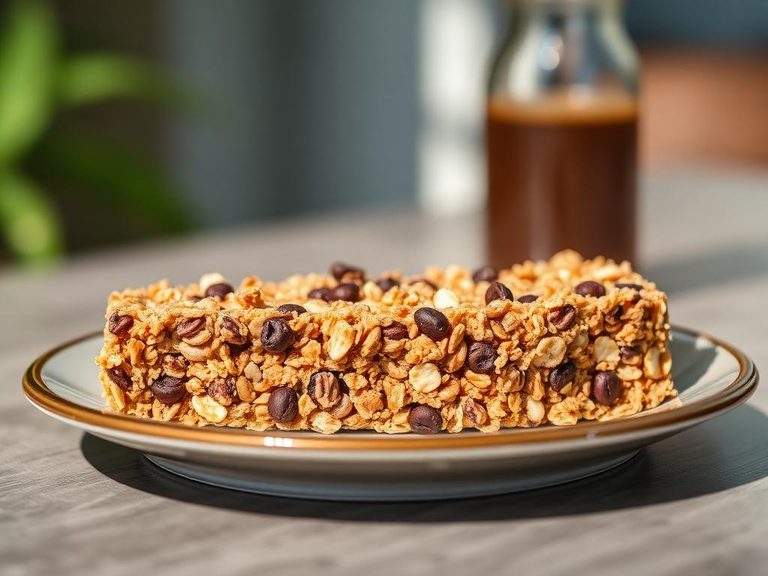
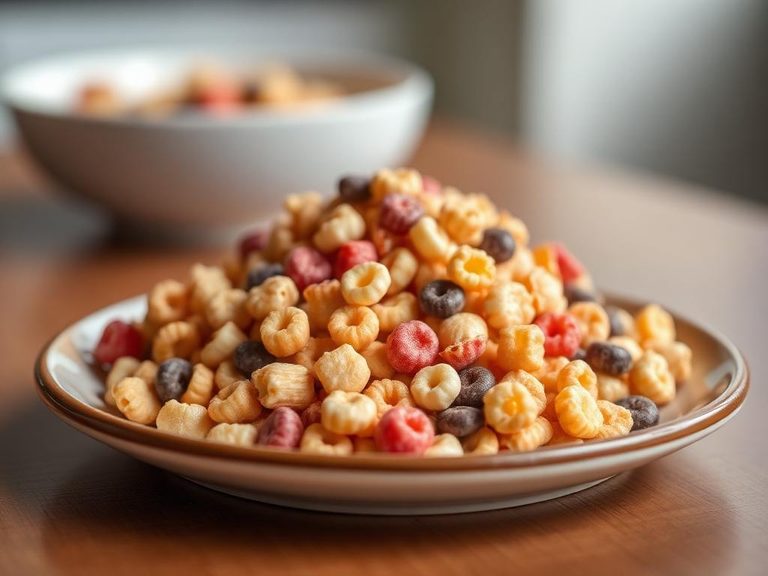
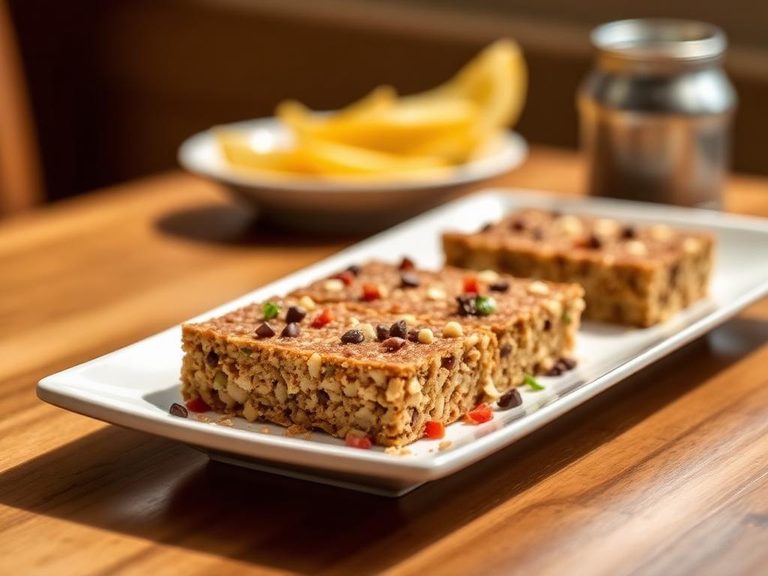

🌍 Where it's eaten
💡 Did you know?
The concept of a 'cereal bar' was popularized in the 1970s and 1980s as food manufacturers sought to capitalize on the booming breakfast cereal market by creating a solid, portable version.
Full nutrition (USDA data · scales with serving)
| Water | 8.7 g |
| Energy | 413 kcal |
| Energy | 1728 kj |
| Protein | 6.5 g |
| Total lipid (fat) | 11.0 g |
| Ash | 1.8 g |
| Carbohydrate, by difference | 72.0 g |
| Fiber, total dietary | 0.40 g |
| Total Sugars | 46.0 g |
| Calcium, Ca | 410 mg |
| Iron, Fe | 6.0 mg |
| Magnesium, Mg | 21.0 mg |
| Phosphorus, P | 155 mg |
| Potassium, K | 254 mg |
| Sodium, Na | 319 mg |
| Zinc, Zn | 0.84 mg |
| Copper, Cu | 0.05 mg |
| Manganese, Mn | 0.21 mg |
| Selenium, Se | 7.7 ug |
| Vitamin C, total ascorbic acid | 15.4 mg |
| Thiamin | 0.61 mg |
| Riboflavin | 0.70 mg |
| Niacin | 8.2 mg |
| Pantothenic acid | 0.49 mg |
| Vitamin B-6 | 0.82 mg |
| Folate, total | 98.0 ug |
| Folic acid | 87.0 ug |
| Folate, food | 11.0 ug |
| Folate, DFE | 159 ug |
| Choline, total | 31.0 mg |
| Vitamin B-12 | 2.0 ug |
| Vitamin B-12, added | 1.5 ug |
| Vitamin A, RAE | 188 ug |
| Retinol | 188 ug |
| Carotene, beta | 0.00 ug |
| Carotene, alpha | 0.00 ug |
| Cryptoxanthin, beta | 0.00 ug |
| Vitamin A, IU | 627 iu |
| Lycopene | 0.00 ug |
| Lutein + zeaxanthin | 0.00 ug |
| Vitamin E (alpha-tocopherol) | 0.42 mg |
| Vitamin E, added | 0.00 mg |
| Vitamin D (D2 + D3), International Units | 68.0 iu |
| Vitamin D (D2 + D3) | 1.7 ug |
| Vitamin K (phylloquinone) | 2.5 ug |
| Alcohol, ethyl | 0.00 g |
| Caffeine | 0.00 mg |
| Theobromine | 0.00 mg |
Fat & fatty acid profile (per 100g)
| Fatty acids, total saturated | 9.1 g |
| SFA 4:0 | 0.04 g |
| SFA 6:0 | 0.05 g |
| SFA 8:0 | 0.33 g |
| SFA 10:0 | 0.24 g |
| SFA 12:0 | 2.7 g |
| SFA 14:0 | 0.98 g |
| SFA 16:0 | 3.8 g |
| SFA 18:0 | 0.88 g |
| Fatty acids, total monounsaturated | 1.2 g |
| MUFA 16:1 | 0.01 g |
| MUFA 18:1 | 1.2 g |
| MUFA 20:1 | 0.00 g |
| MUFA 22:1 | 0.00 g |
| Fatty acids, total polyunsaturated | 0.24 g |
| PUFA 18:2 | 0.23 g |
| PUFA 18:3 | 0.01 g |
| PUFA 18:4 | 0.00 g |
| PUFA 20:4 | 0.00 g |
| PUFA 20:5 n-3 (EPA) | 0.00 g |
| PUFA 22:5 n-3 (DPA) | 0.00 g |
| PUFA 22:6 n-3 (DHA) | 0.00 g |
| Fatty acids, total trans | 0.00 g |
| Cholesterol | 6.0 mg |
Amino acid profile (per 100g)
Estimated from Beverages, coffee substitute, cereal grain beverage, powder, prepared with whole milk — USDA does not publish this profile for Milk and cereal bar.
| Tryptophan | 0.05 g |
| Threonine | 0.15 g |
| Isoleucine | 0.20 g |
| Leucine | 0.32 g |
| Lysine | 0.26 g |
| Methionine | 0.08 g |
| Cystine | 0.03 g |
| Phenylalanine | 0.16 g |
| Tyrosine | 0.16 g |
| Valine | 0.22 g |
| Arginine | 0.12 g |
| Histidine | 0.09 g |
| Alanine | 0.12 g |
| Aspartic acid | 0.25 g |
| Glutamic acid | 0.69 g |
| Glycine | 0.07 g |
| Proline | 0.32 g |
| Serine | 0.18 g |
FAQ
Is a milk and cereal bar a healthy breakfast option?
It can be a convenient option, but its high sugar and refined carbohydrate content means it's not the most balanced choice. It lacks significant protein and fiber, which are important for satiety and stable energy. It's best enjoyed occasionally or paired with protein-rich foods.
How does it differ from a granola bar?
While similar, a milk and cereal bar is primarily made from processed cereal grains (like puffed rice or toasted oats) bound with milk-based ingredients. A granola bar typically features whole rolled oats, nuts, seeds, and often dried fruit, generally offering more fiber and a chewier texture.
Can it be part of a weight management plan?
Due to its high calorie density (413 kcal per 100g) and low satiety from protein and fiber, it's easy to overconsume calories. Strict portion control (e.g., half a bar) and pairing it with a protein source can help, but whole foods are generally more effective for weight management.
Nutrient density (calculated · NRF9.3)
Nutrient Rich Foods index: beneficial nutrients (protein, fiber, vitamins, minerals) minus saturated fat, added sugar & sodium, per 100 kcal.
NRF9.3 index — Fulgoni, Keast & Drewnowski, 2009. Computed from USDA nutrients.
Weight-loss friendliness (composite index)
Energy density 4.13 kcal/g · 6% calories from protein · 0.4 g fiber · 46.0 g sugar per 100 g.
Composite of energy density (Rolls et al., 1999), protein & fiber satiety, minus sugar. A calculated heuristic — ranks satiety-per-calorie, not a clinical measure.
Dietary load (calculated from USDA values)
Potential renal acid load. Positive = acid-forming, negative = alkaline-forming.
Sodium-to-potassium ratio: 1.26 (lower is better — aim for ≤ 1)
Sodium:potassium per WHO potassium guidance. Computed from USDA nutrients.