

Granola Bar
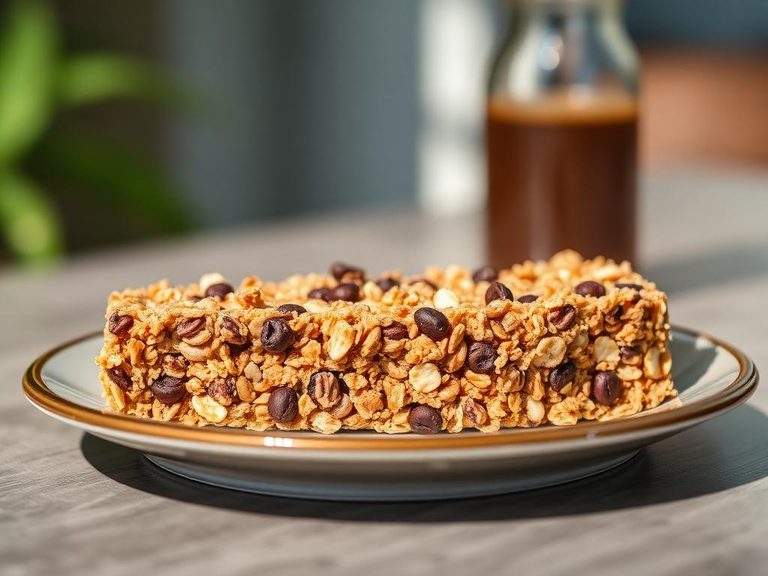
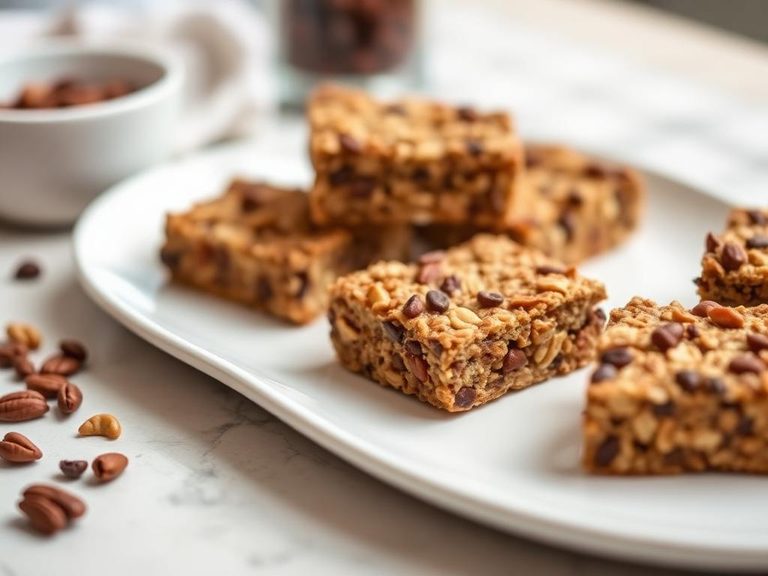
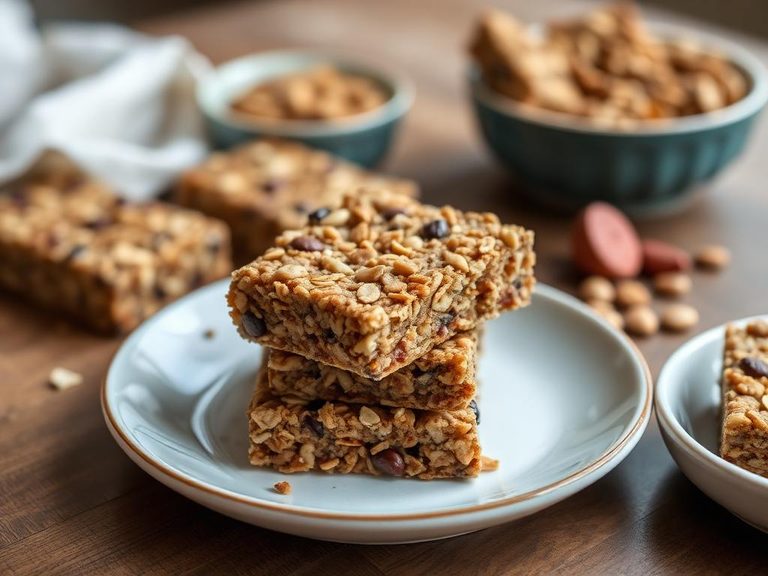
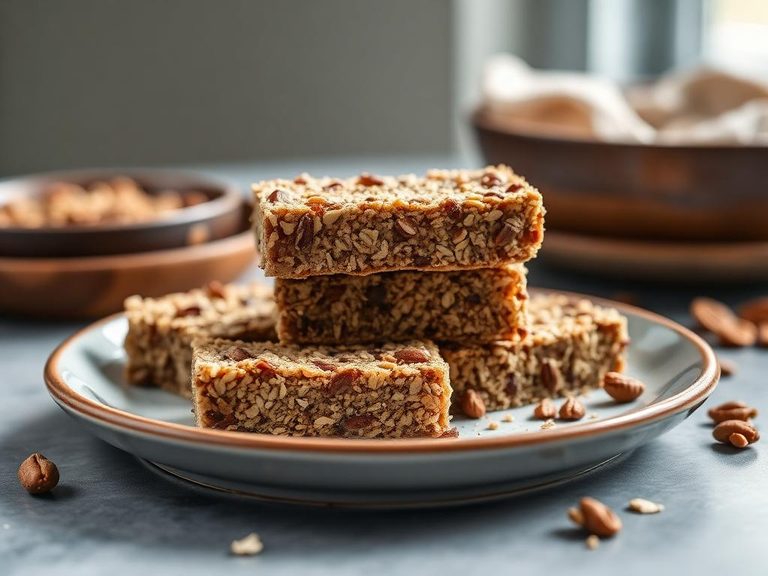
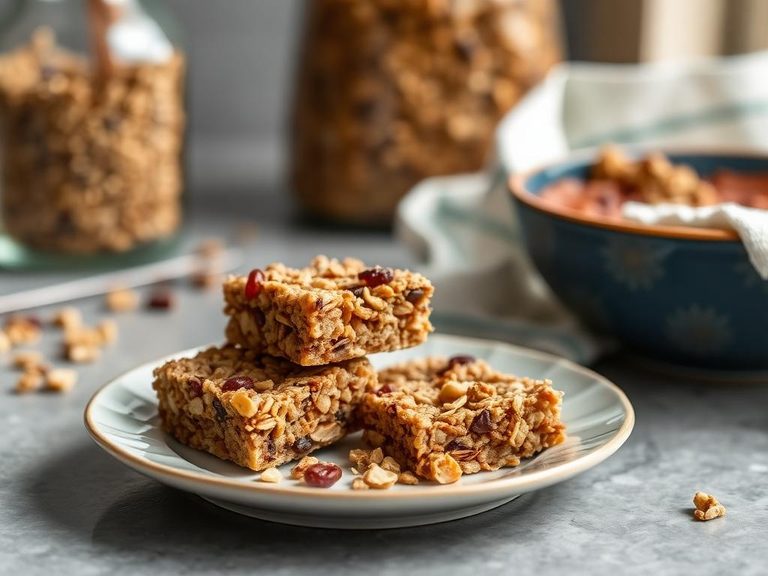
A granola bar is a convenient, portable snack bar typically made from rolled oats, nuts, seeds, and a sweet binder like honey or syrup, often combined with dried fruits or chocolate chips. Originating in the United States, it evolved from the broader 'granola' health food movement of the late 19th century into a mass-produced, on-the-go staple.
🍳 View the full Granola Bar recipe →
🍽️ Nutrition at a glance
Granola bars are generally carbohydrate-dense, providing quick energy from oats and sweeteners, with a moderate amount of fat from nuts and oils. They offer key nutrients like dietary fiber, iron, and B vitamins, with a typical commercial bar ranging from 100 to 250 calories per serving.
Nutrition breakdown
| Calories | 190 kcal |
| Protein | 3 g |
| Carbs | 28 g |
| Fat | 8 g |
| Fiber | 2 g |
| Sugar | 12 g |
| Sodium | 130 mg |
| Iron | 1.5 mg |
| Magnesium | 25 mg |
| Phosphorus | 50 mg |
| Potassium | 100 mg |
| Zinc | 0.8 mg |
| Vitamin B6 | 0.1 mg |
| Folate | 20 mcg |
| Manganese | 0.5 mg |
Per 1 bar (40 g) · estimated, varies by recipe
💡 What's interesting
Culturally, the granola bar embodies the modern demand for 'functional' and convenient nutrition, bridging the gap between a health food and a candy bar. Nutritionally, its unique value lies in its customizable nature, allowing it to be tailored as a high-fiber, protein-packed, or energy-dense snack depending on the specific ingredients used.
🍽️ Related dishes

AI estimate may be inaccurate · Terms