

Luncheon meat, NFS
Common food

Photo: Wikipedia
Luncheon meat, NFS (Not Further Specified), is a finely ground, pre-cooked pork product canned in its own gelatinous broth. It has a soft, uniform texture and a distinctly salty, savory flavor with a hint of spiced smokiness. Nutritionally, it is a dense source of protein with virtually no carbohydrates.
Calorie split: 66% protein · 1% carbs · 33% fat
↓ Full nutrition💚 Why it's loved
People love it for its unmatched convenience and satisfying, umami-rich saltiness that can instantly elevate a simple meal. Its cultural nostalgia, especially in quick breakfasts or pantry meals, makes it a comforting staple.
⚠️ Watch-outs & how to enjoy it better
It is typically very high in sodium and contains preservatives like sodium nitrite, which some prefer to limit. For those monitoring salt intake, it's advisable to rinse slices under water before cooking or pair it with low-sodium sides like steamed vegetables or fresh fruit.
Key benefits
- High in complete protein per calorie
- Extremely long shelf life when unopened
- Requires no cooking, ready to eat from the can
- Provides essential minerals like zinc and selenium
🍽️ Popular dishes

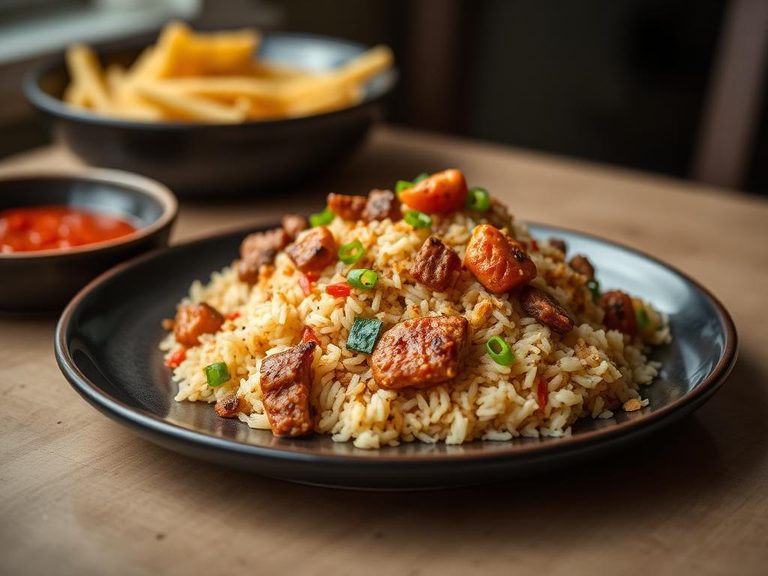
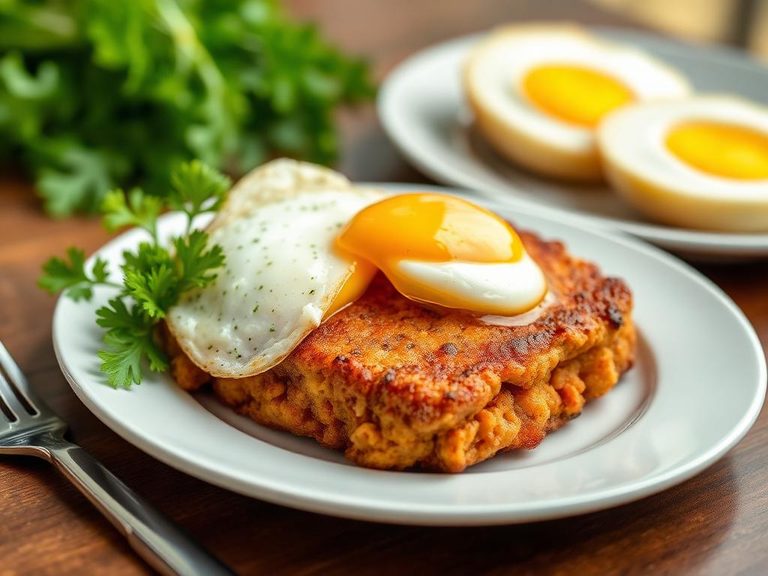
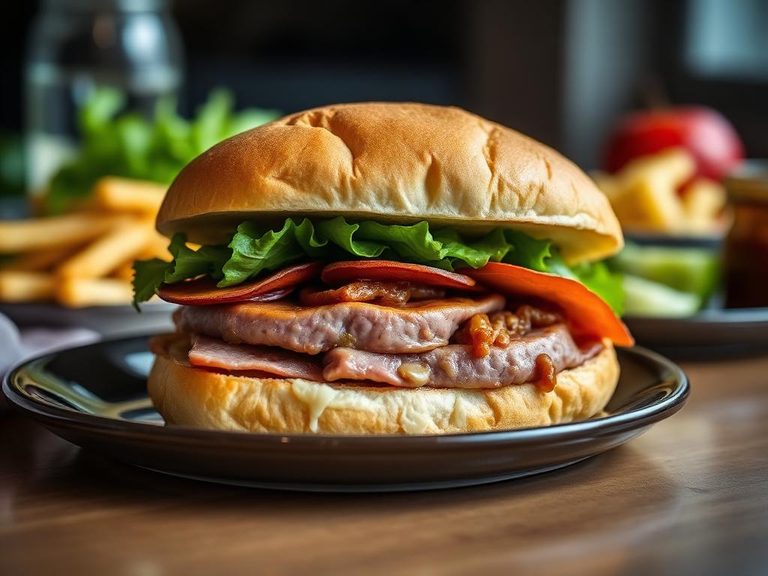
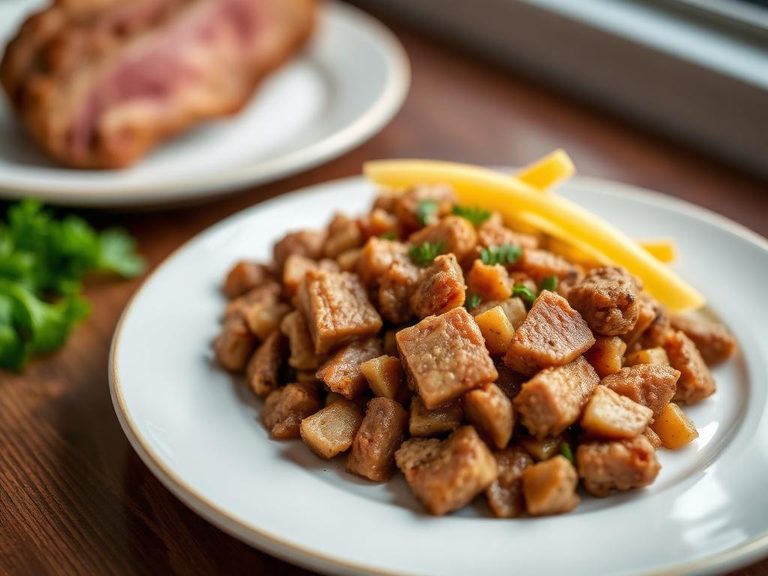
🌍 Where it's eaten
💡 Did you know?
The most famous brand, Spam, was created in 1937 and got its name from a contest; its portmanteau of 'spiced ham' was chosen from over 100,000 entries.
Full nutrition (USDA data · scales with serving)
| Water | 75.7 g |
| Energy | 101 kcal |
| Protein | 16.7 g |
| Total lipid (fat) | 3.7 g |
| Carbohydrate, by difference | 0.27 g |
| Fiber, total dietary | 0.00 g |
| Total Sugars | 0.00 g |
| Calcium, Ca | 5.0 mg |
| Iron, Fe | 0.58 mg |
| Magnesium, Mg | 19.0 mg |
| Phosphorus, P | 261 mg |
| Potassium, K | 425 mg |
| Sodium, Na | 890 mg |
| Zinc, Zn | 1.5 mg |
| Copper, Cu | 0.05 mg |
| Selenium, Se | 31.6 ug |
| Vitamin C, total ascorbic acid | 0.00 mg |
| Thiamin | 0.34 mg |
| Riboflavin | 0.27 mg |
| Niacin | 5.7 mg |
| Vitamin B-6 | 0.39 mg |
| Folate, total | 0.00 ug |
| Folic acid | 0.00 ug |
| Folate, food | 0.00 ug |
| Folate, DFE | 0.00 ug |
| Choline, total | 62.4 mg |
| Vitamin B-12 | 0.36 ug |
| Vitamin B-12, added | 0.00 ug |
| Vitamin A, RAE | 0.00 ug |
| Retinol | 0.00 ug |
| Carotene, beta | 0.00 ug |
| Carotene, alpha | 0.00 ug |
| Cryptoxanthin, beta | 0.00 ug |
| Lycopene | 0.00 ug |
| Lutein + zeaxanthin | 0.00 ug |
| Vitamin E (alpha-tocopherol) | 0.29 mg |
| Vitamin E, added | 0.00 mg |
| Vitamin D (D2 + D3) | 0.60 ug |
| Vitamin K (phylloquinone) | 0.00 ug |
| Alcohol, ethyl | 0.00 g |
| Caffeine | 0.00 mg |
| Theobromine | 0.00 mg |
Fat & fatty acid profile (per 100g)
| Fatty acids, total saturated | 1.1 g |
| SFA 4:0 | 0.00 g |
| SFA 6:0 | 0.00 g |
| SFA 8:0 | 0.00 g |
| SFA 10:0 | 0.00 g |
| SFA 12:0 | 0.00 g |
| SFA 14:0 | 0.04 g |
| SFA 16:0 | 0.71 g |
| SFA 18:0 | 0.35 g |
| Fatty acids, total monounsaturated | 1.5 g |
| MUFA 16:1 | 0.09 g |
| MUFA 18:1 | 1.4 g |
| MUFA 20:1 | 0.03 g |
| MUFA 22:1 | 0.00 g |
| Fatty acids, total polyunsaturated | 0.54 g |
| PUFA 18:2 | 0.45 g |
| PUFA 18:3 | 0.01 g |
| PUFA 18:4 | 0.00 g |
| PUFA 20:4 | 0.05 g |
| PUFA 20:5 n-3 (EPA) | 0.00 g |
| PUFA 22:5 n-3 (DPA) | 0.01 g |
| PUFA 22:6 n-3 (DHA) | 0.00 g |
| Cholesterol | 41.0 mg |
Amino acid profile (per 100g)
Estimated from Beef, cured, luncheon meat, jellied — USDA does not publish this profile for Luncheon meat.
| Tryptophan | 0.14 g |
| Threonine | 0.74 g |
| Isoleucine | 0.71 g |
| Leucine | 1.3 g |
| Lysine | 1.5 g |
| Methionine | 0.42 g |
| Cystine | 0.20 g |
| Phenylalanine | 0.67 g |
| Tyrosine | 0.51 g |
| Valine | 0.82 g |
| Arginine | 1.3 g |
| Histidine | 0.50 g |
| Alanine | 1.3 g |
| Aspartic acid | 1.6 g |
| Glutamic acid | 2.6 g |
| Glycine | 1.8 g |
| Proline | 1.2 g |
| Serine | 0.76 g |
FAQ
What does 'NFS' mean on the nutrition label?
NFS stands for 'Not Further Specified.' It indicates the data is for the general category of luncheon meat without specifying a particular brand or recipe, which can vary in exact nutrient content.
Is luncheon meat the same as Spam?
Spam is a specific, trademarked brand of luncheon meat. 'Luncheon meat' is the broader category that includes Spam and many other similar canned pork products.
How should I store leftovers from the can?
Once opened, transfer any unused meat to an airtight container, not the original can. It should be refrigerated and consumed within 3 to 5 days.
Nutrient density (calculated · NRF9.3)
Nutrient Rich Foods index: beneficial nutrients (protein, fiber, vitamins, minerals) minus saturated fat, added sugar & sodium, per 100 kcal.
NRF9.3 index — Fulgoni, Keast & Drewnowski, 2009. Computed from USDA nutrients.
Weight-loss friendliness (composite index)
Energy density 1.01 kcal/g · 66% calories from protein · 0.0 g fiber · 0.0 g sugar per 100 g.
Composite of energy density (Rolls et al., 1999), protein & fiber satiety, minus sugar. A calculated heuristic — ranks satiety-per-calorie, not a clinical measure.
Dietary load (calculated from USDA values)
Potential renal acid load. Positive = acid-forming, negative = alkaline-forming.
Sodium-to-potassium ratio: 2.09 (lower is better — aim for ≤ 1)
Sodium:potassium per WHO potassium guidance. Computed from USDA nutrients.