

Ice creams, vanilla, fat free
Whole food · Sweets
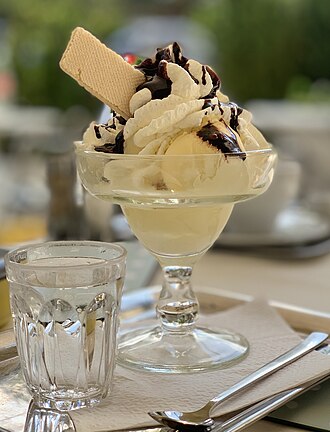
Photo: Wikipedia
Fat-free vanilla ice cream is a light, airy frozen dessert that delivers the classic, sweet vanilla flavor and a smooth, creamy texture without any fat. Its nutrition profile is defined by a high carbohydrate content, primarily from sugars, and a modest amount of protein, making it a lower-calorie alternative to traditional ice cream.
Calorie split: 13% protein · 87% carbs · 0% fat
↓ Full nutrition💚 Why it's loved
People love it for its familiar, comforting vanilla taste and its ability to satisfy a sweet craving with fewer calories. It's a versatile base for toppings and a nostalgic treat that fits into a lighter lifestyle.
⚠️ Watch-outs & how to enjoy it better
The high sugar content can lead to rapid blood-sugar spikes, and some brands may have a slightly icy or less creamy texture due to the lack of fat. To counteract this, pair a small portion with a source of protein or healthy fat (like nuts or a few bites of cheese) to slow sugar absorption, and check labels for added sugars.
Key benefits
- Lower in calories than full-fat ice cream
- Contains no dietary fat or cholesterol
- Provides a small amount of protein
- A good source of quick energy from carbohydrates
- Often fortified with calcium and vitamin D
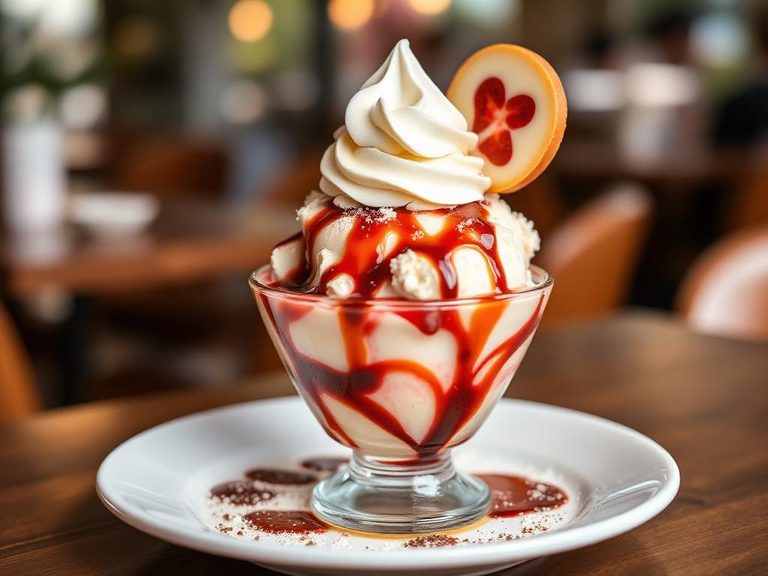
🍽️ Popular dishes
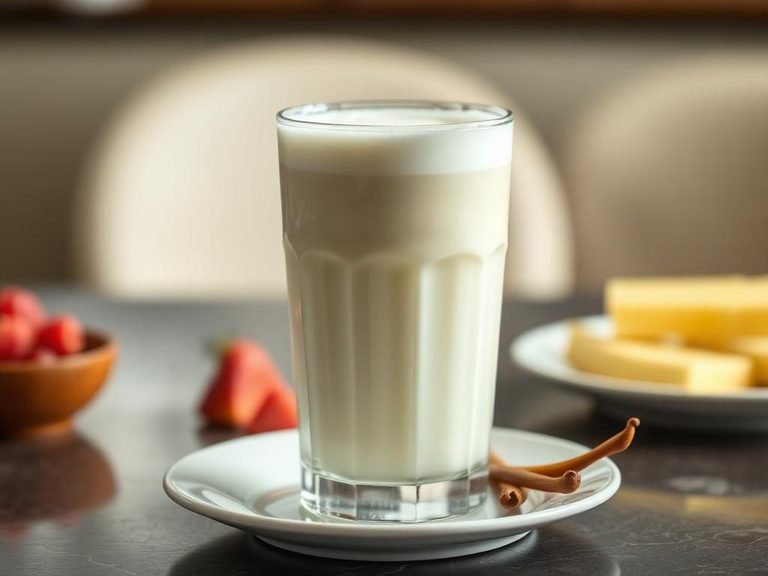
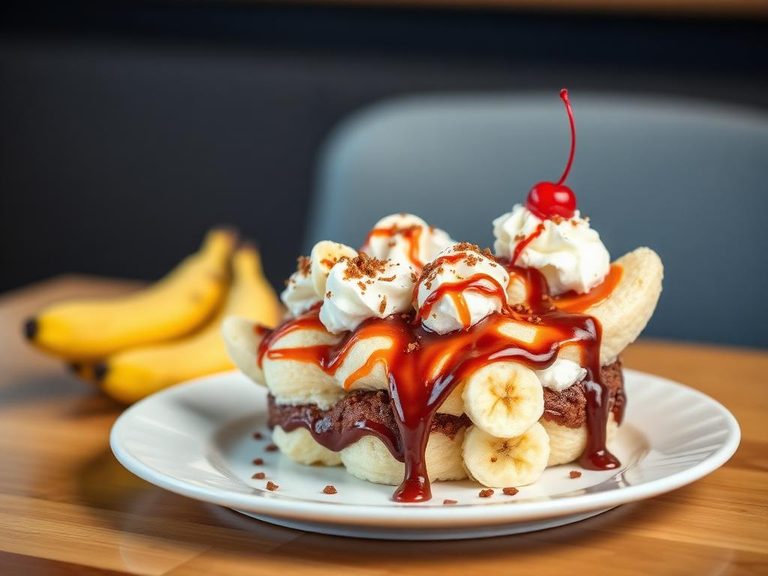
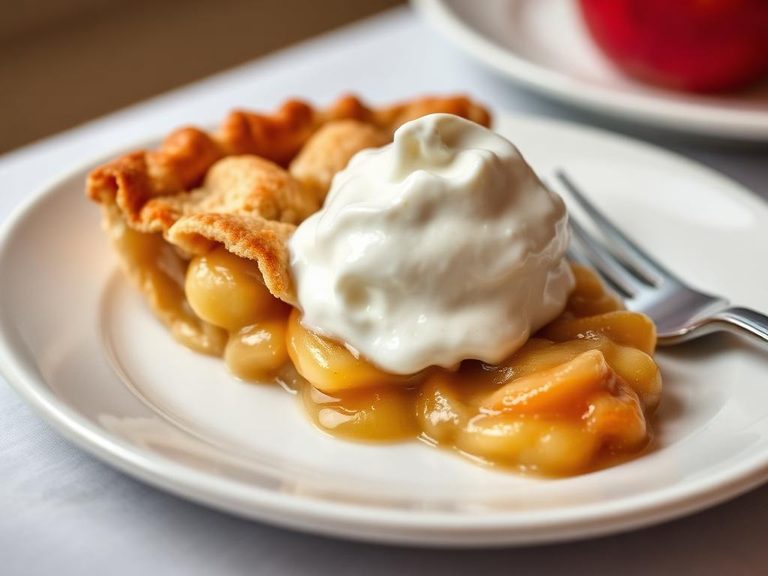
🌍 Where it's eaten
💡 Did you know?
The vanilla bean used for flavoring is actually the seed pod of an orchid, making it the second most expensive spice in the world after saffron.
Full nutrition (USDA data · scales with serving)
| Water | 64.3 g |
| Energy | 138 kcal |
| Energy | 578 kj |
| Protein | 4.5 g |
| Total lipid (fat) | 0.00 g |
| Ash | 1.1 g |
| Carbohydrate, by difference | 30.1 g |
| Fiber, total dietary | 1.0 g |
| Total Sugars | 6.3 g |
| Calcium, Ca | 149 mg |
| Iron, Fe | 0.00 mg |
| Magnesium, Mg | 21.0 mg |
| Phosphorus, P | 150 mg |
| Potassium, K | 302 mg |
| Sodium, Na | 97.0 mg |
| Zinc, Zn | 1.1 mg |
| Copper, Cu | 0.03 mg |
| Selenium, Se | 2.9 ug |
| Vitamin C, total ascorbic acid | 0.00 mg |
| Thiamin | 0.05 mg |
| Riboflavin | 0.25 mg |
| Niacin | 0.14 mg |
| Vitamin B-6 | 0.05 mg |
| Folate, total | 7.0 ug |
| Folic acid | 0.00 ug |
| Folate, food | 7.0 ug |
| Folate, DFE | 7.0 ug |
| Choline, total | 23.8 mg |
| Vitamin B-12 | 0.45 ug |
| Vitamin B-12, added | 0.00 ug |
| Vitamin A, RAE | 200 ug |
| Retinol | 198 ug |
| Carotene, beta | 23.0 ug |
| Carotene, alpha | 0.00 ug |
| Cryptoxanthin, beta | 0.00 ug |
| Vitamin A, IU | 698 iu |
| Lycopene | 0.00 ug |
| Lutein + zeaxanthin | 0.00 ug |
| Vitamin E (alpha-tocopherol) | 0.00 mg |
| Vitamin E, added | 0.00 mg |
| Vitamin D (D2 + D3), International Units | 0.00 iu |
| Vitamin D (D2 + D3) | 0.00 ug |
| Vitamin K (phylloquinone) | 0.00 ug |
| Alcohol, ethyl | 0.00 g |
| Caffeine | 0.00 mg |
| Theobromine | 0.00 mg |
Fat & fatty acid profile (per 100g)
| Fatty acids, total saturated | 0.00 g |
| SFA 4:0 | 0.00 g |
| SFA 6:0 | 0.00 g |
| SFA 8:0 | 0.00 g |
| SFA 10:0 | 0.00 g |
| SFA 12:0 | 0.00 g |
| SFA 14:0 | 0.00 g |
| SFA 16:0 | 0.00 g |
| SFA 18:0 | 0.00 g |
| Fatty acids, total monounsaturated | 0.00 g |
| MUFA 16:1 | 0.00 g |
| MUFA 18:1 | 0.00 g |
| MUFA 20:1 | 0.00 g |
| MUFA 22:1 | 0.00 g |
| Fatty acids, total polyunsaturated | 0.00 g |
| PUFA 18:2 | 0.00 g |
| PUFA 18:3 | 0.00 g |
| PUFA 18:4 | 0.00 g |
| PUFA 20:4 | 0.00 g |
| PUFA 20:5 n-3 (EPA) | 0.00 g |
| PUFA 22:5 n-3 (DPA) | 0.00 g |
| PUFA 22:6 n-3 (DHA) | 0.00 g |
| Cholesterol | 0.00 mg |
Amino acid profile (per 100g)
Estimated from Ice creams, vanilla, rich — USDA does not publish this profile for Ice creams.
| Tryptophan | 0.04 g |
| Threonine | 0.14 g |
| Isoleucine | 0.18 g |
| Leucine | 0.30 g |
| Lysine | 0.25 g |
| Methionine | 0.08 g |
| Cystine | 0.03 g |
| Phenylalanine | 0.15 g |
| Tyrosine | 0.14 g |
| Valine | 0.20 g |
| Arginine | 0.14 g |
| Histidine | 0.08 g |
| Alanine | 0.14 g |
| Glutamic acid | 0.65 g |
| Glycine | 0.15 g |
| Proline | 0.34 g |
| Serine | 0.17 g |
FAQ
Is fat-free ice cream actually healthier?
It's lower in calories and fat, but often higher in sugar to compensate for flavor. It can be part of a balanced diet when consumed in moderation, but isn't inherently 'healthier' overall.
Why does it sometimes taste less creamy?
Fat contributes to a rich, smooth mouthfeel. Without it, manufacturers often use stabilizers and more air (overrun) to mimic creaminess, which can result in a lighter, sometimes icier texture.
Can I use it in baking?
Yes, it can be used in recipes like ice cream cakes or blended into batters for a moist texture, but be aware its high sugar and water content may alter the final product compared to using full-fat versions.
Nutrient density (calculated · NRF9.3)
Nutrient Rich Foods index: beneficial nutrients (protein, fiber, vitamins, minerals) minus saturated fat, added sugar & sodium, per 100 kcal.
NRF9.3 index — Fulgoni, Keast & Drewnowski, 2009. Computed from USDA nutrients.
Weight-loss friendliness (composite index)
Energy density 1.38 kcal/g · 13% calories from protein · 1.0 g fiber · 6.3 g sugar per 100 g.
Composite of energy density (Rolls et al., 1999), protein & fiber satiety, minus sugar. A calculated heuristic — ranks satiety-per-calorie, not a clinical measure.
Dietary load (calculated from USDA values)
Potential renal acid load. Positive = acid-forming, negative = alkaline-forming.
Sodium-to-potassium ratio: 0.32 (lower is better — aim for ≤ 1)
Sodium:potassium per WHO potassium guidance. Computed from USDA nutrients.