

Greens, frozen, cooked, fat added
Common food

Photo: Wikipedia
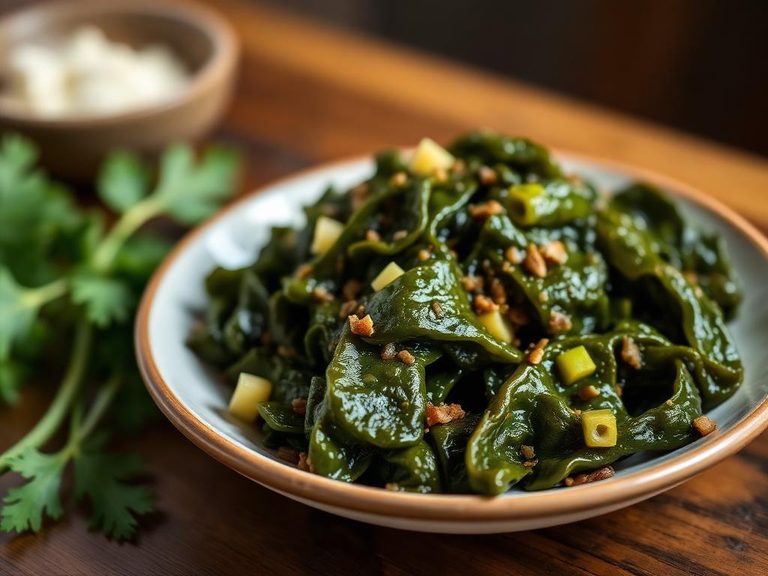
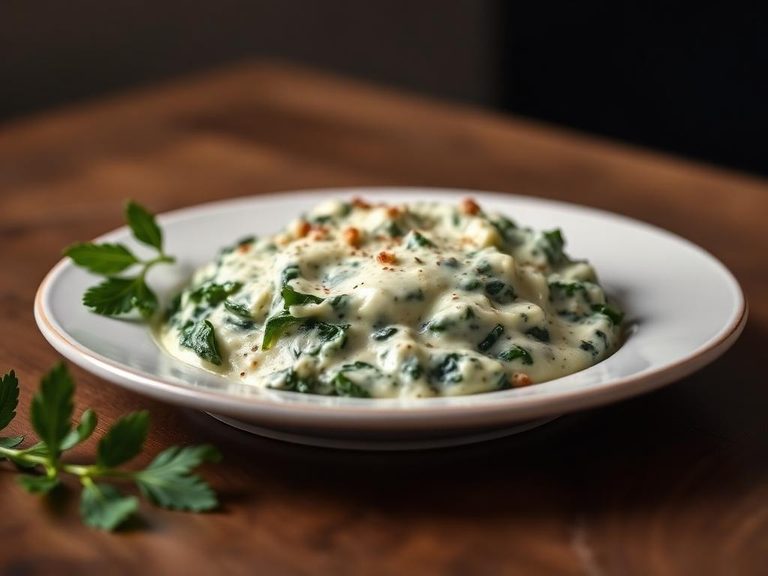
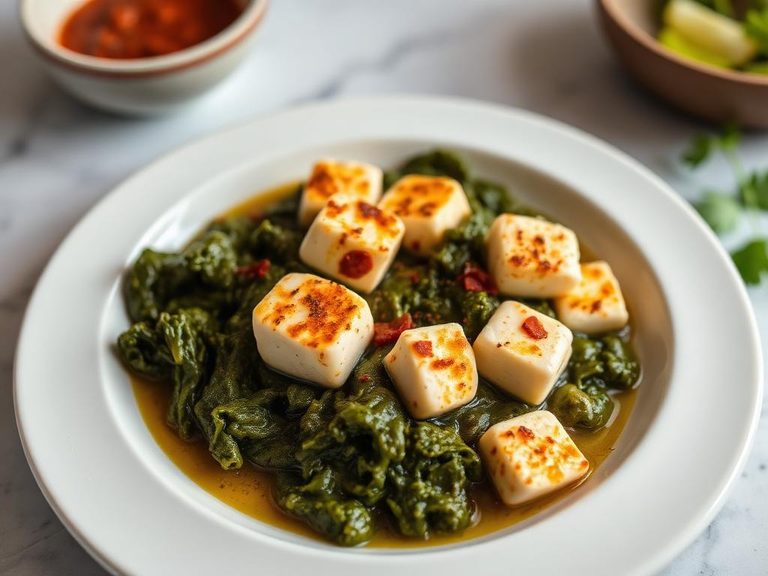
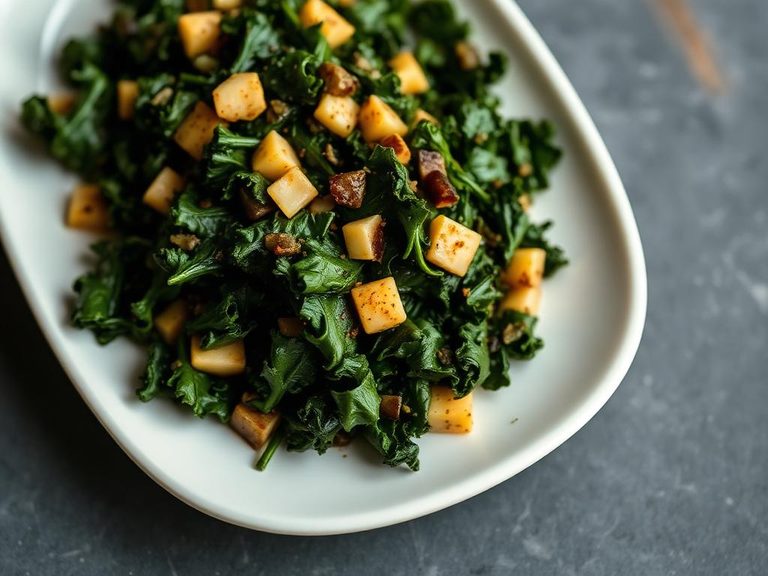
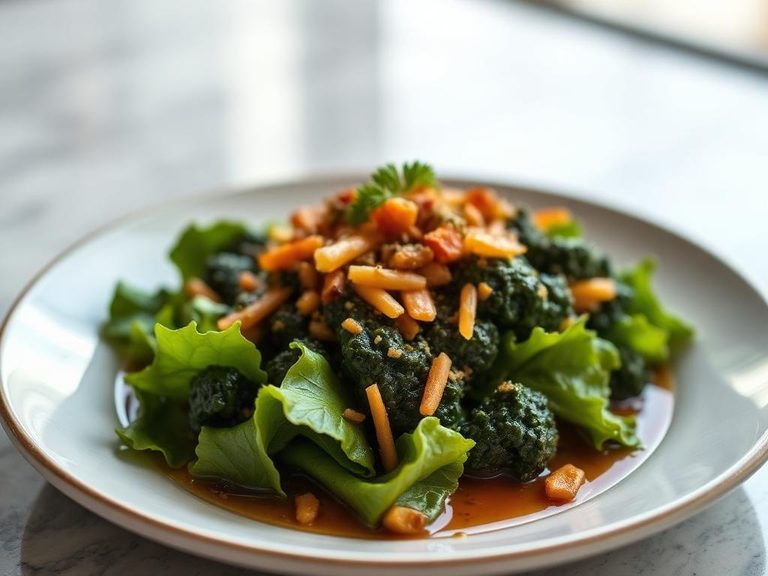
This is a convenient, pre-cooked bundle of leafy greens—like spinach, kale, or collards—frozen at peak freshness and typically reheated with a touch of fat for richness. The texture is tender and silky, with a deep, savory, and slightly earthy flavor that intensifies during cooking. Nutritionally, it's a low-calorie powerhouse, delivering a solid dose of fiber and plant-based protein for very few calories.
Calorie split: 18% protein · 36% carbs · 46% fat
↓ Full nutrition💚 Why it's loved
People love it for its incredible convenience and deep, concentrated flavor that forms the savory backbone of countless comfort foods. It's a versatile staple that can be a simple side dish or a key component in complex recipes, embodying the heart of home cooking in many cultures.
⚠️ Watch-outs & how to enjoy it better
The added fat can increase calorie density, and some commercial varieties may be high in sodium. Those watching their sodium intake should look for low-sodium options or rinse the greens. To balance the meal, pair the greens with a lean protein and a source of complex carbohydrates.
Key benefits
- Excellent source of dietary fiber (2.6g per 100g)
- Good plant-based protein source (2.84g per 100g)
- Very low in sugar (0.76g per 100g)
- Nutrient-dense with minimal calories (59 kcal per 100g)
- Convenient way to increase vegetable intake year-round
🍽️ Popular dishes

🌍 Where it's eaten
💡 Did you know?
Freezing leafy greens can actually increase the bioavailability of certain antioxidants, like beta-carotene, by breaking down tough plant cell walls during the blanching process that precedes freezing.
Full nutrition (USDA data · scales with serving)
| Water | 87.2 g |
| Energy | 59.0 kcal |
| Protein | 2.8 g |
| Total lipid (fat) | 3.2 g |
| Carbohydrate, by difference | 5.6 g |
| Fiber, total dietary | 2.6 g |
| Total Sugars | 0.76 g |
| Calcium, Ca | 164 mg |
| Iron, Fe | 1.1 mg |
| Magnesium, Mg | 25.0 mg |
| Phosphorus, P | 33.0 mg |
| Potassium, K | 188 mg |
| Sodium, Na | 150 mg |
| Zinc, Zn | 0.27 mg |
| Copper, Cu | 0.07 mg |
| Selenium, Se | 1.1 ug |
| Vitamin C, total ascorbic acid | 20.6 mg |
| Thiamin | 0.05 mg |
| Riboflavin | 0.11 mg |
| Niacin | 0.49 mg |
| Vitamin B-6 | 0.10 mg |
| Folate, total | 65.0 ug |
| Folic acid | 0.00 ug |
| Folate, food | 65.0 ug |
| Folate, DFE | 65.0 ug |
| Choline, total | 18.0 mg |
| Vitamin B-12 | 0.00 ug |
| Vitamin B-12, added | 0.00 ug |
| Vitamin A, RAE | 377 ug |
| Retinol | 11.0 ug |
| Carotene, beta | 4351 ug |
| Carotene, alpha | 53.0 ug |
| Cryptoxanthin, beta | 21.0 ug |
| Lycopene | 0.00 ug |
| Lutein + zeaxanthin | 7948 ug |
| Vitamin E (alpha-tocopherol) | 1.9 mg |
| Vitamin E, added | 0.00 mg |
| Vitamin D (D2 + D3) | 0.00 ug |
| Vitamin K (phylloquinone) | 488 ug |
| Alcohol, ethyl | 0.00 g |
| Caffeine | 0.00 mg |
| Theobromine | 0.00 mg |
Fat & fatty acid profile (per 100g)
| Fatty acids, total saturated | 0.76 g |
| SFA 4:0 | 0.02 g |
| SFA 6:0 | 0.01 g |
| SFA 8:0 | 0.01 g |
| SFA 10:0 | 0.02 g |
| SFA 12:0 | 0.02 g |
| SFA 14:0 | 0.07 g |
| SFA 16:0 | 0.45 g |
| SFA 18:0 | 0.14 g |
| Fatty acids, total monounsaturated | 0.96 g |
| MUFA 16:1 | 0.02 g |
| MUFA 18:1 | 0.91 g |
| MUFA 20:1 | 0.01 g |
| MUFA 22:1 | 0.01 g |
| Fatty acids, total polyunsaturated | 1.1 g |
| PUFA 18:2 | 0.78 g |
| PUFA 18:3 | 0.27 g |
| PUFA 18:4 | 0.00 g |
| PUFA 20:4 | 0.00 g |
| PUFA 20:5 n-3 (EPA) | 0.00 g |
| PUFA 22:5 n-3 (DPA) | 0.00 g |
| PUFA 22:6 n-3 (DHA) | 0.00 g |
| Cholesterol | 2.0 mg |
Amino acid profile (per 100g)
Estimated from Beet greens, cooked, boiled, drained, with salt — USDA does not publish this profile for Greens.
| Tryptophan | 0.04 g |
| Threonine | 0.08 g |
| Isoleucine | 0.05 g |
| Leucine | 0.12 g |
| Lysine | 0.07 g |
| Methionine | 0.02 g |
| Cystine | 0.02 g |
| Phenylalanine | 0.07 g |
| Tyrosine | 0.06 g |
| Valine | 0.08 g |
| Arginine | 0.07 g |
| Histidine | 0.04 g |
| Alanine | 0.10 g |
| Aspartic acid | 0.15 g |
| Glutamic acid | 0.31 g |
| Glycine | 0.09 g |
| Proline | 0.06 g |
| Serine | 0.08 g |
FAQ
Why are the greens frozen with fat added?
The fat (often oil or butter) is added during processing to help preserve texture, prevent clumping, and enhance flavor upon reheating. It also contributes to a richer mouthfeel in the final dish.
How do I reduce the water content when cooking?
After thawing, squeeze the greens firmly in a clean kitchen towel or colander to remove excess liquid. For cooking, use a wide skillet over medium-high heat to allow moisture to evaporate quickly.
Are frozen greens as nutritious as fresh?
Yes, often more so. Greens are flash-frozen shortly after harvest, locking in nutrients that can degrade over time in fresh produce during transport and storage.
Nutrient density (calculated · NRF9.3)
Nutrient Rich Foods index: beneficial nutrients (protein, fiber, vitamins, minerals) minus saturated fat, added sugar & sodium, per 100 kcal.
NRF9.3 index — Fulgoni, Keast & Drewnowski, 2009. Computed from USDA nutrients.
Weight-loss friendliness (composite index)
Energy density 0.59 kcal/g · 19% calories from protein · 2.6 g fiber · 0.8 g sugar per 100 g.
Composite of energy density (Rolls et al., 1999), protein & fiber satiety, minus sugar. A calculated heuristic — ranks satiety-per-calorie, not a clinical measure.
Dietary load (calculated from USDA values)
Potential renal acid load. Positive = acid-forming, negative = alkaline-forming.
Sodium-to-potassium ratio: 0.80 (lower is better — aim for ≤ 1)
Sodium:potassium per WHO potassium guidance. Computed from USDA nutrients.