

Green peas, raw
Common food

Photo: Wikipedia
Raw green peas are vibrant, sweet little orbs that pop with a fresh, grassy flavor and a satisfyingly crisp texture. They are a surprisingly potent source of plant-based protein and dietary fiber, offering a low-calorie, nutrient-dense snack or ingredient. Their natural sweetness comes from a notable sugar content, which is balanced by their substantial fiber.
Calorie split: 26% protein · 70% carbs · 4% fat
↓ Full nutrition💚 Why it's loved
People adore their sweet, fresh taste and the satisfying crunch they add to dishes. Their versatility makes them a beloved ingredient in everything from salads and stir-fries to soups and dips, bridging cuisines worldwide.
⚠️ Watch-outs & how to enjoy it better
The natural sugars and carbs can cause a quicker blood sugar rise compared to lower-carb vegetables. To counteract this, pair them with a source of protein (like chicken or tofu) or healthy fat (like olive oil or nuts) in a meal to slow digestion. For those with digestive sensitivities, cooking them thoroughly can reduce potential gas.
Key benefits
- Excellent source of plant-based protein for muscle maintenance.
- High in dietary fiber, supporting digestive health.
- Rich in vitamins K and C, and various B vitamins.
- Contains antioxidants like lutein and zeaxanthin for eye health.
- Low in fat and a good source of complex carbohydrates.
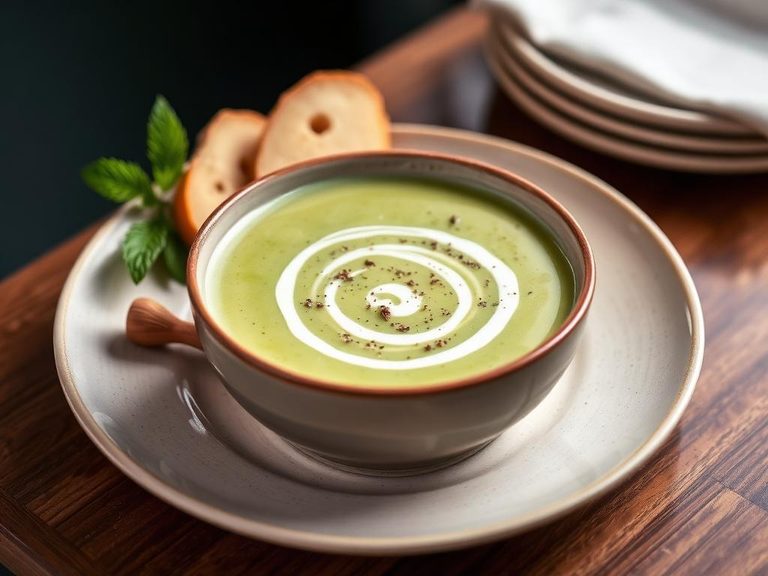
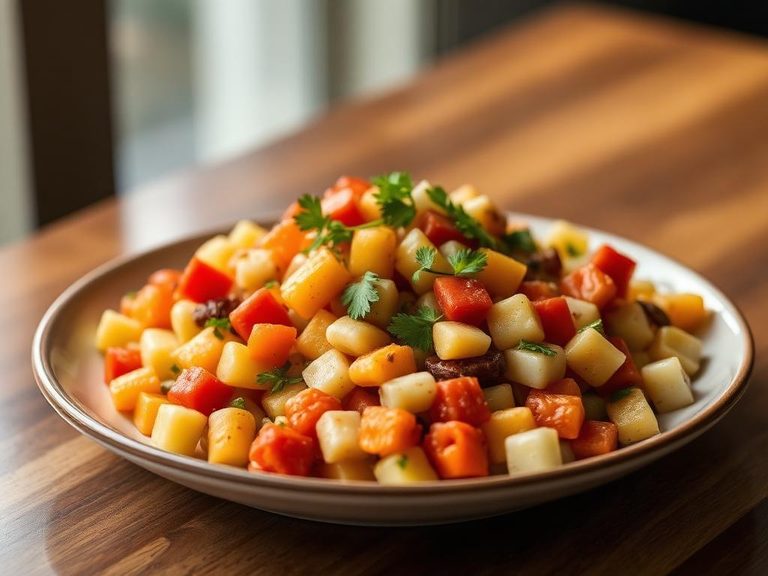
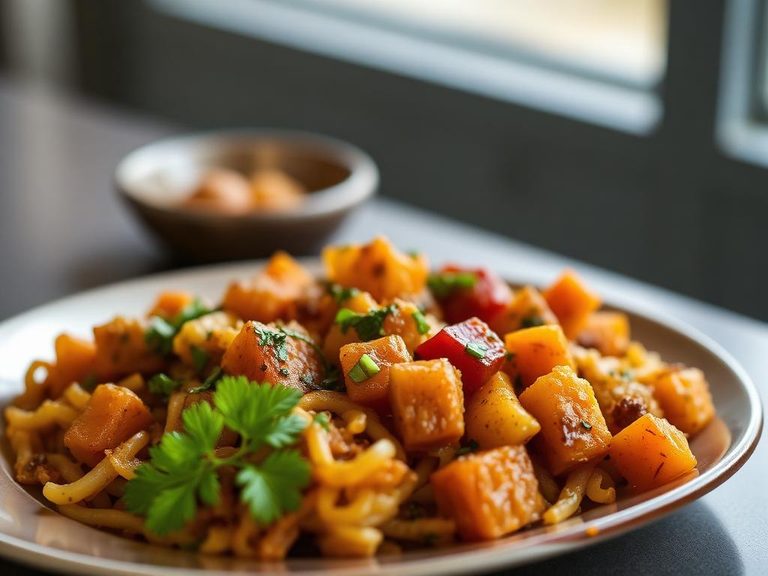
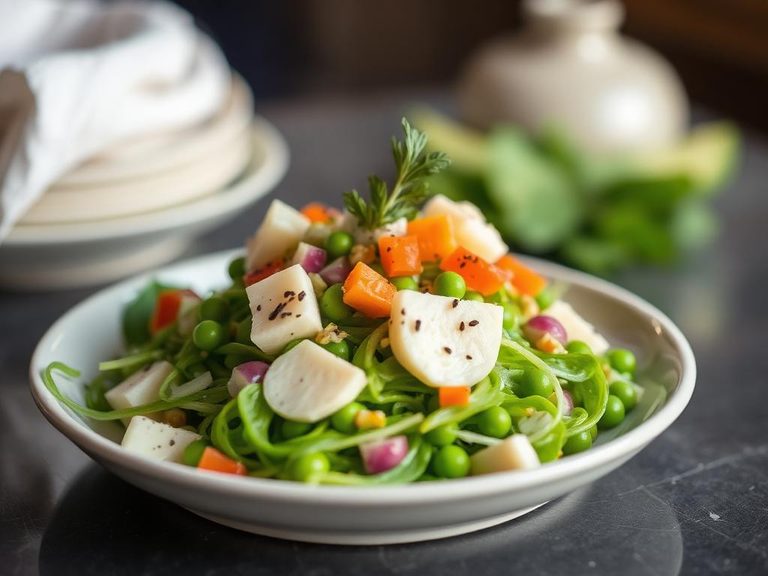
🍽️ Popular dishes


🌍 Where it's eaten
💡 Did you know?
Green peas are technically not vegetables but the seeds of a legume plant, and they are one of the oldest cultivated crops, with evidence of their use dating back to 7,000 BC in the Middle East.
Full nutrition (USDA data · scales with serving)
| Water | 78.9 g |
| Energy | 81.0 kcal |
| Protein | 5.4 g |
| Total lipid (fat) | 0.40 g |
| Carbohydrate, by difference | 14.4 g |
| Fiber, total dietary | 5.7 g |
| Total Sugars | 5.7 g |
| Calcium, Ca | 25.0 mg |
| Iron, Fe | 1.5 mg |
| Magnesium, Mg | 33.0 mg |
| Phosphorus, P | 108 mg |
| Potassium, K | 244 mg |
| Sodium, Na | 5.0 mg |
| Zinc, Zn | 1.2 mg |
| Copper, Cu | 0.18 mg |
| Selenium, Se | 1.8 ug |
| Vitamin C, total ascorbic acid | 40.0 mg |
| Thiamin | 0.27 mg |
| Riboflavin | 0.13 mg |
| Niacin | 2.1 mg |
| Vitamin B-6 | 0.17 mg |
| Folate, total | 65.0 ug |
| Folic acid | 0.00 ug |
| Folate, food | 65.0 ug |
| Folate, DFE | 65.0 ug |
| Choline, total | 28.4 mg |
| Vitamin B-12 | 0.00 ug |
| Vitamin B-12, added | 0.00 ug |
| Vitamin A, RAE | 38.0 ug |
| Retinol | 0.00 ug |
| Carotene, beta | 449 ug |
| Carotene, alpha | 21.0 ug |
| Cryptoxanthin, beta | 0.00 ug |
| Lycopene | 0.00 ug |
| Lutein + zeaxanthin | 2477 ug |
| Vitamin E (alpha-tocopherol) | 0.13 mg |
| Vitamin E, added | 0.00 mg |
| Vitamin D (D2 + D3) | 0.00 ug |
| Vitamin K (phylloquinone) | 24.8 ug |
| Alcohol, ethyl | 0.00 g |
| Caffeine | 0.00 mg |
| Theobromine | 0.00 mg |
Fat & fatty acid profile (per 100g)
| Fatty acids, total saturated | 0.07 g |
| SFA 4:0 | 0.00 g |
| SFA 6:0 | 0.00 g |
| SFA 8:0 | 0.00 g |
| SFA 10:0 | 0.00 g |
| SFA 12:0 | 0.00 g |
| SFA 14:0 | 0.00 g |
| SFA 16:0 | 0.06 g |
| SFA 18:0 | 0.01 g |
| Fatty acids, total monounsaturated | 0.04 g |
| MUFA 16:1 | 0.00 g |
| MUFA 18:1 | 0.04 g |
| MUFA 20:1 | 0.00 g |
| MUFA 22:1 | 0.00 g |
| Fatty acids, total polyunsaturated | 0.19 g |
| PUFA 18:2 | 0.15 g |
| PUFA 18:3 | 0.04 g |
| PUFA 18:4 | 0.00 g |
| PUFA 20:4 | 0.00 g |
| PUFA 20:5 n-3 (EPA) | 0.00 g |
| PUFA 22:5 n-3 (DPA) | 0.00 g |
| PUFA 22:6 n-3 (DHA) | 0.00 g |
| Cholesterol | 0.00 mg |
Amino acid profile (per 100g)
Estimated from Peas, green (includes baby and lesuer types), canned, drained solids, unprepared — USDA does not publish this profile for Green peas.
| Tryptophan | 0.03 g |
| Threonine | 0.17 g |
| Isoleucine | 0.16 g |
| Leucine | 0.27 g |
| Lysine | 0.26 g |
| Methionine | 0.07 g |
| Cystine | 0.03 g |
| Phenylalanine | 0.17 g |
| Tyrosine | 0.09 g |
| Valine | 0.19 g |
| Arginine | 0.35 g |
| Histidine | 0.09 g |
| Alanine | 0.20 g |
| Aspartic acid | 0.41 g |
| Glutamic acid | 0.61 g |
| Glycine | 0.15 g |
| Proline | 0.14 g |
| Serine | 0.15 g |
FAQ
Can you eat garden peas raw?
Yes, fresh garden peas are perfectly safe and delicious to eat raw, especially when young and tender. They offer a sweeter, crisper experience than cooked peas.
Are frozen peas as nutritious as fresh?
Often, yes. Peas are typically flash-frozen shortly after harvest, which preserves their nutrients very effectively. In some cases, frozen peas may retain more vitamins than 'fresh' peas that have traveled long distances.
Why do peas sometimes cause bloating?
Peas contain oligosacaccharides, a type of carbohydrate that some people find difficult to digest, leading to gas. Cooking them well and gradually increasing your intake can help your digestive system adjust.
Nutrient density (calculated · NRF9.3)
Nutrient Rich Foods index: beneficial nutrients (protein, fiber, vitamins, minerals) minus saturated fat, added sugar & sodium, per 100 kcal.
NRF9.3 index — Fulgoni, Keast & Drewnowski, 2009. Computed from USDA nutrients.
Weight-loss friendliness (composite index)
Energy density 0.81 kcal/g · 27% calories from protein · 5.7 g fiber · 5.7 g sugar per 100 g.
Composite of energy density (Rolls et al., 1999), protein & fiber satiety, minus sugar. A calculated heuristic — ranks satiety-per-calorie, not a clinical measure.
Dietary load (calculated from USDA values)
Potential renal acid load. Positive = acid-forming, negative = alkaline-forming.
Sodium-to-potassium ratio: 0.02 (lower is better — aim for ≤ 1)
Sodium:potassium per WHO potassium guidance. Computed from USDA nutrients.