

Green beans, canned, reduced sodium, cooked with oil
Common food

Photo: Wikipedia
This is a convenient, shelf-stable version of the classic green bean, already cooked and lightly coated in oil. The texture is tender but can be slightly softer than fresh beans, with a mild, savory flavor enhanced by the oil. Nutritionally, it offers a good source of fiber (1.8g) with a modest calorie count, and the reduced sodium content makes it a more heart-friendly pantry staple.
Calorie split: 8% protein · 33% carbs · 59% fat
↓ Full nutrition💚 Why it's loved
People love it for its incredible convenience and consistent, mild flavor that pairs well with a wide range of dishes. It's a reliable, ready-to-eat vegetable that can be quickly tossed into salads, casseroles, or stir-fries without any prep time.
⚠️ Watch-outs & how to enjoy it better
The texture can be mushy compared to fresh or frozen beans, and the added oil increases the fat content. For those monitoring sodium, even reduced-sodium versions can contribute to daily intake; pairing with fresh, low-sodium foods and rinsing can help mitigate this.
Key benefits
- Good source of dietary fiber for digestive health
- Low calorie density (48 kcal per 100g)
- Reduced sodium content compared to standard canned beans
- Provides essential vitamins like Vitamin K and Vitamin C
- Convenient and quick to prepare for meals
🍽️ Popular dishes
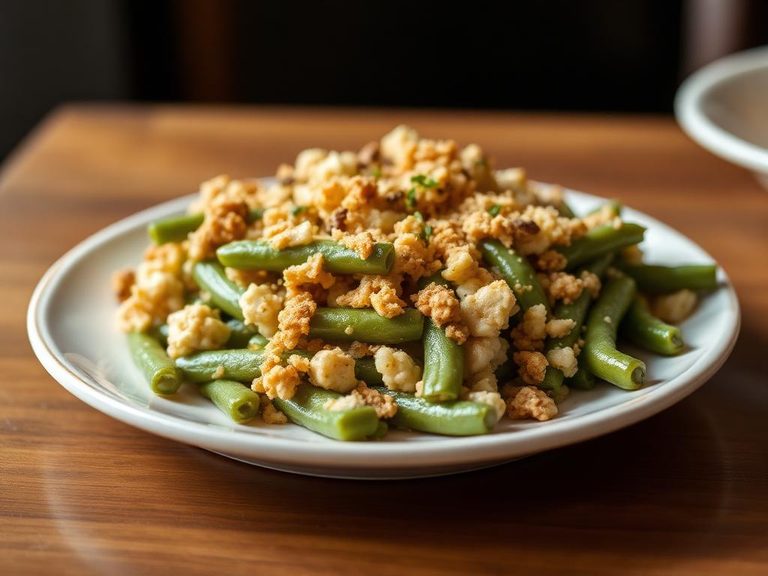
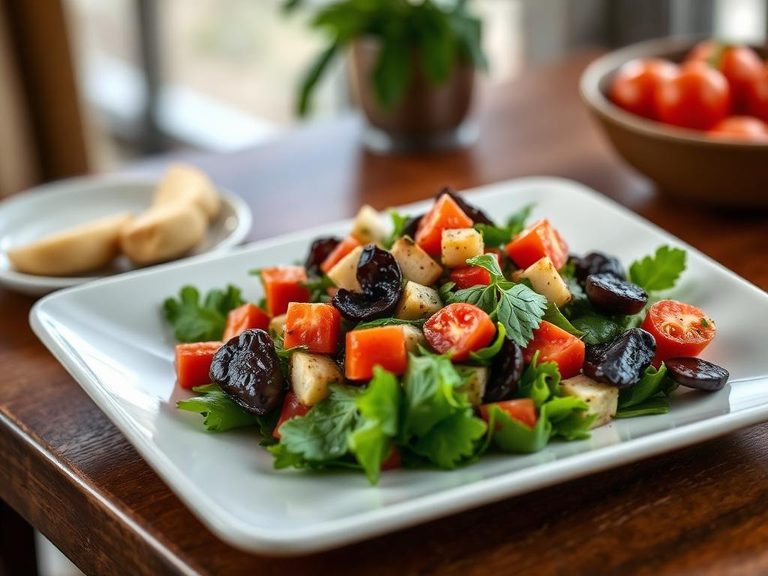
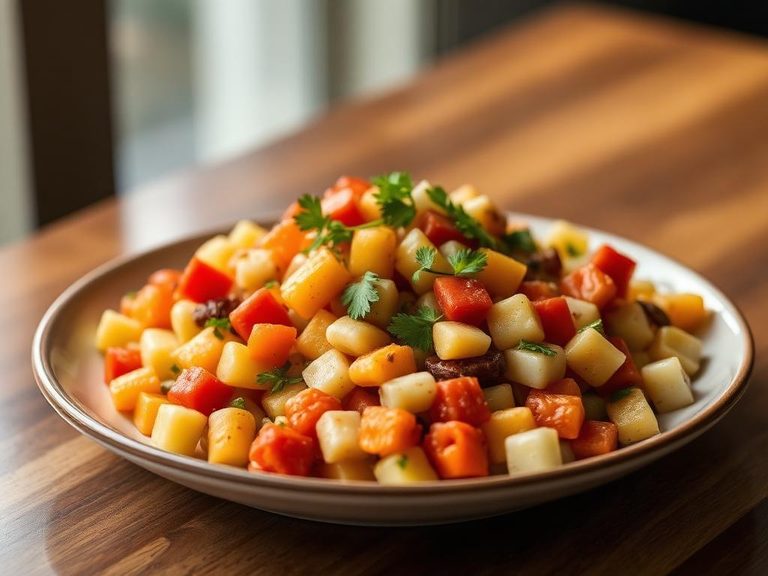
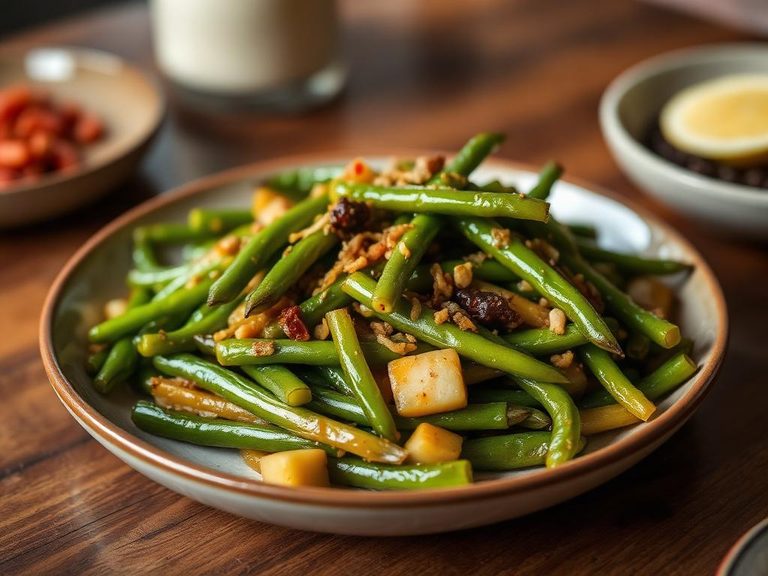
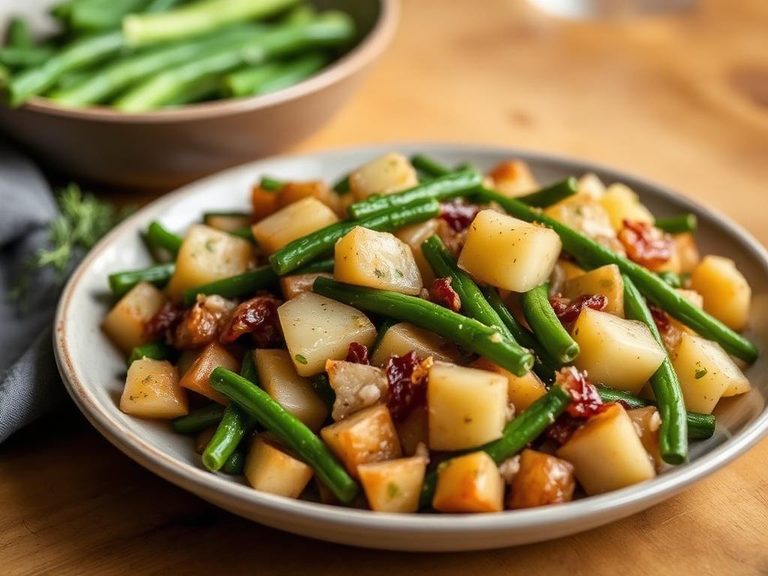
🌍 Where it's eaten
💡 Did you know?
The common green bean (Phaseolus vulgaris) is native to the Americas, but canned green beans became a staple in American pantries after the Civil War, thanks to innovations in canning technology.
Full nutrition (USDA data · scales with serving)
| Water | 90.7 g |
| Energy | 48.0 kcal |
| Protein | 1.1 g |
| Total lipid (fat) | 3.4 g |
| Carbohydrate, by difference | 4.2 g |
| Fiber, total dietary | 1.8 g |
| Total Sugars | 0.76 g |
| Calcium, Ca | 37.0 mg |
| Iron, Fe | 1.0 mg |
| Magnesium, Mg | 13.0 mg |
| Phosphorus, P | 19.0 mg |
| Potassium, K | 93.0 mg |
| Sodium, Na | 2.0 mg |
| Zinc, Zn | 0.19 mg |
| Copper, Cu | 0.03 mg |
| Selenium, Se | 0.40 ug |
| Vitamin C, total ascorbic acid | 2.4 mg |
| Thiamin | 0.01 mg |
| Riboflavin | 0.04 mg |
| Niacin | 0.20 mg |
| Vitamin B-6 | 0.03 mg |
| Folate, total | 26.0 ug |
| Folic acid | 0.00 ug |
| Folate, food | 26.0 ug |
| Folate, DFE | 26.0 ug |
| Choline, total | 14.3 mg |
| Vitamin B-12 | 0.00 ug |
| Vitamin B-12, added | 0.00 ug |
| Vitamin A, RAE | 17.0 ug |
| Retinol | 0.00 ug |
| Carotene, beta | 118 ug |
| Carotene, alpha | 151 ug |
| Cryptoxanthin, beta | 23.0 ug |
| Lycopene | 0.00 ug |
| Lutein + zeaxanthin | 439 ug |
| Vitamin E (alpha-tocopherol) | 0.58 mg |
| Vitamin E, added | 0.00 mg |
| Vitamin D (D2 + D3) | 0.00 ug |
| Vitamin K (phylloquinone) | 40.7 ug |
| Alcohol, ethyl | 0.00 g |
| Caffeine | 0.00 mg |
| Theobromine | 0.00 mg |
Fat & fatty acid profile (per 100g)
| Fatty acids, total saturated | 0.49 g |
| SFA 4:0 | 0.00 g |
| SFA 6:0 | 0.00 g |
| SFA 8:0 | 0.00 g |
| SFA 10:0 | 0.00 g |
| SFA 12:0 | 0.00 g |
| SFA 14:0 | 0.00 g |
| SFA 16:0 | 0.37 g |
| SFA 18:0 | 0.10 g |
| Fatty acids, total monounsaturated | 1.3 g |
| MUFA 16:1 | 0.01 g |
| MUFA 18:1 | 1.2 g |
| MUFA 20:1 | 0.02 g |
| MUFA 22:1 | 0.00 g |
| Fatty acids, total polyunsaturated | 1.3 g |
| PUFA 18:2 | 1.1 g |
| PUFA 18:3 | 0.27 g |
| PUFA 18:4 | 0.00 g |
| PUFA 20:4 | 0.00 g |
| PUFA 20:5 n-3 (EPA) | 0.00 g |
| PUFA 22:5 n-3 (DPA) | 0.00 g |
| PUFA 22:6 n-3 (DHA) | 0.00 g |
| Cholesterol | 0.00 mg |
Amino acid profile (per 100g)
Estimated from Beans, snap, green, canned, no salt added, solids and liquids — USDA does not publish this profile for Green beans.
| Tryptophan | 0.01 g |
| Threonine | 0.04 g |
| Isoleucine | 0.03 g |
| Leucine | 0.05 g |
| Lysine | 0.04 g |
| Methionine | 0.01 g |
| Cystine | 0.01 g |
| Phenylalanine | 0.03 g |
| Tyrosine | 0.02 g |
| Valine | 0.04 g |
| Arginine | 0.03 g |
| Histidine | 0.01 g |
| Alanine | 0.04 g |
| Aspartic acid | 0.11 g |
| Glutamic acid | 0.08 g |
| Glycine | 0.03 g |
| Proline | 0.03 g |
| Serine | 0.04 g |
FAQ
Are canned green beans as nutritious as fresh ones?
Yes, canned green beans retain most of their vitamins and minerals, though some water-soluble vitamins like Vitamin C may be slightly reduced. The main difference is often in texture and sodium content.
How can I reduce the sodium in canned green beans?
Rinse the beans thoroughly under cold water before using them. This can reduce sodium by up to 40%. Also, look for 'no salt added' versions.
Can I use canned green beans in place of fresh in recipes?
Yes, but adjust cooking times as canned beans are already cooked. They work best in casseroles, soups, and salads where texture is less critical.
Nutrient density (calculated · NRF9.3)
Nutrient Rich Foods index: beneficial nutrients (protein, fiber, vitamins, minerals) minus saturated fat, added sugar & sodium, per 100 kcal.
NRF9.3 index — Fulgoni, Keast & Drewnowski, 2009. Computed from USDA nutrients.
Weight-loss friendliness (composite index)
Energy density 0.48 kcal/g · 9% calories from protein · 1.8 g fiber · 0.8 g sugar per 100 g.
Composite of energy density (Rolls et al., 1999), protein & fiber satiety, minus sugar. A calculated heuristic — ranks satiety-per-calorie, not a clinical measure.
Dietary load (calculated from USDA values)
Potential renal acid load. Positive = acid-forming, negative = alkaline-forming.
Sodium-to-potassium ratio: 0.02 (lower is better — aim for ≤ 1)
Sodium:potassium per WHO potassium guidance. Computed from USDA nutrients.