

Green peas, canned, reduced sodium, cooked with oil
Common food

Photo: Wikipedia
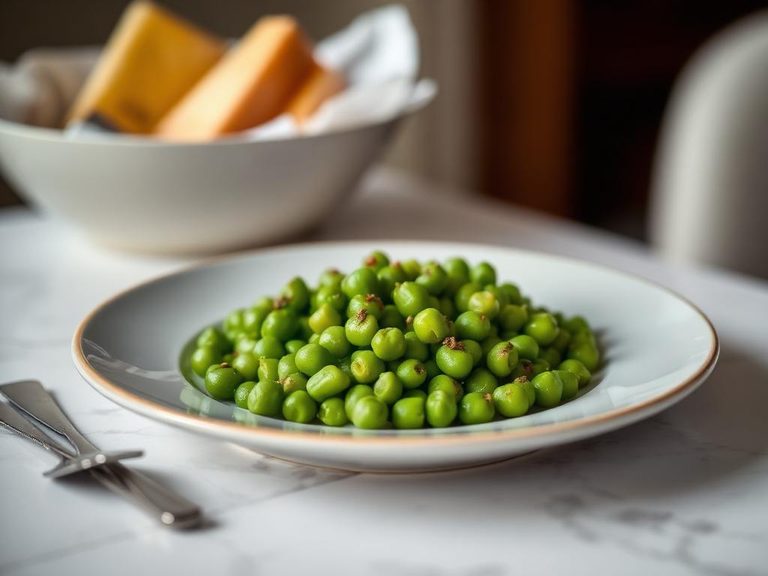
These are tender, sweet green peas preserved in a light brine, then gently cooked with a touch of oil to enhance their flavor and mouthfeel. They offer a satisfyingly soft yet slightly firm texture and a vibrant, earthy sweetness. Nutritionally, they provide a solid boost of plant-based protein and fiber for their modest calorie count.
Calorie split: 16% protein · 48% carbs · 36% fat
↓ Full nutrition💚 Why it's loved
People adore them for their natural, comforting sweetness and the way they pop with a gentle burst of flavor in every bite. They are a culinary chameleon, easily elevating everything from simple sides to complex stews with minimal effort.
⚠️ Watch-outs & how to enjoy it better
While reduced in sodium, they can still contribute to daily salt intake, so those monitoring it should rinse them or use sparingly. The natural sugars, though healthy, can cause a mild blood-sugar rise if eaten in very large portions alone; pairing them with a protein or healthy fat (like in the dish they're cooked with) helps balance this. Some individuals may also have a legume sensitivity.
Key benefits
- Good source of plant-based protein (3.87g per 100g)
- High in dietary fiber (4g per 100g) for digestive health
- Provides complex carbohydrates for sustained energy
- Low in calories (97 kcal per 100g)
- Reduced sodium version supports heart health
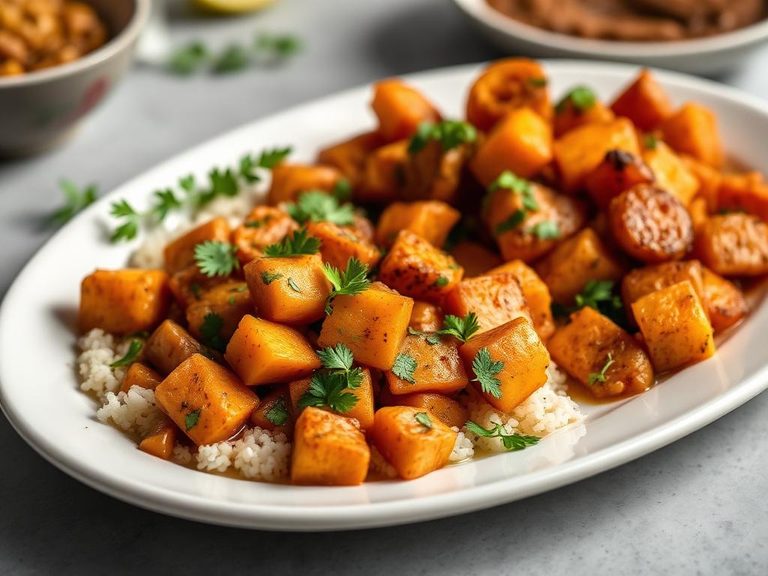
🍽️ Popular dishes

🌍 Where it's eaten
💡 Did you know?
Canned green peas were a key source of nutrition for British sailors in the 18th and 19th centuries, helping to prevent scurvy on long voyages.
Full nutrition (USDA data · scales with serving)
| Water | 79.3 g |
| Energy | 97.0 kcal |
| Protein | 3.9 g |
| Total lipid (fat) | 4.0 g |
| Carbohydrate, by difference | 11.8 g |
| Fiber, total dietary | 4.0 g |
| Total Sugars | 3.9 g |
| Calcium, Ca | 22.0 mg |
| Iron, Fe | 1.2 mg |
| Magnesium, Mg | 21.0 mg |
| Phosphorus, P | 64.0 mg |
| Potassium, K | 121 mg |
| Sodium, Na | 11.0 mg |
| Zinc, Zn | 0.85 mg |
| Copper, Cu | 0.13 mg |
| Selenium, Se | 1.6 ug |
| Vitamin C, total ascorbic acid | 10.7 mg |
| Thiamin | 0.13 mg |
| Riboflavin | 0.09 mg |
| Niacin | 1.0 mg |
| Vitamin B-6 | 0.08 mg |
| Folate, total | 33.0 ug |
| Folic acid | 0.00 ug |
| Folate, food | 33.0 ug |
| Folate, DFE | 33.0 ug |
| Choline, total | 22.9 mg |
| Vitamin B-12 | 0.00 ug |
| Vitamin B-12, added | 0.00 ug |
| Vitamin A, RAE | 87.0 ug |
| Retinol | 0.00 ug |
| Carotene, beta | 1042 ug |
| Carotene, alpha | 17.0 ug |
| Cryptoxanthin, beta | 0.00 ug |
| Lycopene | 0.00 ug |
| Lutein + zeaxanthin | 2002 ug |
| Vitamin E (alpha-tocopherol) | 0.72 mg |
| Vitamin E, added | 0.00 mg |
| Vitamin D (D2 + D3) | 0.00 ug |
| Vitamin K (phylloquinone) | 23.7 ug |
| Alcohol, ethyl | 0.00 g |
| Caffeine | 0.00 mg |
| Theobromine | 0.00 mg |
Fat & fatty acid profile (per 100g)
| Fatty acids, total saturated | 0.55 g |
| SFA 4:0 | 0.00 g |
| SFA 6:0 | 0.00 g |
| SFA 8:0 | 0.00 g |
| SFA 10:0 | 0.00 g |
| SFA 12:0 | 0.00 g |
| SFA 14:0 | 0.00 g |
| SFA 16:0 | 0.41 g |
| SFA 18:0 | 0.11 g |
| Fatty acids, total monounsaturated | 1.6 g |
| MUFA 16:1 | 0.01 g |
| MUFA 18:1 | 1.5 g |
| MUFA 20:1 | 0.03 g |
| MUFA 22:1 | 0.00 g |
| Fatty acids, total polyunsaturated | 1.6 g |
| PUFA 18:2 | 1.4 g |
| PUFA 18:3 | 0.19 g |
| PUFA 18:4 | 0.00 g |
| PUFA 20:4 | 0.00 g |
| PUFA 20:5 n-3 (EPA) | 0.00 g |
| PUFA 22:5 n-3 (DPA) | 0.00 g |
| PUFA 22:6 n-3 (DHA) | 0.00 g |
| Cholesterol | 0.00 mg |
Amino acid profile (per 100g)
Estimated from Peas, green (includes baby and lesuer types), canned, drained solids, unprepared — USDA does not publish this profile for Green peas.
| Tryptophan | 0.03 g |
| Threonine | 0.17 g |
| Isoleucine | 0.16 g |
| Leucine | 0.27 g |
| Lysine | 0.26 g |
| Methionine | 0.07 g |
| Cystine | 0.03 g |
| Phenylalanine | 0.17 g |
| Tyrosine | 0.09 g |
| Valine | 0.19 g |
| Arginine | 0.35 g |
| Histidine | 0.09 g |
| Alanine | 0.20 g |
| Aspartic acid | 0.41 g |
| Glutamic acid | 0.61 g |
| Glycine | 0.15 g |
| Proline | 0.14 g |
| Serine | 0.15 g |
FAQ
Are canned peas as nutritious as fresh or frozen?
They retain most of their vitamins and minerals, though some water-soluble nutrients like Vitamin C may be reduced. The reduced sodium version is a healthier choice, and they offer comparable fiber and protein.
Why are they cooked with oil?
A small amount of oil is often added during the canning process to improve texture, prevent the peas from sticking together, and enhance their flavor and mouthfeel.
How can I reduce the sodium further?
Simply rinse the peas thoroughly under cold running water in a colander before using. This can remove a significant portion of the surface sodium.
Nutrient density (calculated · NRF9.3)
Nutrient Rich Foods index: beneficial nutrients (protein, fiber, vitamins, minerals) minus saturated fat, added sugar & sodium, per 100 kcal.
NRF9.3 index — Fulgoni, Keast & Drewnowski, 2009. Computed from USDA nutrients.
Weight-loss friendliness (composite index)
Energy density 0.97 kcal/g · 16% calories from protein · 4.0 g fiber · 3.9 g sugar per 100 g.
Composite of energy density (Rolls et al., 1999), protein & fiber satiety, minus sugar. A calculated heuristic — ranks satiety-per-calorie, not a clinical measure.
Dietary load (calculated from USDA values)
Potential renal acid load. Positive = acid-forming, negative = alkaline-forming.
Sodium-to-potassium ratio: 0.09 (lower is better — aim for ≤ 1)
Sodium:potassium per WHO potassium guidance. Computed from USDA nutrients.