

Green peas, canned, reduced sodium, cooked, fat added, NS as to fat type
Common food

Photo: Wikipedia
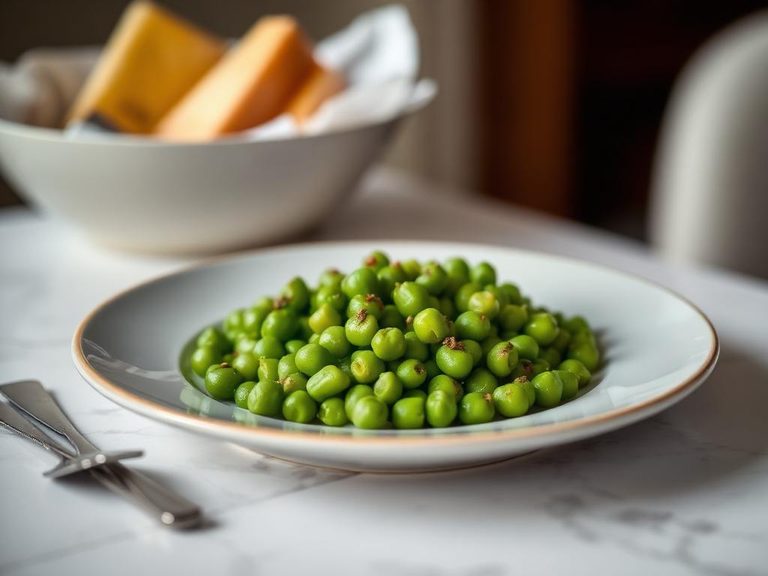
These are tender, sweet green peas preserved in a can with added fat for richness and reduced sodium for a cleaner taste. They offer a soft, slightly starchy bite with a mild, earthy sweetness and a subtle savory note from the added fat. Nutritionally, they provide a solid balance of plant-based protein and fiber with a moderate calorie count.
Calorie split: 16% protein · 50% carbs · 34% fat
↓ Full nutrition💚 Why it's loved
People love them for their comforting, sweet flavor and satisfying, soft texture that makes them a versatile side dish or ingredient. They are a nostalgic staple in many home kitchens, evoking classic comfort food.
⚠️ Watch-outs & how to enjoy it better
The added fat and carbohydrates can contribute to a higher glycemic load, which may concern those monitoring blood sugar. The reduced sodium is still present, and the canning process can slightly diminish some heat-sensitive vitamins. To counteract, pair with a lean protein like chicken or fish to slow sugar absorption and choose low-sodium brands when possible.
Key benefits
- Good source of plant-based protein (3.88g per 100g).
- High in dietary fiber (4g per 100g) for digestive health.
- Contains essential vitamins like Vitamin K and folate.
- Reduced sodium content compared to standard canned peas.
- Provides a quick, energy-dense carbohydrate source.
🍽️ Popular dishes
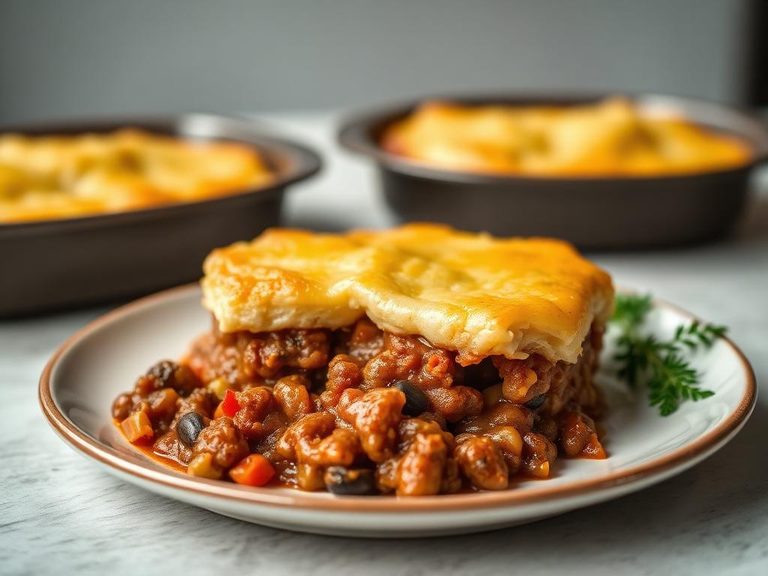
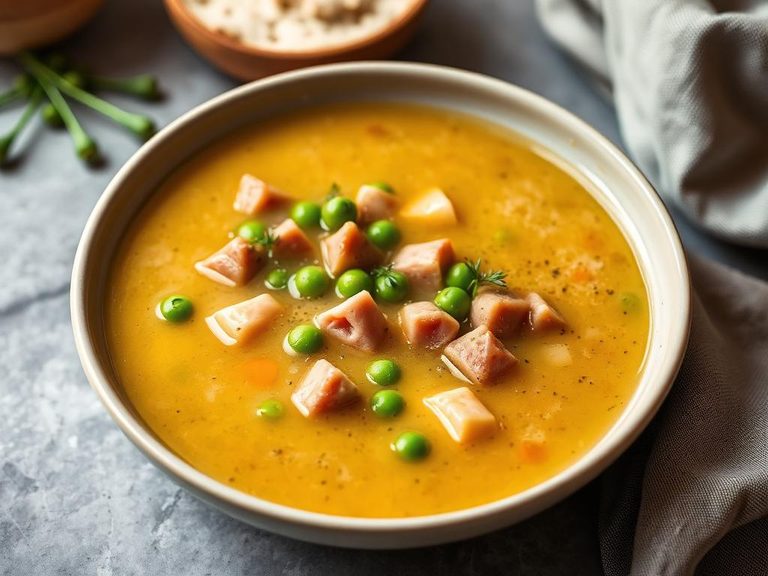
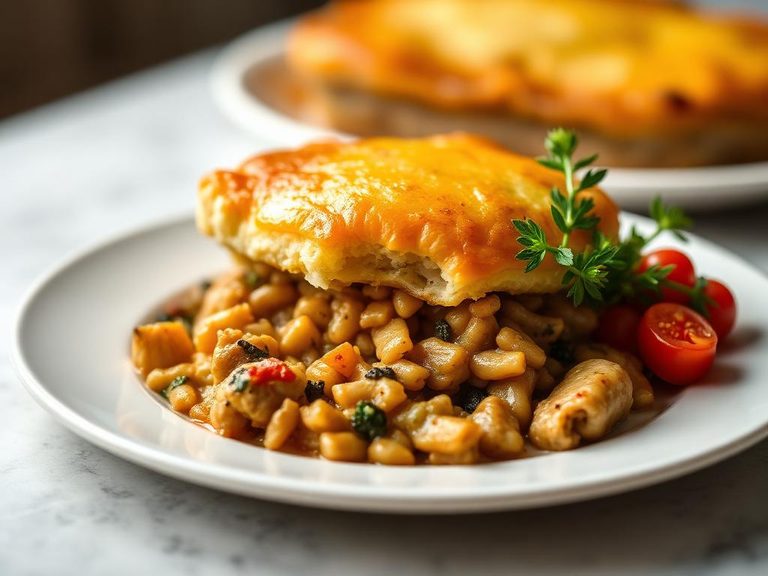
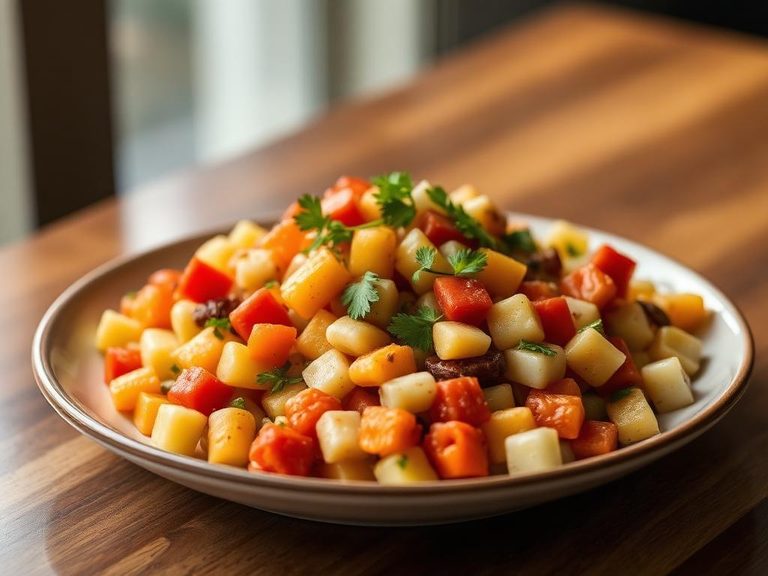
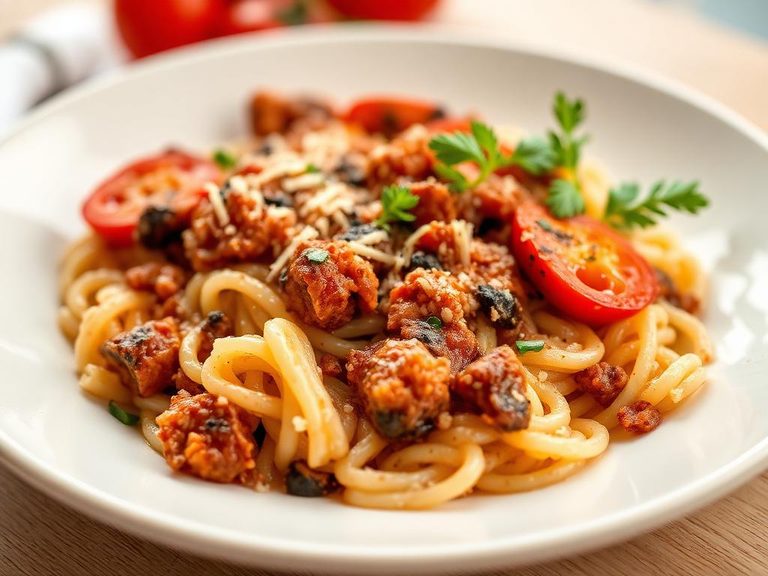
🌍 Where it's eaten
💡 Did you know?
Canned peas were a major innovation of the 19th-century canning industry, making this seasonal vegetable available year-round for the first time in history.
Full nutrition (USDA data · scales with serving)
| Water | 79.7 g |
| Energy | 93.0 kcal |
| Protein | 3.9 g |
| Total lipid (fat) | 3.6 g |
| Carbohydrate, by difference | 11.8 g |
| Fiber, total dietary | 4.0 g |
| Total Sugars | 3.9 g |
| Calcium, Ca | 22.0 mg |
| Iron, Fe | 1.2 mg |
| Magnesium, Mg | 21.0 mg |
| Phosphorus, P | 65.0 mg |
| Potassium, K | 122 mg |
| Sodium, Na | 22.0 mg |
| Zinc, Zn | 0.85 mg |
| Copper, Cu | 0.13 mg |
| Selenium, Se | 1.6 ug |
| Vitamin C, total ascorbic acid | 10.7 mg |
| Thiamin | 0.13 mg |
| Riboflavin | 0.09 mg |
| Niacin | 1.0 mg |
| Vitamin B-6 | 0.10 mg |
| Folate, total | 33.0 ug |
| Folic acid | 0.00 ug |
| Folate, food | 33.0 ug |
| Folate, DFE | 33.0 ug |
| Choline, total | 23.2 mg |
| Vitamin B-12 | 0.00 ug |
| Vitamin B-12, added | 0.00 ug |
| Vitamin A, RAE | 102 ug |
| Retinol | 14.0 ug |
| Carotene, beta | 1049 ug |
| Carotene, alpha | 17.0 ug |
| Cryptoxanthin, beta | 0.00 ug |
| Lycopene | 0.00 ug |
| Lutein + zeaxanthin | 2002 ug |
| Vitamin E (alpha-tocopherol) | 0.50 mg |
| Vitamin E, added | 0.00 mg |
| Vitamin D (D2 + D3) | 0.00 ug |
| Vitamin K (phylloquinone) | 22.7 ug |
| Alcohol, ethyl | 0.00 g |
| Caffeine | 0.00 mg |
| Theobromine | 0.00 mg |
Fat & fatty acid profile (per 100g)
| Fatty acids, total saturated | 0.90 g |
| SFA 4:0 | 0.02 g |
| SFA 6:0 | 0.02 g |
| SFA 8:0 | 0.01 g |
| SFA 10:0 | 0.02 g |
| SFA 12:0 | 0.03 g |
| SFA 14:0 | 0.08 g |
| SFA 16:0 | 0.52 g |
| SFA 18:0 | 0.18 g |
| Fatty acids, total monounsaturated | 1.2 g |
| MUFA 16:1 | 0.02 g |
| MUFA 18:1 | 1.1 g |
| MUFA 20:1 | 0.01 g |
| MUFA 22:1 | 0.00 g |
| Fatty acids, total polyunsaturated | 1.1 g |
| PUFA 18:2 | 0.95 g |
| PUFA 18:3 | 0.13 g |
| PUFA 18:4 | 0.00 g |
| PUFA 20:4 | 0.00 g |
| PUFA 20:5 n-3 (EPA) | 0.00 g |
| PUFA 22:5 n-3 (DPA) | 0.00 g |
| PUFA 22:6 n-3 (DHA) | 0.00 g |
| Cholesterol | 3.0 mg |
Amino acid profile (per 100g)
Estimated from Peas, green (includes baby and lesuer types), canned, drained solids, unprepared — USDA does not publish this profile for Green peas.
| Tryptophan | 0.03 g |
| Threonine | 0.17 g |
| Isoleucine | 0.16 g |
| Leucine | 0.27 g |
| Lysine | 0.26 g |
| Methionine | 0.07 g |
| Cystine | 0.03 g |
| Phenylalanine | 0.17 g |
| Tyrosine | 0.09 g |
| Valine | 0.19 g |
| Arginine | 0.35 g |
| Histidine | 0.09 g |
| Alanine | 0.20 g |
| Aspartic acid | 0.41 g |
| Glutamic acid | 0.61 g |
| Glycine | 0.15 g |
| Proline | 0.14 g |
| Serine | 0.15 g |
FAQ
Are canned peas as nutritious as frozen or fresh?
Canned peas retain most of their fiber, protein, and minerals. While some heat-sensitive vitamins (like Vitamin C) may be reduced, they are still a nutritious choice, especially when rinsed to lower sodium.
Why is fat added to canned peas?
Fat, often in the form of vegetable oil or butter, is added to enhance flavor, improve texture, and prevent the peas from becoming too mushy during the canning process.
How can I reduce the sodium further?
Simply rinse the peas thoroughly under cold water in a colander. This simple step can remove a significant portion of the surface sodium.
Nutrient density (calculated · NRF9.3)
Nutrient Rich Foods index: beneficial nutrients (protein, fiber, vitamins, minerals) minus saturated fat, added sugar & sodium, per 100 kcal.
NRF9.3 index — Fulgoni, Keast & Drewnowski, 2009. Computed from USDA nutrients.
Weight-loss friendliness (composite index)
Energy density 0.93 kcal/g · 17% calories from protein · 4.0 g fiber · 3.9 g sugar per 100 g.
Composite of energy density (Rolls et al., 1999), protein & fiber satiety, minus sugar. A calculated heuristic — ranks satiety-per-calorie, not a clinical measure.
Dietary load (calculated from USDA values)
Potential renal acid load. Positive = acid-forming, negative = alkaline-forming.
Sodium-to-potassium ratio: 0.18 (lower is better — aim for ≤ 1)
Sodium:potassium per WHO potassium guidance. Computed from USDA nutrients.