

Green beans, canned, reduced sodium, cooked, no added fat
Common food

Photo: Wikipedia
These are tender, mild-flavored green beans preserved in a can with minimal salt, offering a soft yet slightly crisp texture. Their nutrition profile is notably light, providing fiber and a touch of protein with very few calories. They are a convenient, low-energy-density vegetable ready for quick meals.
Calorie split: 17% protein · 67% carbs · 16% fat
↓ Full nutrition💚 Why it's loved
People love them for their mild, slightly sweet flavor and satisfying snap, which pairs well with bold seasonings. Their incredible versatility makes them a staple for everything from quick stir-fries to casseroles.
⚠️ Watch-outs & how to enjoy it better
The canning process can result in a softer, less vibrant texture than fresh beans, which some find mushy. The low sodium version is safe for most, but those on strict potassium-restricted diets should check labels, as canned vegetables can be higher in potassium. To counteract texture, quickly sauté them in a hot pan with garlic to restore some bite.
Key benefits
- Very low in calories and fat
- Good source of dietary fiber
- Provides plant-based protein
- Low sodium option for heart health
- Convenient and shelf-stable
🍽️ Popular dishes
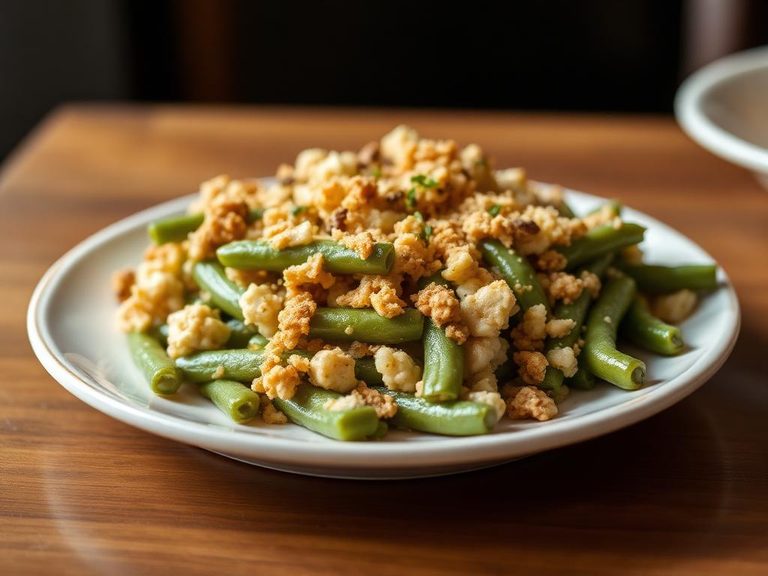
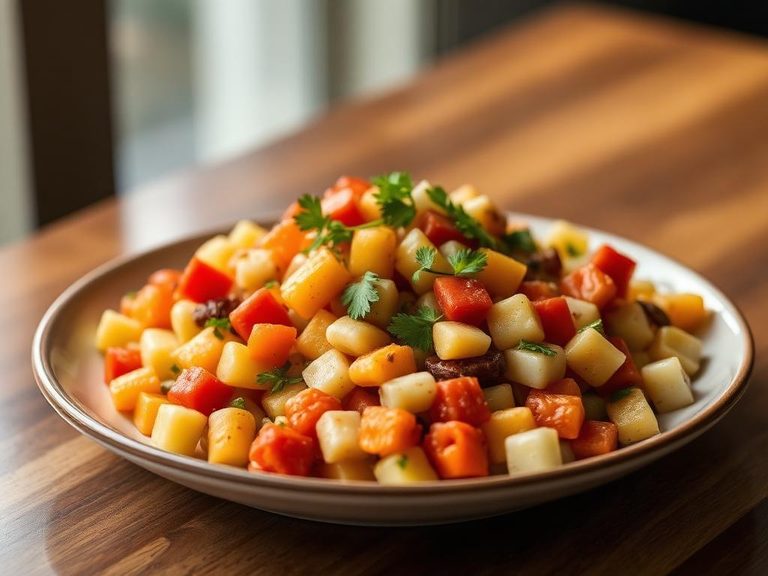
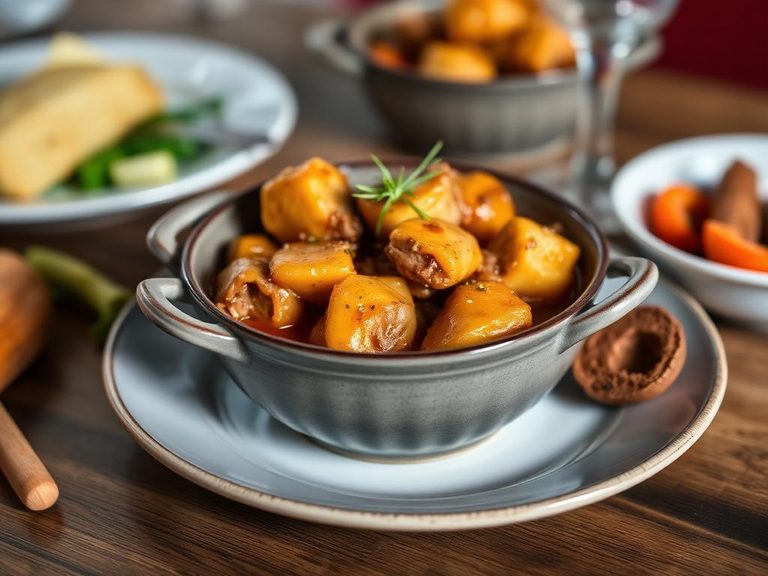
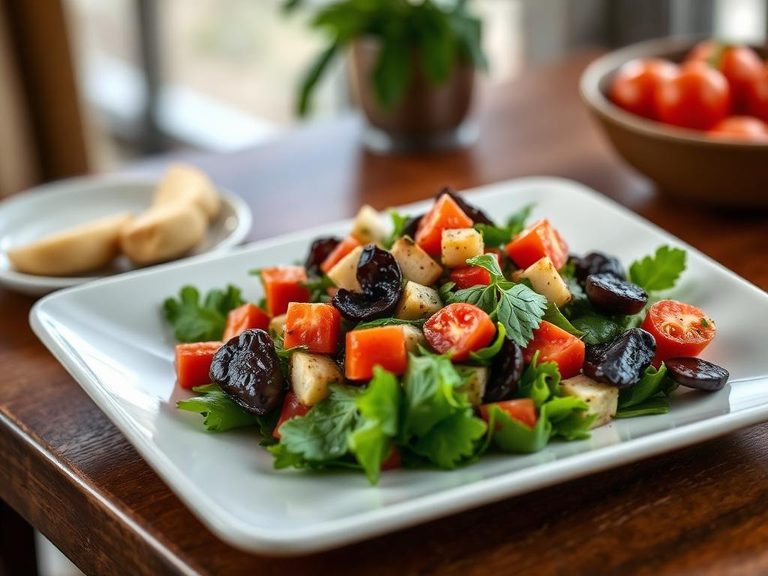
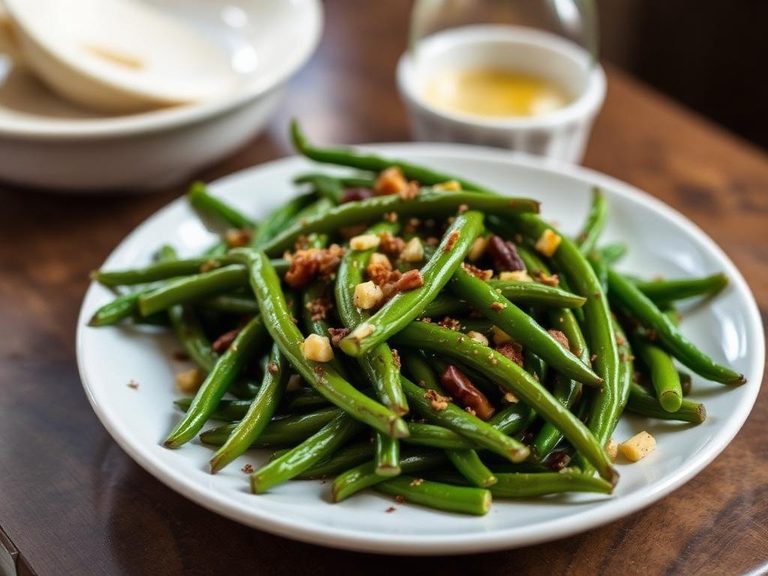
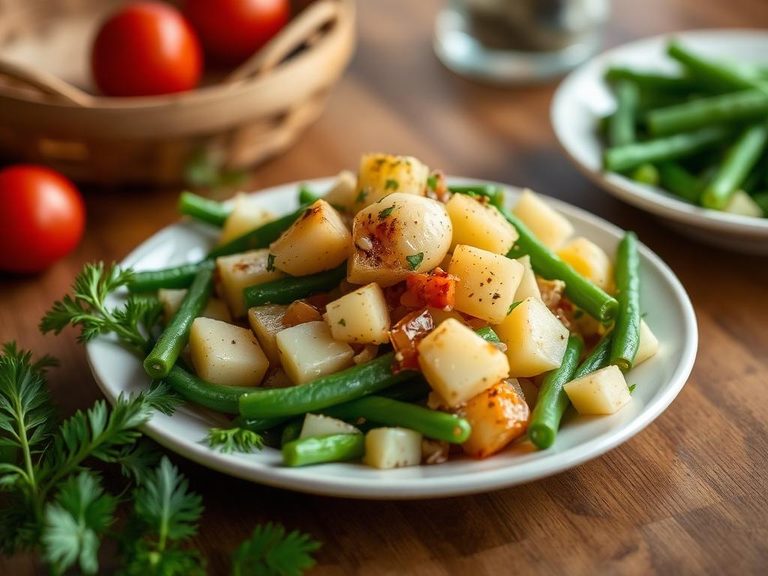
🌍 Where it's eaten
💡 Did you know?
The 'Green Bean Casserole,' a Thanksgiving staple, was invented in 1955 by a Campbell's Soup employee specifically to promote cream of mushroom soup.
Full nutrition (USDA data · scales with serving)
| Water | 93.4 g |
| Energy | 22.0 kcal |
| Protein | 1.1 g |
| Total lipid (fat) | 0.46 g |
| Carbohydrate, by difference | 4.3 g |
| Fiber, total dietary | 1.9 g |
| Total Sugars | 0.78 g |
| Calcium, Ca | 38.0 mg |
| Iron, Fe | 1.1 mg |
| Magnesium, Mg | 13.0 mg |
| Phosphorus, P | 20.0 mg |
| Potassium, K | 96.0 mg |
| Sodium, Na | 2.0 mg |
| Zinc, Zn | 0.20 mg |
| Copper, Cu | 0.03 mg |
| Selenium, Se | 0.40 ug |
| Vitamin C, total ascorbic acid | 2.5 mg |
| Thiamin | 0.01 mg |
| Riboflavin | 0.05 mg |
| Niacin | 0.21 mg |
| Vitamin B-6 | 0.03 mg |
| Folate, total | 27.0 ug |
| Folic acid | 0.00 ug |
| Folate, food | 27.0 ug |
| Folate, DFE | 27.0 ug |
| Choline, total | 14.7 mg |
| Vitamin B-12 | 0.00 ug |
| Vitamin B-12, added | 0.00 ug |
| Vitamin A, RAE | 18.0 ug |
| Retinol | 0.00 ug |
| Carotene, beta | 122 ug |
| Carotene, alpha | 156 ug |
| Cryptoxanthin, beta | 24.0 ug |
| Lycopene | 0.00 ug |
| Lutein + zeaxanthin | 452 ug |
| Vitamin E (alpha-tocopherol) | 0.03 mg |
| Vitamin E, added | 0.00 mg |
| Vitamin D (D2 + D3) | 0.00 ug |
| Vitamin K (phylloquinone) | 38.9 ug |
| Alcohol, ethyl | 0.00 g |
| Caffeine | 0.00 mg |
| Theobromine | 0.00 mg |
Fat & fatty acid profile (per 100g)
| Fatty acids, total saturated | 0.10 g |
| SFA 4:0 | 0.00 g |
| SFA 6:0 | 0.00 g |
| SFA 8:0 | 0.00 g |
| SFA 10:0 | 0.00 g |
| SFA 12:0 | 0.00 g |
| SFA 14:0 | 0.00 g |
| SFA 16:0 | 0.09 g |
| SFA 18:0 | 0.01 g |
| Fatty acids, total monounsaturated | 0.02 g |
| MUFA 16:1 | 0.00 g |
| MUFA 18:1 | 0.02 g |
| MUFA 20:1 | 0.00 g |
| MUFA 22:1 | 0.00 g |
| Fatty acids, total polyunsaturated | 0.23 g |
| PUFA 18:2 | 0.09 g |
| PUFA 18:3 | 0.14 g |
| PUFA 18:4 | 0.00 g |
| PUFA 20:4 | 0.00 g |
| PUFA 20:5 n-3 (EPA) | 0.00 g |
| PUFA 22:5 n-3 (DPA) | 0.00 g |
| PUFA 22:6 n-3 (DHA) | 0.00 g |
| Cholesterol | 0.00 mg |
Amino acid profile (per 100g)
Estimated from Beans, snap, green, canned, no salt added, solids and liquids — USDA does not publish this profile for Green beans.
| Tryptophan | 0.01 g |
| Threonine | 0.04 g |
| Isoleucine | 0.03 g |
| Leucine | 0.05 g |
| Lysine | 0.04 g |
| Methionine | 0.01 g |
| Cystine | 0.01 g |
| Phenylalanine | 0.03 g |
| Tyrosine | 0.02 g |
| Valine | 0.04 g |
| Arginine | 0.03 g |
| Histidine | 0.01 g |
| Alanine | 0.04 g |
| Aspartic acid | 0.11 g |
| Glutamic acid | 0.08 g |
| Glycine | 0.03 g |
| Proline | 0.03 g |
| Serine | 0.04 g |
FAQ
Are canned green beans as nutritious as fresh?
Canned green beans retain most of their fiber, vitamins, and minerals. The main difference is texture and sodium content. Choosing 'reduced sodium' or 'no salt added' versions makes them a very healthy choice.
Why are my canned green beans mushy?
Canning involves heat processing which softens the beans. To improve texture, drain them well and quickly sauté in a hot skillet with a little oil for 2-3 minutes until heated through and slightly crisped.
What does 'no added fat' mean on the label?
It means no oils or fats were added during the canning process. The beans are packed in water or a light brine, keeping the fat content naturally very low (0.46g per 100g).
Nutrient density (calculated · NRF9.3)
Nutrient Rich Foods index: beneficial nutrients (protein, fiber, vitamins, minerals) minus saturated fat, added sugar & sodium, per 100 kcal.
NRF9.3 index — Fulgoni, Keast & Drewnowski, 2009. Computed from USDA nutrients.
Weight-loss friendliness (composite index)
Energy density 0.22 kcal/g · 20% calories from protein · 1.9 g fiber · 0.8 g sugar per 100 g.
Composite of energy density (Rolls et al., 1999), protein & fiber satiety, minus sugar. A calculated heuristic — ranks satiety-per-calorie, not a clinical measure.
Dietary load (calculated from USDA values)
Potential renal acid load. Positive = acid-forming, negative = alkaline-forming.
Sodium-to-potassium ratio: 0.02 (lower is better — aim for ≤ 1)
Sodium:potassium per WHO potassium guidance. Computed from USDA nutrients.