

Grapefruit juice, 100%, freshly squeezed
Common food
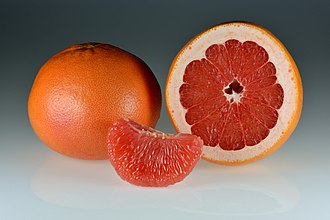
Photo: Wikipedia
This is the pure, unadulterated juice of freshly squeezed grapefruits, a vibrant, opaque liquid with a signature tart-sweet flavor and a slightly viscous, pulpy texture. Its bright, sunny color and refreshing zing make it a morning staple, while its low calorie count (39 kcal per 100g) and notable vitamin C content are key nutritional highlights.
Calorie split: 5% protein · 93% carbs · 2% fat
↓ Full nutrition💚 Why it's loved
People adore its bold, complex flavor that perfectly balances tartness with a subtle sweetness, making it an invigorating start to the day. Its versatility shines in both simple glasses and as a base for iconic cocktails like the Paloma.
⚠️ Watch-outs & how to enjoy it better
Its high natural sugar content (9.1g per 100g) can cause blood sugar spikes, and its acidity may aggravate acid reflux or irritate sensitive teeth. To counteract, consume it with a source of protein or fat (like Greek yogurt or nuts) to slow sugar absorption, and rinse your mouth with water afterward.
Key benefits
- Excellent source of immune-supporting vitamin C.
- Contains the antioxidant lycopene, linked to heart health.
- Low in calories and fat-free, aiding in weight management.
- Provides a good amount of potassium for fluid balance.
- Naturally hydrating with a high water content.
🍽️ Popular dishes

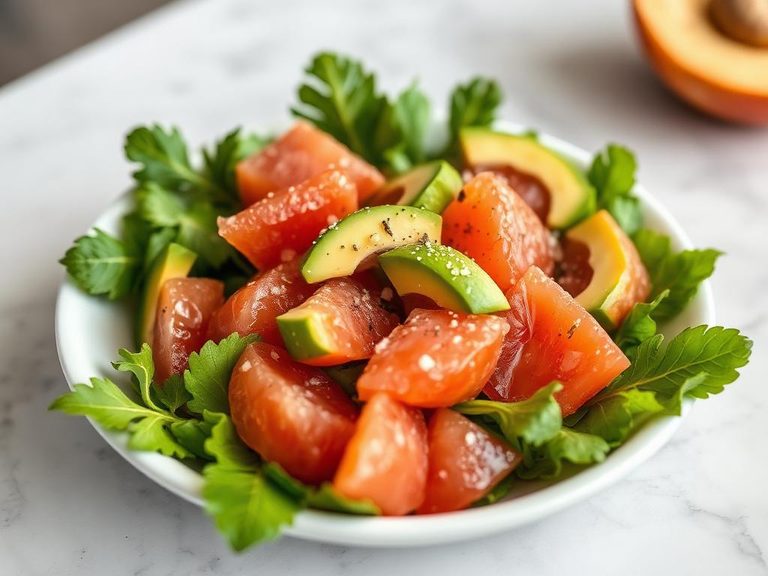
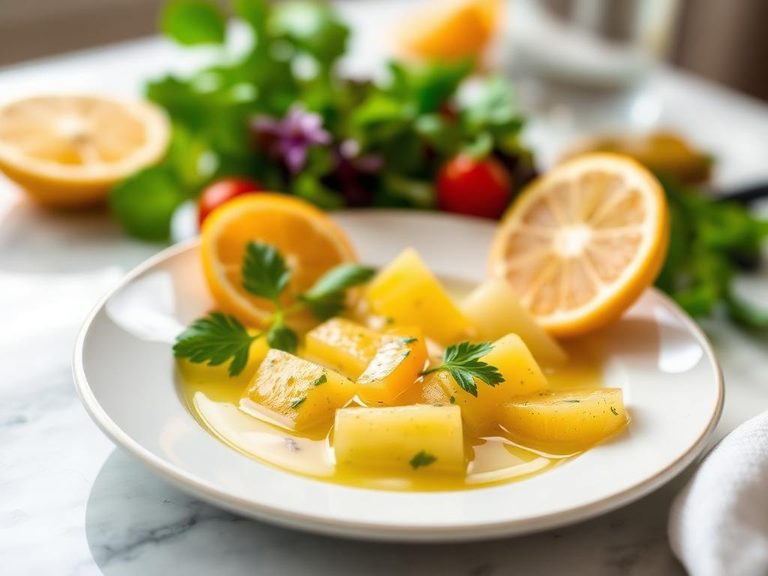
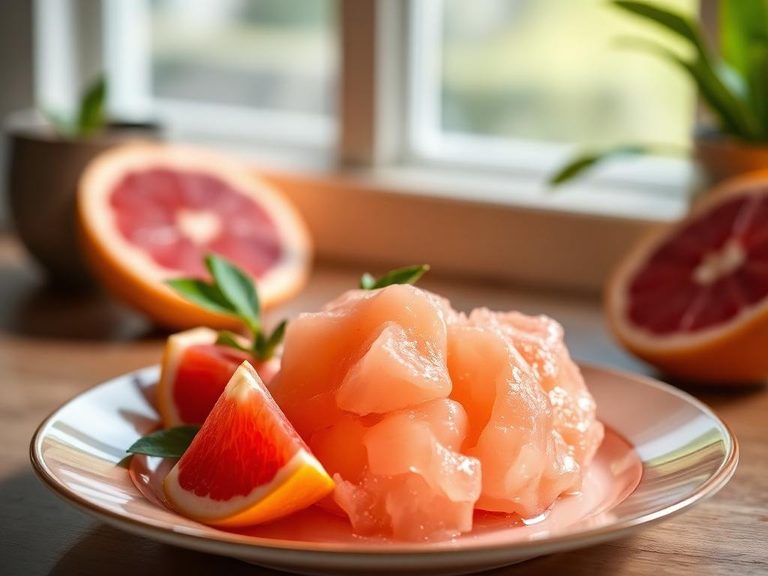
🌍 Where it's eaten
💡 Did you know?
The ruby red variety's color comes from lycopene, the same antioxidant that gives tomatoes their red hue, which is unusual for a citrus fruit.
Full nutrition (USDA data · scales with serving)
| Water | 90.0 g |
| Energy | 39.0 kcal |
| Protein | 0.50 g |
| Total lipid (fat) | 0.10 g |
| Carbohydrate, by difference | 9.2 g |
| Fiber, total dietary | 0.10 g |
| Total Sugars | 9.1 g |
| Calcium, Ca | 9.0 mg |
| Iron, Fe | 0.20 mg |
| Magnesium, Mg | 12.0 mg |
| Phosphorus, P | 15.0 mg |
| Potassium, K | 162 mg |
| Sodium, Na | 1.0 mg |
| Zinc, Zn | 0.05 mg |
| Copper, Cu | 0.03 mg |
| Selenium, Se | 0.10 ug |
| Vitamin C, total ascorbic acid | 38.0 mg |
| Thiamin | 0.04 mg |
| Riboflavin | 0.02 mg |
| Niacin | 0.20 mg |
| Vitamin B-6 | 0.04 mg |
| Folate, total | 10.0 ug |
| Folic acid | 0.00 ug |
| Folate, food | 10.0 ug |
| Folate, DFE | 10.0 ug |
| Choline, total | 7.7 mg |
| Vitamin B-12 | 0.00 ug |
| Vitamin B-12, added | 0.00 ug |
| Vitamin A, RAE | 1.0 ug |
| Retinol | 0.00 ug |
| Carotene, beta | 4.0 ug |
| Carotene, alpha | 2.0 ug |
| Cryptoxanthin, beta | 1.0 ug |
| Lycopene | 0.00 ug |
| Lutein + zeaxanthin | 10.0 ug |
| Vitamin E (alpha-tocopherol) | 0.22 mg |
| Vitamin E, added | 0.00 mg |
| Vitamin D (D2 + D3) | 0.00 ug |
| Vitamin K (phylloquinone) | 0.00 ug |
| Alcohol, ethyl | 0.00 g |
| Caffeine | 0.00 mg |
| Theobromine | 0.00 mg |
Fat & fatty acid profile (per 100g)
| Fatty acids, total saturated | 0.01 g |
| SFA 4:0 | 0.00 g |
| SFA 6:0 | 0.00 g |
| SFA 8:0 | 0.00 g |
| SFA 10:0 | 0.00 g |
| SFA 12:0 | 0.00 g |
| SFA 14:0 | 0.00 g |
| SFA 16:0 | 0.01 g |
| SFA 18:0 | 0.00 g |
| Fatty acids, total monounsaturated | 0.01 g |
| MUFA 16:1 | 0.00 g |
| MUFA 18:1 | 0.01 g |
| MUFA 20:1 | 0.00 g |
| MUFA 22:1 | 0.00 g |
| Fatty acids, total polyunsaturated | 0.02 g |
| PUFA 18:2 | 0.02 g |
| PUFA 18:3 | 0.01 g |
| PUFA 18:4 | 0.00 g |
| PUFA 20:4 | 0.00 g |
| PUFA 20:5 n-3 (EPA) | 0.00 g |
| PUFA 22:5 n-3 (DPA) | 0.00 g |
| PUFA 22:6 n-3 (DHA) | 0.00 g |
| Cholesterol | 0.00 mg |
Amino acid profile (per 100g)
Estimated from Grapefruit, sections, canned, juice pack, solids and liquids — USDA does not publish this profile for Grapefruit juice.
| Tryptophan | 0.01 g |
| Threonine | 0.01 g |
| Isoleucine | 0.01 g |
| Leucine | 0.01 g |
| Lysine | 0.02 g |
| Methionine | 0.01 g |
| Cystine | 0.01 g |
| Phenylalanine | 0.04 g |
| Tyrosine | 0.01 g |
| Valine | 0.01 g |
| Arginine | 0.08 g |
| Histidine | 0.01 g |
| Alanine | 0.02 g |
| Aspartic acid | 0.13 g |
| Glutamic acid | 0.18 g |
| Glycine | 0.01 g |
| Proline | 0.06 g |
| Serine | 0.03 g |
FAQ
Is freshly squeezed grapefruit juice healthier than store-bought?
Yes, freshly squeezed juice retains more heat-sensitive nutrients like vitamin C and contains no added sugars or preservatives, but it also lacks the pasteurization that kills harmful bacteria.
Why does grapefruit juice interact with some medications?
Compounds in grapefruit (furanocoumarins) inhibit an enzyme in your gut that breaks down certain drugs, leading to dangerously high levels of the medication in your bloodstream.
Can I freeze freshly squeezed grapefruit juice?
Absolutely. Pour it into ice cube trays or airtight containers, leaving headspace for expansion. It will maintain best quality for 3-4 months.
Nutrient density (calculated · NRF9.3)
Nutrient Rich Foods index: beneficial nutrients (protein, fiber, vitamins, minerals) minus saturated fat, added sugar & sodium, per 100 kcal.
NRF9.3 index — Fulgoni, Keast & Drewnowski, 2009. Computed from USDA nutrients.
Weight-loss friendliness (composite index)
Energy density 0.39 kcal/g · 5% calories from protein · 0.1 g fiber · 9.1 g sugar per 100 g.
Composite of energy density (Rolls et al., 1999), protein & fiber satiety, minus sugar. A calculated heuristic — ranks satiety-per-calorie, not a clinical measure.
Dietary load (calculated from USDA values)
Potential renal acid load. Positive = acid-forming, negative = alkaline-forming.
Sodium-to-potassium ratio: 0.01 (lower is better — aim for ≤ 1)
Sodium:potassium per WHO potassium guidance. Computed from USDA nutrients.