

Grapefruit juice, 100%, canned, bottled or in a carton
Common food

Photo: Wikipedia
Grapefruit juice, 100%, is a vibrant, tart, and refreshing citrus beverage with a bright, sunny yellow-orange hue and a thin, smooth texture. It delivers a clean, tangy punch with a subtle underlying sweetness, making it a classic breakfast staple. Nutritionally, it's a low-calorie, hydrating drink that provides a quick source of natural sugars and a notable amount of vitamin C.
Calorie split: 6% protein · 84% carbs · 11% fat
↓ Full nutrition💚 Why it's loved
People adore its uniquely bold, tart flavor that awakens the palate, often preferring it over sweeter orange juice. It's celebrated for its versatility as a standalone drink, a cocktail mixer (like in a Paloma), or a bright ingredient in dressings and marinades.
⚠️ Watch-outs & how to enjoy it better
Its high acidity can be harsh on sensitive teeth or trigger heartburn in some individuals. The natural sugars, while healthy, can cause a rapid blood-sugar spike if consumed in large quantities alone. Tip: Pair it with a source of protein or fat (like eggs or nuts) to slow sugar absorption, and consider drinking it with a straw to minimize tooth contact.
Key benefits
- Excellent source of immune-supporting vitamin C
- Provides hydration with minimal calories
- Contains natural antioxidants like lycopene (in pink/red varieties)
- A good source of potassium for heart and muscle function
- Offers a quick, natural energy boost from fruit sugars
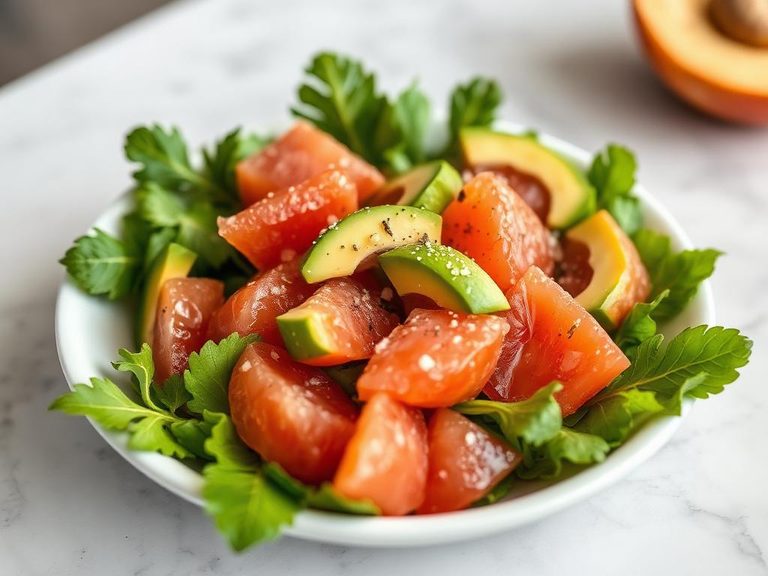
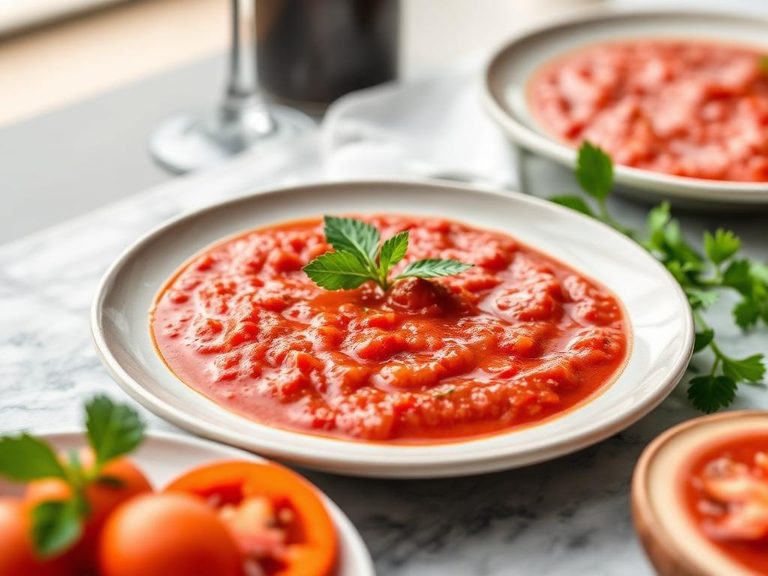
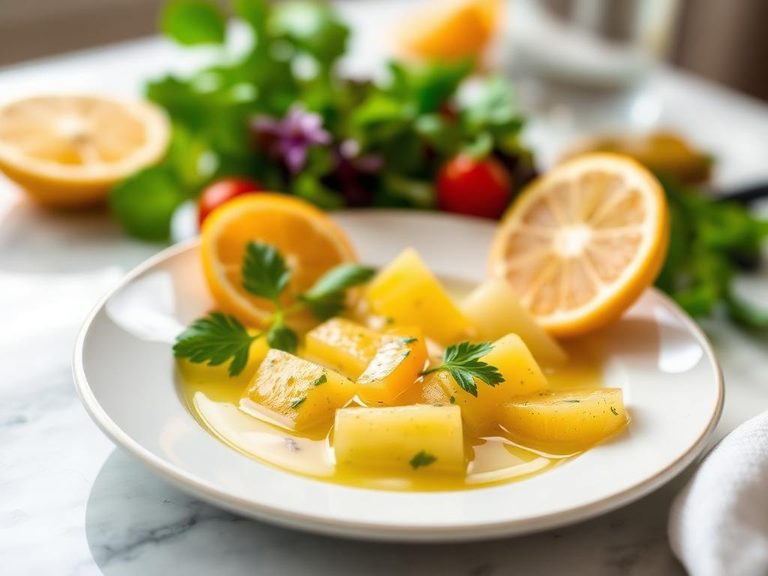
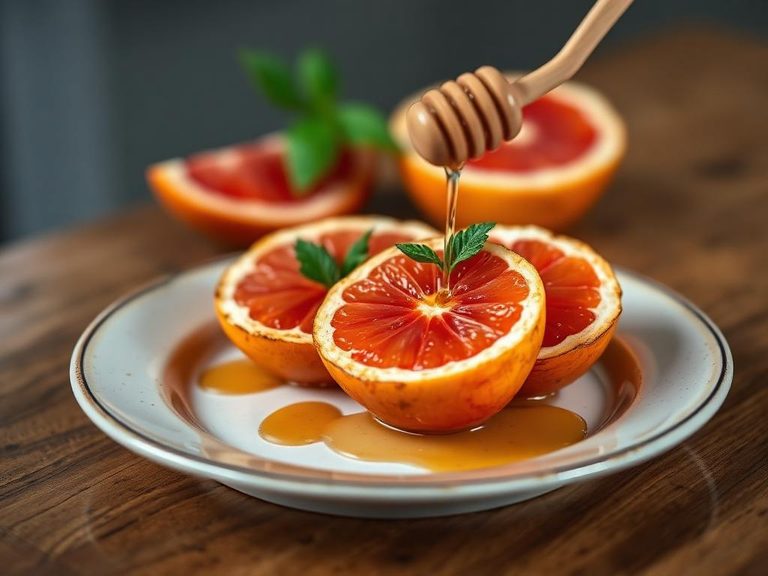
🍽️ Popular dishes

🌍 Where it's eaten
💡 Did you know?
Grapefruit was first documented as a 'forbidden fruit' in Barbados in 1750, and it's actually a hybrid between the pomelo and the sweet orange, making it one of the few citrus fruits that is a relatively modern creation.
Full nutrition (USDA data · scales with serving)
| Water | 90.4 g |
| Energy | 40.0 kcal |
| Protein | 0.56 g |
| Total lipid (fat) | 0.48 g |
| Carbohydrate, by difference | 8.3 g |
| Fiber, total dietary | 0.20 g |
| Total Sugars | 7.4 g |
| Calcium, Ca | 12.0 mg |
| Iron, Fe | 0.04 mg |
| Magnesium, Mg | 9.0 mg |
| Phosphorus, P | 16.0 mg |
| Potassium, K | 134 mg |
| Sodium, Na | 1.0 mg |
| Zinc, Zn | 0.04 mg |
| Copper, Cu | 0.03 mg |
| Selenium, Se | 0.10 ug |
| Vitamin C, total ascorbic acid | 31.8 mg |
| Thiamin | 0.05 mg |
| Riboflavin | 0.02 mg |
| Niacin | 0.14 mg |
| Vitamin B-6 | 0.01 mg |
| Folate, total | 16.0 ug |
| Folic acid | 0.00 ug |
| Folate, food | 16.0 ug |
| Folate, DFE | 16.0 ug |
| Choline, total | 7.7 mg |
| Vitamin B-12 | 0.00 ug |
| Vitamin B-12, added | 0.00 ug |
| Vitamin A, RAE | 2.0 ug |
| Retinol | 0.00 ug |
| Carotene, beta | 20.0 ug |
| Carotene, alpha | 2.0 ug |
| Cryptoxanthin, beta | 1.0 ug |
| Lycopene | 0.00 ug |
| Lutein + zeaxanthin | 10.0 ug |
| Vitamin E (alpha-tocopherol) | 0.22 mg |
| Vitamin E, added | 0.00 mg |
| Vitamin D (D2 + D3) | 0.00 ug |
| Vitamin K (phylloquinone) | 0.00 ug |
| Alcohol, ethyl | 0.00 g |
| Caffeine | 0.00 mg |
| Theobromine | 0.00 mg |
Fat & fatty acid profile (per 100g)
| Fatty acids, total saturated | 0.08 g |
| SFA 4:0 | 0.00 g |
| SFA 6:0 | 0.00 g |
| SFA 8:0 | 0.00 g |
| SFA 10:0 | 0.00 g |
| SFA 12:0 | 0.00 g |
| SFA 14:0 | 0.00 g |
| SFA 16:0 | 0.08 g |
| SFA 18:0 | 0.01 g |
| Fatty acids, total monounsaturated | 0.09 g |
| MUFA 16:1 | 0.01 g |
| MUFA 18:1 | 0.08 g |
| MUFA 20:1 | 0.00 g |
| MUFA 22:1 | 0.00 g |
| Fatty acids, total polyunsaturated | 0.17 g |
| PUFA 18:2 | 0.14 g |
| PUFA 18:3 | 0.04 g |
| PUFA 18:4 | 0.00 g |
| PUFA 20:4 | 0.00 g |
| PUFA 20:5 n-3 (EPA) | 0.00 g |
| PUFA 22:5 n-3 (DPA) | 0.00 g |
| PUFA 22:6 n-3 (DHA) | 0.00 g |
| Cholesterol | 1.0 mg |
Amino acid profile (per 100g)
Estimated from Grapefruit, sections, canned, juice pack, solids and liquids — USDA does not publish this profile for Grapefruit juice.
| Tryptophan | 0.01 g |
| Threonine | 0.01 g |
| Isoleucine | 0.01 g |
| Leucine | 0.01 g |
| Lysine | 0.02 g |
| Methionine | 0.01 g |
| Cystine | 0.01 g |
| Phenylalanine | 0.04 g |
| Tyrosine | 0.01 g |
| Valine | 0.01 g |
| Arginine | 0.08 g |
| Histidine | 0.01 g |
| Alanine | 0.02 g |
| Aspartic acid | 0.13 g |
| Glutamic acid | 0.18 g |
| Glycine | 0.01 g |
| Proline | 0.06 g |
| Serine | 0.03 g |
FAQ
Is grapefruit juice as healthy as eating the whole fruit?
While it provides vitamins and hydration, juicing removes most of the beneficial fiber found in the whole fruit, which helps with satiety and blood sugar regulation. The juice is also more concentrated in sugar.
Why is it important to check medications with grapefruit juice?
Grapefruit contains compounds called furanocoumarins that can interfere with enzymes in your gut and liver, potentially altering the absorption and effects of a wide range of prescription medications, from statins to blood pressure drugs. Always consult your doctor or pharmacist.
What's the difference between pink/red and white grapefruit juice?
Pink and red varieties contain lycopene, an antioxidant that gives them their color and may offer additional health benefits. They are often slightly sweeter and less acidic than the more bitter white grapefruit juice.
Nutrient density (calculated · NRF9.3)
Nutrient Rich Foods index: beneficial nutrients (protein, fiber, vitamins, minerals) minus saturated fat, added sugar & sodium, per 100 kcal.
NRF9.3 index — Fulgoni, Keast & Drewnowski, 2009. Computed from USDA nutrients.
Weight-loss friendliness (composite index)
Energy density 0.40 kcal/g · 6% calories from protein · 0.2 g fiber · 7.4 g sugar per 100 g.
Composite of energy density (Rolls et al., 1999), protein & fiber satiety, minus sugar. A calculated heuristic — ranks satiety-per-calorie, not a clinical measure.
Dietary load (calculated from USDA values)
Potential renal acid load. Positive = acid-forming, negative = alkaline-forming.
Sodium-to-potassium ratio: 0.01 (lower is better — aim for ≤ 1)
Sodium:potassium per WHO potassium guidance. Computed from USDA nutrients.