

Fish, trout, baked or broiled, coated
Common food

Photo: Wikipedia
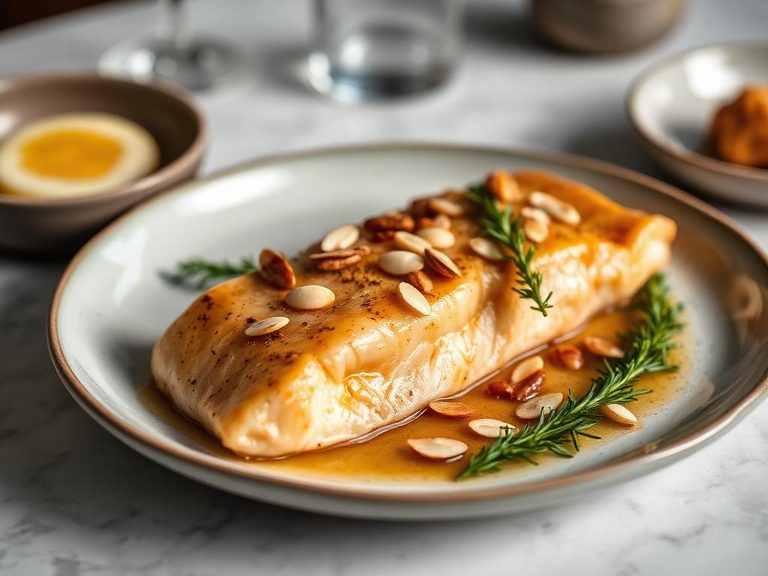
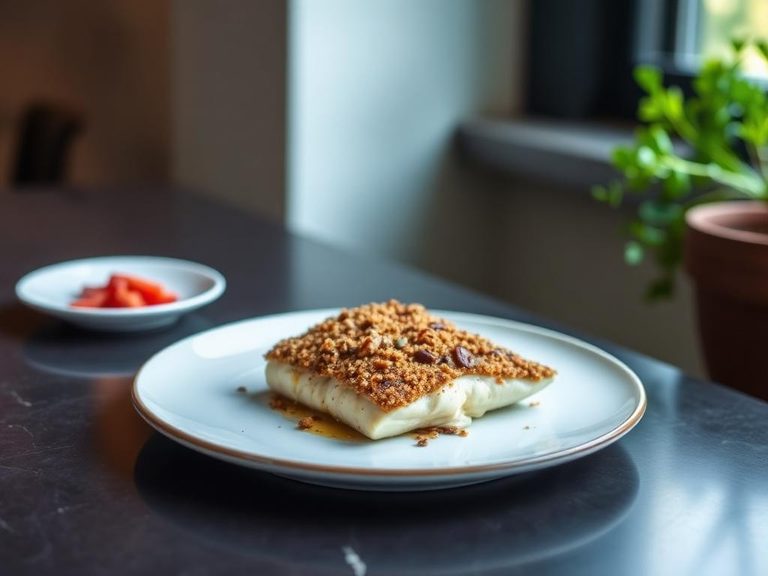
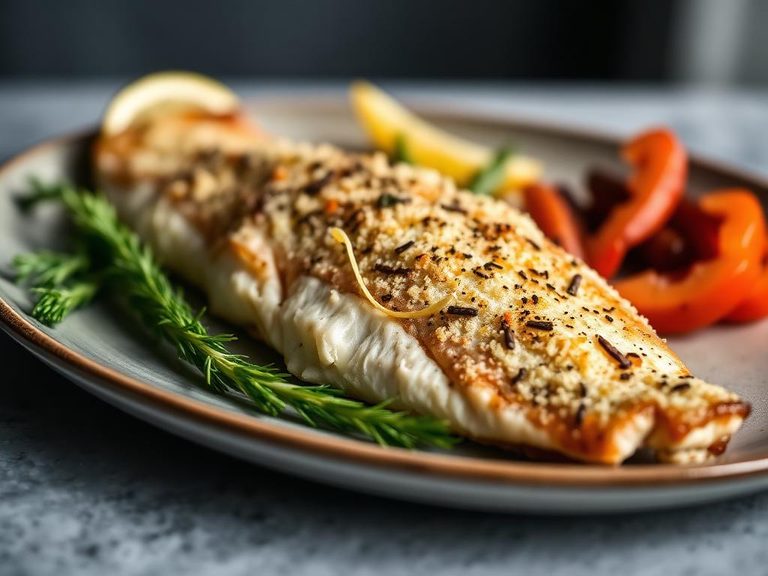
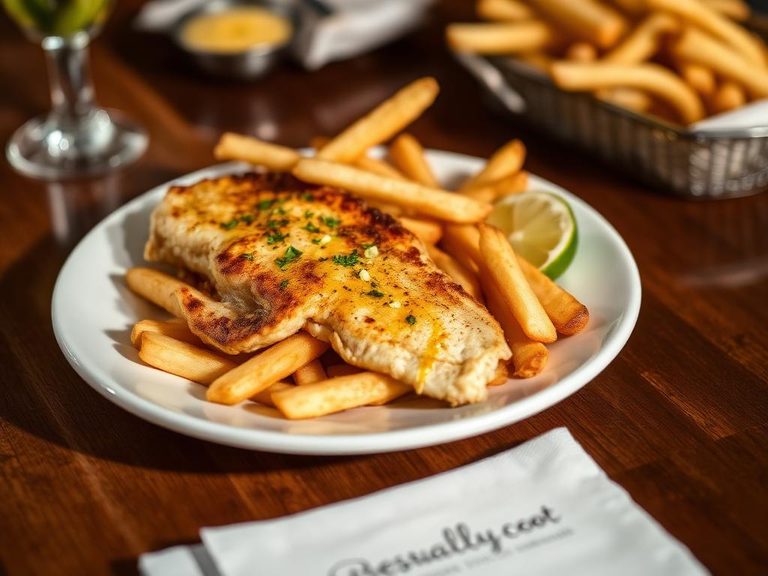
This is a tender, flaky trout fillet, typically rainbow trout, that has been coated in a light breading or batter and then baked or broiled to a golden crisp. The coating adds a satisfying crunch that contrasts beautifully with the moist, delicate fish underneath, offering a mild, subtly sweet flavor. Nutritionally, it's a standout source of high-quality protein while remaining relatively lean for a coated dish.
Calorie split: 40% protein · 14% carbs · 46% fat
↓ Full nutrition💚 Why it's loved
People love it for the perfect textural contrast between the crispy, seasoned coating and the tender, flaky fish inside. It's a versatile centerpiece that feels both comforting and elegant, easily adapting to various herbs and seasonings.
⚠️ Watch-outs & how to enjoy it better
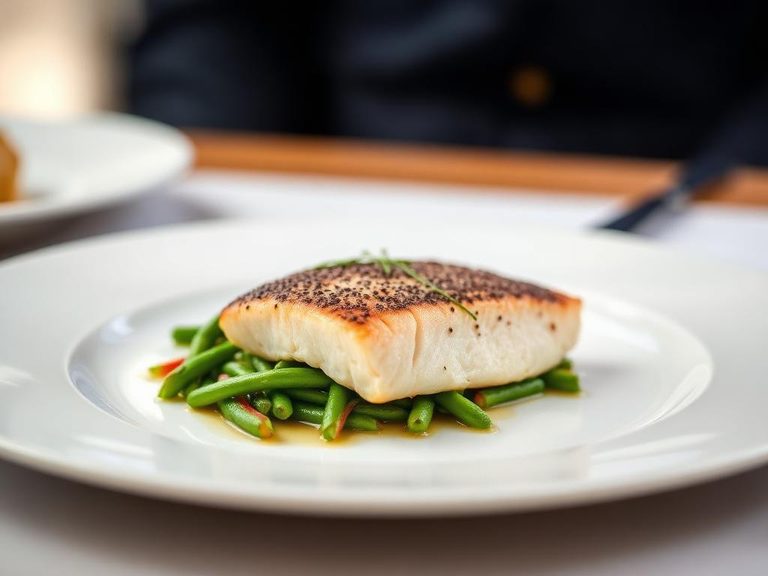
The coating can add extra carbohydrates and calories compared to plain baked fish, which may be a consideration for strict low-carb diets. To maximize benefits, pair it with non-starchy vegetables like steamed broccoli or a fresh salad instead of starchy sides. Those watching sodium intake should be mindful of pre-made breading mixes.
Key benefits
- Excellent source of complete protein (22g per 100g)
- Provides omega-3 fatty acids for heart and brain health
- Good source of B vitamins, especially B12 and niacin
- Contains selenium, an important antioxidant mineral
- Lower in saturated fat compared to many fried fish preparations
🍽️ Popular dishes
🌍 Where it's eaten
💡 Did you know?
Rainbow trout, the most common species for this dish, are not true salmon but are in the same family (Salmonidae) and get their name from the pinkish-red stripe that runs along their sides.
Full nutrition (USDA data · scales with serving)
| Water | 57.9 g |
| Energy | 228 kcal |
| Protein | 22.2 g |
| Total lipid (fat) | 11.3 g |
| Carbohydrate, by difference | 7.8 g |
| Fiber, total dietary | 0.30 g |
| Total Sugars | 0.14 g |
| Calcium, Ca | 36.0 mg |
| Iron, Fe | 0.91 mg |
| Magnesium, Mg | 29.0 mg |
| Phosphorus, P | 253 mg |
| Potassium, K | 412 mg |
| Sodium, Na | 317 mg |
| Zinc, Zn | 0.57 mg |
| Copper, Cu | 0.07 mg |
| Selenium, Se | 26.8 ug |
| Vitamin C, total ascorbic acid | 2.4 mg |
| Thiamin | 0.20 mg |
| Riboflavin | 0.14 mg |
| Niacin | 6.5 mg |
| Vitamin B-6 | 0.36 mg |
| Folate, total | 27.0 ug |
| Folic acid | 13.0 ug |
| Folate, food | 14.0 ug |
| Folate, DFE | 36.0 ug |
| Choline, total | 73.0 mg |
| Vitamin B-12 | 4.1 ug |
| Vitamin B-12, added | 0.00 ug |
| Vitamin A, RAE | 97.0 ug |
| Retinol | 96.0 ug |
| Carotene, beta | 9.0 ug |
| Carotene, alpha | 0.00 ug |
| Cryptoxanthin, beta | 0.00 ug |
| Lycopene | 0.00 ug |
| Lutein + zeaxanthin | 7.0 ug |
| Vitamin E (alpha-tocopherol) | 3.1 mg |
| Vitamin E, added | 0.00 mg |
| Vitamin D (D2 + D3) | 16.7 ug |
| Vitamin K (phylloquinone) | 4.0 ug |
| Alcohol, ethyl | 0.00 g |
| Caffeine | 0.00 mg |
| Theobromine | 0.00 mg |
Fat & fatty acid profile (per 100g)
| Fatty acids, total saturated | 2.7 g |
| SFA 4:0 | 0.03 g |
| SFA 6:0 | 0.02 g |
| SFA 8:0 | 0.01 g |
| SFA 10:0 | 0.03 g |
| SFA 12:0 | 0.04 g |
| SFA 14:0 | 0.30 g |
| SFA 16:0 | 1.7 g |
| SFA 18:0 | 0.50 g |
| Fatty acids, total monounsaturated | 3.7 g |
| MUFA 16:1 | 0.38 g |
| MUFA 18:1 | 3.0 g |
| MUFA 20:1 | 0.25 g |
| MUFA 22:1 | 0.02 g |
| Fatty acids, total polyunsaturated | 3.0 g |
| PUFA 18:2 | 1.8 g |
| PUFA 18:3 | 0.22 g |
| PUFA 18:4 | 0.00 g |
| PUFA 20:4 | 0.05 g |
| PUFA 20:5 n-3 (EPA) | 0.23 g |
| PUFA 22:5 n-3 (DPA) | 0.10 g |
| PUFA 22:6 n-3 (DHA) | 0.54 g |
| Cholesterol | 70.0 mg |
Amino acid profile (per 100g)
Estimated from Fish, fish sticks, frozen, prepared — USDA does not publish this profile for Fish.
| Tryptophan | 0.12 g |
| Threonine | 0.37 g |
| Isoleucine | 0.43 g |
| Leucine | 0.85 g |
| Lysine | 0.80 g |
| Methionine | 0.30 g |
| Phenylalanine | 0.47 g |
| Tyrosine | 0.29 g |
| Valine | 0.50 g |
| Arginine | 0.59 g |
| Histidine | 0.23 g |
| Alanine | 0.55 g |
| Aspartic acid | 0.82 g |
| Glutamic acid | 2.3 g |
| Glycine | 0.47 g |
| Proline | 0.78 g |
| Serine | 0.49 g |
| Hydroxyproline | 0.00 g |
FAQ
Is baked coated trout healthier than fried fish and chips?
Generally, yes. Baking or broiling uses significantly less added fat than deep-frying, resulting in a lower overall calorie and fat content while still providing a crispy texture.
Can I make this with other types of fish?
Absolutely. While trout is classic, the same coating and cooking method works well with other firm, white-fleshed fish like cod, haddock, or tilapia.
What's the best way to keep the coating from getting soggy?
Ensure the fish is patted very dry before coating, and place it on a wire rack over a baking sheet to allow air to circulate underneath during baking or broiling.
Nutrient density (calculated · NRF9.3)
Nutrient Rich Foods index: beneficial nutrients (protein, fiber, vitamins, minerals) minus saturated fat, added sugar & sodium, per 100 kcal.
NRF9.3 index — Fulgoni, Keast & Drewnowski, 2009. Computed from USDA nutrients.
Weight-loss friendliness (composite index)
Energy density 2.28 kcal/g · 39% calories from protein · 0.3 g fiber · 0.1 g sugar per 100 g.
Composite of energy density (Rolls et al., 1999), protein & fiber satiety, minus sugar. A calculated heuristic — ranks satiety-per-calorie, not a clinical measure.
Dietary load (calculated from USDA values)
Potential renal acid load. Positive = acid-forming, negative = alkaline-forming.
Sodium-to-potassium ratio: 0.77 (lower is better — aim for ≤ 1)
Sodium:potassium per WHO potassium guidance. Computed from USDA nutrients.