

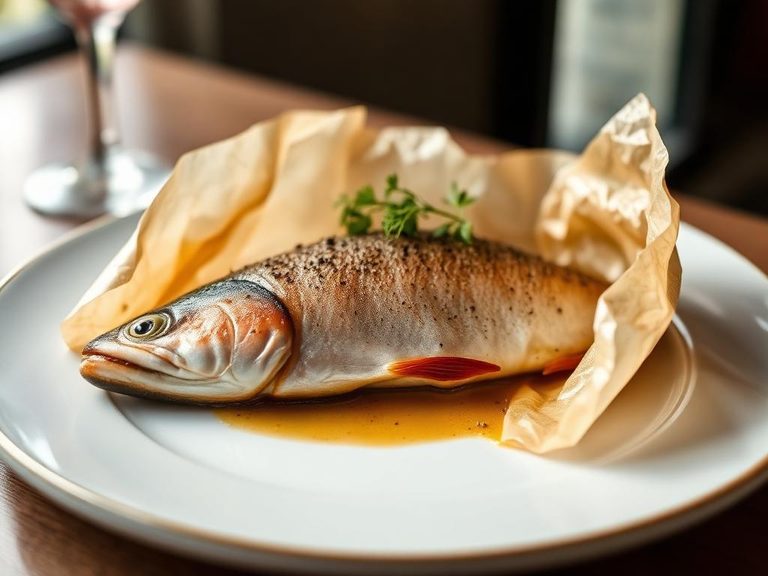
Fish, trout, baked or broiled
Common food

Photo: Wikipedia
Baked or broiled trout offers a delicate, flaky texture and a mild, sweet flavor that becomes slightly nutty when cooked. It is an exceptionally lean protein source, with virtually no carbohydrates and a healthy dose of omega-3 fatty acids. The simple cooking method preserves its clean taste and nutritional integrity, making it a staple of healthy, flavorful meals.
Calorie split: 47% protein · 0% carbs · 53% fat
↓ Full nutrition💚 Why it's loved
People love baked or broiled trout for its clean, versatile flavor that pairs beautifully with herbs, citrus, and butter. Its quick cooking time and delicate texture make it a favorite for both weeknight dinners and elegant presentations.
⚠️ Watch-outs & how to enjoy it better
While generally healthy, trout can be a common fish allergen. Some individuals may be sensitive to the histamine levels in fish if not perfectly fresh. To counteract this, ensure the trout is sourced from a reputable supplier and cooked immediately. For a balanced meal, pair it with non-starchy vegetables and a healthy fat source like olive oil or avocado to manage blood sugar response.
Key benefits
- High-quality, complete protein for muscle maintenance and satiety.
- Rich in heart-healthy omega-3 fatty acids (EPA and DHA).
- Very low in carbohydrates and sugars, suitable for low-carb diets.
- Good source of B vitamins, particularly B12 and niacin.
- Contains essential minerals like selenium and phosphorus.
🍽️ Popular dishes
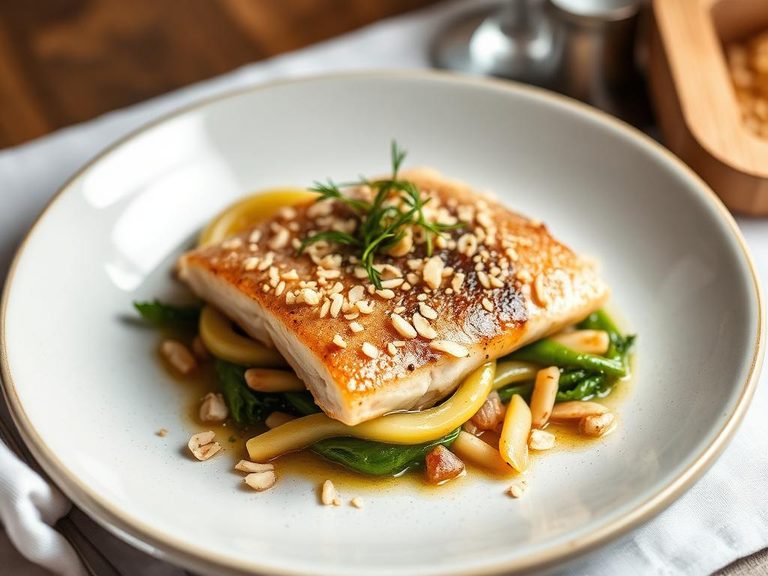
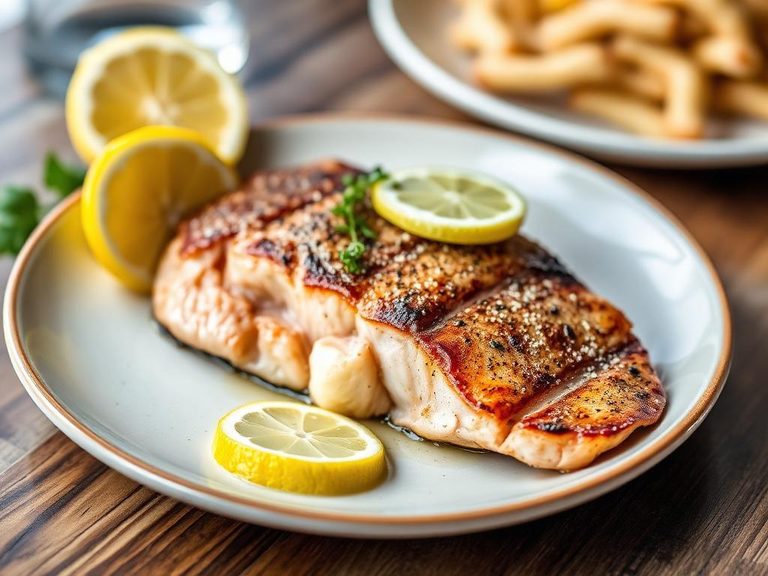
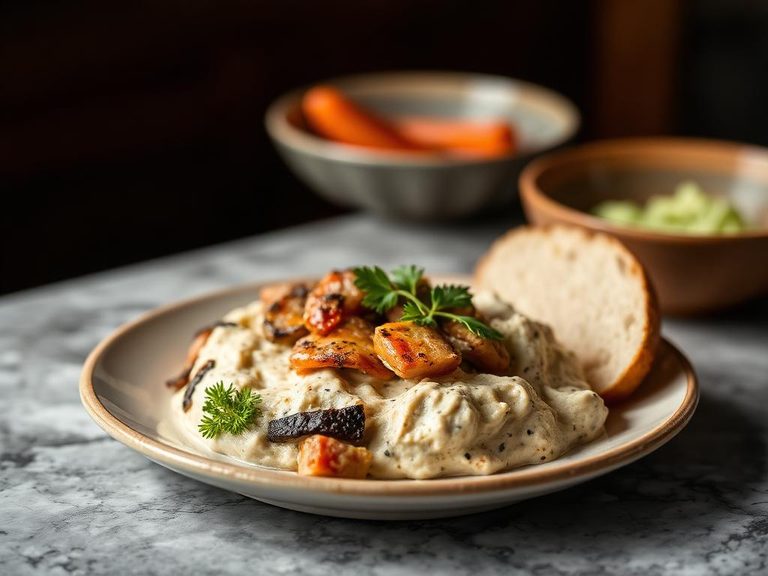
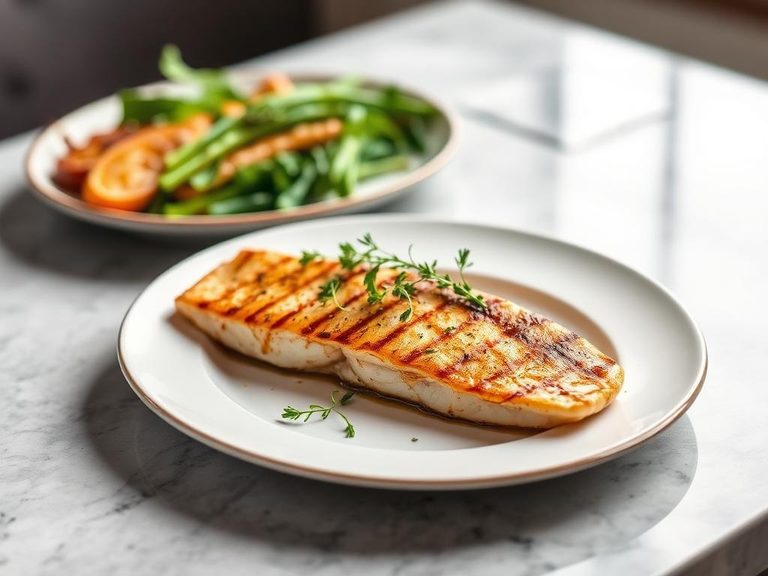
🌍 Where it's eaten
💡 Did you know?
Rainbow trout, a common species for this preparation, gets its name from the pinkish-red stripe that runs along its side, which becomes more vivid during spawning season.
Full nutrition (USDA data · scales with serving)
| Water | 62.4 g |
| Energy | 216 kcal |
| Protein | 24.8 g |
| Total lipid (fat) | 12.2 g |
| Carbohydrate, by difference | 0.01 g |
| Fiber, total dietary | 0.00 g |
| Total Sugars | 0.01 g |
| Calcium, Ca | 32.0 mg |
| Iron, Fe | 0.39 mg |
| Magnesium, Mg | 31.0 mg |
| Phosphorus, P | 281 mg |
| Potassium, K | 469 mg |
| Sodium, Na | 279 mg |
| Zinc, Zn | 0.56 mg |
| Copper, Cu | 0.06 mg |
| Selenium, Se | 29.3 ug |
| Vitamin C, total ascorbic acid | 2.9 mg |
| Thiamin | 0.13 mg |
| Riboflavin | 0.11 mg |
| Niacin | 6.9 mg |
| Vitamin B-6 | 0.41 mg |
| Folate, total | 12.0 ug |
| Folic acid | 0.00 ug |
| Folate, food | 12.0 ug |
| Folate, DFE | 12.0 ug |
| Choline, total | 81.1 mg |
| Vitamin B-12 | 4.8 ug |
| Vitamin B-12, added | 0.00 ug |
| Vitamin A, RAE | 109 ug |
| Retinol | 108 ug |
| Carotene, beta | 9.0 ug |
| Carotene, alpha | 0.00 ug |
| Cryptoxanthin, beta | 0.00 ug |
| Lycopene | 0.00 ug |
| Lutein + zeaxanthin | 0.00 ug |
| Vitamin E (alpha-tocopherol) | 3.6 mg |
| Vitamin E, added | 0.00 mg |
| Vitamin D (D2 + D3) | 19.8 ug |
| Vitamin K (phylloquinone) | 3.9 ug |
| Alcohol, ethyl | 0.00 g |
| Caffeine | 0.00 mg |
| Theobromine | 0.00 mg |
Fat & fatty acid profile (per 100g)
| Fatty acids, total saturated | 2.9 g |
| SFA 4:0 | 0.03 g |
| SFA 6:0 | 0.02 g |
| SFA 8:0 | 0.01 g |
| SFA 10:0 | 0.03 g |
| SFA 12:0 | 0.04 g |
| SFA 14:0 | 0.34 g |
| SFA 16:0 | 1.8 g |
| SFA 18:0 | 0.53 g |
| Fatty acids, total monounsaturated | 4.1 g |
| MUFA 16:1 | 0.45 g |
| MUFA 18:1 | 3.3 g |
| MUFA 20:1 | 0.30 g |
| MUFA 22:1 | 0.02 g |
| Fatty acids, total polyunsaturated | 3.2 g |
| PUFA 18:2 | 1.8 g |
| PUFA 18:3 | 0.23 g |
| PUFA 18:4 | 0.00 g |
| PUFA 20:4 | 0.06 g |
| PUFA 20:5 n-3 (EPA) | 0.27 g |
| PUFA 22:5 n-3 (DPA) | 0.11 g |
| PUFA 22:6 n-3 (DHA) | 0.64 g |
| Cholesterol | 77.0 mg |
Amino acid profile (per 100g)
Estimated from Fish, fish sticks, frozen, prepared — USDA does not publish this profile for Fish.
| Tryptophan | 0.12 g |
| Threonine | 0.37 g |
| Isoleucine | 0.43 g |
| Leucine | 0.85 g |
| Lysine | 0.80 g |
| Methionine | 0.30 g |
| Phenylalanine | 0.47 g |
| Tyrosine | 0.29 g |
| Valine | 0.50 g |
| Arginine | 0.59 g |
| Histidine | 0.23 g |
| Alanine | 0.55 g |
| Aspartic acid | 0.82 g |
| Glutamic acid | 2.3 g |
| Glycine | 0.47 g |
| Proline | 0.78 g |
| Serine | 0.49 g |
| Hydroxyproline | 0.00 g |
FAQ
What is the difference between baked and broiled trout?
Baking cooks trout with indirect, surrounding heat (like an oven), resulting in a more gentle, even cook. Broiling uses direct, intense top heat, creating a quicker cook with a slightly charred or crispy top surface.
How do I know when trout is done?
Trout is done when it reaches an internal temperature of 145°F (63°C). The flesh should be opaque and flake easily with a fork. It should still be moist, not dry.
Is trout a sustainable fish choice?
Sustainability varies by source. Farmed rainbow trout from the U.S. is often considered a good choice, while wild-caught trout sustainability depends on the specific fishery and location. Look for certifications like the Marine Stewardship Council (MSC) or Best Aquaculture Practices (BAP).
Nutrient density (calculated · NRF9.3)
Nutrient Rich Foods index: beneficial nutrients (protein, fiber, vitamins, minerals) minus saturated fat, added sugar & sodium, per 100 kcal.
NRF9.3 index — Fulgoni, Keast & Drewnowski, 2009. Computed from USDA nutrients.
Weight-loss friendliness (composite index)
Energy density 2.16 kcal/g · 46% calories from protein · 0.0 g fiber · 0.0 g sugar per 100 g.
Composite of energy density (Rolls et al., 1999), protein & fiber satiety, minus sugar. A calculated heuristic — ranks satiety-per-calorie, not a clinical measure.
Dietary load (calculated from USDA values)
Potential renal acid load. Positive = acid-forming, negative = alkaline-forming.
Sodium-to-potassium ratio: 0.59 (lower is better — aim for ≤ 1)
Sodium:potassium per WHO potassium guidance. Computed from USDA nutrients.