

Fish, haddock, baked or broiled, coated
Common food

Photo: Wikipedia
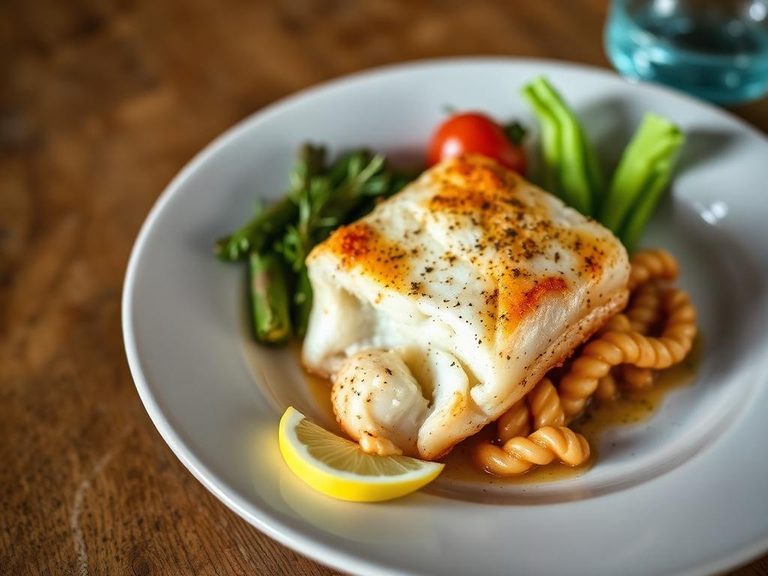
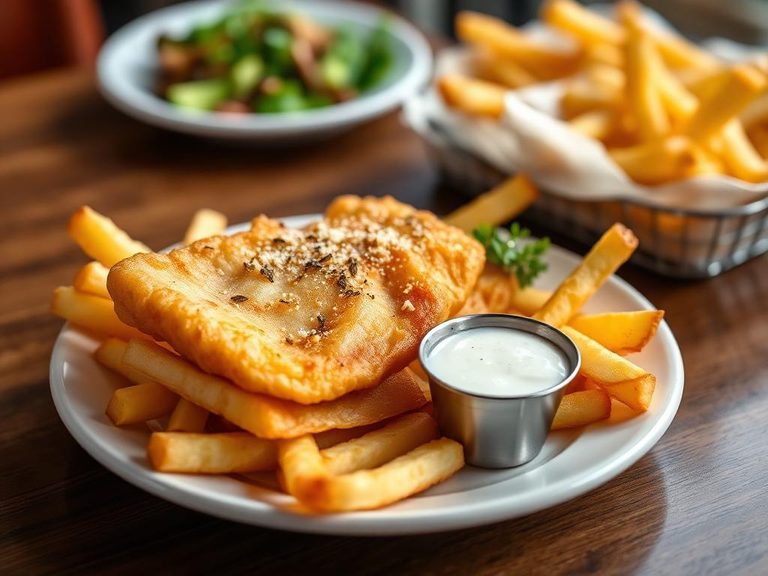
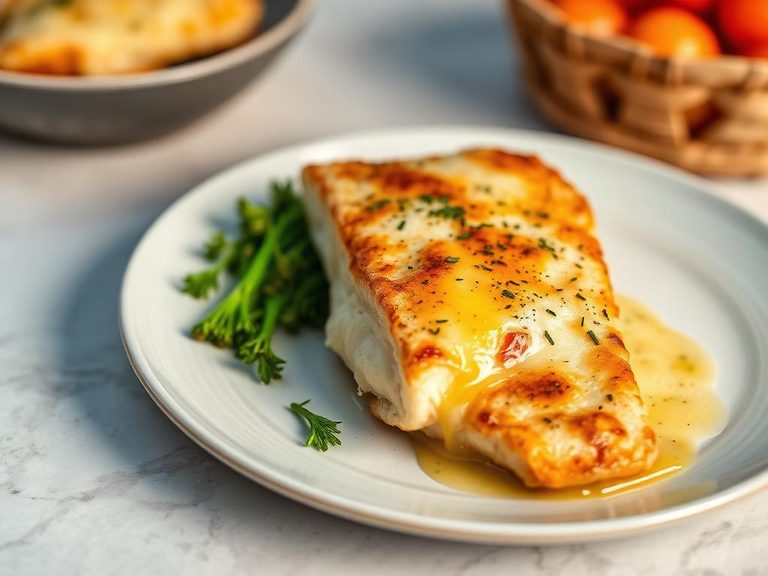
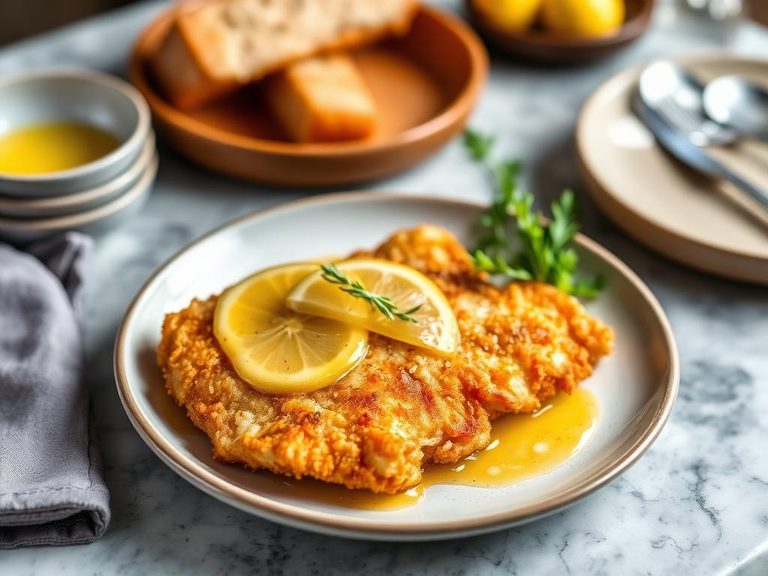
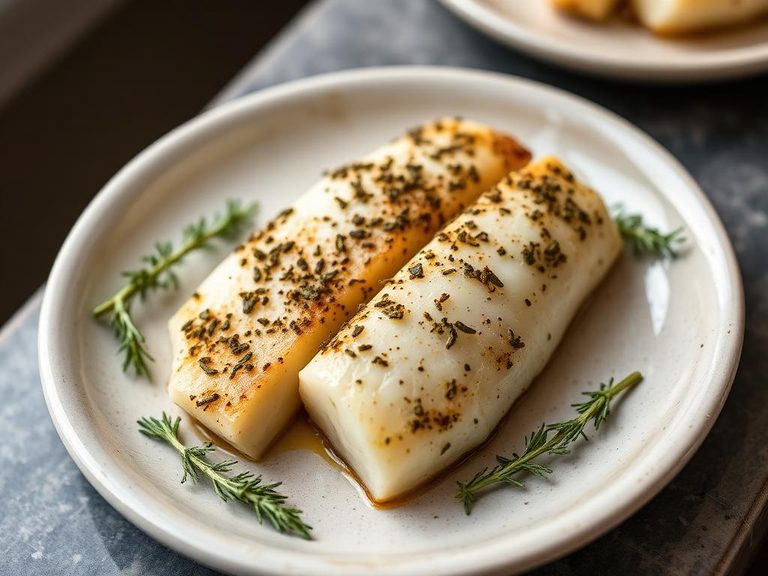
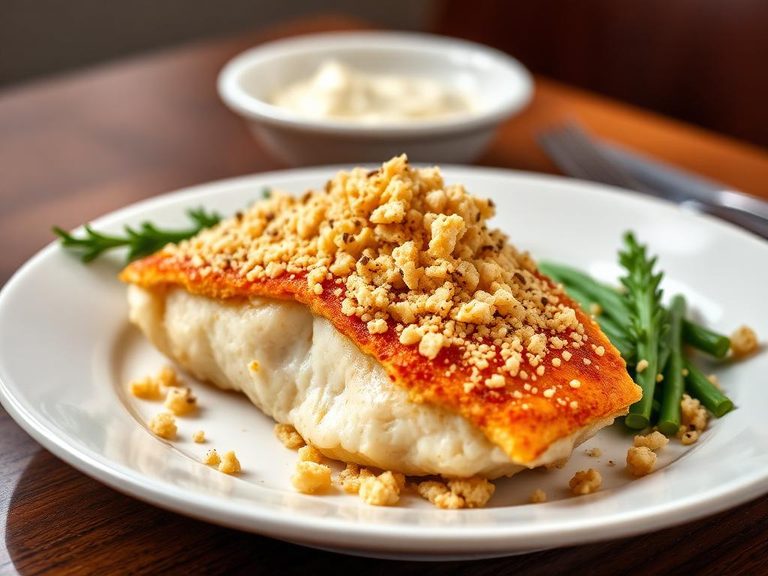
Baked or broiled haddock with a light coating offers a satisfying, flaky white fish experience with a delicate, sweet flavor. The golden crust adds a subtle crunch that contrasts beautifully with the moist, tender flesh inside. At just 152 calories per 100g, it's a lean protein powerhouse with a modest 5.32g of fat.
Calorie split: 48% protein · 20% carbs · 31% fat
↓ Full nutrition💚 Why it's loved
People adore it for its clean, mild taste that pairs beautifully with a variety of seasonings, from lemon and dill to paprika and garlic. The textural contrast between the crisp coating and the soft, flaky fish makes it a comforting and elegant dish suitable for both weeknight dinners and special occasions.
⚠️ Watch-outs & how to enjoy it better
The coating, often made with refined flour or breadcrumbs, can add unnecessary simple carbs and may not be suitable for strict low-carb diets. For those monitoring sodium intake, some pre-made coatings or seasoning mixes can be high in salt. To counteract this, opt for homemade coatings using whole-grain flour or almond meal, and season with herbs and spices instead of salt.
Key benefits
- Excellent source of lean protein (18.37g per 100g)
- Low in calories, supporting weight management
- Provides essential nutrients like selenium and B vitamins
- Versatile base for many healthy meal preparations
- The coating can be customized for added fiber or flavor
🍽️ Popular dishes
🌍 Where it's eaten
💡 Did you know?
Haddock is a close relative of cod and is famously known as the 'Finnan Haddie' in Scotland, where it is traditionally smoked over wood chips.
Full nutrition (USDA data · scales with serving)
| Water | 67.9 g |
| Energy | 152 kcal |
| Protein | 18.4 g |
| Total lipid (fat) | 5.3 g |
| Carbohydrate, by difference | 7.8 g |
| Fiber, total dietary | 0.30 g |
| Total Sugars | 0.14 g |
| Calcium, Ca | 22.0 mg |
| Iron, Fe | 0.76 mg |
| Magnesium, Mg | 25.0 mg |
| Phosphorus, P | 254 mg |
| Potassium, K | 316 mg |
| Sodium, Na | 334 mg |
| Zinc, Zn | 0.44 mg |
| Copper, Cu | 0.04 mg |
| Selenium, Se | 29.2 ug |
| Vitamin C, total ascorbic acid | 0.00 mg |
| Thiamin | 0.11 mg |
| Riboflavin | 0.11 mg |
| Niacin | 4.2 mg |
| Vitamin B-6 | 0.30 mg |
| Folate, total | 27.0 ug |
| Folic acid | 13.0 ug |
| Folate, food | 14.0 ug |
| Folate, DFE | 37.0 ug |
| Choline, total | 73.0 mg |
| Vitamin B-12 | 1.7 ug |
| Vitamin B-12, added | 0.00 ug |
| Vitamin A, RAE | 37.0 ug |
| Retinol | 36.0 ug |
| Carotene, beta | 9.0 ug |
| Carotene, alpha | 0.00 ug |
| Cryptoxanthin, beta | 0.00 ug |
| Lycopene | 0.00 ug |
| Lutein + zeaxanthin | 7.0 ug |
| Vitamin E (alpha-tocopherol) | 1.2 mg |
| Vitamin E, added | 0.00 mg |
| Vitamin D (D2 + D3) | 0.60 ug |
| Vitamin K (phylloquinone) | 4.0 ug |
| Alcohol, ethyl | 0.00 g |
| Caffeine | 0.00 mg |
| Theobromine | 0.00 mg |
Fat & fatty acid profile (per 100g)
| Fatty acids, total saturated | 1.4 g |
| SFA 4:0 | 0.03 g |
| SFA 6:0 | 0.02 g |
| SFA 8:0 | 0.01 g |
| SFA 10:0 | 0.03 g |
| SFA 12:0 | 0.04 g |
| SFA 14:0 | 0.12 g |
| SFA 16:0 | 0.76 g |
| SFA 18:0 | 0.28 g |
| Fatty acids, total monounsaturated | 1.7 g |
| MUFA 16:1 | 0.03 g |
| MUFA 18:1 | 1.6 g |
| MUFA 20:1 | 0.03 g |
| MUFA 22:1 | 0.00 g |
| Fatty acids, total polyunsaturated | 1.6 g |
| PUFA 18:2 | 1.3 g |
| PUFA 18:3 | 0.15 g |
| PUFA 18:4 | 0.00 g |
| PUFA 20:4 | 0.01 g |
| PUFA 20:5 n-3 (EPA) | 0.04 g |
| PUFA 22:5 n-3 (DPA) | 0.01 g |
| PUFA 22:6 n-3 (DHA) | 0.09 g |
| Cholesterol | 64.0 mg |
Amino acid profile (per 100g)
Estimated from Fish, fish sticks, frozen, prepared — USDA does not publish this profile for Fish.
| Tryptophan | 0.12 g |
| Threonine | 0.37 g |
| Isoleucine | 0.43 g |
| Leucine | 0.85 g |
| Lysine | 0.80 g |
| Methionine | 0.30 g |
| Phenylalanine | 0.47 g |
| Tyrosine | 0.29 g |
| Valine | 0.50 g |
| Arginine | 0.59 g |
| Histidine | 0.23 g |
| Alanine | 0.55 g |
| Aspartic acid | 0.82 g |
| Glutamic acid | 2.3 g |
| Glycine | 0.47 g |
| Proline | 0.78 g |
| Serine | 0.49 g |
| Hydroxyproline | 0.00 g |
FAQ
What's the difference between baked and broiled haddock?
Baking cooks the fish evenly with surrounding dry heat, while broiling uses direct, intense top-down heat to quickly brown and crisp the coating. Broiling is faster but requires closer attention to prevent burning.
Is the coating on baked haddock typically high in carbs?
It can be. Traditional coatings use white flour or breadcrumbs. For a lower-carb version, you can use crushed pork rinds, almond flour, or a Parmesan cheese crust.
How do I prevent my coated haddock from becoming soggy?
Pat the fish completely dry before coating. Ensure your baking sheet or broiler pan is hot, and don't overcrowd the fillets. A light spray of oil on the coating before cooking helps achieve crispness.
Nutrient density (calculated · NRF9.3)
Nutrient Rich Foods index: beneficial nutrients (protein, fiber, vitamins, minerals) minus saturated fat, added sugar & sodium, per 100 kcal.
NRF9.3 index — Fulgoni, Keast & Drewnowski, 2009. Computed from USDA nutrients.
Weight-loss friendliness (composite index)
Energy density 1.52 kcal/g · 48% calories from protein · 0.3 g fiber · 0.1 g sugar per 100 g.
Composite of energy density (Rolls et al., 1999), protein & fiber satiety, minus sugar. A calculated heuristic — ranks satiety-per-calorie, not a clinical measure.
Dietary load (calculated from USDA values)
Potential renal acid load. Positive = acid-forming, negative = alkaline-forming.
Sodium-to-potassium ratio: 1.06 (lower is better — aim for ≤ 1)
Sodium:potassium per WHO potassium guidance. Computed from USDA nutrients.