

Eggplant, cooked, as ingredient
Common food

Photo: Wikipedia
Cooked eggplant is a culinary chameleon, transforming from a firm, spongy vegetable into a silky, melt-in-your-mouth ingredient that readily absorbs the flavors of sauces and spices. Nutritionally, it's a low-calorie powerhouse, providing substantial fiber and a touch of natural sugar with almost no fat.
Calorie split: 13% protein · 81% carbs · 5% fat
↓ Full nutrition💚 Why it's loved
People love cooked eggplant for its incredible versatility and its ability to become the hearty, savory star of a dish, soaking up garlic, herbs, and oils to create deep, complex flavors. It's a beloved staple in countless comfort foods, from creamy dips to rich stews.
⚠️ Watch-outs & how to enjoy it better
Its high water content and sponge-like texture can lead to a soggy or greasy result if not cooked properly. To counteract this, salt and drain eggplant before cooking to draw out moisture, or roast it at high heat to achieve a better texture. Its mild flavor can also become bitter if overripe, so choose firm, glossy specimens.
Key benefits
- Excellent source of dietary fiber for digestive health.
- Very low in calories, supporting weight management.
- Contains antioxidants like nasunin in its purple skin.
- Provides a good base for adding other nutrient-dense ingredients.
🍽️ Popular dishes
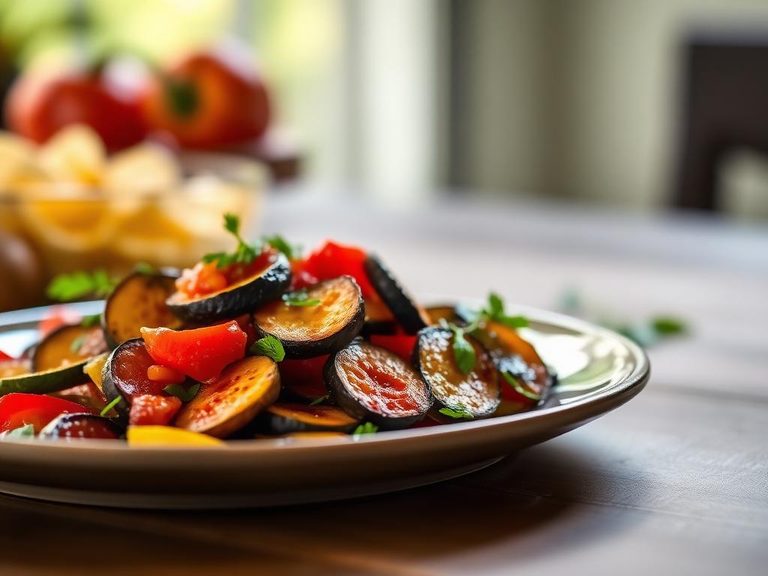
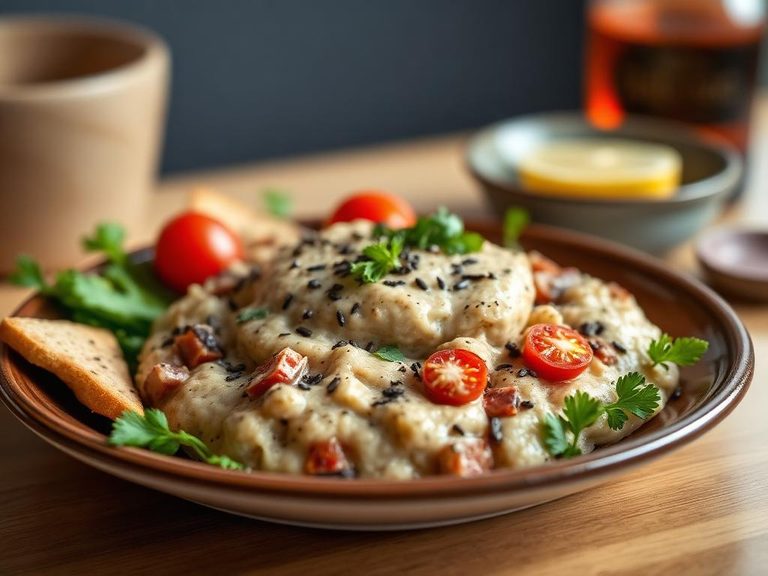
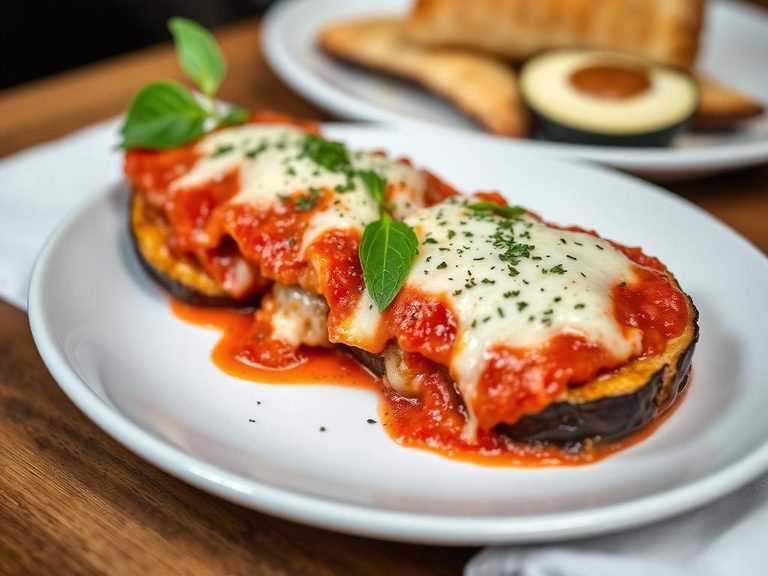
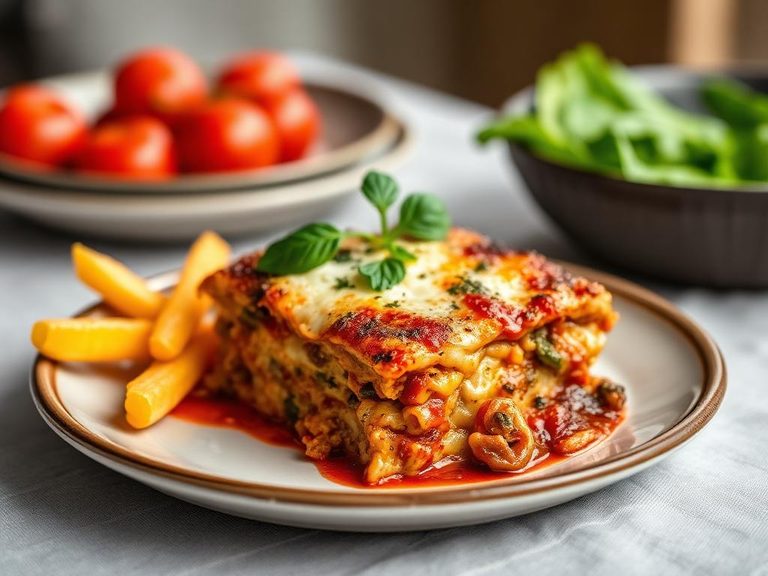
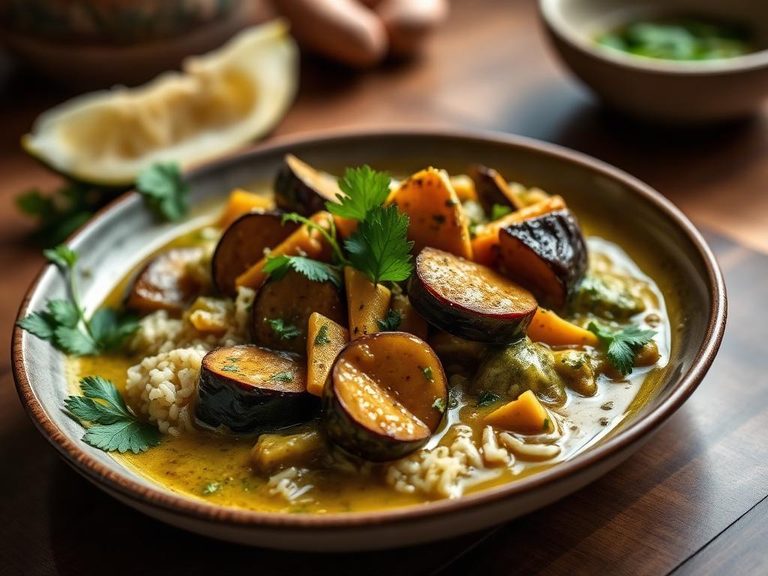
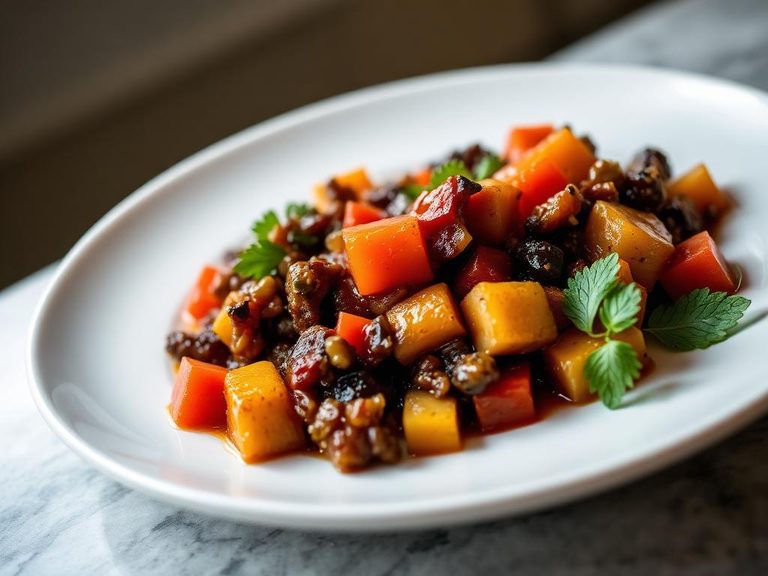
🌍 Where it's eaten
💡 Did you know?
Despite its culinary use as a vegetable, eggplant is botanically a berry, making it a close relative of tomatoes and potatoes in the nightshade family.
Full nutrition (USDA data · scales with serving)
| Water | 91.7 g |
| Energy | 27.0 kcal |
| Protein | 1.1 g |
| Total lipid (fat) | 0.19 g |
| Carbohydrate, by difference | 6.3 g |
| Fiber, total dietary | 3.2 g |
| Total Sugars | 3.8 g |
| Calcium, Ca | 10.0 mg |
| Iron, Fe | 0.25 mg |
| Magnesium, Mg | 15.0 mg |
| Phosphorus, P | 26.0 mg |
| Potassium, K | 246 mg |
| Sodium, Na | 2.0 mg |
| Zinc, Zn | 0.17 mg |
| Copper, Cu | 0.09 mg |
| Selenium, Se | 0.30 ug |
| Vitamin C, total ascorbic acid | 2.0 mg |
| Thiamin | 0.04 mg |
| Riboflavin | 0.04 mg |
| Niacin | 0.66 mg |
| Vitamin B-6 | 0.08 mg |
| Folate, total | 20.0 ug |
| Folic acid | 0.00 ug |
| Folate, food | 20.0 ug |
| Folate, DFE | 20.0 ug |
| Choline, total | 7.4 mg |
| Vitamin B-12 | 0.00 ug |
| Vitamin B-12, added | 0.00 ug |
| Vitamin A, RAE | 1.0 ug |
| Retinol | 0.00 ug |
| Carotene, beta | 14.0 ug |
| Carotene, alpha | 0.00 ug |
| Cryptoxanthin, beta | 0.00 ug |
| Lycopene | 0.00 ug |
| Lutein + zeaxanthin | 37.0 ug |
| Vitamin E (alpha-tocopherol) | 0.32 mg |
| Vitamin E, added | 0.00 mg |
| Vitamin D (D2 + D3) | 0.00 ug |
| Vitamin K (phylloquinone) | 3.8 ug |
| Alcohol, ethyl | 0.00 g |
| Caffeine | 0.00 mg |
| Theobromine | 0.00 mg |
Fat & fatty acid profile (per 100g)
| Fatty acids, total saturated | 0.04 g |
| SFA 4:0 | 0.00 g |
| SFA 6:0 | 0.00 g |
| SFA 8:0 | 0.00 g |
| SFA 10:0 | 0.00 g |
| SFA 12:0 | 0.00 g |
| SFA 14:0 | 0.00 g |
| SFA 16:0 | 0.03 g |
| SFA 18:0 | 0.01 g |
| Fatty acids, total monounsaturated | 0.02 g |
| MUFA 16:1 | 0.00 g |
| MUFA 18:1 | 0.01 g |
| MUFA 20:1 | 0.00 g |
| MUFA 22:1 | 0.00 g |
| Fatty acids, total polyunsaturated | 0.08 g |
| PUFA 18:2 | 0.07 g |
| PUFA 18:3 | 0.01 g |
| PUFA 18:4 | 0.00 g |
| PUFA 20:4 | 0.00 g |
| PUFA 20:5 n-3 (EPA) | 0.00 g |
| PUFA 22:5 n-3 (DPA) | 0.00 g |
| PUFA 22:6 n-3 (DHA) | 0.00 g |
| Cholesterol | 0.00 mg |
Amino acid profile (per 100g)
Estimated from Eggplant, raw — USDA does not publish this profile for Eggplant.
| Tryptophan | 0.01 g |
| Threonine | 0.04 g |
| Isoleucine | 0.04 g |
| Leucine | 0.06 g |
| Lysine | 0.05 g |
| Methionine | 0.01 g |
| Cystine | 0.01 g |
| Phenylalanine | 0.04 g |
| Tyrosine | 0.03 g |
| Valine | 0.05 g |
| Arginine | 0.06 g |
| Histidine | 0.02 g |
| Alanine | 0.05 g |
| Aspartic acid | 0.16 g |
| Glutamic acid | 0.19 g |
| Glycine | 0.04 g |
| Proline | 0.04 g |
| Serine | 0.04 g |
FAQ
Why do you salt eggplant before cooking?
Salting (or 'sweating') draws out excess moisture and can help reduce any potential bitterness, resulting in a less soggy and more meaty texture when cooked.
Is the skin edible?
Yes, the skin is edible and contains valuable nutrients like fiber and antioxidants. It's typically left on for dishes like ratatouille or roasted eggplant, but may be peeled for a smoother texture in dishes like baba ganoush.
How do I pick a good eggplant?
Look for a firm, glossy skin with no soft spots or wrinkles. The stem should be green and fresh-looking. A good eggplant will feel heavy for its size and spring back slightly when pressed.
Nutrient density (calculated · NRF9.3)
Nutrient Rich Foods index: beneficial nutrients (protein, fiber, vitamins, minerals) minus saturated fat, added sugar & sodium, per 100 kcal.
NRF9.3 index — Fulgoni, Keast & Drewnowski, 2009. Computed from USDA nutrients.
Weight-loss friendliness (composite index)
Energy density 0.27 kcal/g · 16% calories from protein · 3.2 g fiber · 3.8 g sugar per 100 g.
Composite of energy density (Rolls et al., 1999), protein & fiber satiety, minus sugar. A calculated heuristic — ranks satiety-per-calorie, not a clinical measure.
Dietary load (calculated from USDA values)
Potential renal acid load. Positive = acid-forming, negative = alkaline-forming.
Sodium-to-potassium ratio: 0.01 (lower is better — aim for ≤ 1)
Sodium:potassium per WHO potassium guidance. Computed from USDA nutrients.