

Egg omelet or scrambled egg, with cheese and meat, made with oil
Common food

Photo: Wikipedia
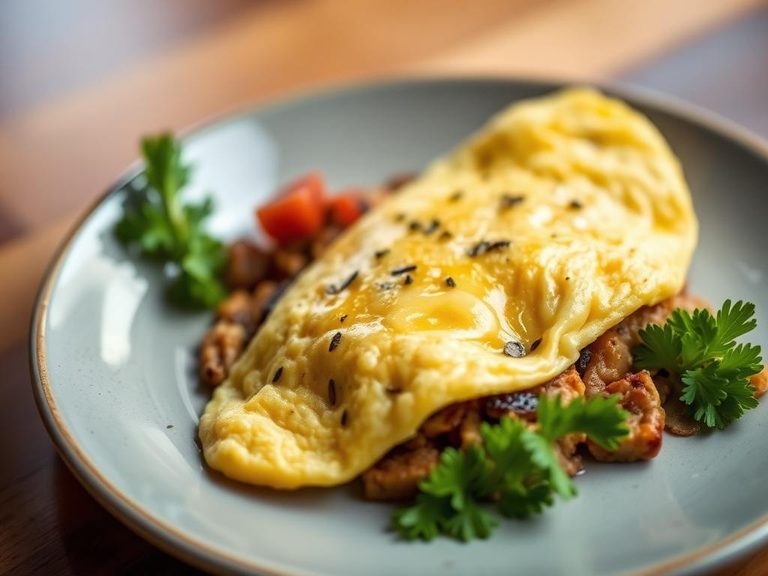
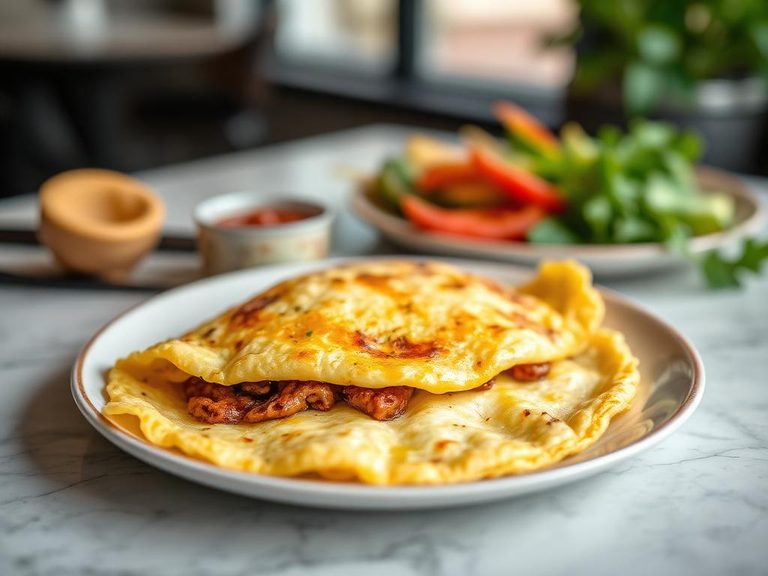
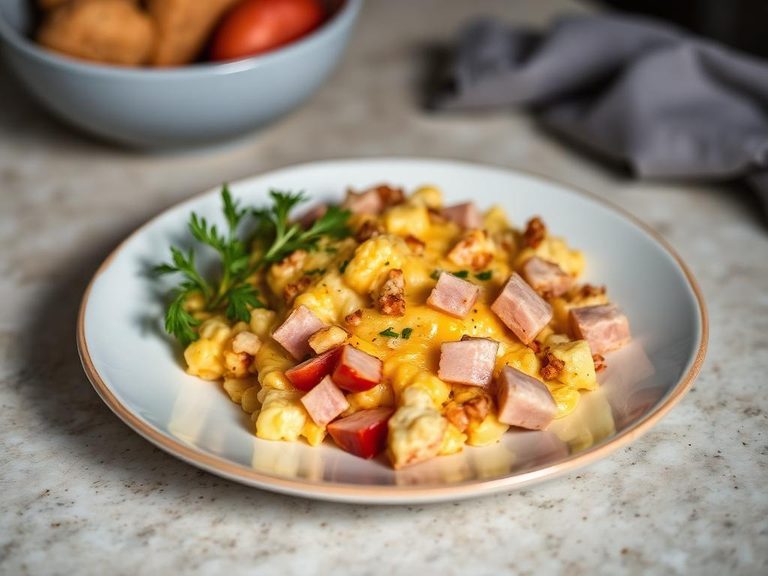
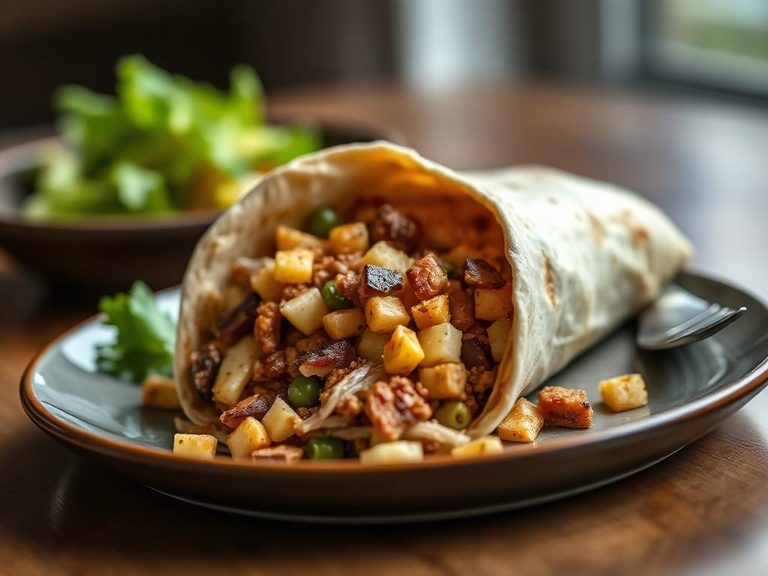
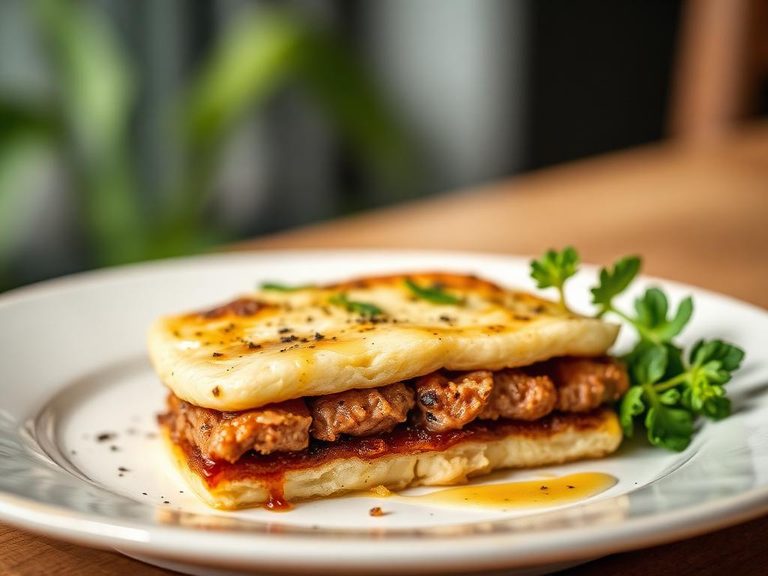
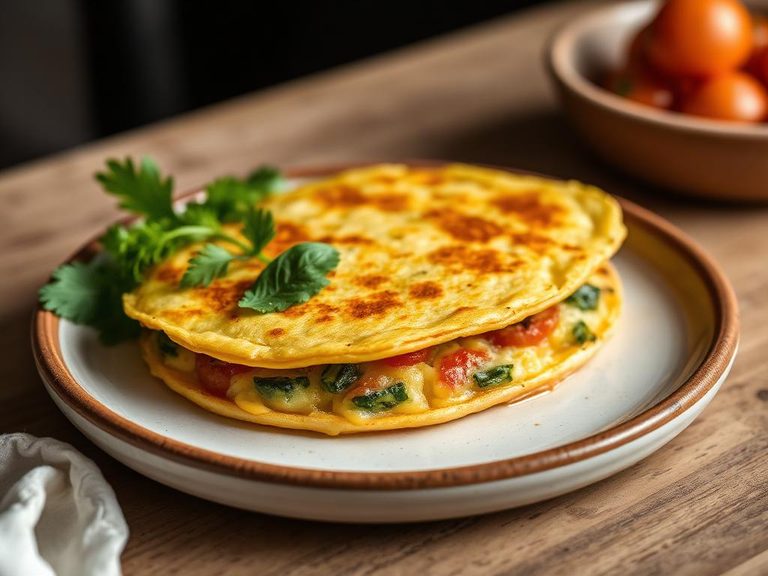
A hearty, savory breakfast staple where beaten eggs are cooked in oil, then folded or stirred with melted cheese and savory meat like ham or sausage. The texture is fluffy yet rich, with a satisfying chew from the meat and gooey pockets of cheese. It's a protein-packed powerhouse, delivering over 13g of protein per 100g with virtually no carbohydrates.
Calorie split: 25% protein · 3% carbs · 73% fat
↓ Full nutrition💚 Why it's loved
People adore it for its deeply satisfying, savory flavor and the comforting combination of fluffy egg, salty meat, and creamy cheese. It's a globally beloved canvas that can be customized with endless fillings to suit any taste.
⚠️ Watch-outs & how to enjoy it better
The high fat content from oil, cheese, and meat can make it heavy and calorie-dense. Those monitoring saturated fat intake or with dairy allergies should be cautious. To counteract, use a non-stick pan with minimal oil, opt for leaner meats like turkey, and pair with a side of vegetables or whole-grain toast for fiber and balance.
Key benefits
- Excellent source of complete protein for muscle maintenance.
- Provides essential vitamins like B12, riboflavin, and choline from eggs.
- High in satiating fats for sustained energy.
- Quick and versatile meal for any time of day.
- Contains calcium from the cheese component.
🍽️ Popular dishes
🌍 Where it's eaten
💡 Did you know?
The term 'omelet' in English is believed to derive from the French 'omelette', which itself may come from 'lamelle' (a thin slice) and 'alumelle' (knife blade), referring to its thin, folded shape.
Full nutrition (USDA data · scales with serving)
| Water | 66.2 g |
| Energy | 215 kcal |
| Protein | 13.3 g |
| Total lipid (fat) | 17.4 g |
| Carbohydrate, by difference | 1.4 g |
| Fiber, total dietary | 0.00 g |
| Total Sugars | 0.54 g |
| Calcium, Ca | 140 mg |
| Iron, Fe | 1.4 mg |
| Magnesium, Mg | 13.0 mg |
| Phosphorus, P | 223 mg |
| Potassium, K | 145 mg |
| Sodium, Na | 383 mg |
| Zinc, Zn | 1.5 mg |
| Copper, Cu | 0.01 mg |
| Selenium, Se | 28.4 ug |
| Vitamin C, total ascorbic acid | 0.00 mg |
| Thiamin | 0.07 mg |
| Riboflavin | 0.36 mg |
| Niacin | 0.52 mg |
| Vitamin B-6 | 0.08 mg |
| Folate, total | 42.0 ug |
| Folic acid | 0.00 ug |
| Folate, food | 42.0 ug |
| Folate, DFE | 42.0 ug |
| Choline, total | 211 mg |
| Vitamin B-12 | 0.84 ug |
| Vitamin B-12, added | 0.00 ug |
| Vitamin A, RAE | 168 ug |
| Retinol | 166 ug |
| Carotene, beta | 9.0 ug |
| Carotene, alpha | 0.00 ug |
| Cryptoxanthin, beta | 11.0 ug |
| Lycopene | 0.00 ug |
| Lutein + zeaxanthin | 382 ug |
| Vitamin E (alpha-tocopherol) | 1.9 mg |
| Vitamin E, added | 0.00 mg |
| Vitamin D (D2 + D3) | 2.4 ug |
| Vitamin K (phylloquinone) | 5.9 ug |
| Alcohol, ethyl | 0.00 g |
| Caffeine | 0.00 mg |
| Theobromine | 0.00 mg |
Fat & fatty acid profile (per 100g)
| Fatty acids, total saturated | 5.4 g |
| SFA 4:0 | 0.07 g |
| SFA 6:0 | 0.05 g |
| SFA 8:0 | 0.03 g |
| SFA 10:0 | 0.08 g |
| SFA 12:0 | 0.09 g |
| SFA 14:0 | 0.34 g |
| SFA 16:0 | 3.4 g |
| SFA 18:0 | 1.2 g |
| Fatty acids, total monounsaturated | 6.3 g |
| MUFA 16:1 | 0.28 g |
| MUFA 18:1 | 6.0 g |
| MUFA 20:1 | 0.06 g |
| MUFA 22:1 | 0.00 g |
| Fatty acids, total polyunsaturated | 3.8 g |
| PUFA 18:2 | 3.2 g |
| PUFA 18:3 | 0.26 g |
| PUFA 18:4 | 0.00 g |
| PUFA 20:4 | 0.01 g |
| PUFA 20:5 n-3 (EPA) | 0.00 g |
| PUFA 22:5 n-3 (DPA) | 0.00 g |
| PUFA 22:6 n-3 (DHA) | 0.00 g |
| Cholesterol | 327 mg |
Amino acid profile (per 100g)
Estimated from Egg, whole, cooked, omelet — USDA does not publish this profile for Egg omelet or scrambled egg.
| Tryptophan | 0.14 g |
| Threonine | 0.47 g |
| Isoleucine | 0.56 g |
| Leucine | 0.91 g |
| Lysine | 0.77 g |
| Methionine | 0.32 g |
| Cystine | 0.23 g |
| Phenylalanine | 0.57 g |
| Tyrosine | 0.42 g |
| Valine | 0.72 g |
| Arginine | 0.69 g |
| Histidine | 0.26 g |
| Alanine | 0.62 g |
| Aspartic acid | 1.1 g |
| Glutamic acid | 1.4 g |
| Glycine | 0.36 g |
| Proline | 0.43 g |
| Serine | 0.82 g |
FAQ
Is this dish keto-friendly?
Yes, it's an excellent fit for a ketogenic diet due to its very high fat and protein content with negligible carbohydrates from eggs, cheese, and most meats.
Can I make it ahead of time?
Scrambled eggs are best fresh, but you can cook the meat and cheese mixture ahead. For a make-ahead option, bake it as a frittata or strata, which holds up well refrigerated for 3-4 days.
What's the difference between an omelet and scrambled eggs with mix-ins?
An omelet is typically cooked as a single patty and folded over the fillings, while scrambled eggs are stirred and broken up during cooking, mixing the fillings throughout.
Nutrient density (calculated · NRF9.3)
Nutrient Rich Foods index: beneficial nutrients (protein, fiber, vitamins, minerals) minus saturated fat, added sugar & sodium, per 100 kcal.
NRF9.3 index — Fulgoni, Keast & Drewnowski, 2009. Computed from USDA nutrients.
Weight-loss friendliness (composite index)
Energy density 2.15 kcal/g · 25% calories from protein · 0.0 g fiber · 0.5 g sugar per 100 g.
Composite of energy density (Rolls et al., 1999), protein & fiber satiety, minus sugar. A calculated heuristic — ranks satiety-per-calorie, not a clinical measure.
Dietary load (calculated from USDA values)
Potential renal acid load. Positive = acid-forming, negative = alkaline-forming.
Sodium-to-potassium ratio: 2.64 (lower is better — aim for ≤ 1)
Sodium:potassium per WHO potassium guidance. Computed from USDA nutrients.