

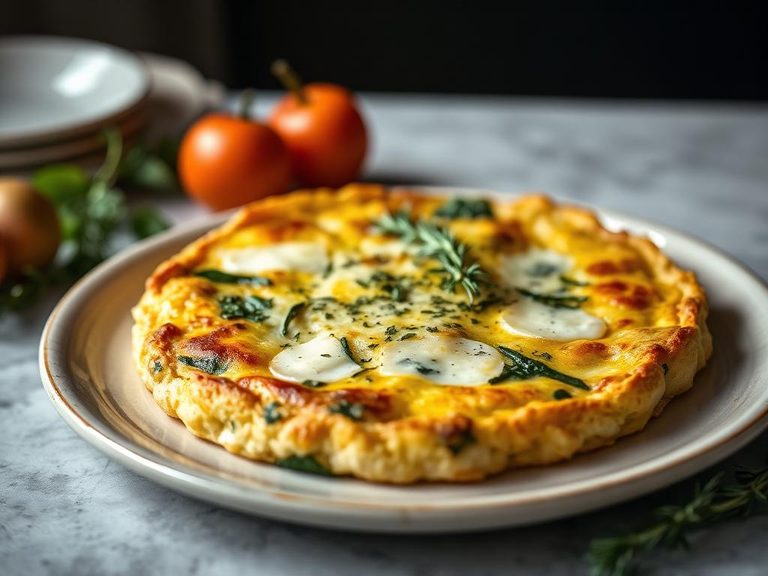
Egg omelet or scrambled egg, with cheese, made with oil
Common food

Photo: Wikipedia
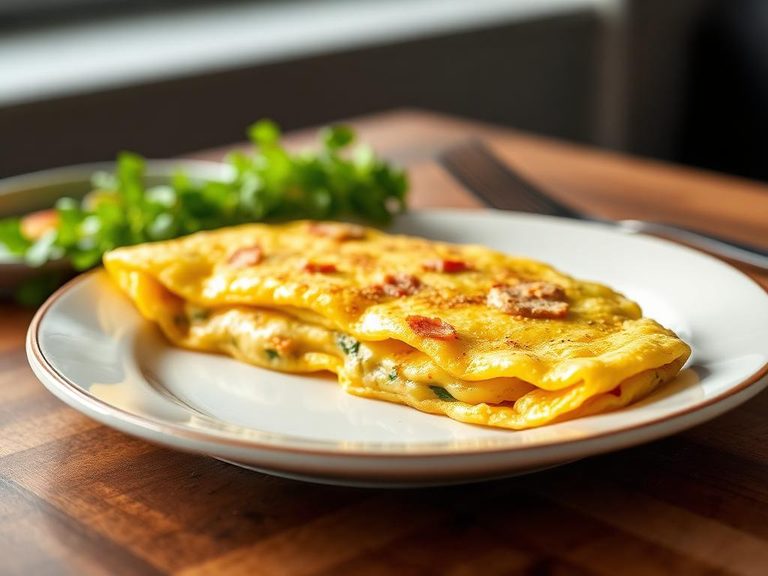
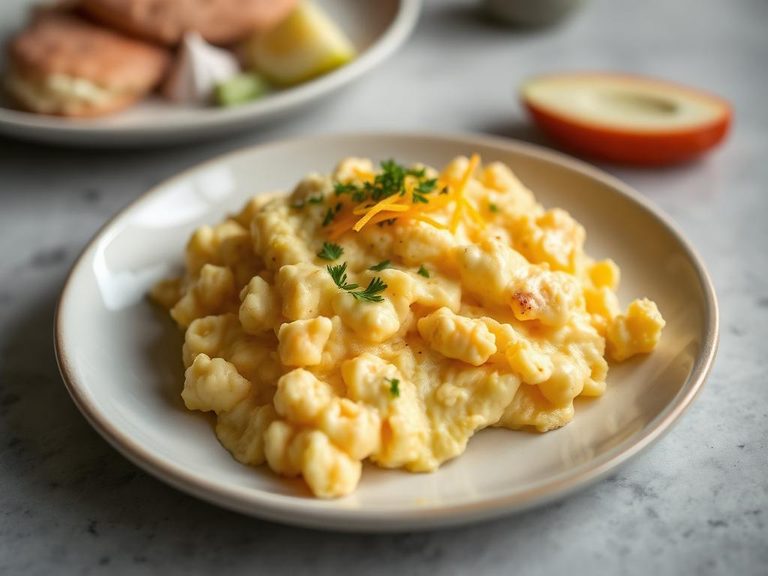
A golden, fluffy omelet or soft-scrambled egg, enriched with melted cheese and cooked in a touch of oil for a rich, savory flavor. The texture is tender and custardy, with the cheese adding a creamy, salty contrast. At 212 kcal per 100g, it's a protein-packed meal with most of its calories coming from satisfying fats.
Calorie split: 24% protein · 3% carbs · 74% fat
↓ Full nutrition💚 Why it's loved
People love it for its comforting, savory richness and incredible versatility—it's a blank canvas for countless fillings. It's a staple of quick, satisfying meals across cultures, from a simple breakfast to a late-night snack.
⚠️ Watch-outs & how to enjoy it better
The high saturated fat and cholesterol content may be a concern for some, and it's a common allergen (eggs, dairy). To counteract, pair with a large side of non-starchy vegetables like spinach or tomatoes to add fiber and volume, and use a moderate portion of cheese.
Key benefits
- Excellent source of high-quality protein for muscle maintenance.
- Provides essential vitamins like B12 and riboflavin from eggs.
- Rich in choline, important for brain health.
- The fat and protein promote a strong feeling of fullness.
- Quick and versatile base for adding vegetables or herbs.
🍽️ Popular dishes
🌍 Where it's eaten
💡 Did you know?
The French word for omelet, 'omelette,' is thought to derive from 'lamelle,' meaning a thin plate or layer, describing its folded shape.
Full nutrition (USDA data · scales with serving)
| Water | 67.0 g |
| Energy | 212 kcal |
| Protein | 12.6 g |
| Total lipid (fat) | 17.4 g |
| Carbohydrate, by difference | 1.4 g |
| Fiber, total dietary | 0.00 g |
| Total Sugars | 0.51 g |
| Calcium, Ca | 150 mg |
| Iron, Fe | 1.4 mg |
| Magnesium, Mg | 13.0 mg |
| Phosphorus, P | 222 mg |
| Potassium, K | 126 mg |
| Sodium, Na | 324 mg |
| Zinc, Zn | 1.4 mg |
| Copper, Cu | 0.00 mg |
| Selenium, Se | 28.2 ug |
| Vitamin C, total ascorbic acid | 0.00 mg |
| Thiamin | 0.05 mg |
| Riboflavin | 0.37 mg |
| Niacin | 0.01 mg |
| Vitamin B-6 | 0.06 mg |
| Folate, total | 45.0 ug |
| Folic acid | 0.00 ug |
| Folate, food | 45.0 ug |
| Folate, DFE | 45.0 ug |
| Choline, total | 222 mg |
| Vitamin B-12 | 0.84 ug |
| Vitamin B-12, added | 0.00 ug |
| Vitamin A, RAE | 180 ug |
| Retinol | 179 ug |
| Carotene, beta | 10.0 ug |
| Carotene, alpha | 0.00 ug |
| Cryptoxanthin, beta | 11.0 ug |
| Lycopene | 0.00 ug |
| Lutein + zeaxanthin | 414 ug |
| Vitamin E (alpha-tocopherol) | 2.0 mg |
| Vitamin E, added | 0.00 mg |
| Vitamin D (D2 + D3) | 2.5 ug |
| Vitamin K (phylloquinone) | 6.3 ug |
| Alcohol, ethyl | 0.00 g |
| Caffeine | 0.00 mg |
| Theobromine | 0.00 mg |
Fat & fatty acid profile (per 100g)
| Fatty acids, total saturated | 5.4 g |
| SFA 4:0 | 0.07 g |
| SFA 6:0 | 0.06 g |
| SFA 8:0 | 0.04 g |
| SFA 10:0 | 0.09 g |
| SFA 12:0 | 0.10 g |
| SFA 14:0 | 0.35 g |
| SFA 16:0 | 3.4 g |
| SFA 18:0 | 1.2 g |
| Fatty acids, total monounsaturated | 6.2 g |
| MUFA 16:1 | 0.27 g |
| MUFA 18:1 | 5.9 g |
| MUFA 20:1 | 0.05 g |
| MUFA 22:1 | 0.00 g |
| Fatty acids, total polyunsaturated | 3.8 g |
| PUFA 18:2 | 3.3 g |
| PUFA 18:3 | 0.28 g |
| PUFA 18:4 | 0.00 g |
| PUFA 20:4 | 0.01 g |
| PUFA 20:5 n-3 (EPA) | 0.00 g |
| PUFA 22:5 n-3 (DPA) | 0.00 g |
| PUFA 22:6 n-3 (DHA) | 0.00 g |
| Cholesterol | 347 mg |
Amino acid profile (per 100g)
Estimated from Egg, whole, cooked, omelet — USDA does not publish this profile for Egg omelet or scrambled egg.
| Tryptophan | 0.14 g |
| Threonine | 0.47 g |
| Isoleucine | 0.56 g |
| Leucine | 0.91 g |
| Lysine | 0.77 g |
| Methionine | 0.32 g |
| Cystine | 0.23 g |
| Phenylalanine | 0.57 g |
| Tyrosine | 0.42 g |
| Valine | 0.72 g |
| Arginine | 0.69 g |
| Histidine | 0.26 g |
| Alanine | 0.62 g |
| Aspartic acid | 1.1 g |
| Glutamic acid | 1.4 g |
| Glycine | 0.36 g |
| Proline | 0.43 g |
| Serine | 0.82 g |
FAQ
Is this a good post-workout meal?
Yes, it's excellent. The high-quality protein from the eggs supports muscle repair, and the fat provides sustained energy. For optimal recovery, consider adding a small source of fast-digesting carbs like a piece of fruit on the side.
How can I make it healthier?
Use a non-stick pan to reduce oil, opt for a lower-fat cheese like feta or part-skim mozzarella, and bulk it up with vegetables like mushrooms, peppers, or onions. Using egg whites or a mix of whole eggs and whites also lowers the fat content.
Why does my cheese omelet sometimes get watery?
This often happens if the cheese is added too early or if watery vegetables (like tomatoes) aren't pre-cooked. Add the cheese just before folding the omelet, and always sauté vegetables first to evaporate their moisture.
Nutrient density (calculated · NRF9.3)
Nutrient Rich Foods index: beneficial nutrients (protein, fiber, vitamins, minerals) minus saturated fat, added sugar & sodium, per 100 kcal.
NRF9.3 index — Fulgoni, Keast & Drewnowski, 2009. Computed from USDA nutrients.
Weight-loss friendliness (composite index)
Energy density 2.12 kcal/g · 24% calories from protein · 0.0 g fiber · 0.5 g sugar per 100 g.
Composite of energy density (Rolls et al., 1999), protein & fiber satiety, minus sugar. A calculated heuristic — ranks satiety-per-calorie, not a clinical measure.
Dietary load (calculated from USDA values)
Potential renal acid load. Positive = acid-forming, negative = alkaline-forming.
Sodium-to-potassium ratio: 2.57 (lower is better — aim for ≤ 1)
Sodium:potassium per WHO potassium guidance. Computed from USDA nutrients.