

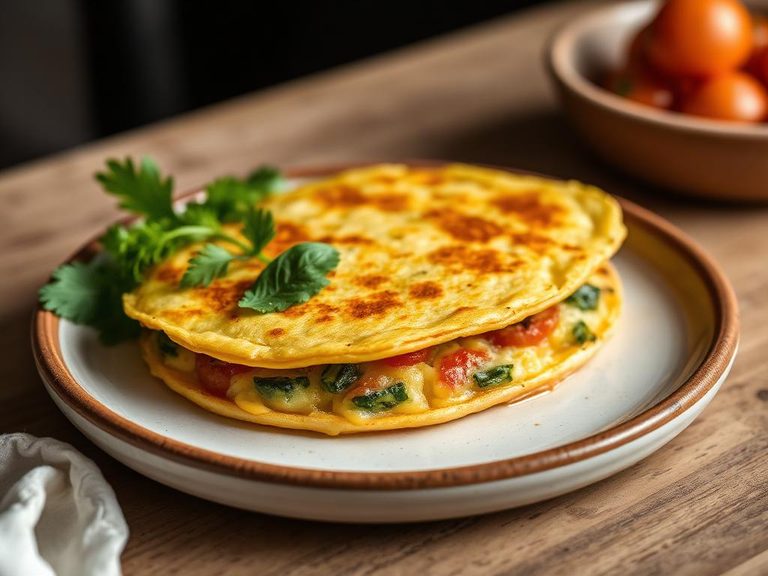
Egg omelet or scrambled egg, with cheese and meat, made with margarine
Common food

Photo: Wikipedia
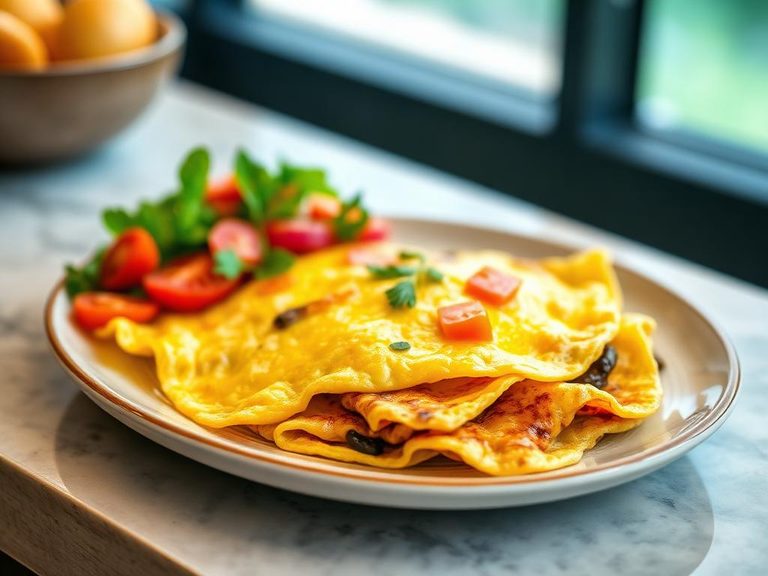
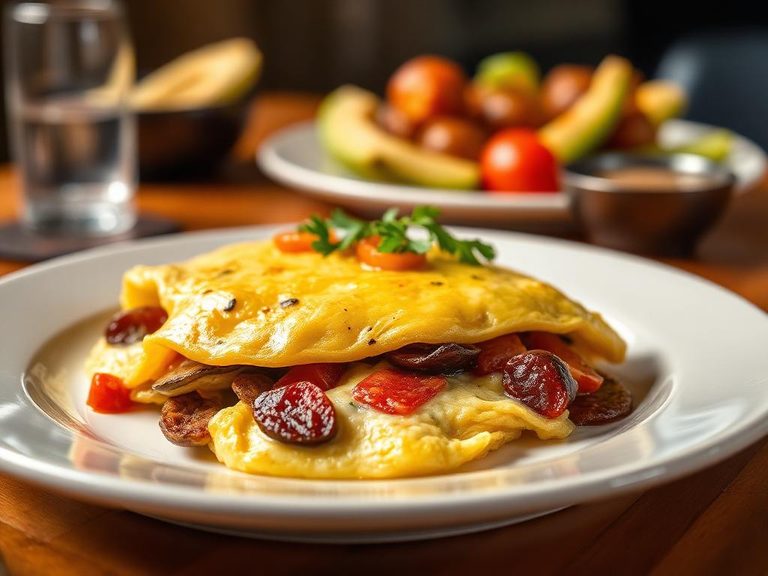
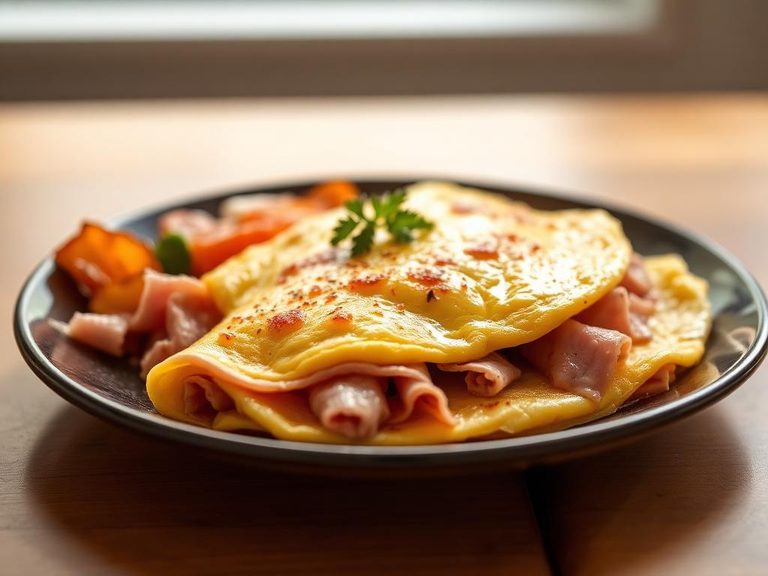
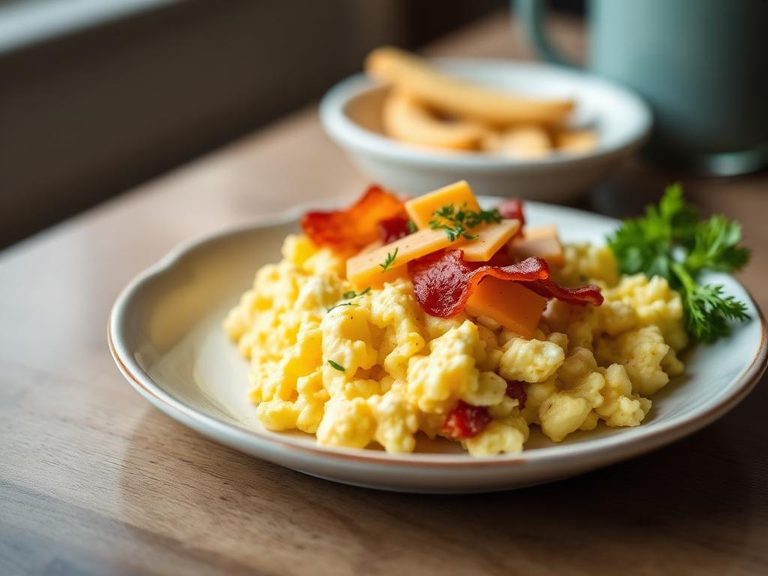
A hearty, savory blend of fluffy eggs scrambled or folded into an omelet, studded with melted cheese and savory meat, all cooked in rich margarine. The texture is soft and custardy with a satisfying chew from the meat and a gooey cheese pull. It's a protein-packed powerhouse with a high fat content for sustained energy.
Calorie split: 27% protein · 3% carbs · 70% fat
↓ Full nutrition💚 Why it's loved
People adore it for its comforting, savory richness and the customizable combination of fillings. It's a beloved, quick-cooking staple that feels indulgent yet satisfying.
⚠️ Watch-outs & how to enjoy it better
The high fat and calorie density from cheese, meat, and margarine can be a concern for those monitoring intake. To counteract, use lean meats like turkey or chicken breast, opt for a moderate portion of cheese, and consider using a non-stick pan with minimal margarine or a light spray.
Key benefits
- Excellent source of high-quality protein for muscle maintenance.
- Provides essential vitamins like B12 and riboflavin from eggs.
- Fat content promotes satiety and helps absorb fat-soluble vitamins.
- Quick and versatile meal for any time of day.
🍽️ Popular dishes
🌍 Where it's eaten
💡 Did you know?
The word 'omelette' first appeared in French cuisine in the 16th century, but the modern folded version we know was popularized in the 19th century.
Full nutrition (USDA data · scales with serving)
| Water | 67.9 g |
| Energy | 198 kcal |
| Protein | 13.3 g |
| Total lipid (fat) | 15.5 g |
| Carbohydrate, by difference | 1.5 g |
| Fiber, total dietary | 0.00 g |
| Total Sugars | 0.54 g |
| Calcium, Ca | 140 mg |
| Iron, Fe | 1.4 mg |
| Magnesium, Mg | 13.0 mg |
| Phosphorus, P | 224 mg |
| Potassium, K | 146 mg |
| Sodium, Na | 420 mg |
| Zinc, Zn | 1.5 mg |
| Copper, Cu | 0.01 mg |
| Selenium, Se | 28.4 ug |
| Vitamin C, total ascorbic acid | 0.00 mg |
| Thiamin | 0.07 mg |
| Riboflavin | 0.36 mg |
| Niacin | 0.52 mg |
| Vitamin B-6 | 0.23 mg |
| Folate, total | 42.0 ug |
| Folic acid | 0.00 ug |
| Folate, food | 42.0 ug |
| Folate, DFE | 42.0 ug |
| Choline, total | 211 mg |
| Vitamin B-12 | 0.84 ug |
| Vitamin B-12, added | 0.00 ug |
| Vitamin A, RAE | 211 ug |
| Retinol | 207 ug |
| Carotene, beta | 41.0 ug |
| Carotene, alpha | 0.00 ug |
| Cryptoxanthin, beta | 11.0 ug |
| Lycopene | 0.00 ug |
| Lutein + zeaxanthin | 382 ug |
| Vitamin E (alpha-tocopherol) | 1.9 mg |
| Vitamin E, added | 0.00 mg |
| Vitamin D (D2 + D3) | 2.6 ug |
| Vitamin K (phylloquinone) | 5.8 ug |
| Alcohol, ethyl | 0.00 g |
| Caffeine | 0.00 mg |
| Theobromine | 0.00 mg |
Fat & fatty acid profile (per 100g)
| Fatty acids, total saturated | 5.4 g |
| SFA 4:0 | 0.07 g |
| SFA 6:0 | 0.05 g |
| SFA 8:0 | 0.03 g |
| SFA 10:0 | 0.08 g |
| SFA 12:0 | 0.10 g |
| SFA 14:0 | 0.34 g |
| SFA 16:0 | 3.3 g |
| SFA 18:0 | 1.3 g |
| Fatty acids, total monounsaturated | 5.3 g |
| MUFA 16:1 | 0.27 g |
| MUFA 18:1 | 5.0 g |
| MUFA 20:1 | 0.03 g |
| MUFA 22:1 | 0.00 g |
| Fatty acids, total polyunsaturated | 3.1 g |
| PUFA 18:2 | 2.7 g |
| PUFA 18:3 | 0.17 g |
| PUFA 18:4 | 0.00 g |
| PUFA 20:4 | 0.01 g |
| PUFA 20:5 n-3 (EPA) | 0.00 g |
| PUFA 22:5 n-3 (DPA) | 0.00 g |
| PUFA 22:6 n-3 (DHA) | 0.00 g |
| Cholesterol | 327 mg |
Amino acid profile (per 100g)
Estimated from Egg, whole, cooked, omelet — USDA does not publish this profile for Egg omelet or scrambled egg.
| Tryptophan | 0.14 g |
| Threonine | 0.47 g |
| Isoleucine | 0.56 g |
| Leucine | 0.91 g |
| Lysine | 0.77 g |
| Methionine | 0.32 g |
| Cystine | 0.23 g |
| Phenylalanine | 0.57 g |
| Tyrosine | 0.42 g |
| Valine | 0.72 g |
| Arginine | 0.69 g |
| Histidine | 0.26 g |
| Alanine | 0.62 g |
| Aspartic acid | 1.1 g |
| Glutamic acid | 1.4 g |
| Glycine | 0.36 g |
| Proline | 0.43 g |
| Serine | 0.82 g |
FAQ
Is this a good post-workout meal?
Yes, the high protein content is ideal for muscle repair and recovery. The fats provide lasting energy, though you might pair it with a source of carbs like toast for optimal glycogen replenishment.
Can I make this healthier?
Absolutely. Use egg whites or a mix of whole eggs and whites, choose low-fat cheese, swap margarine for a small amount of olive oil, and load up on vegetables like spinach or peppers to add fiber and volume.
Why is there zero fiber and sugar?
This is typical for animal-based foods like eggs, cheese, and meat. To balance the meal, serve it alongside whole-grain toast, a side salad, or fruit.
Nutrient density (calculated · NRF9.3)
Nutrient Rich Foods index: beneficial nutrients (protein, fiber, vitamins, minerals) minus saturated fat, added sugar & sodium, per 100 kcal.
NRF9.3 index — Fulgoni, Keast & Drewnowski, 2009. Computed from USDA nutrients.
Weight-loss friendliness (composite index)
Energy density 1.98 kcal/g · 27% calories from protein · 0.0 g fiber · 0.5 g sugar per 100 g.
Composite of energy density (Rolls et al., 1999), protein & fiber satiety, minus sugar. A calculated heuristic — ranks satiety-per-calorie, not a clinical measure.
Dietary load (calculated from USDA values)
Potential renal acid load. Positive = acid-forming, negative = alkaline-forming.
Sodium-to-potassium ratio: 2.88 (lower is better — aim for ≤ 1)
Sodium:potassium per WHO potassium guidance. Computed from USDA nutrients.