

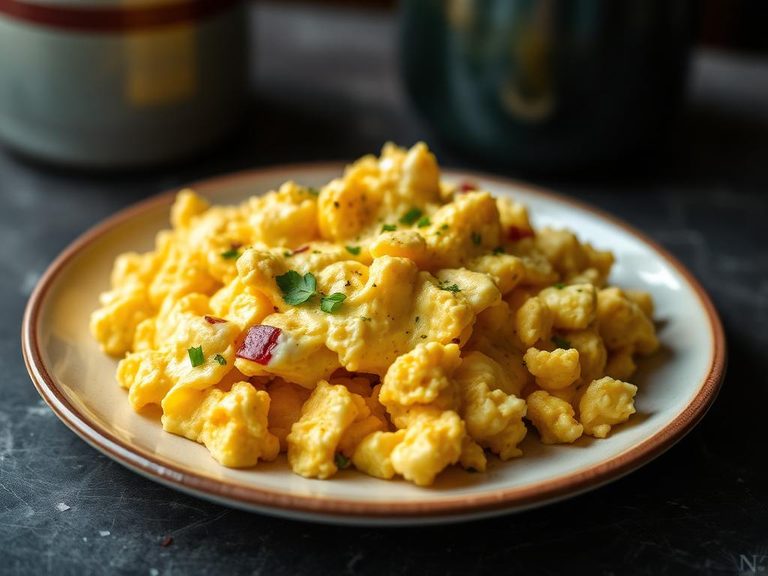
Egg omelet or scrambled egg, made with margarine
Common food

Photo: Wikipedia
A humble yet satisfying dish of eggs beaten and cooked in margarine, yielding a tender, slightly creamy texture with a rich, savory flavor. It's a protein-packed staple, offering over 11 grams of protein per 100 grams with minimal carbohydrates. The use of margarine adds a distinct, buttery richness that coats the palate.
Calorie split: 27% protein · 2% carbs · 71% fat
↓ Full nutrition💚 Why it's loved
People love it for its comforting, familiar taste and incredible versatility—it's a blank canvas for herbs, cheese, or vegetables. It's a universal quick meal, deeply embedded in breakfast cultures worldwide.
⚠️ Watch-outs & how to enjoy it better
The primary concern is the high saturated and trans fat content from margarine, which can impact heart health if consumed excessively. To counteract this, consider using a small amount of olive oil or a heart-healthy margarine, and pair the dish with fiber-rich vegetables like spinach or tomatoes to balance the meal.
Key benefits
- Excellent source of high-quality protein
- Very low in carbohydrates and sugar
- Provides essential vitamins like B12 and riboflavin
- Quick and affordable source of energy
- Margarine contains added vitamins A and D
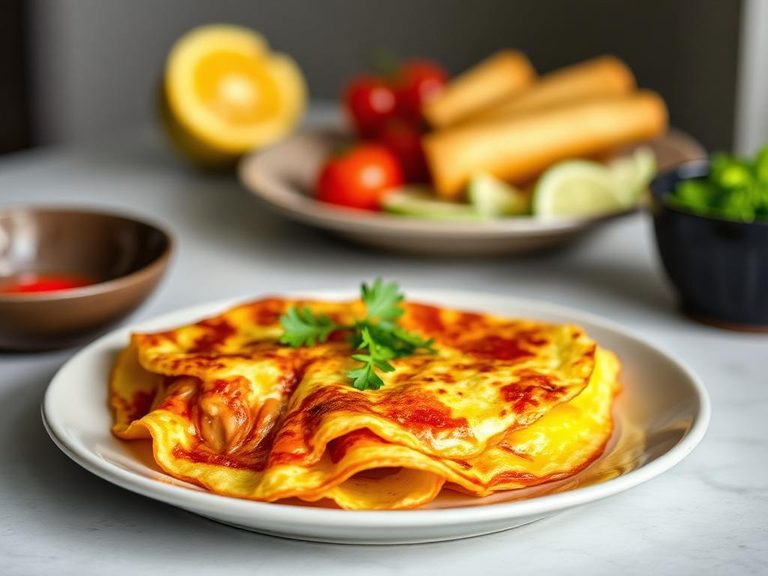
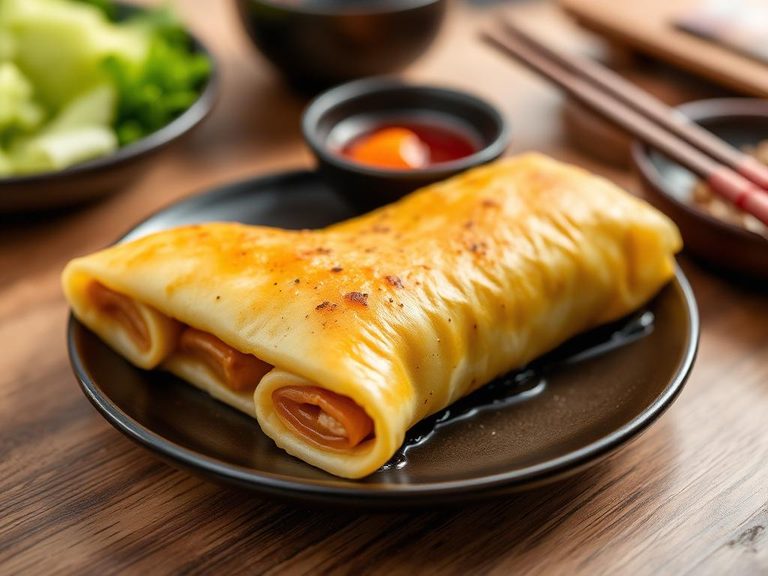
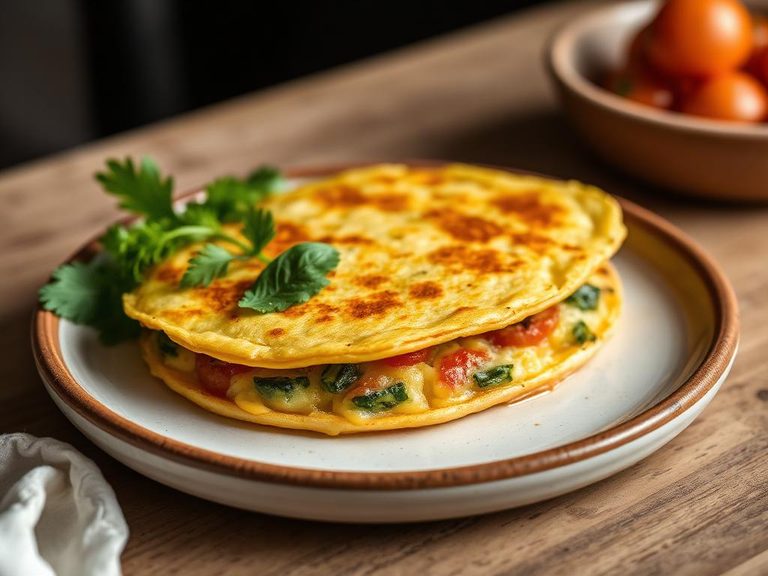
🍽️ Popular dishes
🌍 Where it's eaten
💡 Did you know?
The French omelette is so revered that it's a benchmark test in culinary schools, where students are judged on achieving a perfectly smooth, pale yellow exterior with a soft, creamy interior.
Full nutrition (USDA data · scales with serving)
| Water | 72.8 g |
| Energy | 171 kcal |
| Protein | 11.6 g |
| Total lipid (fat) | 13.5 g |
| Carbohydrate, by difference | 0.95 g |
| Fiber, total dietary | 0.00 g |
| Total Sugars | 0.19 g |
| Calcium, Ca | 46.0 mg |
| Iron, Fe | 1.6 mg |
| Magnesium, Mg | 10.0 mg |
| Phosphorus, P | 172 mg |
| Potassium, K | 125 mg |
| Sodium, Na | 274 mg |
| Zinc, Zn | 1.2 mg |
| Copper, Cu | 0.00 mg |
| Selenium, Se | 29.0 ug |
| Vitamin C, total ascorbic acid | 0.00 mg |
| Thiamin | 0.06 mg |
| Riboflavin | 0.37 mg |
| Niacin | 0.00 mg |
| Vitamin B-6 | 0.24 mg |
| Folate, total | 50.0 ug |
| Folic acid | 0.00 ug |
| Folate, food | 50.0 ug |
| Folate, DFE | 50.0 ug |
| Choline, total | 251 mg |
| Vitamin B-12 | 0.76 ug |
| Vitamin B-12, added | 0.00 ug |
| Vitamin A, RAE | 221 ug |
| Retinol | 217 ug |
| Carotene, beta | 40.0 ug |
| Carotene, alpha | 0.00 ug |
| Cryptoxanthin, beta | 12.0 ug |
| Lycopene | 0.00 ug |
| Lutein + zeaxanthin | 469 ug |
| Vitamin E (alpha-tocopherol) | 2.2 mg |
| Vitamin E, added | 0.00 mg |
| Vitamin D (D2 + D3) | 2.6 ug |
| Vitamin K (phylloquinone) | 6.8 ug |
| Alcohol, ethyl | 0.00 g |
| Caffeine | 0.00 mg |
| Theobromine | 0.00 mg |
Fat & fatty acid profile (per 100g)
| Fatty acids, total saturated | 3.8 g |
| SFA 4:0 | 0.00 g |
| SFA 6:0 | 0.00 g |
| SFA 8:0 | 0.00 g |
| SFA 10:0 | 0.00 g |
| SFA 12:0 | 0.01 g |
| SFA 14:0 | 0.04 g |
| SFA 16:0 | 2.6 g |
| SFA 18:0 | 1.1 g |
| Fatty acids, total monounsaturated | 5.0 g |
| MUFA 16:1 | 0.23 g |
| MUFA 18:1 | 4.7 g |
| MUFA 20:1 | 0.01 g |
| MUFA 22:1 | 0.00 g |
| Fatty acids, total polyunsaturated | 3.4 g |
| PUFA 18:2 | 2.9 g |
| PUFA 18:3 | 0.18 g |
| PUFA 18:4 | 0.00 g |
| PUFA 20:4 | 0.00 g |
| PUFA 20:5 n-3 (EPA) | 0.00 g |
| PUFA 22:5 n-3 (DPA) | 0.00 g |
| PUFA 22:6 n-3 (DHA) | 0.00 g |
| Cholesterol | 383 mg |
Amino acid profile (per 100g)
Estimated from Egg, whole, cooked, omelet — USDA does not publish this profile for Egg omelet or scrambled egg.
| Tryptophan | 0.14 g |
| Threonine | 0.47 g |
| Isoleucine | 0.56 g |
| Leucine | 0.91 g |
| Lysine | 0.77 g |
| Methionine | 0.32 g |
| Cystine | 0.23 g |
| Phenylalanine | 0.57 g |
| Tyrosine | 0.42 g |
| Valine | 0.72 g |
| Arginine | 0.69 g |
| Histidine | 0.26 g |
| Alanine | 0.62 g |
| Aspartic acid | 1.1 g |
| Glutamic acid | 1.4 g |
| Glycine | 0.36 g |
| Proline | 0.43 g |
| Serine | 0.82 g |
FAQ
Is this the same as a butter omelet?
No. The flavor, texture, and nutritional profile differ. Margarine is an emulsion of vegetable oils and has a higher water content, which can make the eggs slightly more tender but also changes the mouthfeel and fat composition compared to butter.
Can I make this with egg whites only?
Yes, you can make a scrambled egg white dish with margarine. It will significantly reduce the fat and cholesterol content while retaining the high protein, resulting in a lighter, fluffier texture.
Why is there 0g of fiber?
Eggs and margarine are animal-derived or processed fat products that naturally contain no dietary fiber. To increase fiber, serve with a side of whole-grain toast or vegetables.
Nutrient density (calculated · NRF9.3)
Nutrient Rich Foods index: beneficial nutrients (protein, fiber, vitamins, minerals) minus saturated fat, added sugar & sodium, per 100 kcal.
NRF9.3 index — Fulgoni, Keast & Drewnowski, 2009. Computed from USDA nutrients.
Weight-loss friendliness (composite index)
Energy density 1.71 kcal/g · 27% calories from protein · 0.0 g fiber · 0.2 g sugar per 100 g.
Composite of energy density (Rolls et al., 1999), protein & fiber satiety, minus sugar. A calculated heuristic — ranks satiety-per-calorie, not a clinical measure.
Dietary load (calculated from USDA values)
Potential renal acid load. Positive = acid-forming, negative = alkaline-forming.
Sodium-to-potassium ratio: 2.19 (lower is better — aim for ≤ 1)
Sodium:potassium per WHO potassium guidance. Computed from USDA nutrients.