

Egg omelet or scrambled egg, no added fat
Common food

Photo: Wikipedia
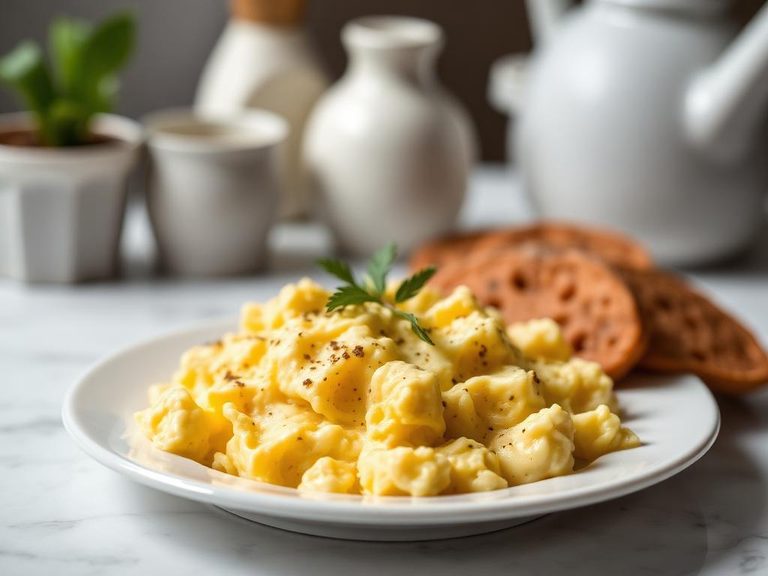
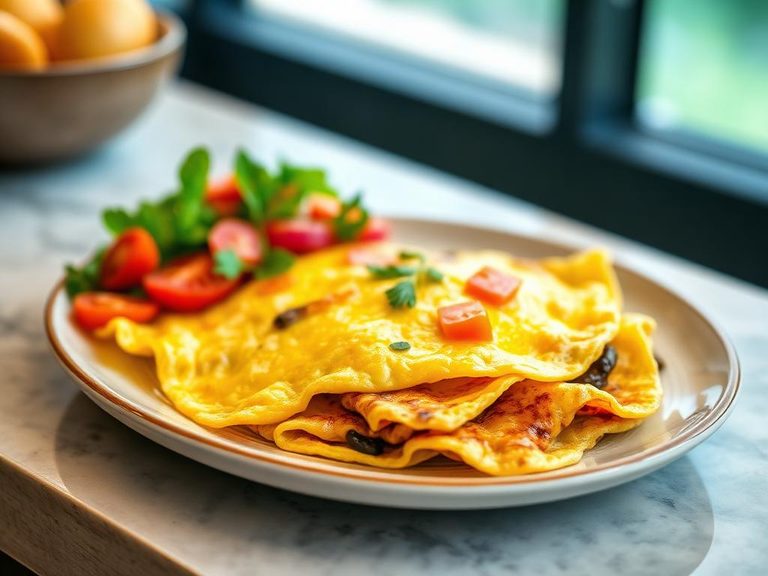
A simple, protein-packed preparation where eggs are gently cooked without any added butter or oil, resulting in a tender, slightly dry texture. The flavor is pure, rich, and eggy, with the nutritional highlight being its high-quality protein and very low carbohydrate content.
Calorie split: 35% protein · 3% carbs · 63% fat
↓ Full nutrition💚 Why it's loved
People love it for its incredible versatility—it's a blank canvas that can be seasoned simply with salt and pepper or filled with vegetables, cheese, or herbs. It's a quick, reliable, and comforting staple in kitchens worldwide, from a simple breakfast to a light dinner.
⚠️ Watch-outs & how to enjoy it better
Without added fat, the texture can be drier or rubbery if overcooked, which some find unappealing. Those watching their cholesterol intake should be mindful of portion size, and it's a common allergen. To counteract dryness, cook gently over medium-low heat and remove from heat while still slightly moist. Pair with vegetables or a side of avocado for added moisture and nutrients.
Key benefits
- Excellent source of complete protein
- Very low in carbohydrates
- Naturally gluten-free
- Rich in choline for brain health
- Provides essential vitamins like B12 and D
🍽️ Popular dishes
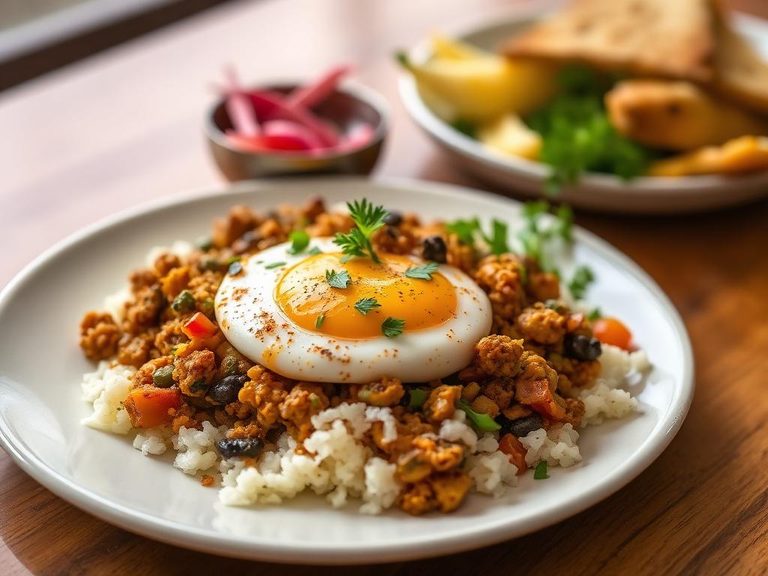
🌍 Where it's eaten
💡 Did you know?
The world record for the largest scrambled egg used over 150,000 eggs and was cooked in a pan nearly 10 feet in diameter.
Full nutrition (USDA data · scales with serving)
| Water | 75.6 g |
| Energy | 143 kcal |
| Protein | 12.4 g |
| Total lipid (fat) | 9.9 g |
| Carbohydrate, by difference | 0.96 g |
| Fiber, total dietary | 0.00 g |
| Total Sugars | 0.20 g |
| Calcium, Ca | 48.0 mg |
| Iron, Fe | 1.7 mg |
| Magnesium, Mg | 11.0 mg |
| Phosphorus, P | 183 mg |
| Potassium, K | 132 mg |
| Sodium, Na | 244 mg |
| Zinc, Zn | 1.2 mg |
| Copper, Cu | 0.00 mg |
| Selenium, Se | 31.0 ug |
| Vitamin C, total ascorbic acid | 0.00 mg |
| Thiamin | 0.06 mg |
| Riboflavin | 0.40 mg |
| Niacin | 0.00 mg |
| Vitamin B-6 | 0.06 mg |
| Folate, total | 53.0 ug |
| Folic acid | 0.00 ug |
| Folate, food | 53.0 ug |
| Folate, DFE | 53.0 ug |
| Choline, total | 267 mg |
| Vitamin B-12 | 0.81 ug |
| Vitamin B-12, added | 0.00 ug |
| Vitamin A, RAE | 179 ug |
| Retinol | 178 ug |
| Carotene, beta | 0.00 ug |
| Carotene, alpha | 0.00 ug |
| Cryptoxanthin, beta | 13.0 ug |
| Lycopene | 0.00 ug |
| Lutein + zeaxanthin | 501 ug |
| Vitamin E (alpha-tocopherol) | 1.1 mg |
| Vitamin E, added | 0.00 mg |
| Vitamin D (D2 + D3) | 2.5 ug |
| Vitamin K (phylloquinone) | 0.30 ug |
| Alcohol, ethyl | 0.00 g |
| Caffeine | 0.00 mg |
| Theobromine | 0.00 mg |
Fat & fatty acid profile (per 100g)
| Fatty acids, total saturated | 3.2 g |
| SFA 4:0 | 0.00 g |
| SFA 6:0 | 0.00 g |
| SFA 8:0 | 0.00 g |
| SFA 10:0 | 0.00 g |
| SFA 12:0 | 0.00 g |
| SFA 14:0 | 0.03 g |
| SFA 16:0 | 2.3 g |
| SFA 18:0 | 0.81 g |
| Fatty acids, total monounsaturated | 3.6 g |
| MUFA 16:1 | 0.24 g |
| MUFA 18:1 | 3.3 g |
| MUFA 20:1 | 0.00 g |
| MUFA 22:1 | 0.00 g |
| Fatty acids, total polyunsaturated | 1.8 g |
| PUFA 18:2 | 1.5 g |
| PUFA 18:3 | 0.01 g |
| PUFA 18:4 | 0.00 g |
| PUFA 20:4 | 0.00 g |
| PUFA 20:5 n-3 (EPA) | 0.00 g |
| PUFA 22:5 n-3 (DPA) | 0.00 g |
| PUFA 22:6 n-3 (DHA) | 0.00 g |
| Cholesterol | 410 mg |
Amino acid profile (per 100g)
Estimated from Egg, whole, cooked, omelet — USDA does not publish this profile for Egg omelet or scrambled egg.
| Tryptophan | 0.14 g |
| Threonine | 0.47 g |
| Isoleucine | 0.56 g |
| Leucine | 0.91 g |
| Lysine | 0.77 g |
| Methionine | 0.32 g |
| Cystine | 0.23 g |
| Phenylalanine | 0.57 g |
| Tyrosine | 0.42 g |
| Valine | 0.72 g |
| Arginine | 0.69 g |
| Histidine | 0.26 g |
| Alanine | 0.62 g |
| Aspartic acid | 1.1 g |
| Glutamic acid | 1.4 g |
| Glycine | 0.36 g |
| Proline | 0.43 g |
| Serine | 0.82 g |
FAQ
How do I prevent my fat-free scrambled eggs from sticking?
Use a high-quality non-stick pan and cook over medium-low heat. You can also add a tablespoon of water or broth to the eggs before cooking to create steam and prevent sticking.
Is this a good meal for weight loss?
Yes, it's very high in protein and low in calories, which promotes satiety. However, eating it without any fat or fiber may leave you hungry sooner. Pair it with vegetables or a small portion of whole-grain toast for a more balanced meal.
Can I reheat it without it becoming rubbery?
Reheating is tricky. The best method is to gently warm it in a non-stick skillet over low heat, stirring constantly. Alternatively, enjoy it cold in a salad or wrap.
Nutrient density (calculated · NRF9.3)
Nutrient Rich Foods index: beneficial nutrients (protein, fiber, vitamins, minerals) minus saturated fat, added sugar & sodium, per 100 kcal.
NRF9.3 index — Fulgoni, Keast & Drewnowski, 2009. Computed from USDA nutrients.
Weight-loss friendliness (composite index)
Energy density 1.43 kcal/g · 35% calories from protein · 0.0 g fiber · 0.2 g sugar per 100 g.
Composite of energy density (Rolls et al., 1999), protein & fiber satiety, minus sugar. A calculated heuristic — ranks satiety-per-calorie, not a clinical measure.
Dietary load (calculated from USDA values)
Potential renal acid load. Positive = acid-forming, negative = alkaline-forming.
Sodium-to-potassium ratio: 1.85 (lower is better — aim for ≤ 1)
Sodium:potassium per WHO potassium guidance. Computed from USDA nutrients.