

Dip, NFS
Common food

Photo: Wikipedia
A rich, creamy emulsion of fat and flavor, 'Dip, NFS' (Not Further Specified) is a catch-all term for a vast category of savory or sweet spreads. Its texture ranges from silky-smooth to thick and chunky, with a taste profile that can be tangy, spicy, herbaceous, or cheesy. Nutritionally, it's a dense source of energy, primarily from fat, with minimal protein and carbohydrates.
Calorie split: 2% protein · 4% carbs · 94% fat
↓ Full nutrition💚 Why it's loved
People adore dips for their incredible versatility—they can transform a simple carrot stick or chip into a flavorful experience. They are central to social gatherings, from game-day platters to elegant mezze spreads, offering a communal and interactive way to eat.
⚠️ Watch-outs & how to enjoy it better
The primary downside is the very high fat and calorie density, which can lead to overconsumption. Many commercial dips are also high in sodium and may contain additives. To counteract this, practice strict portion control (e.g., using a measured ramekin), pair with high-fiber dippers like raw vegetables, and choose dips based on whole-food ingredients like beans or yogurt.
Key benefits
- Provides a quick source of dietary fat for energy.
- Can enhance the palatability of vegetables and lean proteins.
- Often contains fat-soluble vitamins from its base ingredients.
- Serves as a versatile vehicle for herbs, spices, and other flavorings.
- Facilitates social eating and communal food sharing.
🍽️ Popular dishes
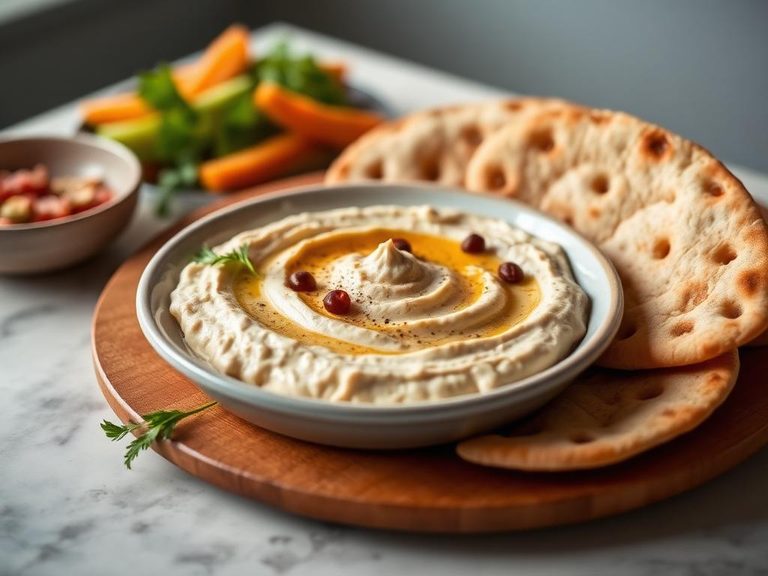
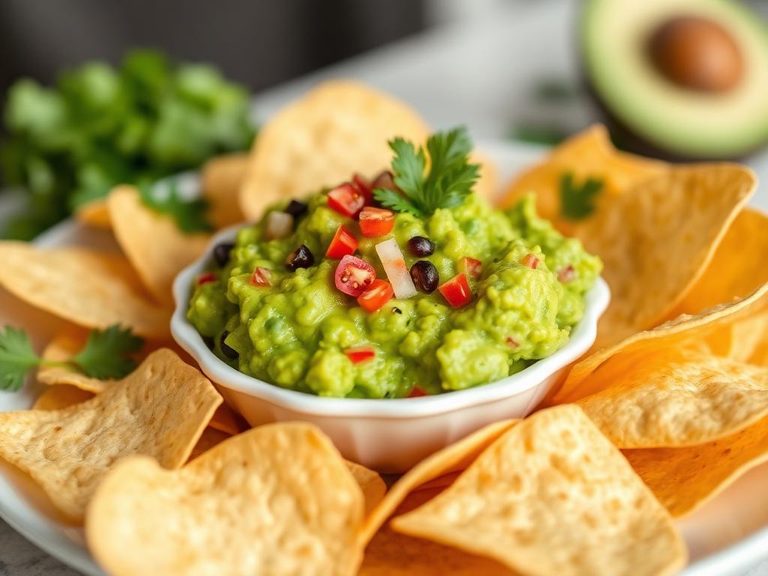

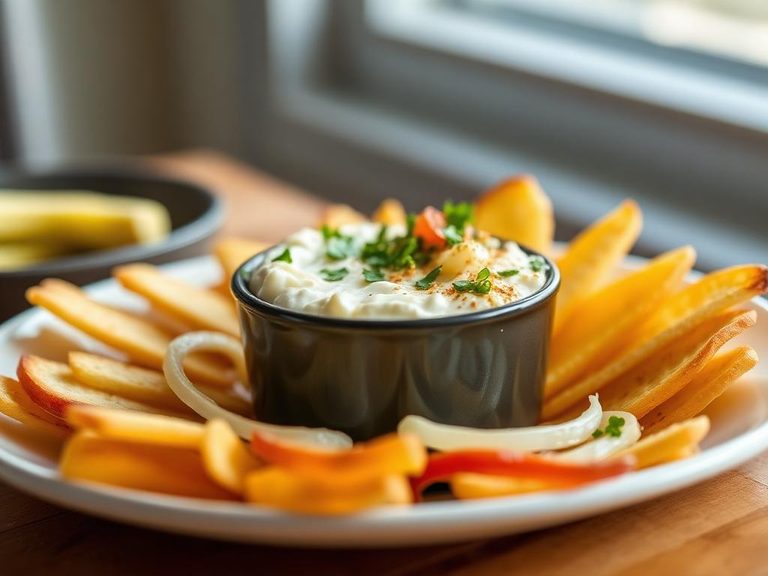
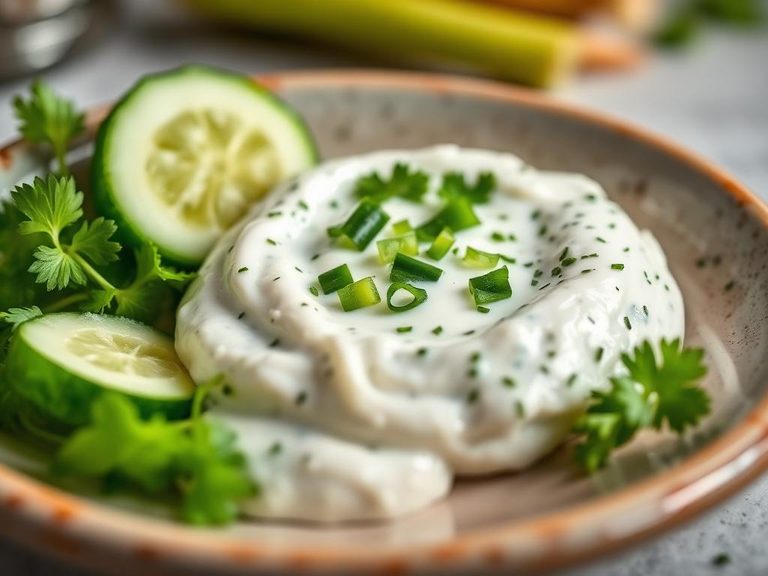

🌍 Where it's eaten
💡 Did you know?
The word 'dip' in this context is relatively modern; historically, thick sauces for scooping were often called 'sops' or 'relishes' in English cookbooks.
Full nutrition (USDA data · scales with serving)
| Water | 45.8 g |
| Energy | 432 kcal |
| Protein | 2.5 g |
| Total lipid (fat) | 45.2 g |
| Carbohydrate, by difference | 3.9 g |
| Fiber, total dietary | 0.30 g |
| Total Sugars | 2.5 g |
| Calcium, Ca | 79.0 mg |
| Iron, Fe | 0.32 mg |
| Magnesium, Mg | 10.0 mg |
| Phosphorus, P | 73.0 mg |
| Potassium, K | 126 mg |
| Sodium, Na | 718 mg |
| Zinc, Zn | 0.35 mg |
| Copper, Cu | 0.02 mg |
| Selenium, Se | 3.2 ug |
| Vitamin C, total ascorbic acid | 1.7 mg |
| Thiamin | 0.03 mg |
| Riboflavin | 0.13 mg |
| Niacin | 0.15 mg |
| Vitamin B-6 | 0.03 mg |
| Folate, total | 8.0 ug |
| Folic acid | 0.00 ug |
| Folate, food | 8.0 ug |
| Folate, DFE | 8.0 ug |
| Choline, total | 28.0 mg |
| Vitamin B-12 | 0.12 ug |
| Vitamin B-12, added | 0.00 ug |
| Vitamin A, RAE | 83.0 ug |
| Retinol | 82.0 ug |
| Carotene, beta | 14.0 ug |
| Carotene, alpha | 0.00 ug |
| Cryptoxanthin, beta | 2.0 ug |
| Lycopene | 0.00 ug |
| Lutein + zeaxanthin | 31.0 ug |
| Vitamin E (alpha-tocopherol) | 1.9 mg |
| Vitamin E, added | 0.00 mg |
| Vitamin D (D2 + D3) | 0.10 ug |
| Vitamin K (phylloquinone) | 93.1 ug |
| Alcohol, ethyl | 0.00 g |
| Caffeine | 0.00 mg |
| Theobromine | 0.00 mg |
Fat & fatty acid profile (per 100g)
| Fatty acids, total saturated | 10.9 g |
| SFA 4:0 | 0.02 g |
| SFA 6:0 | 0.10 g |
| SFA 8:0 | 0.07 g |
| SFA 10:0 | 0.18 g |
| SFA 12:0 | 0.27 g |
| SFA 14:0 | 0.88 g |
| SFA 16:0 | 6.3 g |
| SFA 18:0 | 2.3 g |
| Fatty acids, total monounsaturated | 10.0 g |
| MUFA 16:1 | 0.19 g |
| MUFA 18:1 | 10.0 g |
| MUFA 20:1 | 0.13 g |
| MUFA 22:1 | 0.01 g |
| Fatty acids, total polyunsaturated | 22.1 g |
| PUFA 18:2 | 19.2 g |
| PUFA 18:3 | 2.7 g |
| PUFA 18:4 | 0.00 g |
| PUFA 20:4 | 0.04 g |
| PUFA 20:5 n-3 (EPA) | 0.00 g |
| PUFA 22:5 n-3 (DPA) | 0.01 g |
| PUFA 22:6 n-3 (DHA) | 0.00 g |
| Cholesterol | 47.0 mg |
Amino acid profile (per 100g)
Estimated from Snacks, granola bar, QUAKER, DIPPS, all flavors — USDA does not publish this profile for Dip.
| Tryptophan | 0.05 g |
| Threonine | 0.13 g |
| Isoleucine | 0.15 g |
| Leucine | 0.29 g |
| Lysine | 0.17 g |
| Methionine | 0.07 g |
| Cystine | 0.10 g |
| Phenylalanine | 0.20 g |
| Tyrosine | 0.11 g |
| Valine | 0.20 g |
| Arginine | 0.29 g |
| Histidine | 0.09 g |
| Alanine | 0.17 g |
| Aspartic acid | 0.32 g |
| Glutamic acid | 1.0 g |
| Glycine | 0.17 g |
| Proline | 0.34 g |
| Serine | 0.20 g |
FAQ
What does 'NFS' mean on a nutrition label?
NFS stands for 'Not Further Specified.' It's a generic category used when a specific type of food (like a particular dip) isn't identified, so the data represents an average of many similar products.
Is dip a good source of protein?
Generally, no. Most dips are primarily fat-based. Exceptions include bean-based dips like hummus or those made with Greek yogurt, which offer more protein.
How can I make a dip healthier at home?
Use a base of pureed beans, lentils, or non-fat Greek yogurt instead of mayonnaise or sour cream. Load it with finely chopped vegetables, herbs, and spices for flavor without excess fat or sodium.
Nutrient density (calculated · NRF9.3)
Nutrient Rich Foods index: beneficial nutrients (protein, fiber, vitamins, minerals) minus saturated fat, added sugar & sodium, per 100 kcal.
NRF9.3 index — Fulgoni, Keast & Drewnowski, 2009. Computed from USDA nutrients.
Weight-loss friendliness (composite index)
Energy density 4.32 kcal/g · 2% calories from protein · 0.3 g fiber · 2.5 g sugar per 100 g.
Composite of energy density (Rolls et al., 1999), protein & fiber satiety, minus sugar. A calculated heuristic — ranks satiety-per-calorie, not a clinical measure.
Dietary load (calculated from USDA values)
Potential renal acid load. Positive = acid-forming, negative = alkaline-forming.
Sodium-to-potassium ratio: 5.70 (lower is better — aim for ≤ 1)
Sodium:potassium per WHO potassium guidance. Computed from USDA nutrients.