Hummus with Pita
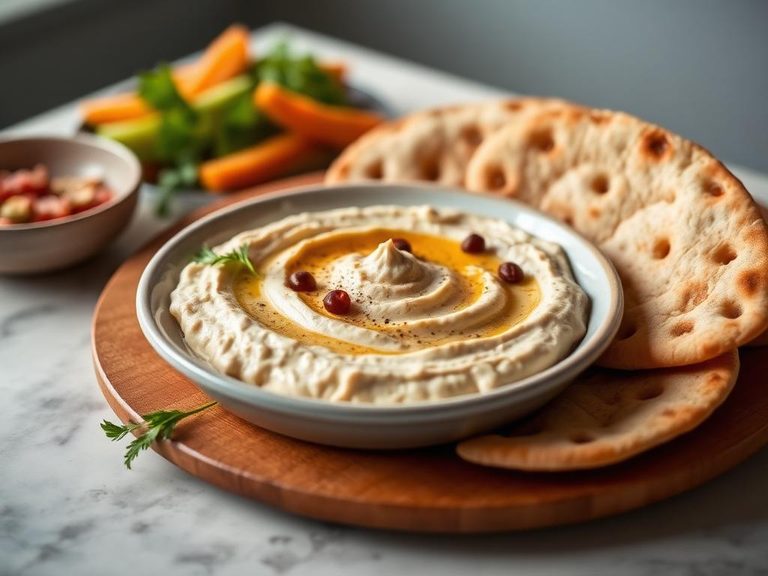
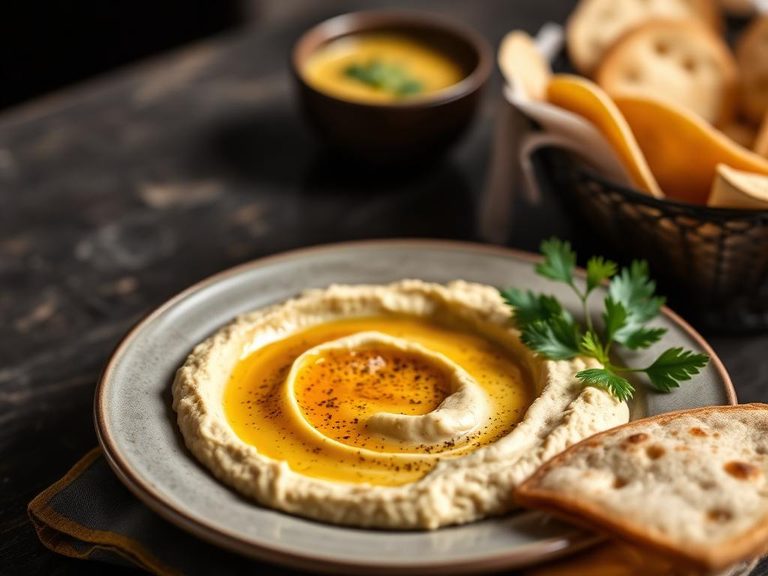
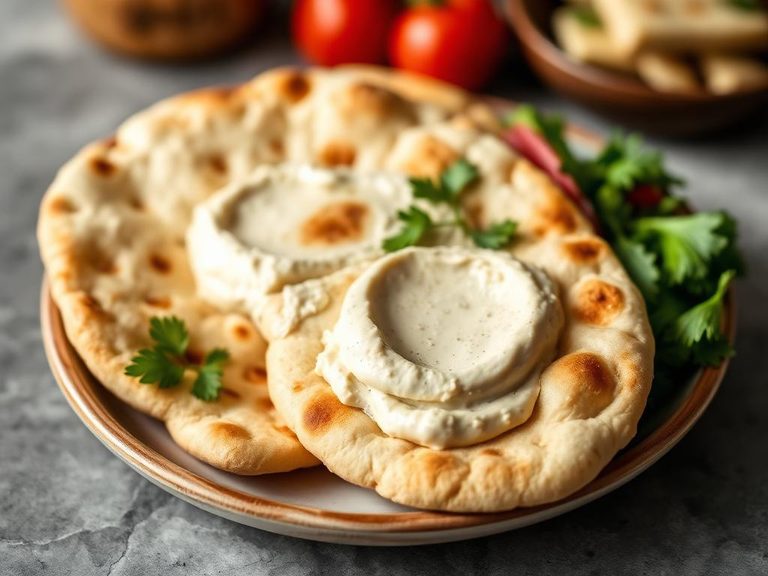
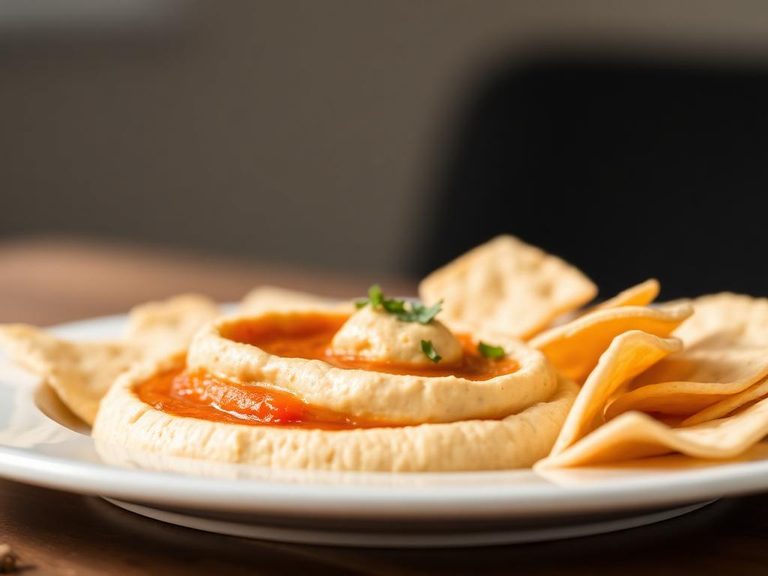
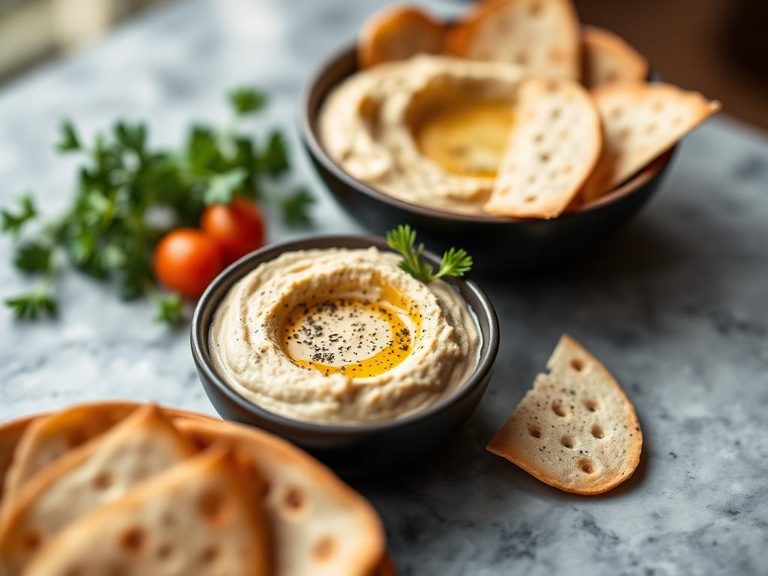
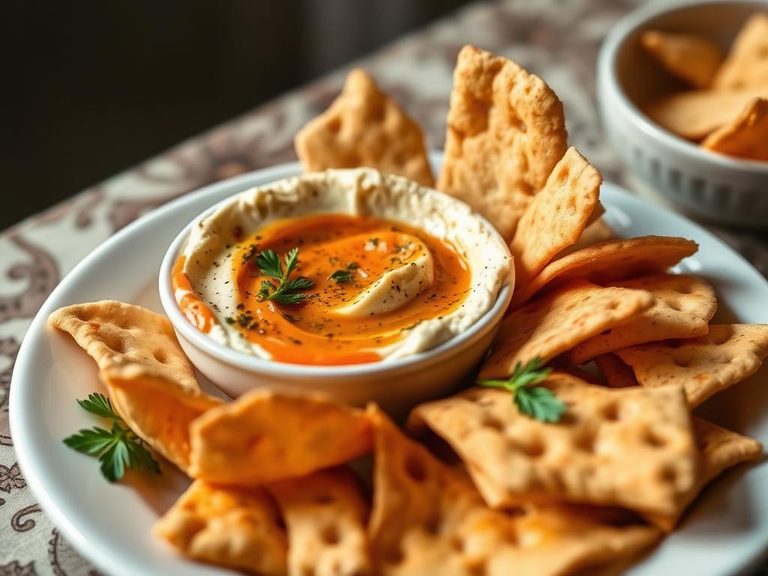
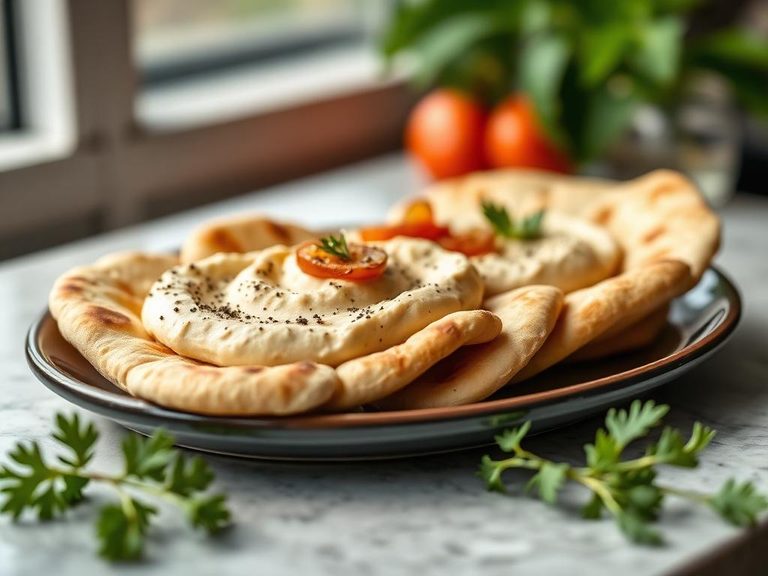
Hummus with pita is a beloved Middle Eastern appetizer or snack consisting of a creamy chickpea dip served alongside soft, warm flatbread. The hummus is typically made from blended chickpeas, tahini (sesame paste), lemon juice, garlic, and olive oil, while the pita is a leavened wheat bread often baked in a hot oven to create its signature pocket. This combination is a staple in Levantine cuisine and has become popular worldwide.
🍽️ Nutrition at a glance
This dish offers a balanced mix of plant-based protein and healthy fats from the chickpeas and tahini, alongside carbohydrates from the pita bread. A standard serving (about 1/2 cup hummus with one pita) provides a good source of fiber, folate, and iron, and generally ranges from 300 to 400 calories.
Nutrition breakdown
| Calories | 400 kcal |
| Protein | 12 g |
| Carbs | 45 g |
| Fat | 18 g |
| Fiber | 8 g |
| Sugar | 5 g |
| Sodium | 700 mg |
| Potassium | 350 mg |
| Iron | 3 mg |
| Magnesium | 50 mg |
| Phosphorus | 150 mg |
| Zinc | 2 mg |
| Vitamin B6 | 0.3 mg |
| Folate | 80 mcg |
| Manganese | 1.5 mg |
Per 1 cup (240 g) · estimated, varies by recipe
💡 What's interesting
Culturally, hummus with pita is a symbol of hospitality and communal eating across the Eastern Mediterranean and Middle East, often served as part of a larger mezze spread. Nutritionally, the combination of legumes (chickpeas) and grains (wheat pita) creates a complete protein, making it a historically important and satisfying meal for various dietary traditions.