

Crab, canned
Common food

Photo: Wikipedia
Canned crab is pre-cooked, flaky white meat from various crab species, preserved in its own juices or a light brine. It has a delicate, sweet, and briny flavor with a tender, slightly fibrous texture that's ready to eat straight from the can. Nutritionally, it's a lean powerhouse, delivering a massive 18 grams of protein per 100 grams with virtually no fat or carbohydrates.
Calorie split: 91% protein · 0% carbs · 9% fat
↓ Full nutrition💚 Why it's loved
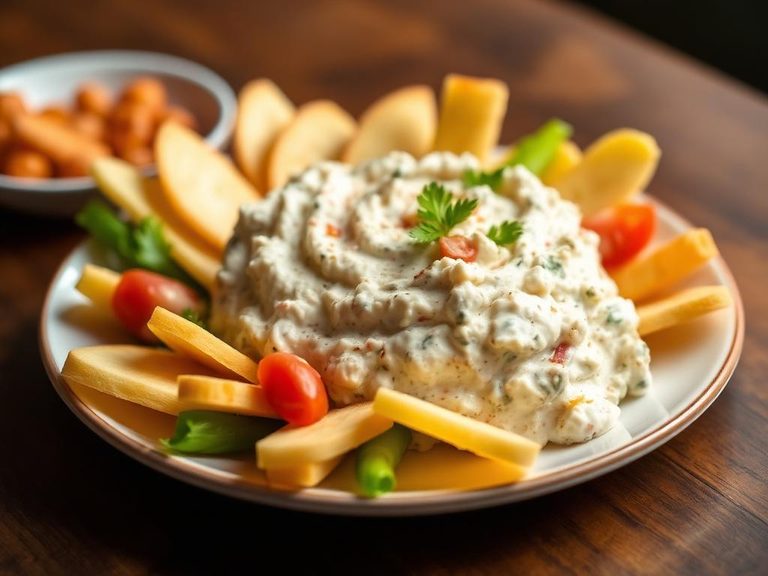
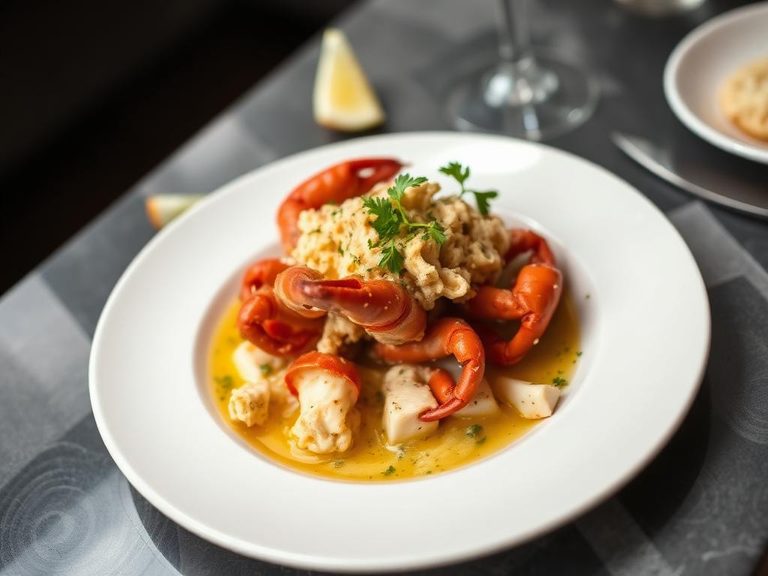
People love canned crab for its incredible convenience and sweet, oceanic flavor that brings a taste of luxury to quick weeknight meals. Its versatility allows it to be the star of everything from simple salads and dips to elegant pasta dishes and savory crab cakes.
⚠️ Watch-outs & how to enjoy it better
The primary concern is high sodium content from the canning brine, which can be problematic for those monitoring blood pressure. It is also a common shellfish allergen. To counteract sodium, look for 'low sodium' or 'no salt added' varieties, and rinse the meat thoroughly under cold water before using. Always check labels for allergen warnings.
Key benefits
- Excellent source of high-quality, complete protein
- Naturally very low in fat and carbohydrates
- Provides essential minerals like selenium and zinc
- Convenient, shelf-stable, and ready-to-eat
- Rich in omega-3 fatty acids (EPA and DHA)
🍽️ Popular dishes


🌍 Where it's eaten
💡 Did you know?
The practice of canning crab was popularized in the United States after the Civil War, turning a regional delicacy from the Chesapeake Bay into a nationally available staple.
Full nutrition (USDA data · scales with serving)
| Water | 79.7 g |
| Energy | 83.0 kcal |
| Protein | 17.9 g |
| Total lipid (fat) | 0.74 g |
| Carbohydrate, by difference | 0.00 g |
| Fiber, total dietary | 0.00 g |
| Total Sugars | 0.00 g |
| Calcium, Ca | 91.0 mg |
| Iron, Fe | 0.50 mg |
| Magnesium, Mg | 36.0 mg |
| Phosphorus, P | 234 mg |
| Potassium, K | 259 mg |
| Sodium, Na | 563 mg |
| Zinc, Zn | 3.8 mg |
| Copper, Cu | 0.81 mg |
| Selenium, Se | 42.9 ug |
| Vitamin C, total ascorbic acid | 3.3 mg |
| Thiamin | 0.02 mg |
| Riboflavin | 0.09 mg |
| Niacin | 2.7 mg |
| Vitamin B-6 | 0.16 mg |
| Folate, total | 51.0 ug |
| Folic acid | 0.00 ug |
| Folate, food | 51.0 ug |
| Folate, DFE | 51.0 ug |
| Choline, total | 80.9 mg |
| Vitamin B-12 | 3.3 ug |
| Vitamin B-12, added | 0.00 ug |
| Vitamin A, RAE | 1.0 ug |
| Retinol | 1.0 ug |
| Carotene, beta | 0.00 ug |
| Carotene, alpha | 0.00 ug |
| Cryptoxanthin, beta | 0.00 ug |
| Lycopene | 0.00 ug |
| Lutein + zeaxanthin | 0.00 ug |
| Vitamin E (alpha-tocopherol) | 1.8 mg |
| Vitamin E, added | 0.00 mg |
| Vitamin D (D2 + D3) | 0.00 ug |
| Vitamin K (phylloquinone) | 0.30 ug |
| Alcohol, ethyl | 0.00 g |
| Caffeine | 0.00 mg |
| Theobromine | 0.00 mg |
Fat & fatty acid profile (per 100g)
| Fatty acids, total saturated | 0.20 g |
| SFA 4:0 | 0.00 g |
| SFA 6:0 | 0.00 g |
| SFA 8:0 | 0.00 g |
| SFA 10:0 | 0.00 g |
| SFA 12:0 | 0.00 g |
| SFA 14:0 | 0.01 g |
| SFA 16:0 | 0.10 g |
| SFA 18:0 | 0.07 g |
| Fatty acids, total monounsaturated | 0.13 g |
| MUFA 16:1 | 0.03 g |
| MUFA 18:1 | 0.09 g |
| MUFA 20:1 | 0.01 g |
| MUFA 22:1 | 0.00 g |
| Fatty acids, total polyunsaturated | 0.26 g |
| PUFA 18:2 | 0.02 g |
| PUFA 18:3 | 0.01 g |
| PUFA 18:4 | 0.00 g |
| PUFA 20:4 | 0.04 g |
| PUFA 20:5 n-3 (EPA) | 0.10 g |
| PUFA 22:5 n-3 (DPA) | 0.01 g |
| PUFA 22:6 n-3 (DHA) | 0.07 g |
| Cholesterol | 97.0 mg |
Amino acid profile (per 100g)
Estimated from Crustaceans, crab, blue, crab cakes, home recipe — USDA does not publish this profile for Crab.
| Tryptophan | 0.28 g |
| Threonine | 0.83 g |
| Isoleucine | 1.00 g |
| Leucine | 1.6 g |
| Lysine | 1.7 g |
| Methionine | 0.57 g |
| Cystine | 0.24 g |
| Phenylalanine | 0.87 g |
| Tyrosine | 0.68 g |
| Valine | 0.98 g |
| Arginine | 1.7 g |
| Histidine | 0.41 g |
| Alanine | 1.1 g |
| Aspartic acid | 2.1 g |
| Glutamic acid | 3.4 g |
| Glycine | 1.2 g |
| Proline | 0.68 g |
| Serine | 0.84 g |
FAQ
Is canned crab cooked?
Yes, all commercially canned crab is fully cooked during the canning process. It is safe to eat straight from the can, though it is often heated in recipes for better flavor and texture.
What's the difference between white and dark crab meat from a can?
White meat comes from the crab's swimming legs and is milder and more tender. Dark meat comes from the body and has a stronger, more briny flavor. Cans often contain a mix.
How long does opened canned crab last in the fridge?
Once opened, transfer the crab to an airtight container. It will keep in the refrigerator for 3 to 4 days. It should not be frozen in its original can.
Nutrient density (calculated · NRF9.3)
Nutrient Rich Foods index: beneficial nutrients (protein, fiber, vitamins, minerals) minus saturated fat, added sugar & sodium, per 100 kcal.
NRF9.3 index — Fulgoni, Keast & Drewnowski, 2009. Computed from USDA nutrients.
Weight-loss friendliness (composite index)
Energy density 0.83 kcal/g · 86% calories from protein · 0.0 g fiber · 0.0 g sugar per 100 g.
Composite of energy density (Rolls et al., 1999), protein & fiber satiety, minus sugar. A calculated heuristic — ranks satiety-per-calorie, not a clinical measure.
Dietary load (calculated from USDA values)
Potential renal acid load. Positive = acid-forming, negative = alkaline-forming.
Sodium-to-potassium ratio: 2.17 (lower is better — aim for ≤ 1)
Sodium:potassium per WHO potassium guidance. Computed from USDA nutrients.