

Crab salad made with imitation crab
Common food

Photo: Wikipedia
This is a chilled, creamy salad made from shredded imitation crab (surimi) mixed with mayonnaise, celery, and seasonings, offering a sweet, briny flavor and a tender, flaky texture reminiscent of real crab. Nutritionally, it is relatively low in protein but moderate in fat and carbohydrates, making it a light yet satisfying option for quick meals. The dish is popular for its convenience and affordability, often served as a side or in sandwiches.
Calorie split: 8% protein · 18% carbs · 74% fat
↓ Full nutrition💚 Why it's loved
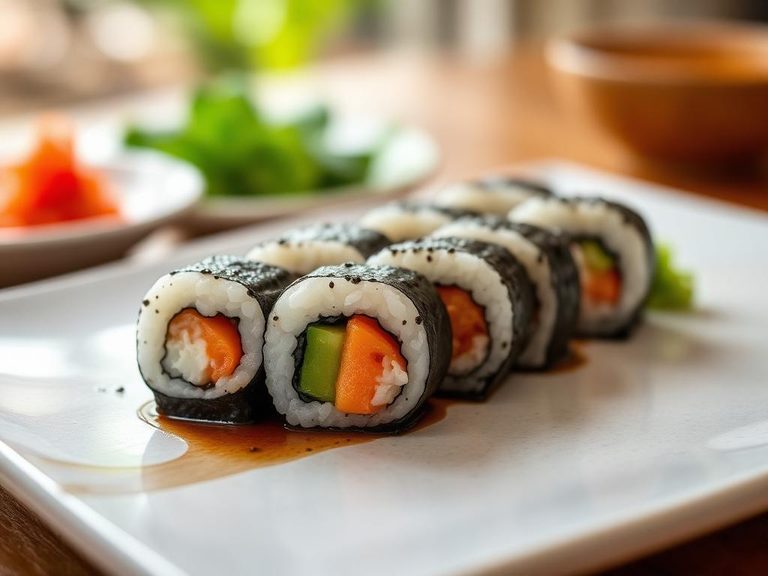
People love it for its sweet, oceanic flavor and creamy, satisfying texture, which makes it a nostalgic comfort food in many cultures. It's also incredibly versatile, fitting into salads, sushi rolls, or as a dip, and is often enjoyed at picnics or casual gatherings for its ease and affordability.
⚠️ Watch-outs & how to enjoy it better
The dish can be high in sodium and may contain added sugars, which might concern those monitoring blood pressure or blood sugar levels. To counteract this, pair it with fiber-rich vegetables like lettuce or cucumber, and use portion control to limit intake. Additionally, imitation crab is a common allergen for some, so individuals with shellfish allergies should avoid it.
Key benefits
- Low in calories compared to many creamy salads
- Provides a source of protein from surimi
- Quick and easy to prepare for meals or snacks
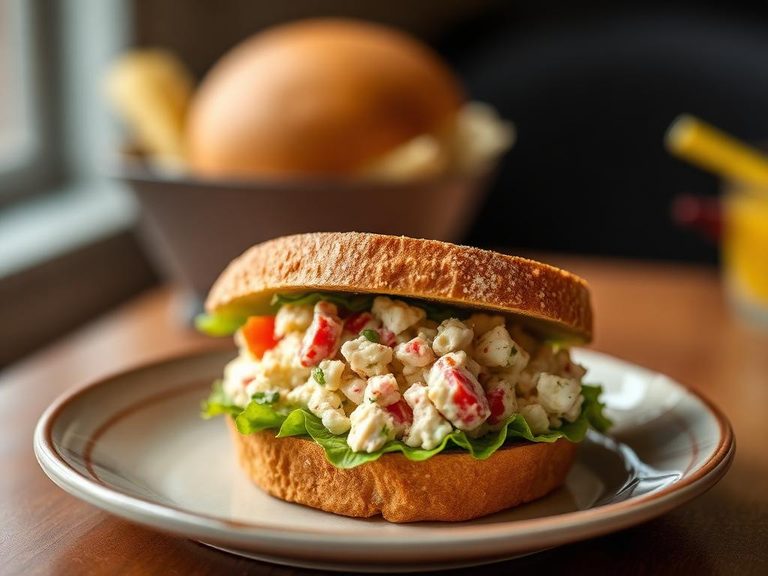
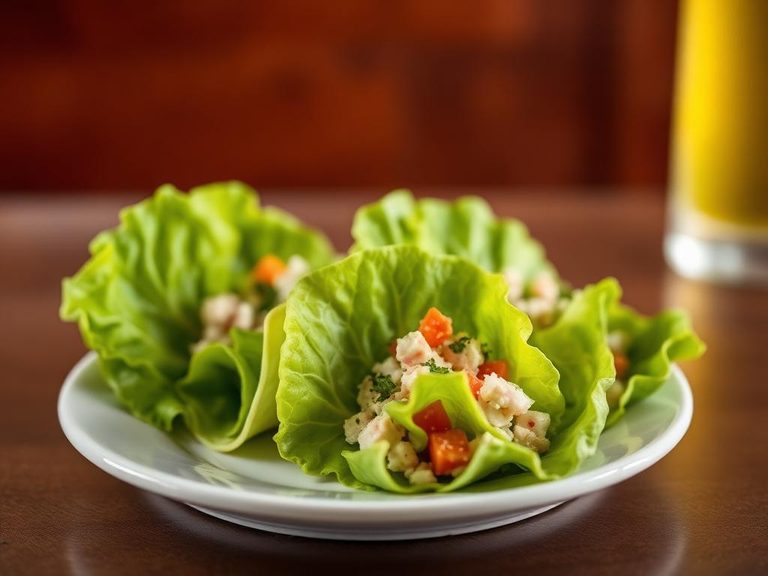
- Versatile in dishes like sandwiches, wraps, or as a topping
- Contains some omega-3 fatty acids from surimi
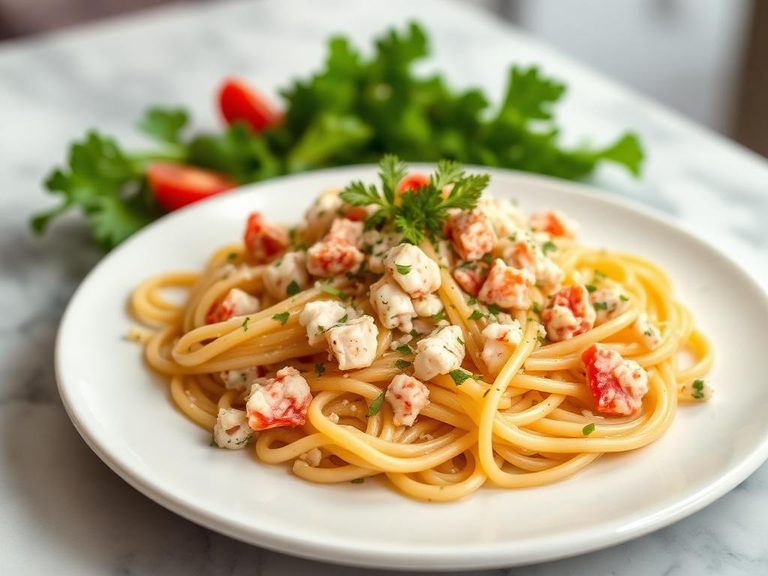
🍽️ Popular dishes
🌍 Where it's eaten
💡 Did you know?
Imitation crab, or surimi, was first developed in Japan in the 1960s as a way to use surplus fish, and it's now a global staple in dishes like sushi and salads.
Full nutrition (USDA data · scales with serving)
| Water | 69.0 g |
| Energy | 197 kcal |
| Protein | 4.1 g |
| Total lipid (fat) | 16.3 g |
| Carbohydrate, by difference | 8.7 g |
| Fiber, total dietary | 0.60 g |
| Total Sugars | 3.6 g |
| Calcium, Ca | 19.0 mg |
| Iron, Fe | 0.24 mg |
| Magnesium, Mg | 24.0 mg |
| Phosphorus, P | 148 mg |
| Potassium, K | 116 mg |
| Sodium, Na | 530 mg |
| Zinc, Zn | 0.22 mg |
| Copper, Cu | 0.02 mg |
| Selenium, Se | 11.4 ug |
| Vitamin C, total ascorbic acid | 3.1 mg |
| Thiamin | 0.02 mg |
| Riboflavin | 0.06 mg |
| Niacin | 0.38 mg |
| Vitamin B-6 | 0.08 mg |
| Folate, total | 11.0 ug |
| Folic acid | 0.00 ug |
| Folate, food | 11.0 ug |
| Folate, DFE | 11.0 ug |
| Choline, total | 15.4 mg |
| Vitamin B-12 | 0.30 ug |
| Vitamin B-12, added | 0.00 ug |
| Vitamin A, RAE | 9.0 ug |
| Retinol | 3.0 ug |
| Carotene, beta | 64.0 ug |
| Carotene, alpha | 0.00 ug |
| Cryptoxanthin, beta | 1.0 ug |
| Lycopene | 0.00 ug |
| Lutein + zeaxanthin | 69.0 ug |
| Vitamin E (alpha-tocopherol) | 0.86 mg |
| Vitamin E, added | 0.00 mg |
| Vitamin D (D2 + D3) | 0.00 ug |
| Vitamin K (phylloquinone) | 41.9 ug |
| Alcohol, ethyl | 0.00 g |
| Caffeine | 0.00 mg |
| Theobromine | 0.00 mg |
Fat & fatty acid profile (per 100g)
| Fatty acids, total saturated | 2.6 g |
| SFA 4:0 | 0.00 g |
| SFA 6:0 | 0.00 g |
| SFA 8:0 | 0.00 g |
| SFA 10:0 | 0.00 g |
| SFA 12:0 | 0.01 g |
| SFA 14:0 | 0.02 g |
| SFA 16:0 | 1.8 g |
| SFA 18:0 | 0.69 g |
| Fatty acids, total monounsaturated | 3.7 g |
| MUFA 16:1 | 0.03 g |
| MUFA 18:1 | 3.6 g |
| MUFA 20:1 | 0.05 g |
| MUFA 22:1 | 0.01 g |
| Fatty acids, total polyunsaturated | 9.6 g |
| PUFA 18:2 | 8.4 g |
| PUFA 18:3 | 1.2 g |
| PUFA 18:4 | 0.00 g |
| PUFA 20:4 | 0.01 g |
| PUFA 20:5 n-3 (EPA) | 0.00 g |
| PUFA 22:5 n-3 (DPA) | 0.00 g |
| PUFA 22:6 n-3 (DHA) | 0.01 g |
| Cholesterol | 19.0 mg |
FAQ
Is imitation crab salad healthy?
It can be a moderate option, but it's often high in sodium and may contain added sugars. Pairing it with vegetables and controlling portions can help balance its nutritional profile.
Can I make imitation crab salad at home?
Yes, it's simple to make by shredding imitation crab and mixing it with mayonnaise, celery, lemon juice, and seasonings. You can adjust ingredients to reduce fat or sodium.
What are the best ways to serve imitation crab salad?
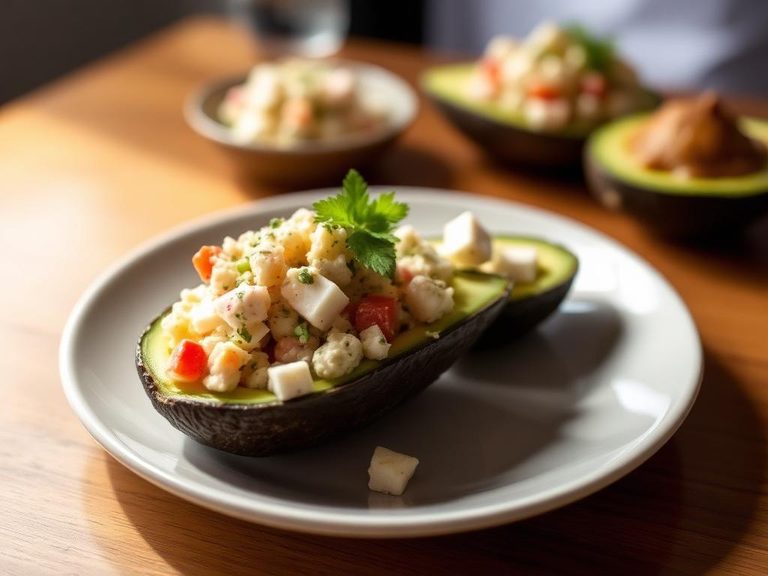
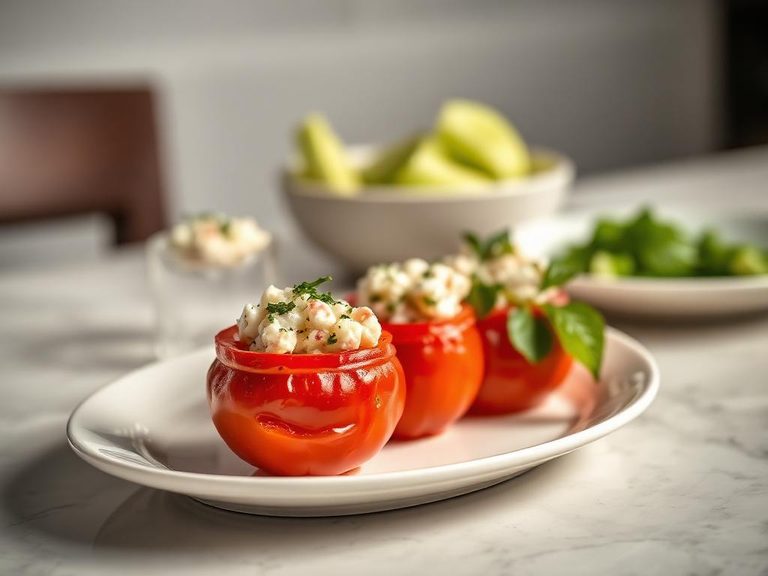
It's great in sandwiches, wraps, as a topping for salads, or stuffed in avocados or tomatoes. It also works well in sushi rolls or as a dip with crackers.
Nutrient density (calculated · NRF9.3)
Nutrient Rich Foods index: beneficial nutrients (protein, fiber, vitamins, minerals) minus saturated fat, added sugar & sodium, per 100 kcal.
NRF9.3 index — Fulgoni, Keast & Drewnowski, 2009. Computed from USDA nutrients.
Weight-loss friendliness (composite index)
Energy density 1.97 kcal/g · 8% calories from protein · 0.6 g fiber · 3.6 g sugar per 100 g.
Composite of energy density (Rolls et al., 1999), protein & fiber satiety, minus sugar. A calculated heuristic — ranks satiety-per-calorie, not a clinical measure.
Dietary load (calculated from USDA values)
Potential renal acid load. Positive = acid-forming, negative = alkaline-forming.
Sodium-to-potassium ratio: 4.57 (lower is better — aim for ≤ 1)
Sodium:potassium per WHO potassium guidance. Computed from USDA nutrients.