

California roll (sushi)
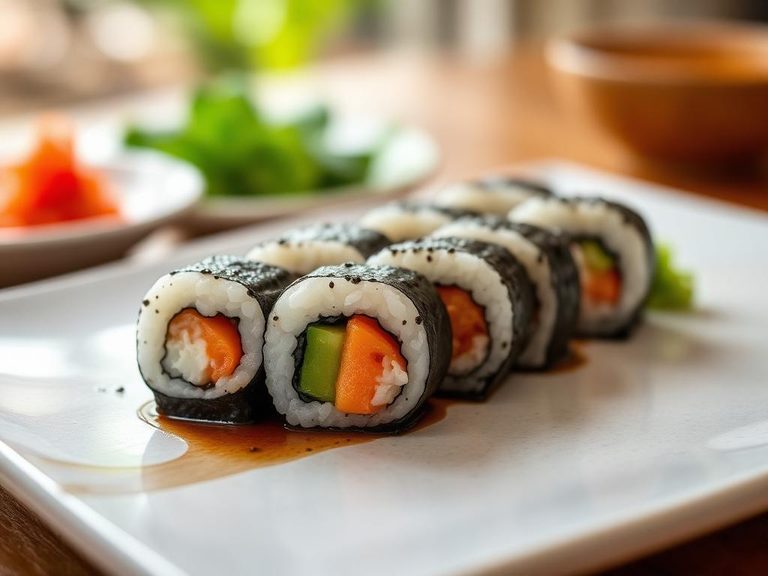
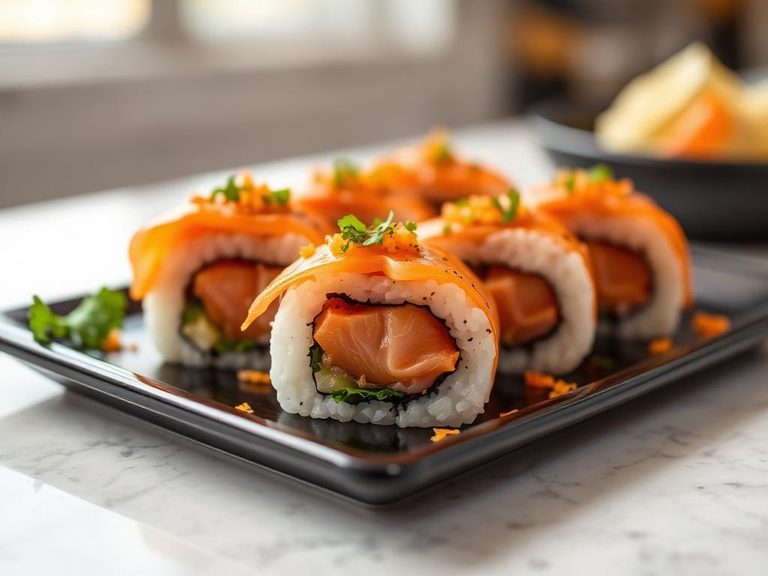
The California roll is a popular type of maki sushi, typically featuring a filling of imitation crab, avocado, and cucumber, all rolled in sushi rice and nori (seaweed). It is an inside-out roll (uramaki), meaning the rice is on the outside, often coated with sesame seeds or tobiko (flying fish roe). The roll is widely attributed to having been invented in North America, likely in Los Angeles or Vancouver, during the 1960s or 70s.
🍳 View the full California roll (sushi) recipe →
🍽️ Nutrition at a glance
A standard 8-piece serving is moderately high in carbohydrates from the sushi rice, with a balanced amount of protein from the imitation crab and healthy fats from the avocado. It provides a good source of omega-3 fatty acids, vitamin K, and selenium, and typically contains around 300-400 calories per roll.
Nutrition breakdown
| Calories | 320 kcal |
| Protein | 9 g |
| Carbs | 52 g |
| Fat | 9 g |
| Fiber | 3 g |
| Sugar | 5 g |
| Sodium | 480 mg |
| Potassium | 250 mg |
| Vitamin D | 0.2 mcg |
| Calcium | 40 mg |
| Iron | 1.8 mg |
| Vitamin B12 | 1.2 mcg |
| Magnesium | 35 mg |
| Phosphorus | 120 mg |
| Selenium | 15 mcg |
Per 1 roll (approx. 200 g) · estimated, varies by recipe
💡 What's interesting
The California roll is a prime example of culinary adaptation, created to appeal to Western palates unfamiliar with raw fish and the texture of seaweed. Its 'inside-out' design cleverly hides the nori, making it a gateway sushi item that helped popularize Japanese cuisine globally.
🍽️ Related dishes
AI estimate may be inaccurate · Terms