

Corn, fresh, cooked, fat added, NS as to fat type
Common food
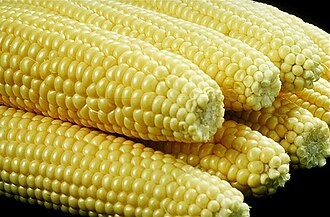
Photo: Wikipedia
This is sweet, tender corn kernels cooked with a small amount of fat, such as butter or oil, which adds a glossy sheen and a rich, savory depth to its natural sweetness. The texture is plump and slightly firm with a satisfying pop, while the added fat enhances the mouthfeel and rounds out the flavor profile. Nutritionally, it provides a moderate calorie boost from the fat while retaining the corn's natural fiber and sugars.
Calorie split: 11% protein · 60% carbs · 29% fat
↓ Full nutrition💚 Why it's loved
People love this preparation for its comforting, buttery sweetness that makes it a versatile side dish or snack. It's a staple in many cultures, often evoking memories of summer barbecues, family meals, and festive occasions.
⚠️ Watch-outs & how to enjoy it better
The added fat and natural sugars can contribute to higher calorie intake and potential blood sugar spikes, especially for those managing diabetes or watching their weight. To counteract this, pair it with protein (like grilled chicken or beans) and non-starchy vegetables to slow digestion, and practice portion control by sticking to a half-cup serving.
Key benefits
- Provides dietary fiber for digestive health
- Contains antioxidants like lutein and zeaxanthin
- Source of B vitamins for energy metabolism
- Offers a quick, natural energy boost from carbohydrates
- The added fat helps with absorption of fat-soluble vitamins
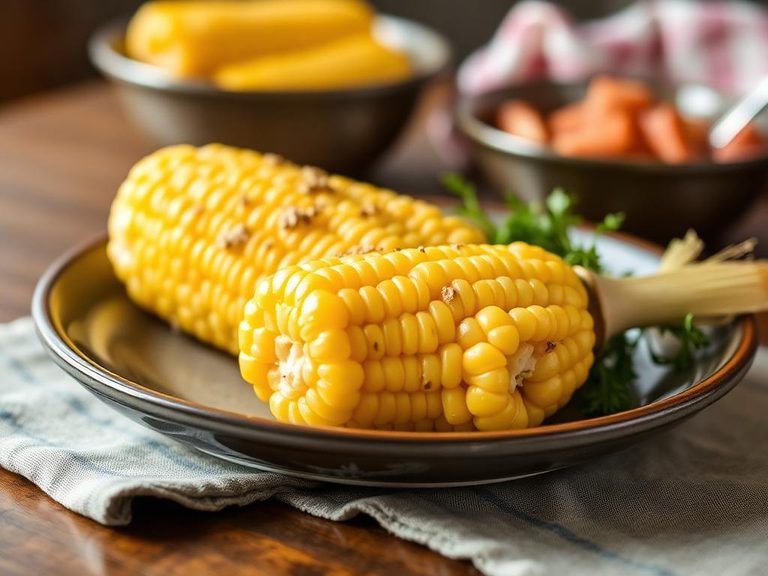
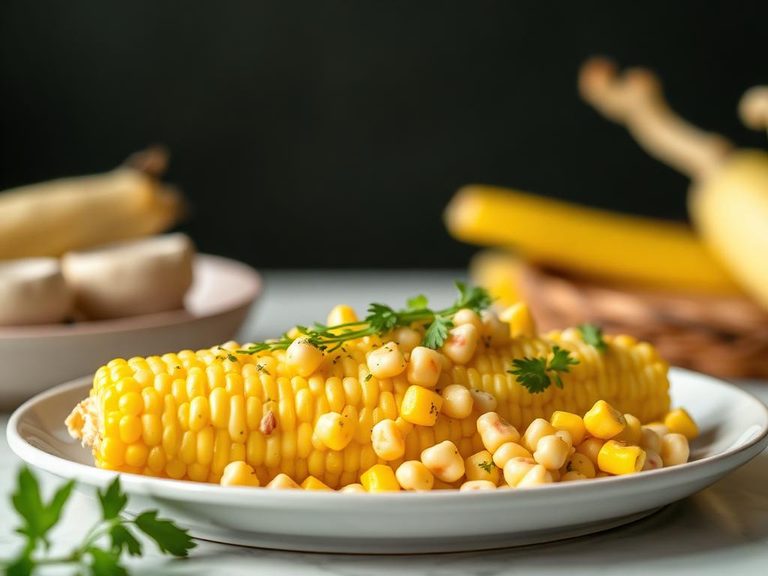
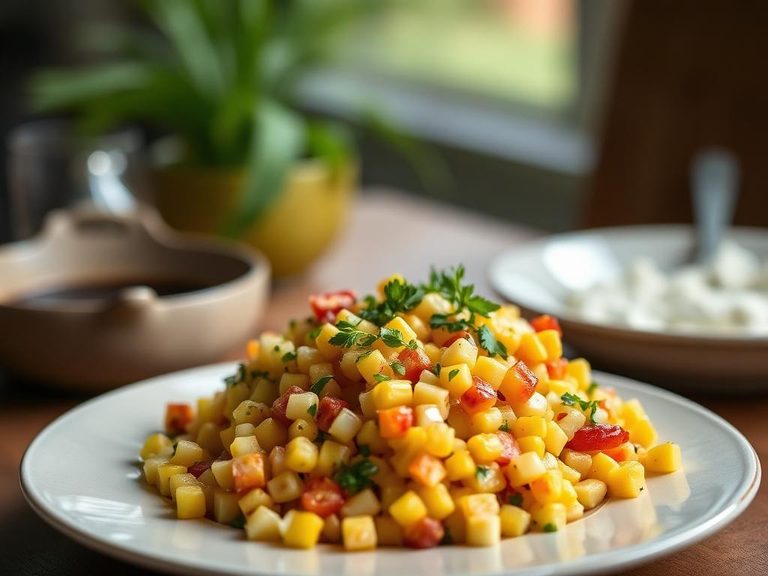
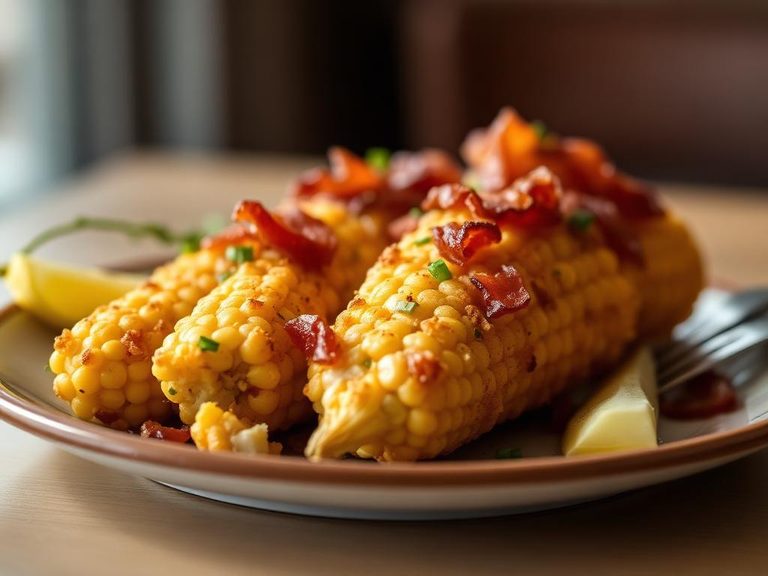
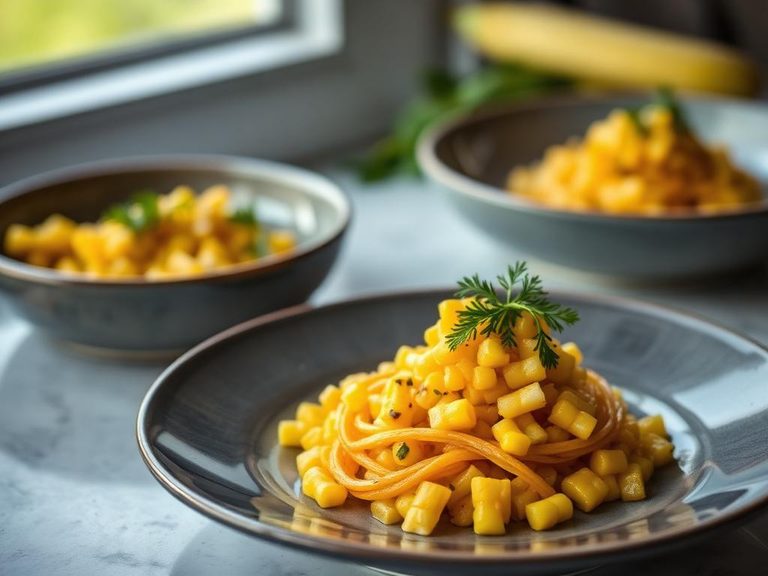
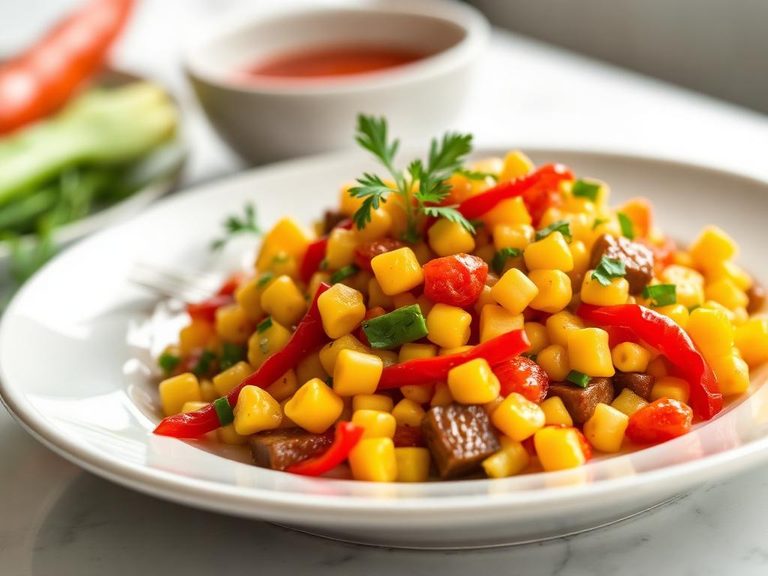
🍽️ Popular dishes
🌍 Where it's eaten
💡 Did you know?
The sugars in fresh corn convert to starch rapidly after harvest, so cooking it within a day of picking is crucial for maximum sweetness—this is why 'freshly picked' corn tastes noticeably sweeter than corn that's been sitting for a few days.
Full nutrition (USDA data · scales with serving)
| Water | 74.0 g |
| Energy | 106 kcal |
| Protein | 3.2 g |
| Total lipid (fat) | 3.9 g |
| Carbohydrate, by difference | 18.1 g |
| Fiber, total dietary | 1.9 g |
| Total Sugars | 6.1 g |
| Calcium, Ca | 2.0 mg |
| Iron, Fe | 0.51 mg |
| Magnesium, Mg | 36.0 mg |
| Phosphorus, P | 86.0 mg |
| Potassium, K | 262 mg |
| Sodium, Na | 136 mg |
| Zinc, Zn | 0.45 mg |
| Copper, Cu | 0.05 mg |
| Selenium, Se | 0.60 ug |
| Vitamin C, total ascorbic acid | 5.6 mg |
| Thiamin | 0.14 mg |
| Riboflavin | 0.05 mg |
| Niacin | 1.6 mg |
| Vitamin B-6 | 0.10 mg |
| Folate, total | 35.0 ug |
| Folic acid | 0.00 ug |
| Folate, food | 35.0 ug |
| Folate, DFE | 35.0 ug |
| Choline, total | 22.5 mg |
| Vitamin B-12 | 0.00 ug |
| Vitamin B-12, added | 0.00 ug |
| Vitamin A, RAE | 20.0 ug |
| Retinol | 11.0 ug |
| Carotene, beta | 48.0 ug |
| Carotene, alpha | 15.0 ug |
| Cryptoxanthin, beta | 106 ug |
| Lycopene | 0.00 ug |
| Lutein + zeaxanthin | 592 ug |
| Vitamin E (alpha-tocopherol) | 0.45 mg |
| Vitamin E, added | 0.00 mg |
| Vitamin D (D2 + D3) | 0.00 ug |
| Vitamin K (phylloquinone) | 2.4 ug |
| Alcohol, ethyl | 0.00 g |
| Caffeine | 0.00 mg |
| Theobromine | 0.00 mg |
Fat & fatty acid profile (per 100g)
| Fatty acids, total saturated | 0.98 g |
| SFA 4:0 | 0.02 g |
| SFA 6:0 | 0.01 g |
| SFA 8:0 | 0.01 g |
| SFA 10:0 | 0.02 g |
| SFA 12:0 | 0.02 g |
| SFA 14:0 | 0.07 g |
| SFA 16:0 | 0.62 g |
| SFA 18:0 | 0.18 g |
| Fatty acids, total monounsaturated | 1.3 g |
| MUFA 16:1 | 0.02 g |
| MUFA 18:1 | 1.3 g |
| MUFA 20:1 | 0.02 g |
| MUFA 22:1 | 0.00 g |
| Fatty acids, total polyunsaturated | 1.2 g |
| PUFA 18:2 | 1.1 g |
| PUFA 18:3 | 0.10 g |
| PUFA 18:4 | 0.00 g |
| PUFA 20:4 | 0.00 g |
| PUFA 20:5 n-3 (EPA) | 0.00 g |
| PUFA 22:5 n-3 (DPA) | 0.00 g |
| PUFA 22:6 n-3 (DHA) | 0.00 g |
| Cholesterol | 2.0 mg |
Amino acid profile (per 100g)
Estimated from Succotash, (corn and limas), canned, with cream style corn — USDA does not publish this profile for Corn.
| Tryptophan | 0.03 g |
| Threonine | 0.11 g |
| Isoleucine | 0.15 g |
| Leucine | 0.23 g |
| Lysine | 0.15 g |
| Methionine | 0.04 g |
| Cystine | 0.03 g |
| Phenylalanine | 0.13 g |
| Tyrosine | 0.09 g |
| Valine | 0.16 g |
| Arginine | 0.15 g |
| Histidine | 0.08 g |
| Alanine | 0.14 g |
| Aspartic acid | 0.26 g |
| Glutamic acid | 0.40 g |
| Glycine | 0.10 g |
| Proline | 0.10 g |
| Serine | 0.15 g |
FAQ
How does adding fat affect the nutritional profile of cooked corn?
Adding fat increases the calorie and fat content, but it also helps the body absorb fat-soluble vitamins (like vitamin A and E) and antioxidants found in corn, making the nutrients more bioavailable.
Is this a good option for people with gluten intolerance?
Yes, corn is naturally gluten-free, making it a safe and nutritious choice for those with celiac disease or gluten sensitivity, as long as no gluten-containing additives are used during preparation.
Can I reduce the sugar impact of this dish?
Pairing the corn with protein (like eggs or cheese) or healthy fats (like avocado) can help stabilize blood sugar levels, and choosing smaller portions can also mitigate sugar spikes.
Nutrient density (calculated · NRF9.3)
Nutrient Rich Foods index: beneficial nutrients (protein, fiber, vitamins, minerals) minus saturated fat, added sugar & sodium, per 100 kcal.
NRF9.3 index — Fulgoni, Keast & Drewnowski, 2009. Computed from USDA nutrients.
Weight-loss friendliness (composite index)
Energy density 1.06 kcal/g · 12% calories from protein · 1.9 g fiber · 6.1 g sugar per 100 g.
Composite of energy density (Rolls et al., 1999), protein & fiber satiety, minus sugar. A calculated heuristic — ranks satiety-per-calorie, not a clinical measure.
Dietary load (calculated from USDA values)
Potential renal acid load. Positive = acid-forming, negative = alkaline-forming.
Sodium-to-potassium ratio: 0.52 (lower is better — aim for ≤ 1)
Sodium:potassium per WHO potassium guidance. Computed from USDA nutrients.