

Corn, canned, reduced sodium, cooked, fat added, NS as to fat type
Common food

Photo: Wikipedia
This is canned sweet corn that's been cooked with a bit of added fat (like butter or oil) and has less sodium than standard canned varieties. It offers a tender, plump kernel with a sweet, slightly buttery flavor and a satisfying pop. Nutritionally, it's a good source of energy from carbs and provides a modest boost of fiber and plant-based protein.
Calorie split: 8% protein · 59% carbs · 33% fat
↓ Full nutrition💚 Why it's loved
People love it for its reliable, sunny sweetness and satisfying texture that elevates simple meals. Its incredible versatility makes it a go-to for everything from quick side dishes and salads to hearty casseroles and salsas.
⚠️ Watch-outs & how to enjoy it better
The added fat and sugars, even in a reduced-sodium version, can contribute to excess calorie intake if not portioned. Those monitoring blood sugar should be mindful of its glycemic impact. Tip: Pair it with a lean protein (like chicken or beans) and a non-starchy vegetable to balance the meal and slow sugar absorption.
Key benefits
- Provides quick energy from natural and added sugars.
- Source of dietary fiber for digestive health.
- Contains essential minerals like phosphorus and magnesium.
- Convenient, pre-cooked, and shelf-stable pantry staple.
- Lower sodium option compared to regular canned corn.
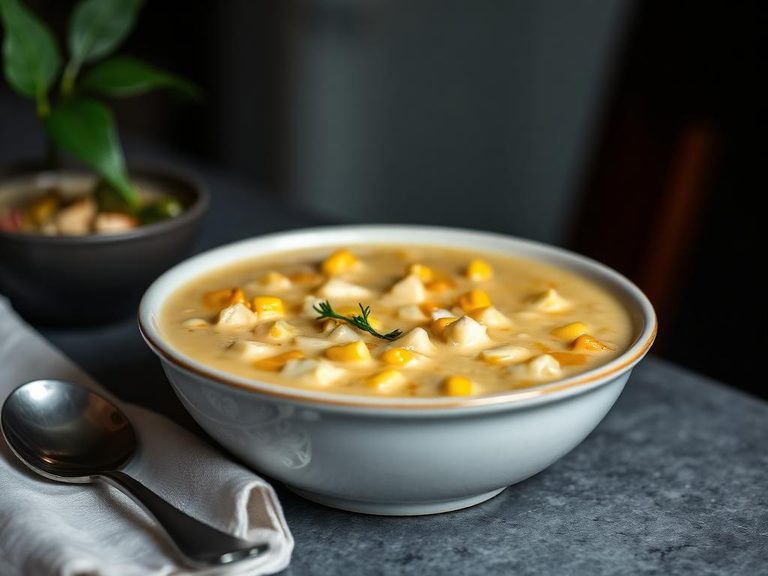
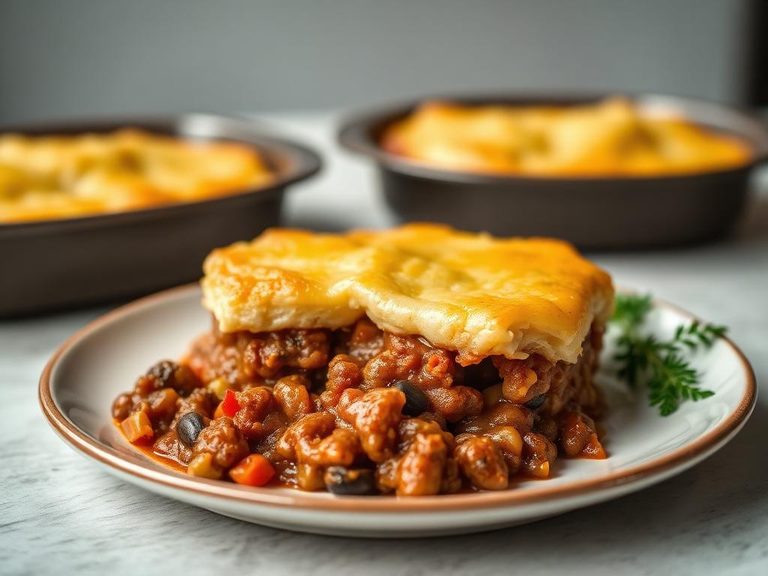
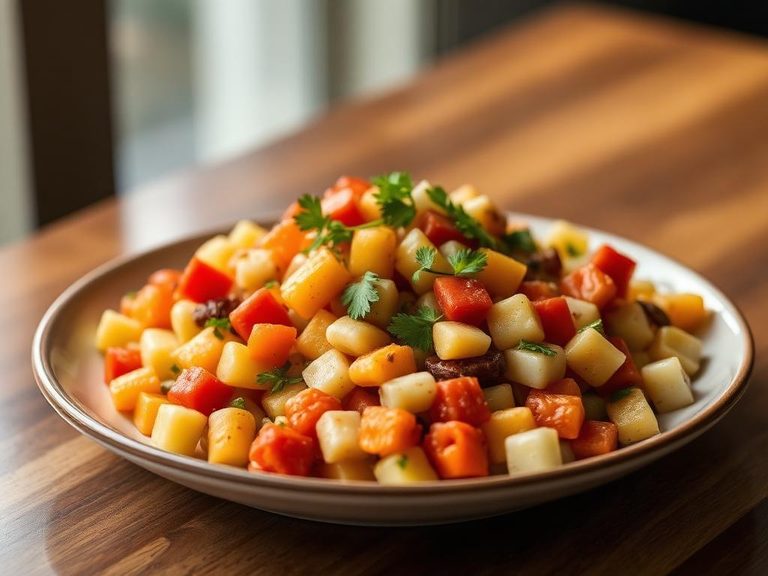
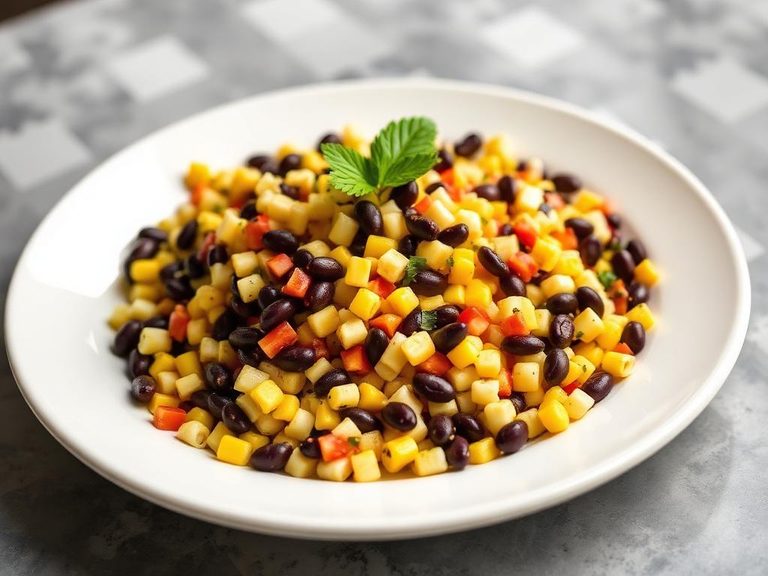
🍽️ Popular dishes

🌍 Where it's eaten
💡 Did you know?
The canning process for corn actually increases the bioavailability of some nutrients, like antioxidants, because the heat breaks down the tough cell walls of the kernels.
Full nutrition (USDA data · scales with serving)
| Water | 79.1 g |
| Energy | 88.0 kcal |
| Protein | 2.0 g |
| Total lipid (fat) | 3.5 g |
| Carbohydrate, by difference | 14.5 g |
| Fiber, total dietary | 1.8 g |
| Total Sugars | 4.3 g |
| Calcium, Ca | 4.0 mg |
| Iron, Fe | 0.38 mg |
| Magnesium, Mg | 16.0 mg |
| Phosphorus, P | 48.0 mg |
| Potassium, K | 142 mg |
| Sodium, Na | 22.0 mg |
| Zinc, Zn | 0.41 mg |
| Copper, Cu | 0.03 mg |
| Selenium, Se | 0.50 ug |
| Vitamin C, total ascorbic acid | 2.4 mg |
| Thiamin | 0.01 mg |
| Riboflavin | 0.02 mg |
| Niacin | 0.92 mg |
| Vitamin B-6 | 0.06 mg |
| Folate, total | 38.0 ug |
| Folic acid | 0.00 ug |
| Folate, food | 38.0 ug |
| Folate, DFE | 38.0 ug |
| Choline, total | 17.6 mg |
| Vitamin B-12 | 0.00 ug |
| Vitamin B-12, added | 0.00 ug |
| Vitamin A, RAE | 14.0 ug |
| Retinol | 12.0 ug |
| Carotene, beta | 15.0 ug |
| Carotene, alpha | 10.0 ug |
| Cryptoxanthin, beta | 15.0 ug |
| Lycopene | 0.00 ug |
| Lutein + zeaxanthin | 679 ug |
| Vitamin E (alpha-tocopherol) | 0.44 mg |
| Vitamin E, added | 0.00 mg |
| Vitamin D (D2 + D3) | 0.00 ug |
| Vitamin K (phylloquinone) | 2.3 ug |
| Alcohol, ethyl | 0.00 g |
| Caffeine | 0.00 mg |
| Theobromine | 0.00 mg |
Fat & fatty acid profile (per 100g)
| Fatty acids, total saturated | 0.80 g |
| SFA 4:0 | 0.02 g |
| SFA 6:0 | 0.01 g |
| SFA 8:0 | 0.01 g |
| SFA 10:0 | 0.02 g |
| SFA 12:0 | 0.02 g |
| SFA 14:0 | 0.07 g |
| SFA 16:0 | 0.47 g |
| SFA 18:0 | 0.15 g |
| Fatty acids, total monounsaturated | 1.1 g |
| MUFA 16:1 | 0.01 g |
| MUFA 18:1 | 1.1 g |
| MUFA 20:1 | 0.01 g |
| MUFA 22:1 | 0.00 g |
| Fatty acids, total polyunsaturated | 1.0 g |
| PUFA 18:2 | 0.94 g |
| PUFA 18:3 | 0.10 g |
| PUFA 18:4 | 0.00 g |
| PUFA 20:4 | 0.00 g |
| PUFA 20:5 n-3 (EPA) | 0.00 g |
| PUFA 22:5 n-3 (DPA) | 0.00 g |
| PUFA 22:6 n-3 (DHA) | 0.00 g |
| Cholesterol | 2.0 mg |
Amino acid profile (per 100g)
Estimated from Succotash, (corn and limas), canned, with cream style corn — USDA does not publish this profile for Corn.
| Tryptophan | 0.03 g |
| Threonine | 0.11 g |
| Isoleucine | 0.15 g |
| Leucine | 0.23 g |
| Lysine | 0.15 g |
| Methionine | 0.04 g |
| Cystine | 0.03 g |
| Phenylalanine | 0.13 g |
| Tyrosine | 0.09 g |
| Valine | 0.16 g |
| Arginine | 0.15 g |
| Histidine | 0.08 g |
| Alanine | 0.14 g |
| Aspartic acid | 0.26 g |
| Glutamic acid | 0.40 g |
| Glycine | 0.10 g |
| Proline | 0.10 g |
| Serine | 0.15 g |
FAQ
Is the 'fat added' in the can unhealthy?
The fat is typically a neutral oil or butter added for flavor and texture. While it adds calories, it's part of the product's profile. You can't remove it, but you can account for it in your daily fat intake.
How does reduced sodium affect the taste?
It tastes noticeably less salty than regular canned corn, allowing the natural sweetness of the corn to come through more clearly. Some brands use potassium chloride, which can have a slight aftertaste for some.
Can I use this for making cornbread?
Yes, but be aware it will add more moisture and fat than plain canned corn. You may need to slightly adjust your recipe's liquid or fat ratios to get the desired texture.
Nutrient density (calculated · NRF9.3)
Nutrient Rich Foods index: beneficial nutrients (protein, fiber, vitamins, minerals) minus saturated fat, added sugar & sodium, per 100 kcal.
NRF9.3 index — Fulgoni, Keast & Drewnowski, 2009. Computed from USDA nutrients.
Weight-loss friendliness (composite index)
Energy density 0.88 kcal/g · 9% calories from protein · 1.8 g fiber · 4.3 g sugar per 100 g.
Composite of energy density (Rolls et al., 1999), protein & fiber satiety, minus sugar. A calculated heuristic — ranks satiety-per-calorie, not a clinical measure.
Dietary load (calculated from USDA values)
Potential renal acid load. Positive = acid-forming, negative = alkaline-forming.
Sodium-to-potassium ratio: 0.15 (lower is better — aim for ≤ 1)
Sodium:potassium per WHO potassium guidance. Computed from USDA nutrients.