

Cookies, chocolate wafers
Whole food · Baked Products
A thin, crisp, dark chocolate-flavored wafer cookie, often used as a building block in desserts. It has a deep cocoa flavor with a satisfying snap, and its nutritional profile is dominated by carbohydrates and sugar, providing a quick energy burst.
Calorie split: 6% protein · 65% carbs · 29% fat
↓ Full nutrition💚 Why it's loved
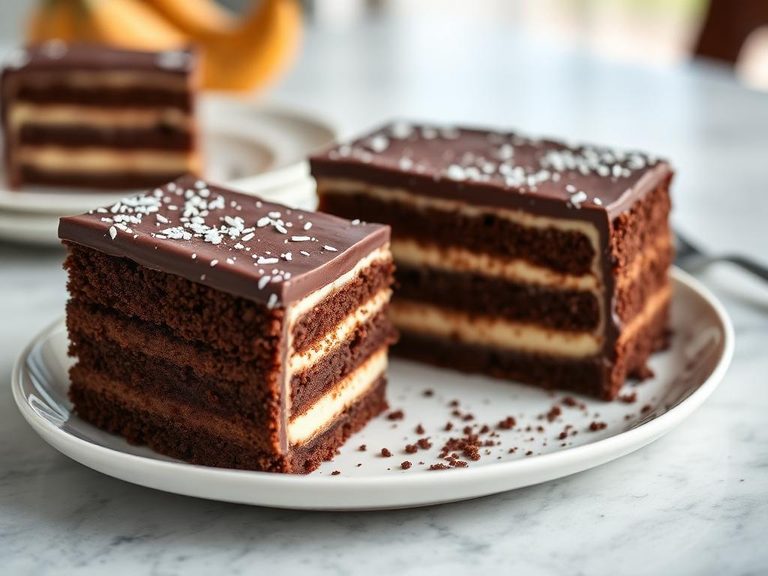
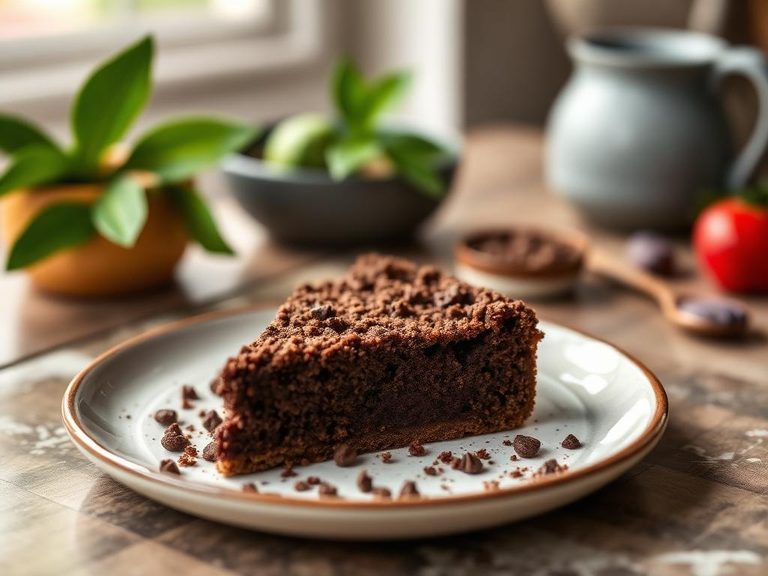
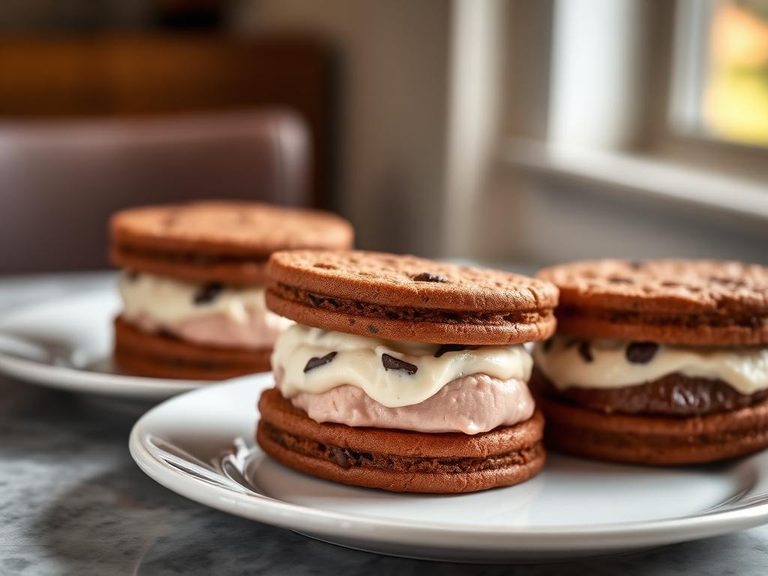
People love chocolate wafers for their intense, not-too-sweet chocolate flavor and their perfect crisp texture that dissolves on the tongue. They are a nostalgic favorite and a versatile staple for creating classic icebox cakes and crusts.
⚠️ Watch-outs & how to enjoy it better
The high sugar and refined carbohydrate content can lead to rapid blood sugar spikes, making it a poor choice for those managing diabetes or seeking sustained energy. To mitigate this, pair a small portion with a source of protein or healthy fat (like nuts or Greek yogurt) to slow sugar absorption, and practice strict portion control.
Key benefits
- Provides a quick source of energy from carbohydrates.
- Contains a small amount of dietary fiber.
- Offers a convenient and portable sweet snack.
- Often used as a versatile ingredient in no-bake desserts.
🍽️ Popular dishes

🌍 Where it's eaten
💡 Did you know?
The iconic Nabisco Famous Chocolate Wafers, first introduced in 1924, were originally marketed as a 'tea biscuit' and were so thin they were sometimes called 'chocolate thins'.
Full nutrition (USDA data · scales with serving)
| Water | 4.5 g |
| Energy | 433 kcal |
| Energy | 1812 kj |
| Protein | 6.6 g |
| Total lipid (fat) | 14.2 g |
| Ash | 2.0 g |
| Carbohydrate, by difference | 72.7 g |
| Fiber, total dietary | 3.4 g |
| Total Sugars | 37.4 g |
| Calcium, Ca | 31.0 mg |
| Iron, Fe | 4.0 mg |
| Magnesium, Mg | 53.0 mg |
| Phosphorus, P | 132 mg |
| Potassium, K | 210 mg |
| Sodium, Na | 580 mg |
| Zinc, Zn | 1.1 mg |
| Copper, Cu | 0.46 mg |
| Manganese, Mn | 0.70 mg |
| Selenium, Se | 5.7 ug |
| Vitamin C, total ascorbic acid | 0.00 mg |
| Thiamin | 0.20 mg |
| Riboflavin | 0.27 mg |
| Niacin | 2.9 mg |
| Pantothenic acid | 0.38 mg |
| Vitamin B-6 | 0.05 mg |
| Folate, total | 47.0 ug |
| Folic acid | 39.0 ug |
| Folate, food | 8.0 ug |
| Folate, DFE | 75.0 ug |
| Choline, total | 14.3 mg |
| Vitamin B-12 | 0.09 ug |
| Vitamin B-12, added | 0.00 ug |
| Vitamin A, RAE | 3.0 ug |
| Retinol | 3.0 ug |
| Carotene, beta | 0.00 ug |
| Carotene, alpha | 0.00 ug |
| Cryptoxanthin, beta | 0.00 ug |
| Vitamin A, IU | 10.0 iu |
| Lycopene | 0.00 ug |
| Lutein + zeaxanthin | 13.0 ug |
| Vitamin E (alpha-tocopherol) | 0.72 mg |
| Vitamin E, added | 0.00 mg |
| Vitamin D (D2 + D3), International Units | 0.00 iu |
| Vitamin D (D2 + D3) | 0.00 ug |
| Vitamin K (phylloquinone) | 2.4 ug |
| Alcohol, ethyl | 0.00 g |
| Caffeine | 10.0 mg |
| Theobromine | 354 mg |
Fat & fatty acid profile (per 100g)
| Fatty acids, total saturated | 4.2 g |
| SFA 4:0 | 0.00 g |
| SFA 6:0 | 0.01 g |
| SFA 8:0 | 0.13 g |
| SFA 10:0 | 0.10 g |
| SFA 12:0 | 0.76 g |
| SFA 14:0 | 0.30 g |
| SFA 16:0 | 1.8 g |
| SFA 18:0 | 1.1 g |
| Fatty acids, total monounsaturated | 4.9 g |
| MUFA 16:1 | 0.05 g |
| MUFA 18:1 | 4.8 g |
| MUFA 20:1 | 0.00 g |
| MUFA 22:1 | 0.00 g |
| Fatty acids, total polyunsaturated | 4.2 g |
| PUFA 18:2 | 3.9 g |
| PUFA 18:3 | 0.27 g |
| PUFA 18:4 | 0.00 g |
| PUFA 20:4 | 0.01 g |
| PUFA 20:5 n-3 (EPA) | 0.00 g |
| PUFA 22:5 n-3 (DPA) | 0.00 g |
| PUFA 22:6 n-3 (DHA) | 0.00 g |
| Cholesterol | 2.0 mg |
Amino acid profile (per 100g)
| Tryptophan | 0.10 g |
| Threonine | 0.22 g |
| Isoleucine | 0.26 g |
| Leucine | 0.45 g |
| Lysine | 0.28 g |
| Methionine | 0.10 g |
| Cystine | 0.13 g |
| Phenylalanine | 0.31 g |
| Tyrosine | 0.20 g |
| Valine | 0.32 g |
| Arginine | 0.29 g |
| Histidine | 0.13 g |
| Alanine | 0.24 g |
| Aspartic acid | 0.41 g |
| Glutamic acid | 1.8 g |
| Glycine | 0.24 g |
| Proline | 0.58 g |
| Serine | 0.34 g |
FAQ
Are chocolate wafers the same as chocolate cookies?
Not exactly. Chocolate wafers are specifically thin, crisp, and often less sweet than a standard chocolate chip cookie. They are designed for eating plain or, more commonly, for use as an ingredient in other desserts.
Can I use chocolate wafers to make a pie crust?
Yes, that's one of their most popular uses. Crush them into fine crumbs, mix with melted butter and a little sugar, then press into a pie plate. It creates a classic, no-bake chocolate crust perfect for cream pies or cheesecakes.
How should I store chocolate wafers to keep them crisp?
Store them in an airtight container at room temperature, away from heat and moisture. If they lose their crispness, you can refresh them by placing them on a baking sheet in a 300°F (150°C) oven for a few minutes.
Nutrient density (calculated · NRF9.3)
Nutrient Rich Foods index: beneficial nutrients (protein, fiber, vitamins, minerals) minus saturated fat, added sugar & sodium, per 100 kcal.
NRF9.3 index — Fulgoni, Keast & Drewnowski, 2009. Computed from USDA nutrients.
Weight-loss friendliness (composite index)
Energy density 4.33 kcal/g · 6% calories from protein · 3.4 g fiber · 37.4 g sugar per 100 g.
Composite of energy density (Rolls et al., 1999), protein & fiber satiety, minus sugar. A calculated heuristic — ranks satiety-per-calorie, not a clinical measure.
Dietary load (calculated from USDA values)
Potential renal acid load. Positive = acid-forming, negative = alkaline-forming.
Sodium-to-potassium ratio: 2.76 (lower is better — aim for ≤ 1)
Sodium:potassium per WHO potassium guidance. Computed from USDA nutrients.