

Cookie, marshmallow, with coconut
Common food

Photo: Wikipedia
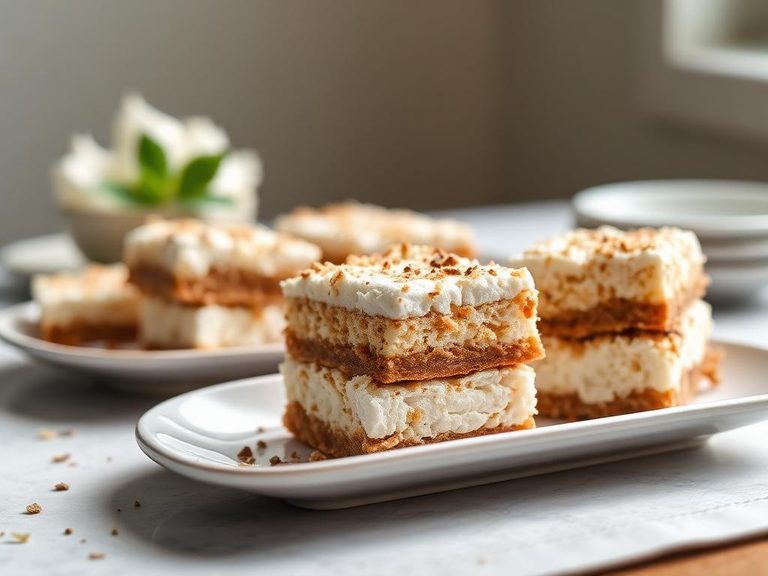
This is a sweet, chewy confection where a soft, airy marshmallow center is enrobed in a crisp, toasted coconut coating. The texture is a delightful contrast between the pillowy interior and the slightly fibrous, crunchy exterior, offering a tropical, sugary flavor profile. Nutritionally, it is a high-energy treat, with nearly all its calories coming from carbohydrates, specifically sugars and fats.
Calorie split: 4% protein · 62% carbs · 35% fat
↓ Full nutrition💚 Why it's loved
People adore this treat for its unique combination of textures—the soft, melt-in-your-mouth marshmallow and the satisfying crunch of toasted coconut. Its sweet, tropical flavor makes it a nostalgic and versatile ingredient in both no-bake desserts and as a standalone indulgence.
⚠️ Watch-outs & how to enjoy it better
Its very high sugar content (44.8g per 100g) can lead to rapid blood sugar spikes, making it unsuitable for diabetics or those monitoring sugar intake. The coconut coating is a common allergen, and the high calorie density requires strict portion control. To mitigate sugar spikes, pair a small portion with a source of protein or healthy fat, like a handful of nuts, to slow digestion.
Key benefits
- Provides a quick source of energy from carbohydrates.
- Offers a satisfying textural contrast between chewy and crunchy.
- Contains small amounts of dietary fiber from the coconut coating.
- Serves as a convenient, portable sweet snack or dessert component.
🍽️ Popular dishes
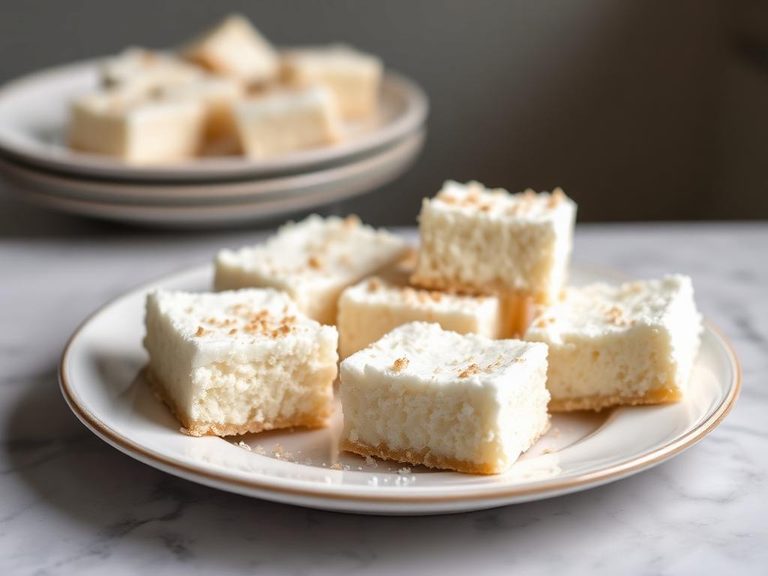
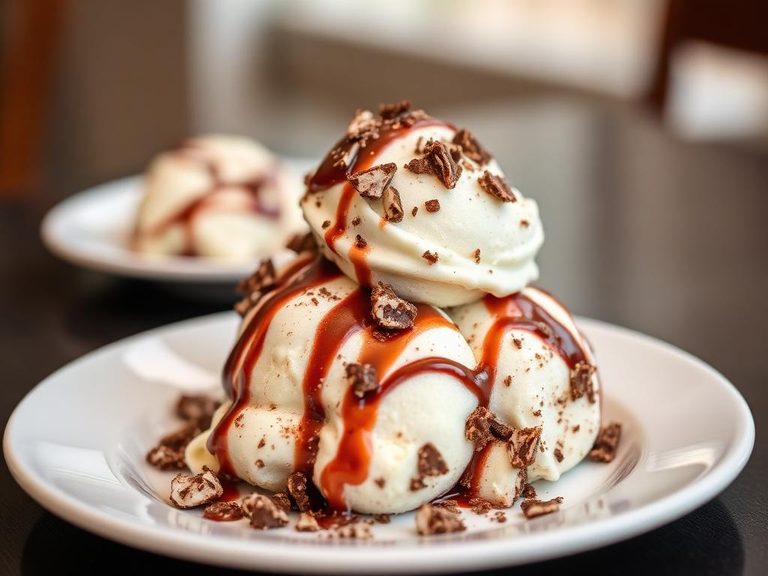
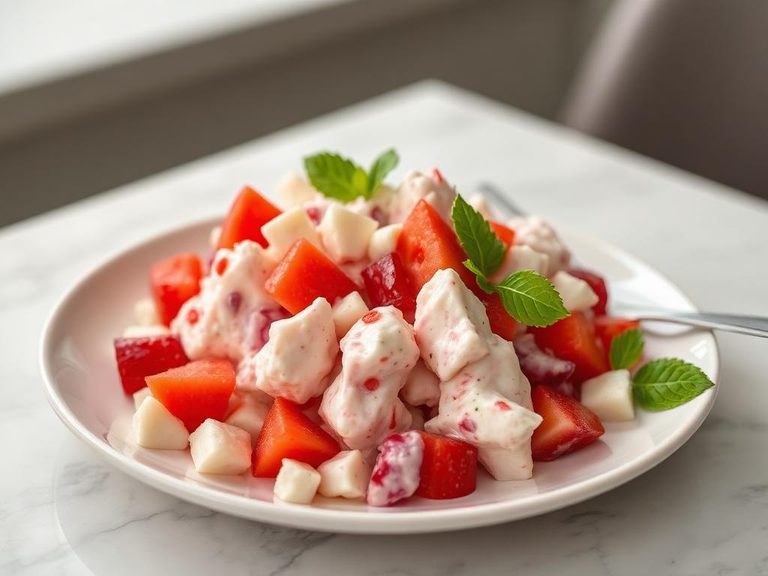
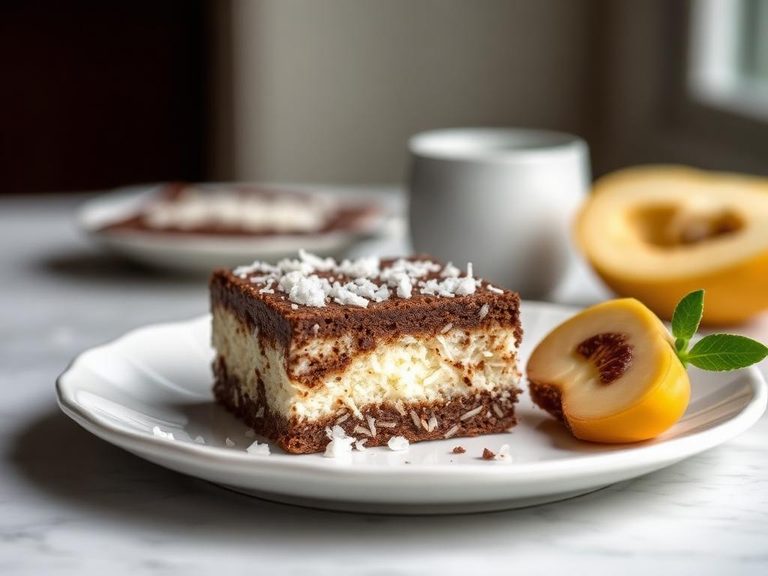
🌍 Where it's eaten
💡 Did you know?
The process of toasting the coconut coating not only enhances its nutty flavor but also creates a Maillard reaction, which is the same browning chemistry that makes seared steak and baked bread taste complex and delicious.
Full nutrition (USDA data · scales with serving)
| Water | 10.1 g |
| Energy | 421 kcal |
| Protein | 4.0 g |
| Total lipid (fat) | 16.9 g |
| Carbohydrate, by difference | 67.7 g |
| Fiber, total dietary | 2.0 g |
| Total Sugars | 44.8 g |
| Calcium, Ca | 46.0 mg |
| Iron, Fe | 2.5 mg |
| Magnesium, Mg | 36.0 mg |
| Phosphorus, P | 97.0 mg |
| Potassium, K | 182 mg |
| Sodium, Na | 188 mg |
| Zinc, Zn | 0.65 mg |
| Copper, Cu | 0.26 mg |
| Selenium, Se | 4.4 ug |
| Vitamin C, total ascorbic acid | 0.10 mg |
| Thiamin | 0.09 mg |
| Riboflavin | 0.21 mg |
| Niacin | 0.78 mg |
| Vitamin B-6 | 0.06 mg |
| Folate, total | 23.0 ug |
| Folic acid | 20.0 ug |
| Folate, food | 3.0 ug |
| Folate, DFE | 37.0 ug |
| Choline, total | 13.6 mg |
| Vitamin B-12 | 0.17 ug |
| Vitamin B-12, added | 0.00 ug |
| Vitamin A, RAE | 1.0 ug |
| Retinol | 1.0 ug |
| Carotene, beta | 0.00 ug |
| Carotene, alpha | 0.00 ug |
| Cryptoxanthin, beta | 0.00 ug |
| Lycopene | 0.00 ug |
| Lutein + zeaxanthin | 3.0 ug |
| Vitamin E (alpha-tocopherol) | 0.14 mg |
| Vitamin E, added | 0.00 mg |
| Vitamin D (D2 + D3) | 0.00 ug |
| Vitamin K (phylloquinone) | 7.0 ug |
| Alcohol, ethyl | 0.00 g |
| Caffeine | 5.0 mg |
| Theobromine | 159 mg |
Fat & fatty acid profile (per 100g)
| Fatty acids, total saturated | 4.7 g |
| SFA 4:0 | 0.00 g |
| SFA 6:0 | 0.00 g |
| SFA 8:0 | 0.00 g |
| SFA 10:0 | 0.00 g |
| SFA 12:0 | 0.00 g |
| SFA 14:0 | 0.09 g |
| SFA 16:0 | 2.4 g |
| SFA 18:0 | 2.2 g |
| Fatty acids, total monounsaturated | 9.3 g |
| MUFA 16:1 | 0.00 g |
| MUFA 18:1 | 9.3 g |
| MUFA 20:1 | 0.00 g |
| MUFA 22:1 | 0.00 g |
| Fatty acids, total polyunsaturated | 1.9 g |
| PUFA 18:2 | 1.8 g |
| PUFA 18:3 | 0.10 g |
| PUFA 18:4 | 0.00 g |
| PUFA 20:4 | 0.00 g |
| PUFA 20:5 n-3 (EPA) | 0.00 g |
| PUFA 22:5 n-3 (DPA) | 0.00 g |
| PUFA 22:6 n-3 (DHA) | 0.00 g |
| Cholesterol | 0.00 mg |
Amino acid profile (per 100g)
Estimated from Pie Crust, Cookie-type, Chocolate, Ready Crust — USDA does not publish this profile for Cookie.
| Tryptophan | 0.08 g |
| Threonine | 0.20 g |
| Isoleucine | 0.23 g |
| Leucine | 0.38 g |
| Lysine | 0.24 g |
| Methionine | 0.07 g |
| Cystine | 0.11 g |
| Phenylalanine | 0.28 g |
| Tyrosine | 0.16 g |
| Valine | 0.32 g |
| Arginine | 0.29 g |
| Histidine | 0.11 g |
| Alanine | 0.24 g |
| Aspartic acid | 0.45 g |
| Glutamic acid | 1.3 g |
| Glycine | 0.24 g |
| Proline | 0.42 g |
| Serine | 0.26 g |
FAQ
Is this the same as a coconut macaroon?
No. A coconut macaroon is primarily made of shredded coconut, egg whites, and sugar, with a dense, chewy texture throughout. This food features a distinct, soft marshmallow center coated in coconut.
Can I use this in baking?
Yes, but with caution. It can be chopped and folded into cookie dough or brownie batter for pockets of chewy sweetness. However, the high sugar content can affect the spread and texture of baked goods, so it's best used as an add-in rather than a primary ingredient.
How should I store them to maintain freshness?
Store in an airtight container at room temperature, away from heat and humidity. The marshmallow can become sticky or weep in humid conditions, and the coconut coating can lose its crispness if exposed to air.
Nutrient density (calculated · NRF9.3)
Nutrient Rich Foods index: beneficial nutrients (protein, fiber, vitamins, minerals) minus saturated fat, added sugar & sodium, per 100 kcal.
NRF9.3 index — Fulgoni, Keast & Drewnowski, 2009. Computed from USDA nutrients.
Weight-loss friendliness (composite index)
Energy density 4.21 kcal/g · 4% calories from protein · 2.0 g fiber · 44.8 g sugar per 100 g.
Composite of energy density (Rolls et al., 1999), protein & fiber satiety, minus sugar. A calculated heuristic — ranks satiety-per-calorie, not a clinical measure.
Dietary load (calculated from USDA values)
Potential renal acid load. Positive = acid-forming, negative = alkaline-forming.
Sodium-to-potassium ratio: 1.03 (lower is better — aim for ≤ 1)
Sodium:potassium per WHO potassium guidance. Computed from USDA nutrients.